What are the advantages of UFH vs. Tube Furnaces for Na3V2(PO4)2F3? Achieve High Tap Density Fast
Updated 3 months ago
Ultra-fast high-temperature synthesis represents a paradigm shift in battery material manufacturing.
This technology enables the synthesis of Na3V2(PO4)2F3 (NVPF) in seconds rather than hours, using extreme heating and cooling rates to decouple crystal growth from grain coarsening. By utilizing instantaneous high-temperature fields, it produces large-sized particles with high tap density and superior crystallinity—results that are difficult to achieve in traditional tube furnaces without significant energy loss and detrimental particle agglomeration.
Core Takeaway: Ultra-fast high-temperature (UFH) synthesis provides a kinetic advantage that allows NVPF to achieve high crystallinity and structural integrity within seconds. This process suppresses excessive grain coarsening while enabling the production of large-sized particles that maximize energy density through high tap density.
Transforming Synthesis Kinetics
From Hours to Seconds
Traditional tube furnaces rely on slow heating rates (e.g., 300°C/h) and long-term isothermal soaking to ensure phase consistency. In contrast, ultra-fast high-temperature equipment induces material nucleation and growth almost instantaneously, often within 30 to 60 seconds.
Suppressing Grain Coarsening
The brief duration of the high-temperature field is critical for NVPF. While traditional methods allow grains to coarsen over hours, the UFH process provides high energy input so quickly that there is insufficient time for the uncontrolled, detrimental growth that typically degrades electrochemical performance.
High Crystallinity and Structural Integrity
Despite the rapid processing time, the high energy density of the UFH field ensures that the NVPF achieves a high degree of crystallinity. This leads to a robust monoclinic structure that is essential for long-term cycling stability and efficient sodium-ion transport.
Optimizing Particle Morphology and Density
Achieving High Tap Density
One of the primary advantages of UFH for NVPF is the ability to produce large-sized particles. In battery applications, larger particles are often preferred because they contribute to a higher tap density, which directly translates to higher volumetric energy density in the final cell.
Maintaining Rate Performance
In traditional synthesis, large particles often suffer from poor rate performance due to long ion-diffusion paths. However, UFH-synthesized NVPF maintains excellent rate performance because the rapid thermal shock can introduce dislocations and defects that enhance kinetic diffusion.
Superior Electrolyte Infiltration
Similar to the "explosive expansion" effects seen in other UFH processes, the rapid release of thermal stress can create a richer porous structure within the material. This ensures that even large-sized NVPF particles have sufficient pathways for electrolyte infiltration, balancing density with activity.
Understanding the Trade-offs
Thermal Gradient Challenges
The primary challenge with ultra-fast synthesis is maintaining temperature uniformity across a large sample mass. Unlike the stable, uniform high-temperature zone of a tube furnace, UFH can create extreme thermal gradients that may lead to localized inconsistencies if not precisely controlled.
Thermodynamic vs. Kinetic Control
Traditional tube furnaces excel at bringing materials to thermodynamic equilibrium, which is vital for complex phases requiring long-range ordering. UFH is a kinetically-driven process; while it is faster, it may not be suitable for every material system that requires slow, specific lattice development.
Equipment Complexity
Tube furnaces are highly reliable for long-term annealing and offer precise control over atmospheres (e.g., inert argon or air). UFH equipment requires more sophisticated control systems to manage the extreme thermal cycling and prevent structural failure of the synthesis chamber itself.
How to Apply This to Your Project
When choosing between ultra-fast high-temperature synthesis and traditional tube furnaces for Na3V2(PO4)2F3 production, consider your primary performance metrics and throughput requirements.
- If your primary focus is volumetric energy density: Use ultra-fast high-temperature synthesis to produce large-sized particles with high tap density.
- If your primary focus is manufacturing throughput: Utilize UFH equipment to reduce synthesis time from hours to seconds, significantly lowering energy costs and increasing output.
- If your primary focus is defect engineering: Choose high-temperature shock methods to introduce dislocations that can improve the sodium-ion diffusion kinetics.
- If your primary focus is absolute phase purity at equilibrium: Stick with a traditional tube furnace to ensure the material reaches its full thermodynamic potential through stable, long-term annealing.
By matching the synthesis method to the desired material morphology, you can optimize NVPF for high-performance sodium-ion battery applications.
Summary Table:
| Feature | Ultra-Fast Synthesis (UFH) | Traditional Tube Furnace |
|---|---|---|
| Synthesis Time | Seconds (30-60s) | Hours (Long soaking) |
| Heating Rate | Extreme/Instantaneous | Slow (e.g., 300°C/h) |
| Particle Size | Large-sized particles | Varies (Agglomeration risk) |
| Tap Density | High (High energy density) | Moderate to Low |
| Control Focus | Kinetic control & Defects | Thermodynamic equilibrium |
| Energy Cost | Low (Minimal run time) | High (Continuous heating) |
Optimize Your Material Synthesis with THERMUNITS
Are you looking to transition from traditional thermal processing to cutting-edge material synthesis? THERMUNITS is a leading manufacturer of high-temperature laboratory equipment for material science and industrial R&D. We provide the precision tools needed to achieve superior crystallinity and density in your sodium-ion battery research.
Our Comprehensive Thermal Solutions Include:
- Muffle, Vacuum, and Atmosphere Furnaces for diverse heat treatments.
- Tube and Rotary Furnaces for continuous and batch processing.
- Advanced CVD/PECVD Systems for thin-film and nanomaterial synthesis.
- Vacuum Induction Melting (VIM) and Hot Press Furnaces for metallurgical excellence.
- Thermal Elements and Dental Furnaces for specialized laboratory applications.
Ready to enhance your lab's efficiency and material performance? Contact THERMUNITS today to consult with our experts on the right thermal processing solution for your project!
References
- Zijing Song, Yanan Chen. Ultrafast Synthesis of Large‐Sized and Conductive Na<sub>3</sub>V<sub>2</sub>(PO<sub>4</sub>)<sub>2</sub>F<sub>3</sub> Simultaneously Approaches High Tap Density, Rate and Cycling Capability. DOI: 10.1002/adfm.202313998
Mentioned Products
- High Temperature Ultrafast Heating Pressing Furnace 2900C Max 100kgf Rapid Thermal Processing System
- Ultrafast Thermal Pressing Furnace 2900C Max Temperature 200K per Second Heating Rate Vacuum Atmosphere Rapid Processing System
- High Temperature Dual Zone Rotating Tube Furnace 1500C Silicon Carbide Heating for Advanced Material Synthesis
- High Temperature Hydrogen Atmosphere Box Furnace 1650C Max Reducing Environment Material Synthesis System 8x8x8 Chamber
- 1500C Max Dual Zone Rotary Tube Furnace with 60 mm OD Alumina Tube for High Temperature Material Synthesis
People Also Ask
- What are the unique advantages of using an ultrafast high-temperature furnace (UFTF) for modified graphite?
- What is the necessity of using a high-temperature hot press furnace for the preparation of dense non-oxide ceramics?
- What role does a SiC-coated graphite susceptor play in H2Se selenization? Boost RTP Thermal Uniformity & Film Purity.
- What are the core advantages of using a Hot Press furnace vs. conventional sintering? Achieve Near-Theoretical Density
- What technical advantages does a Hot Press furnace offer? Achieve full densification and superior material strength.

Tech Team · ThermUnits
Last updated on Jun 02, 2026
Related Products
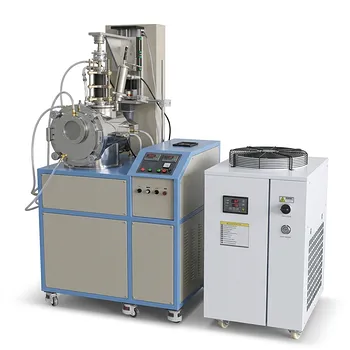
High Temperature Ultrafast Heating Pressing Furnace 2900C Max 100kgf Rapid Thermal Processing System
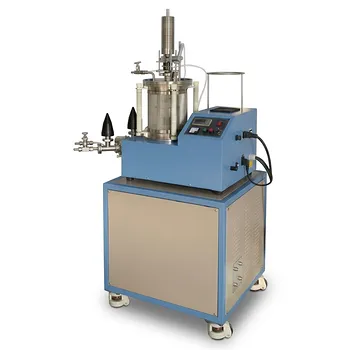
Ultrafast Thermal Pressing Furnace 2900C Max Temperature 200K per Second Heating Rate Vacuum Atmosphere Rapid Processing System
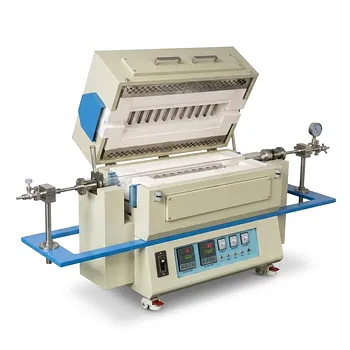
High Temperature Dual Zone Rotating Tube Furnace 1500C Silicon Carbide Heating for Advanced Material Synthesis
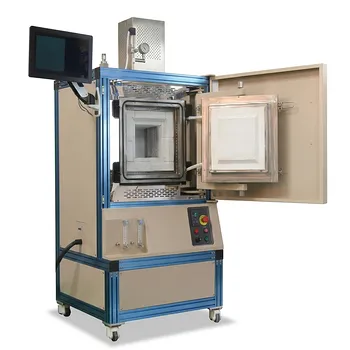
High Temperature Hydrogen Atmosphere Box Furnace 1650C Max Reducing Environment Material Synthesis System 8x8x8 Chamber
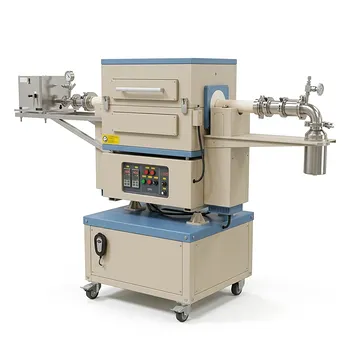
1500C Max Dual Zone Rotary Tube Furnace with 60 mm OD Alumina Tube for High Temperature Material Synthesis

High Temperature 1700C Vertical Tube Furnace for Powder Spherification and Material Sintering
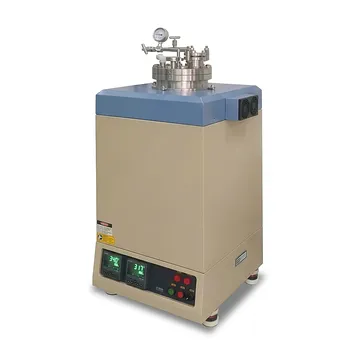
High Temperature 1000C Vacuum Furnace with 8 Inch ID Chamber for Material Sintering and Research Annealing
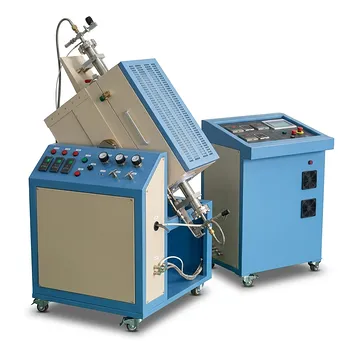
1100C High Pressure Rocking Tube Furnace with 2 Inch Super Alloy Processing Tube for Material Synthesis
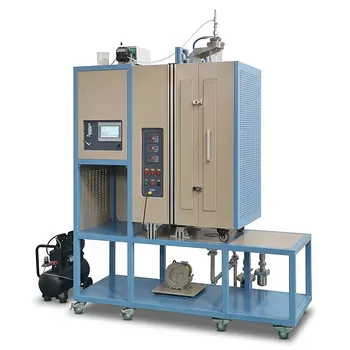
1500C Three Zone Vertical Pyrolysis Furnace for Nanoparticle Synthesis and Advanced Oxide Coating
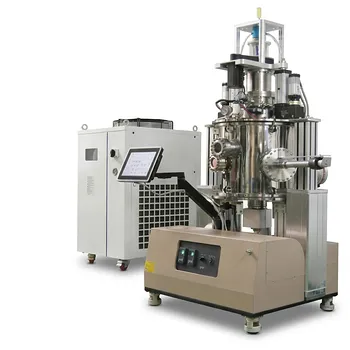
950C Rapid Thermal Processing Furnace for 12 Inch Wafer CSS Coating with Rotating Substrate Holder
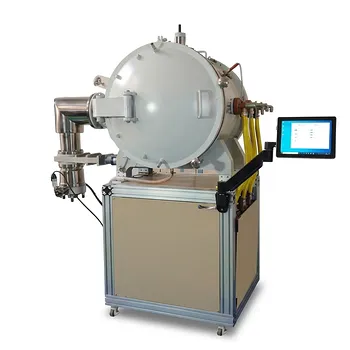
High Temperature Cold Wall Vacuum Furnace for Advanced Material Sintering and Annealing 1600C Heating Area 200x200x300mm
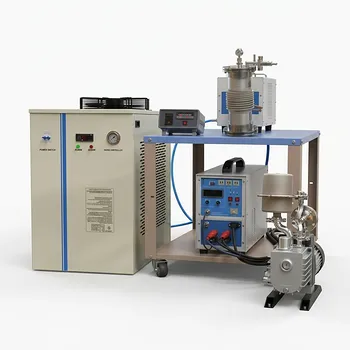
Induction Heating System with Temperature Control for High Temperature Vacuum Sintering and Melting
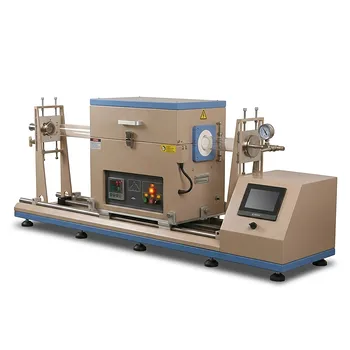
1200C Sliding Tube Furnace for Rapid Thermal Processing and CVD Graphene Growth with 100mm OD Capacity

High Temperature Tube Furnace 1500C with Sliding Flanges and 50mm OD for Rapid Thermal Processing Fast Heating and Cooling
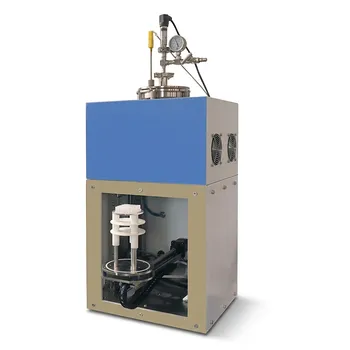
Rapid Thermal Processing RTP Atmosphere Controlled Bottom Loading Furnace 1100C High Throughput 50C per Second Heating Rate
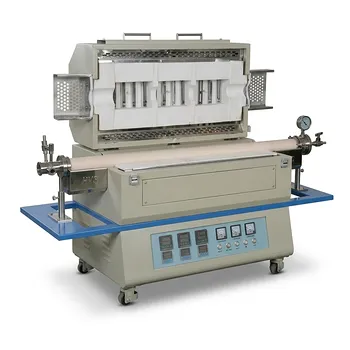
Three Temperature Zone Fast Heating Furnace 1500C Laboratory High Precision Thermal Processing System

High Temperature Automated 5 Inch Tube Furnace for Autonomous Material Research and Advanced Laboratory R&D
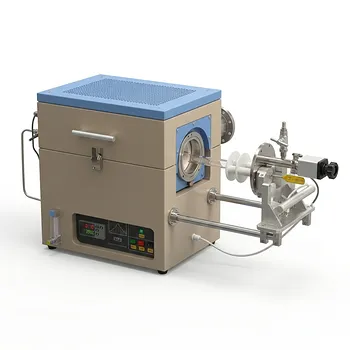
Compact Atmosphere Controlled Rapid Thermal Processing RTP Furnace with 4 Inch ID Quartz Tube 1100C
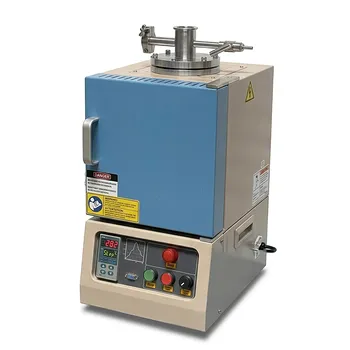
High Temperature Hybrid Muffle and Tube Furnace with Vacuum Capability and PID Control
