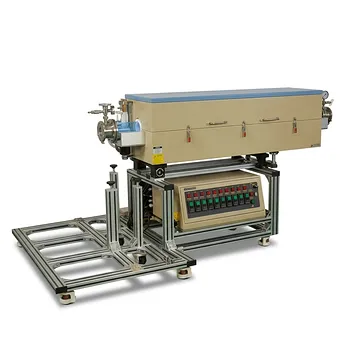
What are the technical advantages of using a tube furnace for activated carbon activation? Optimize Pore Surface Area
Updated 3 months ago
A high-temperature tube furnace is the critical instrument for carbon activation because it offers unparalleled control over the thermal and chemical environment. It enables precise atmosphere management and stable high-heat delivery, which are essential for driving the chemical reactions that transform raw carbon into high-surface-area materials. By facilitating the intense formation of micropores and the removal of volatiles, these furnaces allow for the production of activated carbon with specific surface areas often exceeding 1900 m²/g.
The primary advantage of a tube furnace in carbon activation lies in its ability to create a "sealed micro-environment" where temperature ramps and gas compositions are strictly regulated. This precision ensures that activating agents can etch the carbon skeleton uniformly, maximizing porosity while preventing the loss of material through unwanted oxidation.
Precision Control of the Activation Environment
Atmospheric Integrity and Gas Switching
Tube furnaces provide a sealed condition that allows for the introduction of high-purity inert gases like Nitrogen (N2) or Argon (Ar). This creates a strictly oxygen-free, reducing environment that prevents the carbon material from oxidizing and burning away at high temperatures. Furthermore, the equipment supports stable switching between gases, such as transitioning from N2 to Carbon Dioxide (CO2) to facilitate specific disproportionation reactions.
Program-Controlled Thermal Ramping
Activation requires highly specific heating rates, often ranging from 5 °C/min to 10 °C/min. High-temperature tube furnaces utilize program-controlled systems to maintain these rates and ensure stable holding times at peak temperatures. This level of control is vital for managing the kinetics of the reaction between the carbon precursor and the activating agent.
High-Temperature Stability
The ability to reach and maintain temperatures as high as 800 °C to 1100 °C is essential for full chemical activation. These furnaces provide a constant temperature zone where the thermal energy is distributed evenly across the material. This stability ensures that the reaction proceeds uniformly, leading to consistent material properties across the entire batch.
Driving Complex Chemical Reactions
Facilitating Chemical Etching and Ablation
During the activation phase, agents such as KOH, NaOH, or potassium bicarbonate must react vigorously with the carbon skeleton. The furnace provides the high-heat environment necessary for these agents to etch and ablate the carbon surface. This "chemical drilling" is what creates the intricate network of pores required for high-performance applications.
Removal of Volatiles and Pore Clearing
High-temperature calcination effectively drives off volatile matter trapped within the carbonized material. By clearing these "blocked" areas, the furnace facilitates intense pore formation and structural reorganization. This process is the core step for creating a high-adsorption pore network and improving the overall purity of the carbon.
Precision Micropore Regulation
The combination of specific temperatures and controlled atmospheres allows for the precise regulation of micropore distribution. By adjusting the duration and temperature within the tube furnace, researchers can tailor the pore size to specific needs, such as gas adsorption or energy storage. This allows for the restoration of pore structures even in recycled or waste carbon materials.
Understanding the Trade-offs
Scalability vs. Precision
While tube furnaces offer superior precision for research and small-scale production, they are often limited in throughput compared to industrial rotary kilns. The "batch" nature of most tube furnaces means that scaling up to mass production requires significant engineering adjustments.
Material Constraints and Maintenance
Operating at temperatures near 1100 °C places extreme thermal stress on the furnace tube, whether it is made of quartz or alumina. Additionally, using aggressive activating agents like KOH can lead to tube erosion over time, requiring regular maintenance and replacement of consumables.
Heating Uniformity in Large Loads
In larger tubes, maintaining a perfectly uniform temperature at the center of a dense material load can be challenging. If the material is packed too tightly, the core may not reach the target temperature at the same rate as the exterior, leading to inconsistent activation levels.
Implementing Tube Furnace Technology for Carbon Synthesis
To achieve the best results in carbon activation, your equipment choice and process parameters should align with your specific material goals.
- If your primary focus is Maximum Surface Area: Utilize chemical activators like KOH at temperatures between 750 °C and 850 °C with a slow heating rate to allow for deep, uniform etching.
- If your primary focus is Pore Size Tailoring: Employ a program-controlled atmosphere to switch from inert nitrogen to reactive carbon dioxide during the peak activation phase to precisely regulate micropore growth.
- If your primary focus is Material Recovery (Regeneration): Use lower temperatures and shorter durations with CO2 activation to restore the pore structure of spent carbon without destroying the base material.
The technical precision of a high-temperature tube furnace is the fundamental factor that determines the final adsorption capacity and performance of high-quality activated carbon.
Summary Table:
| Feature | Technical Advantage | Impact on Activated Carbon |
|---|---|---|
| Atmosphere Control | Precise gas switching (N2, Ar, CO2) | Prevents oxidation; facilitates specific etching reactions. |
| Thermal Stability | Constant zones (800°C - 1100°C) | Ensures uniform chemical activation and consistent batch quality. |
| Ramping Precision | Program-controlled (5-10 °C/min) | Manages reaction kinetics for optimal volatile removal. |
| Micropore Regulation | Adjustable duration & temperature | Enables tailoring of pore sizes for specific adsorption needs. |
Maximize Your Material Performance with THERMUNITS
As a leading manufacturer of high-temperature laboratory equipment for material science and industrial R&D, THERMUNITS understands the precision required for advanced carbon synthesis. We offer a comprehensive range of thermal processing solutions designed to help you achieve surface areas exceeding 1900 m²/g.
Our specialized product lineup includes:
- Tube, Muffle, Vacuum, and Atmosphere Furnaces
- CVD/PECVD Systems & Hot Press Furnaces
- Electric Rotary Kilns & Vacuum Induction Melting (VIM) Furnaces
- Dental Furnaces & High-Quality Thermal Elements
Elevate your research and production standards with our industry-leading technology. Contact us today to find the perfect heat treatment solution for your lab!
References
- Kiran Kumar Reddy Reddygunta, Aruna Ivaturi. Sheet-like ZnCo<sub>2</sub>O<sub>4</sub> microspheres and pomelo peel waste-derived activated carbon for high performance solid state asymmetric supercapacitors. DOI: 10.1039/d4se00182f
Mentioned Products
- High Temperature Tube Furnace 1500C with Sliding Flanges and 50mm OD for Rapid Thermal Processing Fast Heating and Cooling
- High Temperature 1700C Tube Furnace with High Vacuum Turbomolecular Pump System and Multi Channel Mass Flow Controller Gas Mixer
- High Temperature 1700C Benchtop Tube Furnace with 5 Inch Heating Zone High Purity Alumina Tube and Vacuum Sealing Flanges
- 1750°C High Temperature Benchtop Vacuum Atmosphere Tube Furnace with Kanthal Super 1800 Heating Elements and 60mm Alumina Processing Tube
- Compact High Temperature 1600C Tube Furnace with 50mm Alumina Tube and Vacuum Flanges for Material Sintering
People Also Ask
- How are high-temperature tube furnaces utilized to repair etching damage? Precision Lattice Restoration Solutions
- What role does a high-temperature tube furnace play in CVD synthesis of silicon nanowires? Master VLS Growth Precision.
- What core conditions does a high-temperature tube furnace provide for rGO aerogels? Mastering Precision Synthesis.
- What role does a high-temperature tube furnace play in the sulfidation heat treatment of CoS@C/MXene nanocomposites? Guide
- How does precision tube furnace control influence CoFe nanoparticle formation? Master Your Bimetallic Synthesis.

Tech Team · ThermUnits
Last updated on Jun 03, 2026
Related Products

High Temperature Tube Furnace 1500C with Sliding Flanges and 50mm OD for Rapid Thermal Processing Fast Heating and Cooling

High Temperature 1700C Tube Furnace with High Vacuum Turbomolecular Pump System and Multi Channel Mass Flow Controller Gas Mixer

High Temperature 1700C Benchtop Tube Furnace with 5 Inch Heating Zone High Purity Alumina Tube and Vacuum Sealing Flanges

1750°C High Temperature Benchtop Vacuum Atmosphere Tube Furnace with Kanthal Super 1800 Heating Elements and 60mm Alumina Processing Tube

Compact High Temperature 1600C Tube Furnace with 50mm Alumina Tube and Vacuum Flanges for Material Sintering
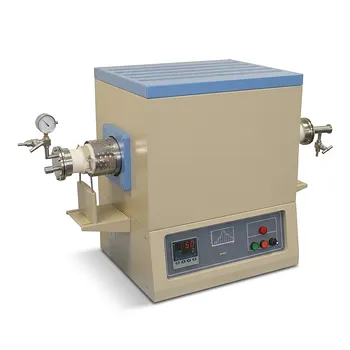
1700C High Temperature Alumina Tube Furnace with 18 Inch Heated Zone and Vacuum Sealing Flanges

1800C High Temperature Compact Vacuum Tube Furnace with 60mm OD Alumina Tube and Kanthal MoSi2 Heating Elements
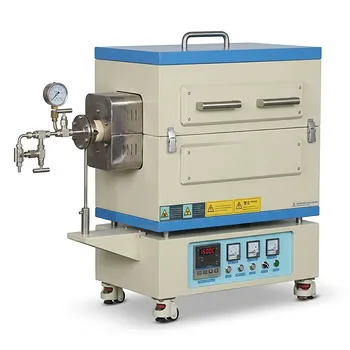
High Temperature Split Tube Furnace 1500C for Material Research Vacuum and Atmosphere Thermal Processing

High Temperature 1700C Vertical Tube Furnace for Powder Spherification and Material Sintering
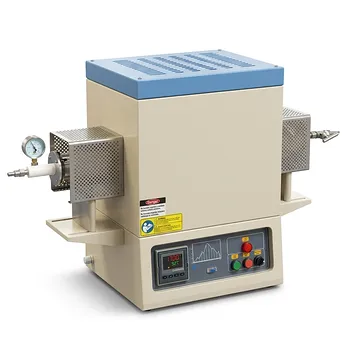
High Temperature Three Zone Tube Furnace 1700C with Alumina Tube and Water Cooled Flanges

High Temperature 1700C Six Zone Split Tube Furnace with Alumina Tube and Water Cooled Flanges
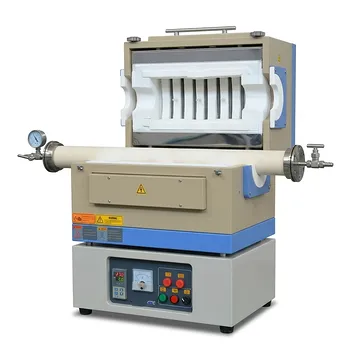
High Temperature 1600C Split Tube Furnace Vacuum Flanges Valves Optional 60mm 80mm Alumina Tube

High Temperature Automated 5 Inch Tube Furnace for Autonomous Material Research and Advanced Laboratory R&D

1100C Tube Furnace with Vacuum Flange and Programmable Temperature Controller for Material Science and Industrial Heat Treatment
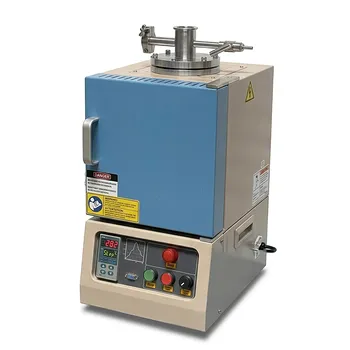
High Temperature Hybrid Muffle and Tube Furnace with Vacuum Capability and PID Control
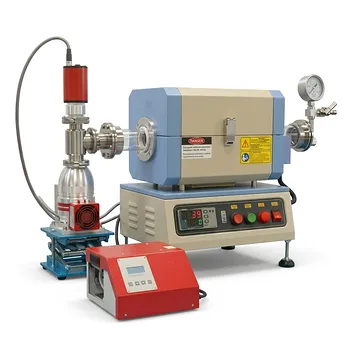
High Vacuum Compact Tube Furnace 1200C with Integrated Turbo Pump System and 8 Inch Heating Zone
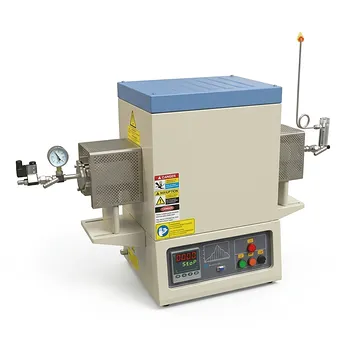
1700C Hydrogen Gas Tube Furnace with 60mm Alumina Process Tube and Integrated Hydrogen Safety Detector
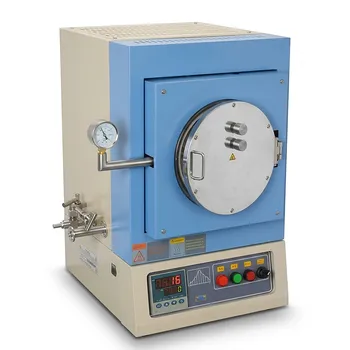
1100°C High Temperature Quartz Chamber Furnace 8 Inch OD with 7.6 Liter Capacity and Vacuum Atmosphere Capability
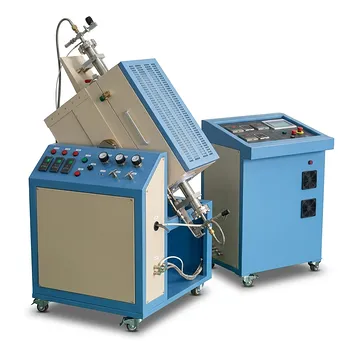
1100C High Pressure Rocking Tube Furnace with 2 Inch Super Alloy Processing Tube for Material Synthesis