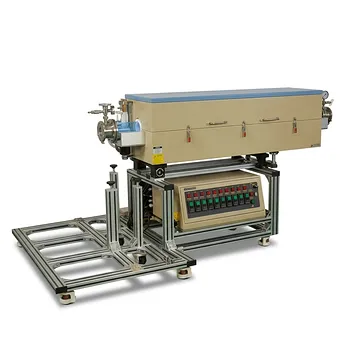
What core functions does a high-temperature tube furnace perform during the preparation of lignin-derived carbon?
Updated 3 months ago
The high-temperature tube furnace serves as the reactive environment for the simultaneous carbonization of lignin and the thermal removal of templates. By providing a controlled nitrogen atmosphere at temperatures typically reaching 1000 °C, the furnace converts organic precursors into a conductive carbon skeleton while gasifying sacrificial templates to create a hierarchical macropore-mesopore structure.
Core Takeaway: The tube furnace acts as a precision reactor that transforms raw lignin into a functional material by balancing chemical carbonization with structural pore-forming through strictly controlled thermal and atmospheric conditions.
Fundamental Thermal Conversion Processes
Facilitating Deoxygenation and Carbonization
The primary role of the furnace is to drive the pyrolysis of lignin and synthetic resins. At high temperatures, oxygen-containing functional groups are removed, a process known as deoxygenation.
This chemical transformation converts the precursor into a stable, conductive carbon skeleton. Without the precise heat of the furnace, the lignin would remain a non-conductive organic polymer rather than a functional electronic material.
Driving Aromatization and Graphitization
The furnace provides the energy necessary for aromatization, where carbon atoms rearrange into hexagonal rings. As the temperature reaches levels like 1000 °C, the degree of graphitization increases.
This structural order is what determines the final electrical conductivity and chemical stability of the biochar. Higher precision in temperature leads to more consistent conductive networks across the material.
Structural Development and Pore Engineering
Thermal Decomposition of Hard Templates
To create "hierarchical" pores, researchers use templates like polystyrene or magnesium carbonate ($MgCO_3$). The tube furnace enables the thermal decomposition and gasification of these hard templates.
As these materials vaporize, they leave behind specific voids or macropores. In some cases, the decomposition of templates like $MgCO_3$ releases $CO_2$, creating a gas-phase exfoliation effect that further develops the internal surface area.
Removal of Soft Templates
The furnace also facilitates the removal of block copolymer soft templates. This occurs through a one-step thermal process that integrates with the carbonization of the lignin.
The result of this synchronized removal is an interconnected macropore-mesopore structure. This hierarchy is essential for applications requiring both high surface area and efficient mass transport of ions or gases.
Environmental and Kinetic Control
Maintaining an Inert Protective Atmosphere
A critical function of the furnace is its sealed structure, which allows for a continuous flow of high-purity nitrogen ($N_2$) or argon. This oxygen-free environment is mandatory to prevent the raw biomass from combusting.
By isolating the carbon, the furnace ensures the reaction remains a pyrolysis (thermal decomposition in the absence of oxygen) rather than simple burning. This preserves the carbon framework and its intricate morphology.
Precision Heating Rate Management
The furnace's control system allows for specific heating rates, such as 5 °C/min or 10 °C/min. This slow ramp-up is vital for the uniform evolution of gases.
Controlling the rate of temperature increase prevents the physical structure from collapsing during gasification. It ensures that the pore distribution remains uniform and the material retains the specific morphology imparted by its templates.
Understanding the Trade-offs and Pitfalls
Localized Overheating vs. Uniformity
In standard stationary tube furnaces, materials near the heating elements may reach higher temperatures than those in the center. This thermal gradient can lead to inconsistent carbonization and uneven pore structures.
Atmosphere Integrity Risks
If the furnace seals are compromised, even trace amounts of oxygen can lead to partial oxidation. This results in a significant loss of carbon yield and can degrade the electrical conductivity of the final hierarchical structure.
Template Residue
If the furnace does not reach or maintain the necessary "isothermal zone" temperature for a sufficient duration, residual template material may remain. This clogs the pores and reduces the effective surface area of the lignin-derived carbon.
Applying This to Your Material Synthesis
Choosing the Right Parameters for Your Goal
- If your primary focus is Maximum Conductivity: Prioritize higher isothermal temperatures (closer to 1000 °C) to maximize the graphitization degree of the carbon skeleton.
- If your primary focus is High Surface Area: Focus on the precise control of the heating rate and the gas-phase exfoliation effects during template decomposition.
- If your primary focus is Material Uniformity: Consider using a rotary tube furnace to ensure all lignin particles maintain continuous and thorough contact with the protective gas.
Proper utilization of the tube furnace transforms lignin from a low-value byproduct into a sophisticated, high-performance porous carbon material.
Summary Table:
| Core Function | Mechanism | Material Outcome |
|---|---|---|
| Carbonization | Deoxygenation & Pyrolysis | Conductive carbon skeleton |
| Aromatization | Structural rearrangement at 1000°C | Enhanced electrical conductivity |
| Template Removal | Thermal decomposition/Gasification | Hierarchical macropores & mesopores |
| Atmosphere Control | Inert gas flow ($N_2$/Argon) | Prevents combustion; ensures purity |
| Kinetic Control | Precise heating rates (5-10°C/min) | Uniform pore distribution & morphology |
Elevate Your Material Research with THERMUNITS
Are you looking to optimize the synthesis of hierarchical porous carbons or advanced bio-materials? THERMUNITS is a leading manufacturer of high-temperature laboratory equipment specifically designed for material science and industrial R&D.
We provide the precision and reliability required for complex thermal processing, offering a comprehensive range of solutions including:
- Tube & Rotary Furnaces (Ideal for uniform carbonization)
- Muffle, Vacuum, & Atmosphere Furnaces
- CVD/PECVD Systems for advanced coating
- Hot Press & Vacuum Induction Melting (VIM) Furnaces
- Dental Furnaces & Electric Rotary Kilns
Whether you are scaling up lignin-derived carbon production or developing next-generation energy storage materials, our thermal elements and heat treatment equipment ensure superior results.
Ready to enhance your lab's capabilities? Contact our engineering experts today to find the perfect furnace solution for your specific research needs.
References
- Mengnan Wang, Maria‐Magdalena Titirici. Enhanced ORR performance with biomass-derived freestanding catalyst layers: advancing mass transport in gas diffusion electrodes. DOI: 10.1039/d4ta03864a
Mentioned Products
- High Temperature Tube Furnace 1500C with Sliding Flanges and 50mm OD for Rapid Thermal Processing Fast Heating and Cooling
- High Temperature 1700C Tube Furnace with High Vacuum Turbomolecular Pump System and Multi Channel Mass Flow Controller Gas Mixer
- High Temperature 1700C Benchtop Tube Furnace with 5 Inch Heating Zone High Purity Alumina Tube and Vacuum Sealing Flanges
- 1750°C High Temperature Benchtop Vacuum Atmosphere Tube Furnace with Kanthal Super 1800 Heating Elements and 60mm Alumina Processing Tube
- Compact High Temperature 1600C Tube Furnace with 50mm Alumina Tube and Vacuum Flanges for Material Sintering
People Also Ask
- How are high-temperature tube furnaces utilized to repair etching damage? Precision Lattice Restoration Solutions
- What role does a high-temperature tube furnace play in the sulfidation heat treatment of CoS@C/MXene nanocomposites? Guide
- What core conditions does a high-temperature tube furnace provide for rGO aerogels? Mastering Precision Synthesis.
- How does precision tube furnace control influence CoFe nanoparticle formation? Master Your Bimetallic Synthesis.
- What role does a high-temperature tube furnace play in CVD synthesis of silicon nanowires? Master VLS Growth Precision.

Tech Team · ThermUnits
Last updated on Jun 03, 2026
Related Products
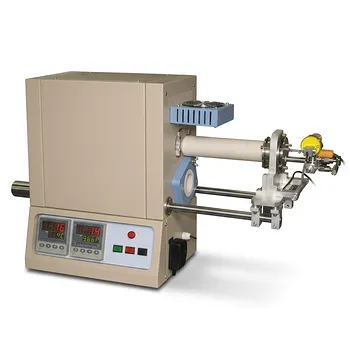
High Temperature Tube Furnace 1500C with Sliding Flanges and 50mm OD for Rapid Thermal Processing Fast Heating and Cooling

High Temperature 1700C Tube Furnace with High Vacuum Turbomolecular Pump System and Multi Channel Mass Flow Controller Gas Mixer
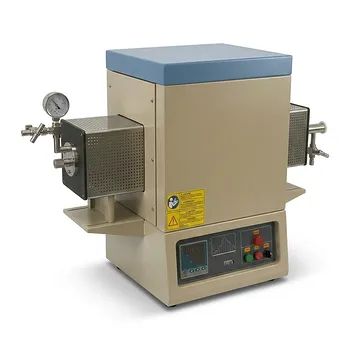
High Temperature 1700C Benchtop Tube Furnace with 5 Inch Heating Zone High Purity Alumina Tube and Vacuum Sealing Flanges
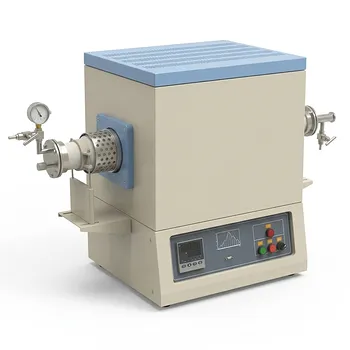
1750°C High Temperature Benchtop Vacuum Atmosphere Tube Furnace with Kanthal Super 1800 Heating Elements and 60mm Alumina Processing Tube

Compact High Temperature 1600C Tube Furnace with 50mm Alumina Tube and Vacuum Flanges for Material Sintering
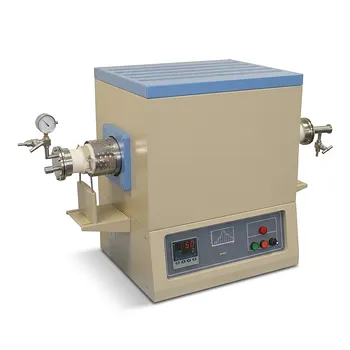
1700C High Temperature Alumina Tube Furnace with 18 Inch Heated Zone and Vacuum Sealing Flanges

1800C High Temperature Compact Vacuum Tube Furnace with 60mm OD Alumina Tube and Kanthal MoSi2 Heating Elements
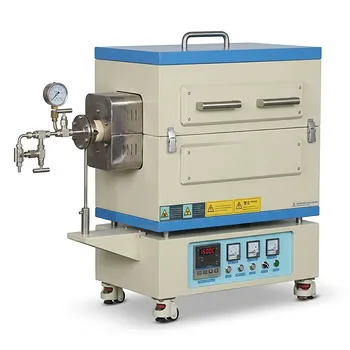
High Temperature Split Tube Furnace 1500C for Material Research Vacuum and Atmosphere Thermal Processing

High Temperature 1700C Vertical Tube Furnace for Powder Spherification and Material Sintering
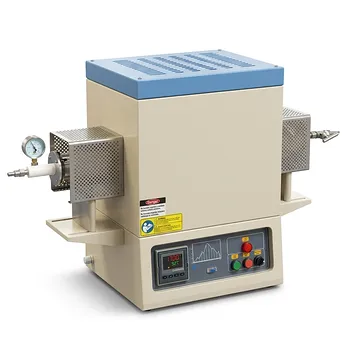
High Temperature Three Zone Tube Furnace 1700C with Alumina Tube and Water Cooled Flanges
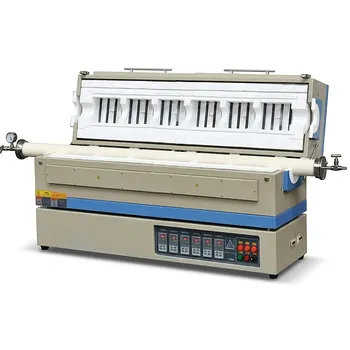
High Temperature 1700C Six Zone Split Tube Furnace with Alumina Tube and Water Cooled Flanges
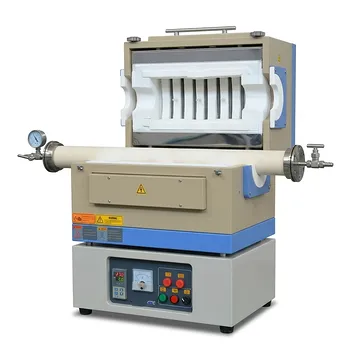
High Temperature 1600C Split Tube Furnace Vacuum Flanges Valves Optional 60mm 80mm Alumina Tube

High Temperature Automated 5 Inch Tube Furnace for Autonomous Material Research and Advanced Laboratory R&D

1100C Tube Furnace with Vacuum Flange and Programmable Temperature Controller for Material Science and Industrial Heat Treatment
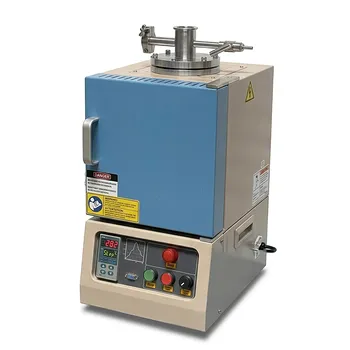
High Temperature Hybrid Muffle and Tube Furnace with Vacuum Capability and PID Control
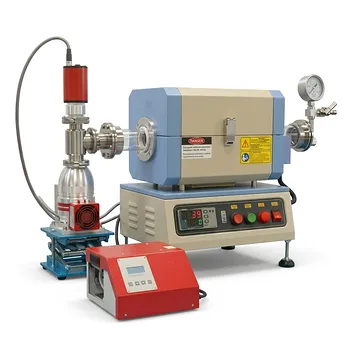
High Vacuum Compact Tube Furnace 1200C with Integrated Turbo Pump System and 8 Inch Heating Zone
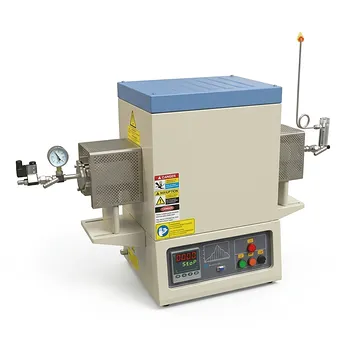
1700C Hydrogen Gas Tube Furnace with 60mm Alumina Process Tube and Integrated Hydrogen Safety Detector
1100°C High Temperature Quartz Chamber Furnace 8 Inch OD with 7.6 Liter Capacity and Vacuum Atmosphere Capability
1100C High Pressure Rocking Tube Furnace with 2 Inch Super Alloy Processing Tube for Material Synthesis