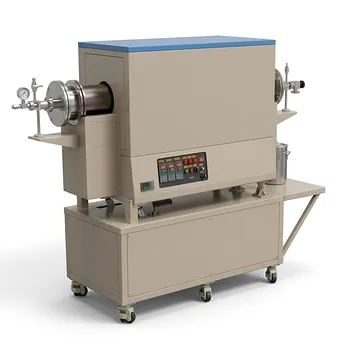
What core functions does an industrial tube atmosphere furnace provide during high-temperature carburizing at 1050 °C? Master Heat Treatment Precision
Updated 3 months ago
For industrial carburizing at 1050 °C, the tube atmosphere furnace serves as a high-precision thermal reactor. It provides two critical functions: strict atmospheric isolation to prevent oxidation and precise programmed temperature control to facilitate the uniform diffusion of carbon and nitrogen atoms. This controlled environment is essential for the melting of salt systems and the subsequent formation of dense reinforcement layers like TiC₀.₃N₀.₇ within an alloy matrix.
Core Takeaway: The industrial tube furnace acts as a hermetically sealed environment that allows for high-temperature chemical reactions without oxidative interference. By balancing nitrogen flow and precise heating rates, it ensures the effective diffusion of atoms to create high-strength, chemically stable surface layers.
Precise Atmospheric Management
Reliable Airtightness and Oxygen Exclusion
At 1050 °C, most metallic and carbonaceous materials react aggressively with oxygen, leading to "oxidative burnout" or unwanted scaling. The furnace’s primary role is to maintain a high-purity nitrogen (N2) flow within a sealed tube to evacuate oxygen completely. This inert environment is the foundation for maintaining the chemical stability of the alloy and any precursors involved.
Stabilization of Nitrogen Flow Protection
Beyond just removing oxygen, the furnace maintains a stable nitrogen pressure and flow rate. This flow is not merely a shield; it is a transport mechanism that can assist in removing volatile byproducts. In carburizing, this stability ensures that the nitrogen concentration remains consistent, which is vital for the formation of carbon-nitride structures.
Advanced Thermal Dynamics
Programmed Temperature and Rate Control
The furnace utilizes sophisticated controllers to manage heating and cooling rates with extreme precision. This isn't just about reaching 1050 °C; it’s about how the material gets there and how it recovers. Controlled cooling is particularly critical to prevent thermal shock and to lock in the desired crystalline structure of the TiC₀.₃N₀.₇ reinforcement layer.
Facilitation of Salt System Melting
In many high-temperature carburizing processes, salt systems are used as media for carbon and nitrogen transfer. The furnace provides the extreme thermal environment required to achieve uniform melting of these salts. Once melted, these salts allow for a more even distribution of reactive elements across the surface of the alloy matrix.
Atomic Diffusion and Structural Evolution
Inducing Carbon and Nitrogen Diffusion
At the core of the 1050 °C process is the kinetic energy provided to carbon and nitrogen atoms. The furnace maintains the temperature high enough to overcome the activation energy required for these atoms to migrate into the alloy matrix. This process transforms the surface of the material into a dense, high-performance composite.
Reorganization of the Carbon Skeleton
Drawing from broader thermal treatment principles, the furnace facilitates deep dehydrogenation and deoxygenation. At 1050 °C, non-carbon elements are eliminated, allowing for the reorganization of carbon chains. This results in a more robust carbon framework that is essential for both structural integrity and chemical resistance.
Understanding the Trade-offs
The Balance of Heating Speed
While rapid heating can increase throughput, it often leads to internal thermal stresses and non-uniform diffusion. Conversely, very slow heating may lead to excessive grain growth in the alloy matrix, potentially reducing the toughness of the final product.
Atmosphere Purity vs. Cost
Maintaining a high-purity nitrogen flow at 1050 °C requires high-quality seals and consistent gas supply. Any leakage or drop in gas purity can lead to immediate oxidation, ruining the batch, but over-engineering the flow rate can lead to unnecessary operational costs.
How to Apply This to Your Project
Making the Right Choice for Your Goal
To achieve the best results with an industrial tube furnace at 1050 °C, you must align your settings with your specific material objectives.
- If your primary focus is Maximum Surface Hardness: Prioritize precise control of the nitrogen/carbon diffusion time at 1050 °C to ensure a dense $TiC_{0.3}N_{0.7}$ layer.
- If your primary focus is Material Purity and Yield: Focus on the furnace's sealing integrity and nitrogen flow stability to prevent any oxidative loss of the carbon sources.
- If your primary focus is Structural Integrity: Utilize a slower, programmed cooling rate to minimize internal stresses during the phase transition of the alloy matrix.
By masterfully controlling both the chemical atmosphere and the thermal trajectory, you transform a simple heating element into a precision tool for advanced molecular engineering.
Summary Table:
| Core Function | Description | Impact on Material |
|---|---|---|
| Atmospheric Isolation | High-purity N2 flow & hermetic sealing | Prevents oxidation and scaling of alloy matrix |
| Thermal Dynamics | Programmed heating/cooling rates | Ensures uniform salt melting and prevents thermal shock |
| Atomic Diffusion | High kinetic energy at 1050 °C | Facilitates dense TiC₀.₃N₀.₇ reinforcement layer formation |
| Structural Evolution | Dehydrogenation & carbon reorganization | Results in high-strength, chemically stable surface layers |
Elevate Your Material Research with THERMUNITS Precision
Is your high-temperature process meeting the rigorous standards of modern material science? THERMUNITS is a leading manufacturer of high-temperature laboratory equipment dedicated to industrial R&D. Our advanced thermal processing solutions are engineered to provide the exact atmospheric purity and thermal stability required for complex processes like 1050 °C carburizing.
Our Comprehensive Product Range Includes:
- Furnaces: Tube, Muffle, Vacuum, Atmosphere, Rotary, and Hot Press Furnaces.
- Advanced Systems: CVD/PECVD systems, Vacuum Induction Melting (VIM), and Dental Furnaces.
- Industrial Kilns: Electric rotary kilns and specialized heat treatment equipment.
- Components: High-quality Thermal Elements for long-lasting performance.
Whether you are developing new alloys or optimizing surface treatments, our expert team is ready to provide tailored equipment solutions that ensure repeatable, high-quality results.
Ready to optimize your thermal trajectory?
Contact THERMUNITS today to discuss your project requirements!
References
- Mohamed A. Ismail, Jiakai Zhang. Carburization-induced surface modification of Ti-6Al-7Nb alloy and its characterization. DOI: 10.1016/j.jallcom.2024.175436
Mentioned Products
- Compact Hybrid Muffle and Tube Furnace for 1000C Controlled Atmosphere Laboratory Material Sintering
- 1650C High Temperature Atmosphere Controlled Box Furnace with 65L Chamber for Advanced Material Sintering and Industrial Heat Treatment
- High Temperature 1800C Atmosphere Tube Furnace for CVD Research and Vacuum Sintering Precision Heat Treatment
- 1700C High Temperature Alumina Tube Furnace with 18 Inch Heated Zone and Vacuum Sealing Flanges
- 1100C Tube Furnace with Vacuum Flange and Programmable Temperature Controller for Material Science and Industrial Heat Treatment
People Also Ask
- Why is an atmosphere-controlled tube furnace required for the pre-sulfidation of NiMo/gamma-Al2O3 catalysts?
- Why is an atmosphere-controlled tube furnace required for 800 °C CNF annealing? Essential for Oxidative Protection.
- Why is an atmosphere-controlled tube furnace required for [email protected]/C preparation? Key for Purity & Structure
- Why is an atmosphere-controlled tube furnace required for single-atom sensor calcination? Ensure Atomic Dispersion.
- What is the function of a controlled atmosphere tube furnace in LiGa alloying? Achieving High-Purity Thermal Synthesis

Tech Team · ThermUnits
Last updated on Jun 02, 2026
Related Products
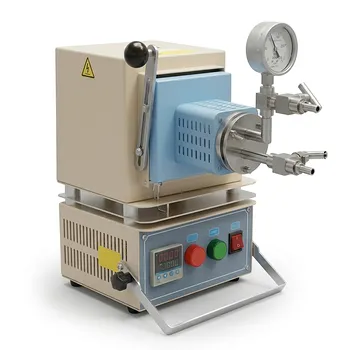
Compact Hybrid Muffle and Tube Furnace for 1000C Controlled Atmosphere Laboratory Material Sintering
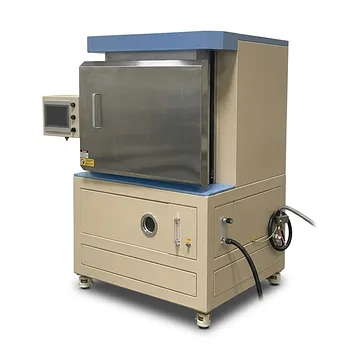
1650C High Temperature Atmosphere Controlled Box Furnace with 65L Chamber for Advanced Material Sintering and Industrial Heat Treatment
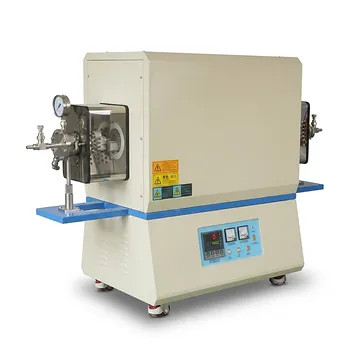
High Temperature 1800C Atmosphere Tube Furnace for CVD Research and Vacuum Sintering Precision Heat Treatment
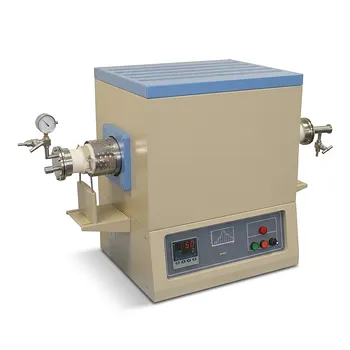
1700C High Temperature Alumina Tube Furnace with 18 Inch Heated Zone and Vacuum Sealing Flanges

1100C Tube Furnace with Vacuum Flange and Programmable Temperature Controller for Material Science and Industrial Heat Treatment

1750°C High Temperature Benchtop Vacuum Atmosphere Tube Furnace with Kanthal Super 1800 Heating Elements and 60mm Alumina Processing Tube

Vertical 1700C Vacuum and Atmosphere Tube Furnace with 80mm Alumina Tube
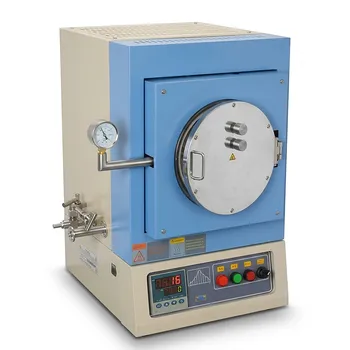
1100°C High Temperature Quartz Chamber Furnace 8 Inch OD with 7.6 Liter Capacity and Vacuum Atmosphere Capability
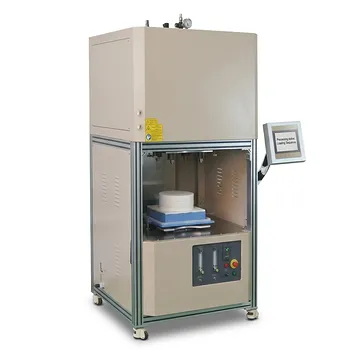
High Temperature Vertical Atmosphere Controlled Furnace with Automatic Bottom Loading and 1700°C Capacity for Advanced Material Research
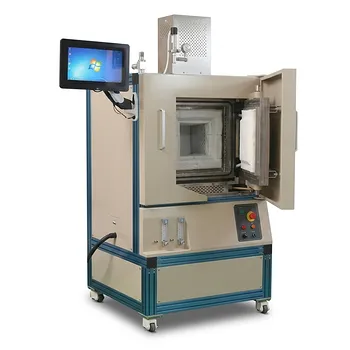
High Temperature Oxygen and Inert Atmosphere Controlled Furnace 8 Liter 1700C Sintering System for Advanced Materials RD
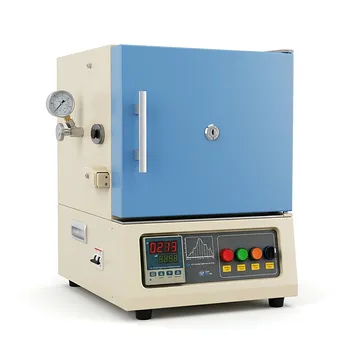
1200C Hybrid Muffle and Tube Furnace for Material Research with Dual Atmosphere Control Quartz Tubes

Compact High Temperature 1600C Tube Furnace with 50mm Alumina Tube and Vacuum Flanges for Material Sintering

High Temperature Tube Furnace 1500C with Sliding Flanges and 50mm OD for Rapid Thermal Processing Fast Heating and Cooling

High Temperature 1700C Tube Furnace with High Vacuum Turbomolecular Pump System and Multi Channel Mass Flow Controller Gas Mixer
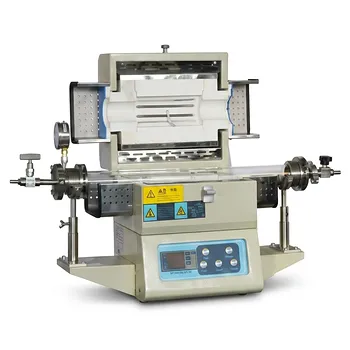
High Temperature 1200C Split Tube Furnace for CVD Research and Vacuum Atmosphere Heat Treatment

1800C High Temperature Compact Vacuum Tube Furnace with 60mm OD Alumina Tube and Kanthal MoSi2 Heating Elements

High Temperature Automated 5 Inch Tube Furnace for Autonomous Material Research and Advanced Laboratory R&D

High Temperature 1700C Benchtop Tube Furnace with 5 Inch Heating Zone High Purity Alumina Tube and Vacuum Sealing Flanges

High Temperature 1700C Vertical Tube Furnace for Powder Spherification and Material Sintering