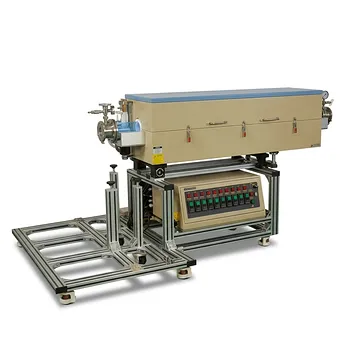
What core physical conditions does a high-temperature tube furnace provide for micro-LED STO? Master Thermal Conversion.
Updated 3 months ago
The Selective Thermal Oxidation (STO) process relies on two critical environmental triggers provided by a high-temperature tube furnace. These furnaces maintain a sustained thermal environment of approximately 900 degrees Celsius while introducing a precisely controlled oxidizing atmosphere (atmospheric oxygen). These specific conditions facilitate a chemical reaction that transforms the unprotected p-GaN and InGaN/GaN layers into insulating oxides, effectively defining pixels without the need for physical material removal.
The high-temperature tube furnace enables a "non-destructive" method of pixel isolation. By replacing traditional physical etching with precise thermal and chemical conversion, it eliminates the structural defects that typically degrade micro-LED performance.
The Mechanics of Thermal Conversion
Activation through Sustained High-Energy States
The primary role of the tube furnace is to provide a stable thermal environment at approximately 900°C. This high temperature is necessary to overcome the activation energy required for the semiconductor layers to react with external gases.
At these temperatures, the atomic mobility within the p-GaN and InGaN/GaN structures increases. This allows the oxygen atoms to penetrate the material and begin the transition from a crystalline semiconductor to an amorphous or polycrystalline insulating oxide.
Facilitating Solid-State Chemical Reactions
The furnace creates a uniform oxidizing atmosphere where atmospheric oxygen serves as the primary reactant. This environment ensures that any unprotected areas of the wafer undergo a deep chemical change.
Unlike physical processes, this chemical synthesis creates a functional insulating barrier. This barrier is essential for confining electrical current to the active pixel area, which is the core goal of micro-LED isolation.
Advantages of Atmospheric Pixel Definition
Elimination of Sidewall Defects
Traditional fabrication uses plasma etching to physically cut through layers to define pixels, often leaving "sidewall damage" that causes current leakage. The tube furnace avoids this by using Selective Thermal Oxidation to "convert" rather than "cut."
Because the material is transformed chemically at the atomic level, the interface between the pixel and the isolation area remains structurally sound. This leads to higher internal quantum efficiency and better overall brightness for the micro-LED.
Precision through Masking and Atmosphere
The tube furnace allows for high-precision definition by reacting only with areas left exposed by a mask. The uniformity of the reaction atmosphere ensures that every pixel on a large wafer receives identical treatment.
This uniformity is critical for mass-producing high-resolution displays. Without the precise regulation of heating rates and soaking times provided by the furnace, the oxide layers could become uneven, leading to inconsistent pixel performance.
Understanding the Trade-offs
The Risk of Thermal Stress
While 900°C is necessary for the STO process, high-temperature heat treatment requires careful management of coefficient of thermal expansion (CTE) mismatches. If the heating or cooling rates are not strictly regulated, the wafer can warp or crack.
Modern tube furnaces mitigate this by using programmable logic controllers to manage ramping and cooling phases. This ensures that the transition to and from 900°C does not compromise the delicate MQW (Multiple Quantum Well) structures.
Oxidation Depth and Timing
Achieving the correct depth of insulation is a balance between soaking time and temperature. If the wafer remains in the oxidizing atmosphere too long, the oxide may encroach upon the intended active pixel area, reducing the effective light-emitting surface.
Conversely, insufficient time or a lower-than-required temperature will result in incomplete insulation. This would allow current to leak between pixels, destroying the contrast and color purity of the micro-LED display.
How to Apply This to Your Project
When utilizing a high-temperature tube furnace for micro-LED fabrication, your parameters must align with your specific device architecture.
- If your primary focus is Maximum Pixel Efficiency: Prioritize the STO method over traditional etching to eliminate sidewall defects and reduce non-radiative recombination.
- If your primary focus is High-Volume Uniformity: Use a furnace with high-precision atmospheric control to ensure consistent oxide thickness across the entire diameter of the wafer.
- If your primary focus is Material Integrity: Implement gradual thermal ramping protocols to protect the InGaN/GaN quantum wells from the stresses of high-heat environments.
By mastering the thermal and atmospheric conditions of the tube furnace, engineers can move beyond the limitations of traditional etching to create more resilient, higher-performance micro-LED displays.
Summary Table:
| Parameter | Required Condition | Impact on Micro-LED Fabrication |
|---|---|---|
| Temperature | Approximately 900°C | Overcomes activation energy; enables atomic mobility and conversion. |
| Atmosphere | Precisely Controlled Oxygen | Facilitates chemical reaction to create insulating oxide layers without etching. |
| Process Control | Managed Ramping & Soaking | Mitigates thermal stress/CTE mismatch and ensures precise oxidation depth. |
| Mechanism | Non-destructive Conversion | Eliminates sidewall defects and prevents current leakage for higher efficiency. |
Advance Your Micro-LED Research with THERMUNITS
As a leading manufacturer of high-temperature laboratory equipment for material science and industrial R&D, THERMUNITS provides the precision thermal environments necessary for advanced processes like Selective Thermal Oxidation. Our high-performance Tube furnaces offer the stable atmospheric and thermal control required to eliminate sidewall defects and maximize pixel efficiency.
Beyond our specialized tube furnaces, we offer a comprehensive range of thermal processing solutions, including:
- Muffle, Vacuum, and Atmosphere Furnaces
- Rotary, Hot Press, and Dental Furnaces
- CVD/PECVD Systems
- Vacuum Induction Melting (VIM) and Electric Rotary Kilns
- High-Quality Thermal Elements
Contact our technical experts today to find the ideal furnace configuration for your micro-LED or semiconductor fabrication project!
References
- Zhiyuan Liu, Xiaohang Li. Etching-free pixel definition in InGaN green micro-LEDs. DOI: 10.1038/s41377-024-01465-7
Mentioned Products
- High Temperature Tube Furnace 1500C with Sliding Flanges and 50mm OD for Rapid Thermal Processing Fast Heating and Cooling
- High Temperature 1700C Tube Furnace with High Vacuum Turbomolecular Pump System and Multi Channel Mass Flow Controller Gas Mixer
- High Temperature 1700C Benchtop Tube Furnace with 5 Inch Heating Zone High Purity Alumina Tube and Vacuum Sealing Flanges
- 1750°C High Temperature Benchtop Vacuum Atmosphere Tube Furnace with Kanthal Super 1800 Heating Elements and 60mm Alumina Processing Tube
- Compact High Temperature 1600C Tube Furnace with 50mm Alumina Tube and Vacuum Flanges for Material Sintering
People Also Ask
- How are high-temperature tube furnaces utilized to repair etching damage? Precision Lattice Restoration Solutions
- What role does a high-temperature tube furnace play in CVD synthesis of silicon nanowires? Master VLS Growth Precision.
- What role does a high-temperature tube furnace play in the sulfidation heat treatment of CoS@C/MXene nanocomposites? Guide
- How does precision tube furnace control influence CoFe nanoparticle formation? Master Your Bimetallic Synthesis.
- What core conditions does a high-temperature tube furnace provide for rGO aerogels? Mastering Precision Synthesis.

Tech Team · ThermUnits
Last updated on Jun 03, 2026
Related Products
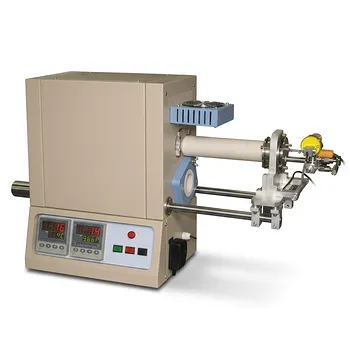
High Temperature Tube Furnace 1500C with Sliding Flanges and 50mm OD for Rapid Thermal Processing Fast Heating and Cooling

High Temperature 1700C Tube Furnace with High Vacuum Turbomolecular Pump System and Multi Channel Mass Flow Controller Gas Mixer

High Temperature 1700C Benchtop Tube Furnace with 5 Inch Heating Zone High Purity Alumina Tube and Vacuum Sealing Flanges

1750°C High Temperature Benchtop Vacuum Atmosphere Tube Furnace with Kanthal Super 1800 Heating Elements and 60mm Alumina Processing Tube

Compact High Temperature 1600C Tube Furnace with 50mm Alumina Tube and Vacuum Flanges for Material Sintering
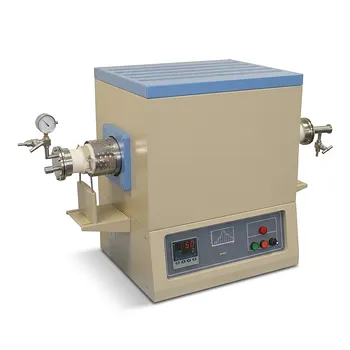
1700C High Temperature Alumina Tube Furnace with 18 Inch Heated Zone and Vacuum Sealing Flanges

1800C High Temperature Compact Vacuum Tube Furnace with 60mm OD Alumina Tube and Kanthal MoSi2 Heating Elements
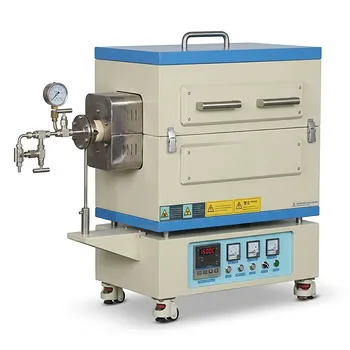
High Temperature Split Tube Furnace 1500C for Material Research Vacuum and Atmosphere Thermal Processing

High Temperature 1700C Vertical Tube Furnace for Powder Spherification and Material Sintering
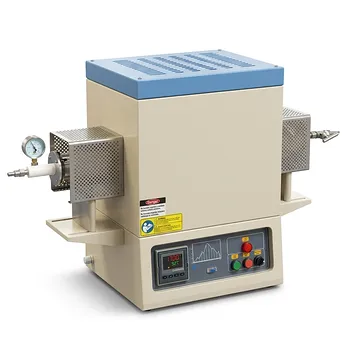
High Temperature Three Zone Tube Furnace 1700C with Alumina Tube and Water Cooled Flanges

High Temperature 1700C Six Zone Split Tube Furnace with Alumina Tube and Water Cooled Flanges
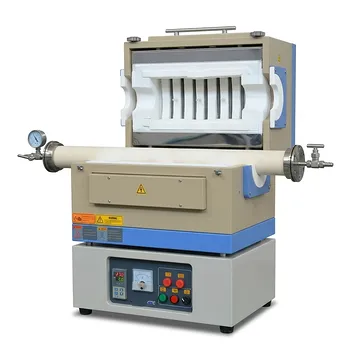
High Temperature 1600C Split Tube Furnace Vacuum Flanges Valves Optional 60mm 80mm Alumina Tube

High Temperature Automated 5 Inch Tube Furnace for Autonomous Material Research and Advanced Laboratory R&D
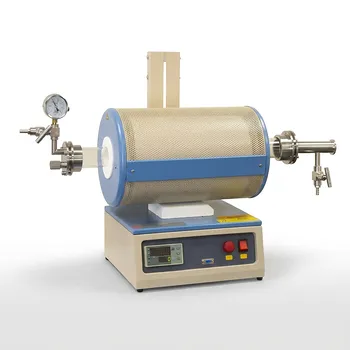
1100C Tube Furnace with Vacuum Flange and Programmable Temperature Controller for Material Science and Industrial Heat Treatment
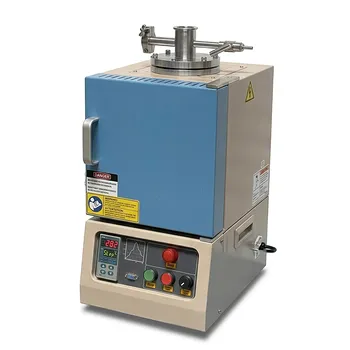
High Temperature Hybrid Muffle and Tube Furnace with Vacuum Capability and PID Control
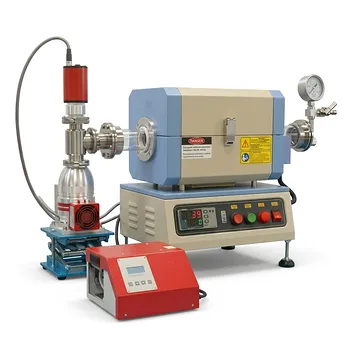
High Vacuum Compact Tube Furnace 1200C with Integrated Turbo Pump System and 8 Inch Heating Zone
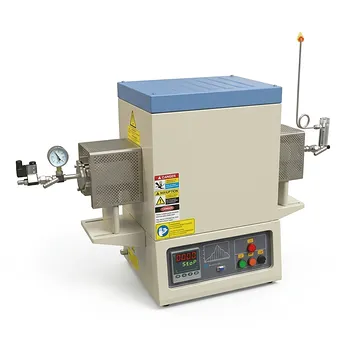
1700C Hydrogen Gas Tube Furnace with 60mm Alumina Process Tube and Integrated Hydrogen Safety Detector
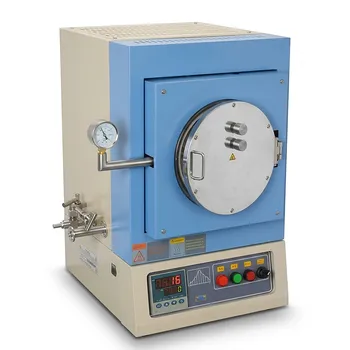
1100°C High Temperature Quartz Chamber Furnace 8 Inch OD with 7.6 Liter Capacity and Vacuum Atmosphere Capability
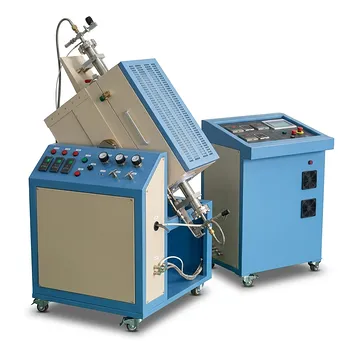
1100C High Pressure Rocking Tube Furnace with 2 Inch Super Alloy Processing Tube for Material Synthesis