What conditions does a tube furnace provide for H2PtCl6 reduction? Optimize Your Platinum Catalyst Synthesis
Updated 3 months ago
To reduce platinum precursors like chloroplatinic acid ($H_2PtCl_6$), a controlled atmosphere tube furnace provides a precise thermal field and a chemically stable reducing environment. Specifically, it delivers a consistent flow of reducing gases (typically a hydrogen/nitrogen or hydrogen/argon mixture) and a programmed heating rate—often targeting 350 °C to 400 °C—to facilitate the in-situ conversion of platinum ions into highly dispersed metallic nanoparticles while strictly inhibiting grain coarsening.
Core Takeaway: A controlled atmosphere tube furnace is essential for synthesizing platinum catalysts because it allows for the simultaneous regulation of chemical reduction kinetics and thermal stabilization, preventing particle aggregation to maximize the active surface area.
The Precise Regulation of Reduction Chemistry
Maintaining a Stable Reducing Atmosphere
The furnace provides a hermetically sealed environment where a hydrogen-rich gas mixture acts as the reducing agent. This stable atmosphere ensures that the reduction of $H_2PtCl_6$ to metallic platinum ($Pt^0$) is chemically complete and uniform across the entire sample batch.
Preventing Oxidation and Contamination
By using high-purity inert carrier gases like argon or nitrogen, the furnace displaces oxygen that would otherwise lead to unwanted oxidation or impurities. This purity is critical for maintaining the specific crystal facets of the platinum nanoparticles, which directly impacts their catalytic efficiency.
Controlling Flow Rates for Kinetic Stability
The ability to strictly regulate the gas flow rate allows for the removal of reaction byproducts, such as chlorine gas or water vapor. Maintaining a consistent flow ensures that the thermodynamic conditions remain stable, preventing localized fluctuations that could disrupt nanoparticle formation.
Thermal Management and Nucleation Kinetics
Programmed Heating to Prevent Coarsening
A critical feature of these furnaces is the slow, programmed temperature increase from room temperature to the target reduction point. This controlled ramp prevents "explosive nucleation," a phenomenon where rapid heating causes metal particles to grow too quickly and unevenly.
Ensuring Thermal Field Uniformity
The horizontal design of the tube furnace creates a precise isothermal environment where the temperature is consistent across the carbon skeleton or substrate. This uniformity is vital for producing a narrow particle size distribution, ensuring that all active centers are of a similar, optimized size.
Inhibiting Particle Migration
At temperatures typically ranging from 300 °C to 500 °C, the furnace provides enough energy for reduction while staying below the threshold for excessive sintering. By keeping the temperature precisely controlled, the furnace inhibits the migration and coarsening of platinum grains, keeping them small and highly dispersed.
Understanding the Trade-offs and Limitations
The Risk of Excessive Sintering
While high temperatures ensure complete reduction, exceeding the optimal thermal window can cause particle sintering. This results in larger platinum clusters and a significant loss of active surface area, which degrades the final catalyst's performance.
Atmosphere Purity vs. Cost
Operating with ultra-high purity gases and precise flow controllers increases the complexity and cost of the process. However, any compromise in atmosphere purity can lead to the formation of platinum oxides or the inclusion of contaminants that poison the catalyst.
Volumetric Contraction Challenges
In some precursors, the reduction process involves a volume contraction as the metal ions transition to a metallic state. If not managed through precise temperature control, this can introduce structural stresses or alter the bonding between the catalyst and its substrate.
How to Apply This to Your Project
Recommendations for Success
- If your primary focus is maximizing active surface area: Prioritize a slow programmed heating rate (e.g., ramping to 400 °C) and high gas flow rates to ensure high dispersion and prevent particle growth.
- If your primary focus is preventing platinum oxidation: Utilize a high-purity argon-hydrogen mixture and ensure the furnace seals are checked to maintain a strictly oxygen-free environment.
- If your primary focus is achieving uniform particle size: Focus on the isothermal stability of the furnace and ensure the sample is placed in the center of the thermal field for maximum uniformity.
By masterfully balancing the thermal energy and gas chemistry within a tube furnace, you can transform volatile precursors into stable, high-performance platinum nanostructures.
Summary Table:
| Critical Factor | Technical Requirement | Impact on Platinum Catalyst |
|---|---|---|
| Atmosphere | Hydrogen-rich ($H_2/Ar$ or $H_2/N_2$) | Ensures complete chemical reduction to metallic $Pt^0$. |
| Thermal Control | Programmed ramp (350°C - 400°C) | Prevents explosive nucleation and particle coarsening. |
| Gas Flow Rate | Constant byproduct removal ($Cl_2$, $H_2O$) | Maintains thermodynamic stability and kinetic uniformity. |
| Thermal Field | High isothermal uniformity | Ensures a narrow particle size distribution and high dispersion. |
| Purity Level | Inert gas displacement (Ar/N2) | Prevents oxidation and preserves catalytic crystal facets. |
Elevate Your Material Research with THERMUNITS Precision
Achieving the perfect platinum dispersion requires more than just heat—it requires total environmental control. THERMUNITS is a leading manufacturer of high-temperature laboratory equipment, providing the material science and industrial R&D sectors with the tools necessary for world-class results.
Whether you are synthesizing catalysts or developing advanced alloys, our comprehensive range of thermal solutions—including Atmosphere Tube Furnaces, Vacuum Furnaces, CVD/PECVD systems, and Rotary Kilns—offers the unmatched isothermal stability and gas management your project demands.
Ready to optimize your reduction process? Contact our engineering team today to find the ideal thermal solution for your lab and ensure the highest active surface area for your metallic nanoparticles.
References
- Mengnan Wang, Maria‐Magdalena Titirici. Enhanced ORR performance with biomass-derived freestanding catalyst layers: advancing mass transport in gas diffusion electrodes. DOI: 10.1039/d4ta03864a
Mentioned Products
- 1200C Sliding Internal Crucible Tube Furnace for Controlled Atmosphere Thin Film Deposition and Material Sublimation Research
- Compact Hybrid Muffle and Tube Furnace for 1000C Controlled Atmosphere Laboratory Material Sintering
- 1700C Compact Hybrid Furnace with Dual Layer Box Sintering and Controlled Atmosphere Alumina Tubes
- Compact Atmosphere Controlled Rapid Thermal Processing RTP Furnace with 4 Inch ID Quartz Tube 1100C
- Compact Vertical Split Quartz Tube Furnace with Stainless Steel Vacuum Flanges for Rapid Thermal Quenching and Controlled Atmosphere Material Processing
People Also Ask
- What are the advantages of a tube atmosphere furnace for CdS thin films? Enhance Crystallinity & Prevent Sulfur Loss
- Why is an atmosphere tube furnace considered core equipment for CVD? Essential for Precision Thin-Film & 2D Materials
- Why is an atmosphere-controlled tube furnace required for the annealing of Sb2S3? Optimize Semi-conductor Performance
- How does a slanted tube furnace contribute to the crystal growth of Sr4Os3O12? Optimize Thermal Fields and Purity
- Why must deposited LiMn2O4 thin films undergo annealing in a digital tube furnace? Unlock High-Performance Cathodes

Tech Team · ThermUnits
Last updated on Jun 03, 2026
Related Products
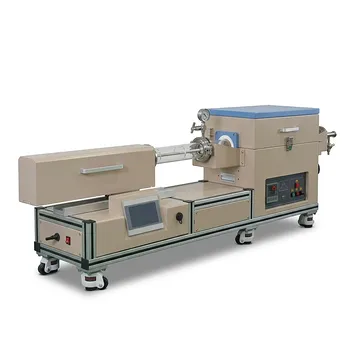
1200C Sliding Internal Crucible Tube Furnace for Controlled Atmosphere Thin Film Deposition and Material Sublimation Research
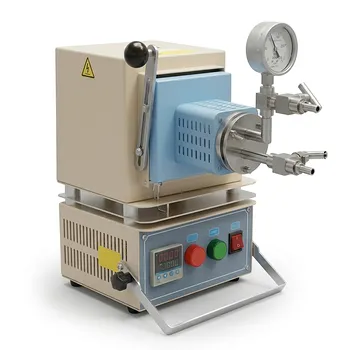
Compact Hybrid Muffle and Tube Furnace for 1000C Controlled Atmosphere Laboratory Material Sintering
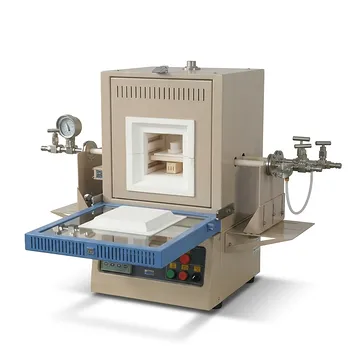
1700C Compact Hybrid Furnace with Dual Layer Box Sintering and Controlled Atmosphere Alumina Tubes
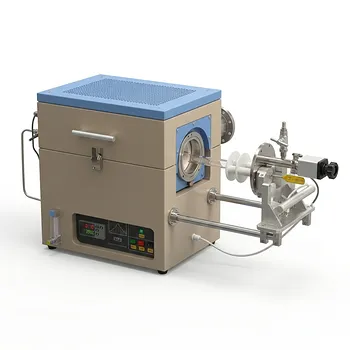
Compact Atmosphere Controlled Rapid Thermal Processing RTP Furnace with 4 Inch ID Quartz Tube 1100C

Compact Vertical Split Quartz Tube Furnace with Stainless Steel Vacuum Flanges for Rapid Thermal Quenching and Controlled Atmosphere Material Processing
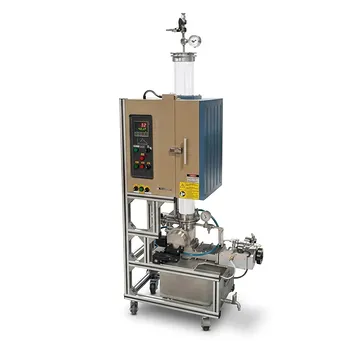
1200C High Temperature Atmosphere Controlled Vertical Quenching Tube Furnace with 4 Inch Quartz Tube
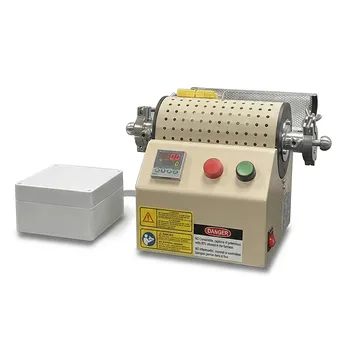
1000C Mini Tube Furnace with 20mm Quartz Tube and Vacuum Flanges for Material Science Research and Controlled Atmosphere Small Sample Processing
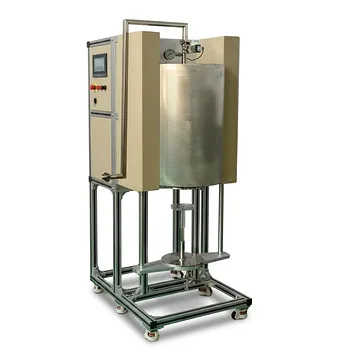
1200°C Atmosphere Controlled Automatic Bottom Loading Furnace with 6 Inch Quartz Tube
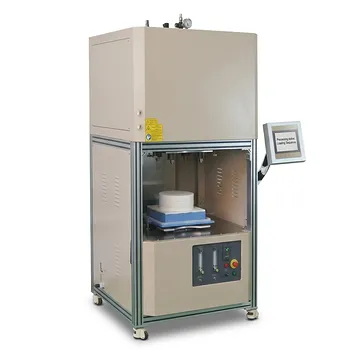
High Temperature Vertical Atmosphere Controlled Furnace with Automatic Bottom Loading and 1700°C Capacity for Advanced Material Research
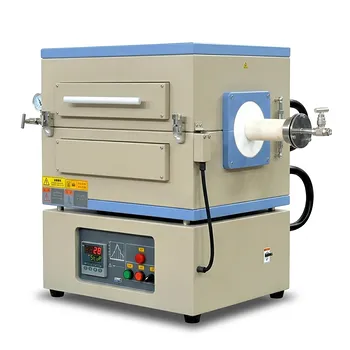
1500°C Split Tube Furnace with Alumina Tube and Vacuum Sealing Flanges for Material Research
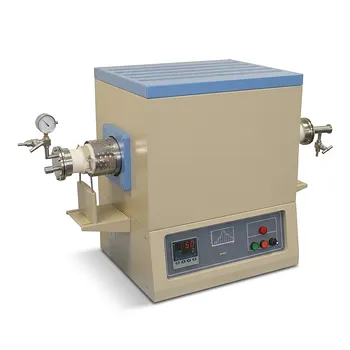
1700C High Temperature Alumina Tube Furnace with 18 Inch Heated Zone and Vacuum Sealing Flanges
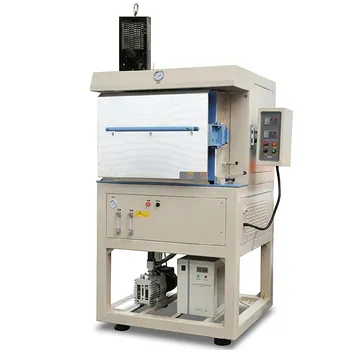
1200C Hydrogen Atmosphere Box Furnace with 5 Heated Sides and 64L Chamber

Vertical 1700C Vacuum and Atmosphere Tube Furnace with 80mm Alumina Tube

High Temperature 1700C Tube Furnace with High Vacuum Turbomolecular Pump System and Multi Channel Mass Flow Controller Gas Mixer
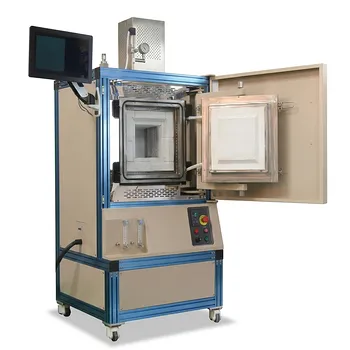
High Temperature Hydrogen Atmosphere Box Furnace 1650C Max Reducing Environment Material Synthesis System 8x8x8 Chamber

High Temperature 1700C Vertical Tube Furnace for Powder Spherification and Material Sintering
High Temperature 1100C Compact Top Loading Vertical Vacuum Tube Furnace for High Vacuum Noble Metal Melting and Material Research

Compact High Temperature 1600C Tube Furnace with 50mm Alumina Tube and Vacuum Flanges for Material Sintering

1200C High Throughput Multi Channel Tube Furnace with 50mm Quartz Tubes for Annealing and Material Phase Diagram Research
