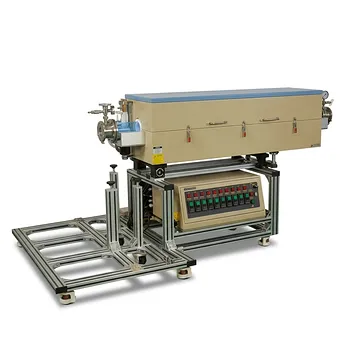
What is the tube furnace's function in biomass carbon anode prep? Master Pyrolysis and Structural Evolution Control.
Updated 3 months ago
The high-temperature tube furnace serves as the reactive heart of biomass-to-carbon conversion. It provides a precisely controlled, oxygen-free environment—typically ranging from 500°C to 1500°C—that facilitates the carbonization and structural evolution of organic precursors into conductive, porous anode materials.
Core Takeaway: A high-temperature tube furnace is essential for executing controlled pyrolysis, a process that removes volatile impurities and reorganizes the biomass carbon skeleton into a stable, conductive framework with high specific surface areas.
The Fundamental Mechanism: Pyrolysis and Carbonization
Driving Thermal Decomposition
The primary role of the tube furnace is to provide the thermal energy required for pyrolysis. By heating biomass precursors (such as coconut shells or pods) to temperatures like 800°C, the furnace drives the removal of volatile substances, including oxygen and hydrogen.
Evolution of the Carbon Skeleton
As the furnace maintains a high-temperature environment, it facilitates carbon isolation and aromatization. This stage is critical because it transforms raw organic matter into a carbonized intermediate, establishing the foundational carbon skeleton needed for electrical conductivity.
Reorganization of Biomass Molecules
At elevated temperatures, the furnace promotes deep dehydrogenation and deoxygenation. This leads to a reorganization of the molecular structure, often forming hard carbon materials characterized by wide graphene layer spacing and amorphous structures ideal for ion storage.
Atmospheric Control and Structural Precision
Preventing Material Combustion
Unlike a standard oven, a tube furnace allows for a stable, oxygen-free atmosphere, usually maintained by a continuous flow of nitrogen or argon. This inert environment is mandatory to ensure the biomass carbonizes rather than combusts, preserving the material's integrity.
Engineering Porosity and Surface Area
The furnace’s ability to precisely regulate heating rates (e.g., 10 K/min) directly impacts the development of pore structures. By controlling the "soak time" at peak temperature, researchers can maximize the specific surface area, which is vital for high-performance supercapacitor and battery anodes.
Functionalization and Doping
High-temperature tube furnaces can facilitate chemical reduction and doping by introducing reactive gases like ammonia. This allows for nitrogen-functionalized doping, which enhances the chemical stability and electronic properties of the resulting carbon cloth or fibers.
Understanding the Trade-offs
Temperature vs. Storage Capacity
While higher temperatures (above 1000°C) increase graphitization and conductivity, they can also lead to the collapse of some micropores. This reduces the surface area available for ion adsorption, creating a delicate balance between electrical speed and total storage capacity.
Energy Consumption and Throughput
The precision of a tube furnace comes at the cost of energy intensity and limited volume. Achieving extremely high temperatures (up to 1600°C) requires significant power, and the narrow tube design limits the amount of biomass that can be processed in a single batch compared to industrial kilns.
Atmospheric Sensitivity
The quality of the final anode is highly dependent on the purity of the inert gas. Even minor oxygen leaks within the tube furnace can cause partial oxidation, which degrades the pore structure and reduces the final carbon yield.
Making the Right Choice for Your Goal
To optimize your biomass-derived carbon materials, align your furnace settings with your specific electrochemical requirements.
- If your primary focus is High Electrical Conductivity: Set the furnace to higher temperatures (1000°C–1500°C) to promote advanced graphitization and carbon skeleton reorganization.
- If your primary focus is High Specific Surface Area: Use a lower, precisely controlled temperature (around 500°C–800°C) to facilitate pore development without causing structural collapse.
- If your primary focus is Sodium-Ion Storage: Prioritize settings that produce hard carbon with wide graphene layer spacing by strictly controlling the dehydrogenation process under a nitrogen atmosphere.
By mastering the thermal and atmospheric variables of the tube furnace, you can transform simple organic waste into high-performance energy storage components.
Summary Table:
| Key Process Factor | Furnace Function | Material Impact |
|---|---|---|
| Controlled Pyrolysis | Drives thermal decomposition (500-1500°C) | Establishes a stable, conductive carbon skeleton |
| Atmospheric Control | Maintains oxygen-free (N2/Ar) environment | Prevents combustion and preserves material yield |
| Structural Precision | Regulates heating rates and soak times | Engineers porosity and maximizes specific surface area |
| Functionalization | Introduces reactive gases (e.g., Ammonia) | Enables nitrogen-doping for enhanced electronic properties |
Optimize Your Material Research with THERMUNITS Precision
As a leading manufacturer of high-temperature laboratory equipment for material science and industrial R&D, THERMUNITS offers the specialized tools needed to transform organic precursors into high-performance energy storage materials. Our comprehensive thermal solutions—including Tube, Muffle, Vacuum, Atmosphere, and Rotary Furnaces, as well as CVD/PECVD systems and Vacuum Induction Melting (VIM) furnaces—provide the atmospheric purity and thermal accuracy required for advanced carbonization and graphitization.
Whether you are scaling up biomass-to-carbon production or exploring complex nitrogen-doping techniques, we deliver the reliability your laboratory demands. Contact us today to discuss your specific heat treatment requirements and discover how our equipment can enhance your research efficiency.
References
- Vandana Molahalli, Gurumurthy Hegde. Zinc oxide/tin oxide nanoflower-based asymmetric supercapacitors for enhanced energy storage devices. DOI: 10.1039/d4ra05340k
Mentioned Products
- High Temperature Tube Furnace 1500C with Sliding Flanges and 50mm OD for Rapid Thermal Processing Fast Heating and Cooling
- High Temperature 1700C Tube Furnace with High Vacuum Turbomolecular Pump System and Multi Channel Mass Flow Controller Gas Mixer
- High Temperature 1700C Benchtop Tube Furnace with 5 Inch Heating Zone High Purity Alumina Tube and Vacuum Sealing Flanges
- 1750°C High Temperature Benchtop Vacuum Atmosphere Tube Furnace with Kanthal Super 1800 Heating Elements and 60mm Alumina Processing Tube
- Compact High Temperature 1600C Tube Furnace with 50mm Alumina Tube and Vacuum Flanges for Material Sintering
People Also Ask
- How are high-temperature tube furnaces utilized to repair etching damage? Precision Lattice Restoration Solutions
- What core conditions does a high-temperature tube furnace provide for rGO aerogels? Mastering Precision Synthesis.
- What role does a high-temperature tube furnace play in CVD synthesis of silicon nanowires? Master VLS Growth Precision.
- How does precision tube furnace control influence CoFe nanoparticle formation? Master Your Bimetallic Synthesis.
- What role does a high-temperature tube furnace play in the sulfidation heat treatment of CoS@C/MXene nanocomposites? Guide

Tech Team · ThermUnits
Last updated on Jun 03, 2026
Related Products
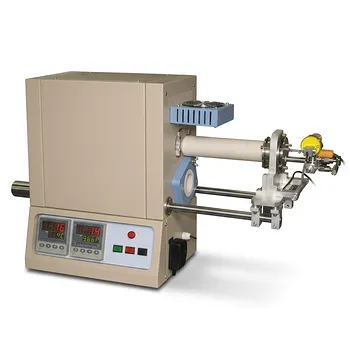
High Temperature Tube Furnace 1500C with Sliding Flanges and 50mm OD for Rapid Thermal Processing Fast Heating and Cooling

High Temperature 1700C Tube Furnace with High Vacuum Turbomolecular Pump System and Multi Channel Mass Flow Controller Gas Mixer

High Temperature 1700C Benchtop Tube Furnace with 5 Inch Heating Zone High Purity Alumina Tube and Vacuum Sealing Flanges
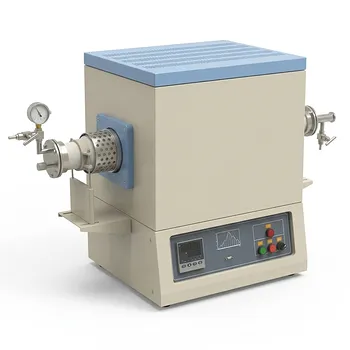
1750°C High Temperature Benchtop Vacuum Atmosphere Tube Furnace with Kanthal Super 1800 Heating Elements and 60mm Alumina Processing Tube

Compact High Temperature 1600C Tube Furnace with 50mm Alumina Tube and Vacuum Flanges for Material Sintering
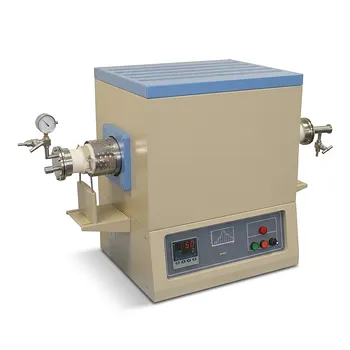
1700C High Temperature Alumina Tube Furnace with 18 Inch Heated Zone and Vacuum Sealing Flanges

1800C High Temperature Compact Vacuum Tube Furnace with 60mm OD Alumina Tube and Kanthal MoSi2 Heating Elements
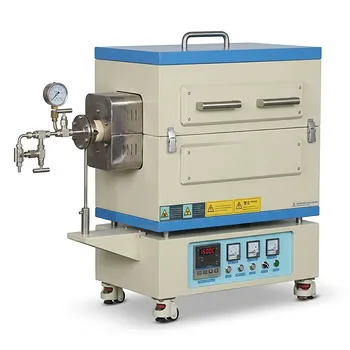
High Temperature Split Tube Furnace 1500C for Material Research Vacuum and Atmosphere Thermal Processing

High Temperature 1700C Vertical Tube Furnace for Powder Spherification and Material Sintering
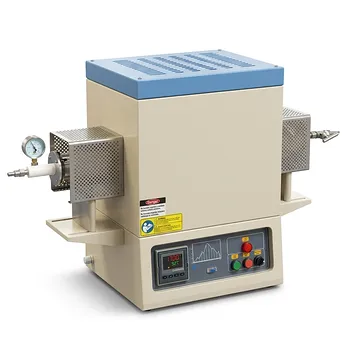
High Temperature Three Zone Tube Furnace 1700C with Alumina Tube and Water Cooled Flanges

High Temperature 1700C Six Zone Split Tube Furnace with Alumina Tube and Water Cooled Flanges
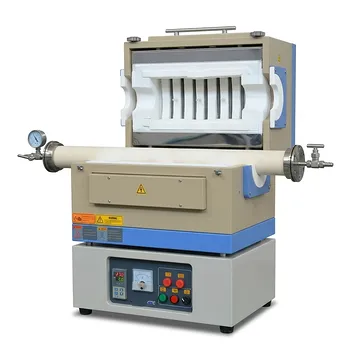
High Temperature 1600C Split Tube Furnace Vacuum Flanges Valves Optional 60mm 80mm Alumina Tube

High Temperature Automated 5 Inch Tube Furnace for Autonomous Material Research and Advanced Laboratory R&D

1100C Tube Furnace with Vacuum Flange and Programmable Temperature Controller for Material Science and Industrial Heat Treatment
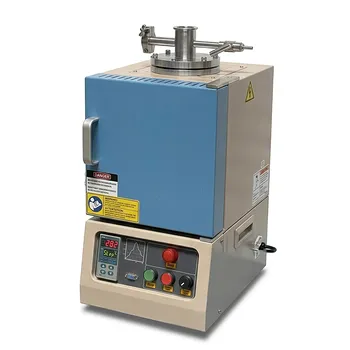
High Temperature Hybrid Muffle and Tube Furnace with Vacuum Capability and PID Control
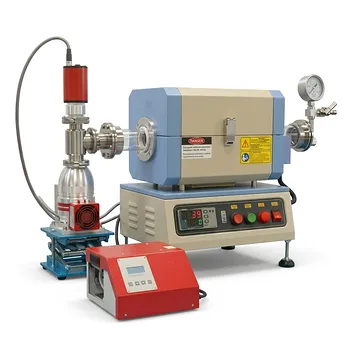
High Vacuum Compact Tube Furnace 1200C with Integrated Turbo Pump System and 8 Inch Heating Zone

1700C Hydrogen Gas Tube Furnace with 60mm Alumina Process Tube and Integrated Hydrogen Safety Detector
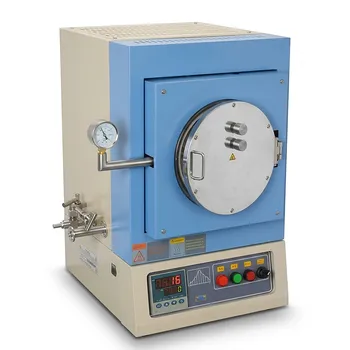
1100°C High Temperature Quartz Chamber Furnace 8 Inch OD with 7.6 Liter Capacity and Vacuum Atmosphere Capability
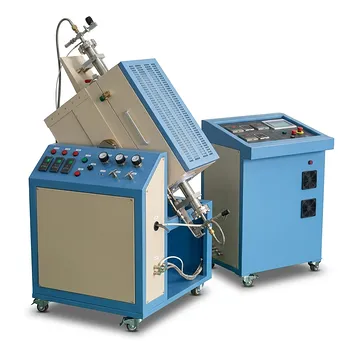
1100C High Pressure Rocking Tube Furnace with 2 Inch Super Alloy Processing Tube for Material Synthesis