What critical process conditions does a high-temperature tube furnace provide? Mastering Catalyst Activation Success
Updated 3 months ago
The activation of Nickel-Cerium-Aluminum (Ni-Ce-Al) mixed oxide catalysts relies on the precise synergy of thermal stability and atmospheric control provided by a high-temperature tube furnace. Specifically, the furnace maintains a stable environment of approximately 600°C under a controlled reducing atmosphere, typically consisting of 5% H₂ balanced with Argon (Ar). This specific combination is required to transform the precursor material into a catalytically active state.
Core Takeaway: A high-temperature tube furnace serves as the reactive environment where controlled reduction and thermal energy trigger the formation of metallic nickel sites and oxygen vacancies, both of which are essential for carbon dioxide adsorption and hydrogen dissociation.
Atmospheric Control and Chemical Reduction
The Role of the 5% H₂/Ar Reducing Atmosphere
The tube furnace acts as a sealed vessel to exclude oxygen and introduce a specific reducing gas mixture. This controlled environment is necessary to drive the chemical transition of the metal species without causing uncontrolled combustion or unwanted oxidation.
Conversion of Nickel Oxide to Metallic Nickel (Ni⁰)
Under the influence of the hydrogen-rich atmosphere, the nickel oxide (NiO) within the catalyst precursor is reduced to metallic nickel (Ni⁰). These metallic sites serve as the primary active centers for subsequent chemical reactions, particularly for the dissociation of hydrogen molecules.
Thermal Stability and Structural Engineering
Maintaining the 600°C Temperature Threshold
The furnace provides a stable thermal environment at approximately 600°C, which provides the necessary activation energy for the reduction process. This precise temperature control ensures that the reaction proceeds completely without exceeding the limits that would lead to material degradation.
Generation of Oxygen Vacancies (OVDs)
Beyond nickel reduction, the high-temperature environment induces the formation of oxygen vacancies (OVDs) on the surface of the ceria (Cerium Oxide). These structural defects are critical because they act as specialized sites for carbon dioxide (CO₂) adsorption, enhancing the catalyst's overall efficiency.
Preventing Particle Agglomeration
A high-quality tube furnace ensures thermal uniformity throughout the heating zone. This uniformity is vital for maintaining the dispersion of the active components, ensuring that the nickel and ceria do not aggregate into larger, less effective particles during the heating cycle.
Understanding the Trade-offs and Risks
Balancing Activation vs. Sintering
While high temperatures are required for activation, excessive heat can lead to sintering, where the small, active nanoparticles merge into larger clusters. This reduces the total surface area and effectively kills the catalyst's performance; therefore, strict adherence to the 600°C limit is mandatory.
Atmosphere Precision and Safety
Using a 5% H₂/Ar mix is a calculated safety trade-off. While pure hydrogen would provide a stronger reducing environment, the diluted 5% mixture remains below the flammability limit in air, providing a safer operating margin in a laboratory or industrial tube furnace setting.
How to Optimize Your Activation Process
To achieve the best results when activating mixed oxide catalysts, consider the following technical priorities:
- If your primary focus is maximizing active sites: Ensure the furnace atmosphere is purged of all residual oxygen before reaching the 600°C setpoint to prevent premature oxidation.
- If your primary focus is catalyst longevity: Use programmable temperature ramping to reach 600°C gradually, which helps maintain the structural integrity of the ceria-aluminum framework.
- If your primary focus is process repeatability: Calibrate the furnace thermocouples regularly to ensure the "600°C" reading reflects the actual temperature of the catalyst bed inside the tube.
The precise regulation of the thermal and chemical environment within a tube furnace is the fundamental requirement for transforming inert mixed oxides into high-performance catalysts.
Summary Table:
| Process Condition | Parameter | Key Functional Role |
|---|---|---|
| Temperature | ~600°C | Provides activation energy while preventing particle sintering |
| Atmosphere | 5% H₂ / Ar | Facilitates chemical reduction of NiO to metallic Ni⁰ |
| Structural Control | Oxygen Vacancies | Generates OVDs on ceria for enhanced CO₂ adsorption |
| Thermal Uniformity | Stable Zone | Maintains active site dispersion and prevents agglomeration |
Elevate Your Material Research with THERMUNITS Precision
As a global leader in high-temperature laboratory equipment, THERMUNITS understands that catalyst activation requires absolute control. We provide researchers in material science and industrial R&D with a comprehensive range of thermal solutions, including high-precision Tube Furnaces, Atmosphere Furnaces, and Vacuum Furnaces designed to maintain stable chemical environments.
Whether you need CVD/PECVD systems, Rotary Kilns, or Vacuum Induction Melting (VIM) equipment, our technology ensures your Ni-Ce-Al mixed oxides achieve peak performance through uniform heating and advanced atmospheric management.
Ready to optimize your thermal processes? Contact our technical experts today to find your ideal furnace solution!
References
- Deepa Choudhry, Chin Li Cheung. Plasma‐Assisted Synthesis of Methanol Through Hydrogenation of Carbon Dioxide With Non‐Noble Metal Mixed Oxide Catalysts. DOI: 10.1002/cssc.202400776
Mentioned Products
- 1750°C High Temperature Benchtop Vacuum Atmosphere Tube Furnace with Kanthal Super 1800 Heating Elements and 60mm Alumina Processing Tube
- Vertical Hybrid High Temperature Furnace 1500C Alumina Tube SOFC Fuel Cell Testing Laboratory Heat Treatment Research Equipment
- Compact High Temperature 1600C Tube Furnace with 50mm Alumina Tube and Vacuum Flanges for Material Sintering
- High Temperature 1700C Tube Furnace with 4 Inch OD Alumina Tube and Vacuum Sealing Flanges
- High Temperature 1700C Vertical Tube Furnace for Powder Spherification and Material Sintering
People Also Ask
- What core functions does a high-temperature vacuum tube furnace provide? Optimize np-CuSn Sintering & Joint Integrity
- What is the role of a high-temperature tube furnace in the calcination process of ZnO/In2O3 nanocomposites?
- What role does a high-temperature tube furnace play in the sulfidation heat treatment of CoS@C/MXene nanocomposites? Guide
- Why is a high-temperature tube furnace required for CuAlO2 heat treatment? Master Phase Transformation Today
- What role does a high-temperature tube furnace play in executing nitrogen absorption kinetic experiments? Expert Insights

Tech Team · ThermUnits
Last updated on Jun 03, 2026
Related Products

1750°C High Temperature Benchtop Vacuum Atmosphere Tube Furnace with Kanthal Super 1800 Heating Elements and 60mm Alumina Processing Tube
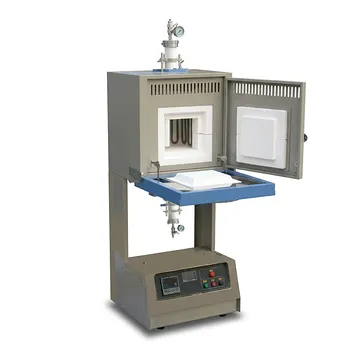
Vertical Hybrid High Temperature Furnace 1500C Alumina Tube SOFC Fuel Cell Testing Laboratory Heat Treatment Research Equipment

Compact High Temperature 1600C Tube Furnace with 50mm Alumina Tube and Vacuum Flanges for Material Sintering
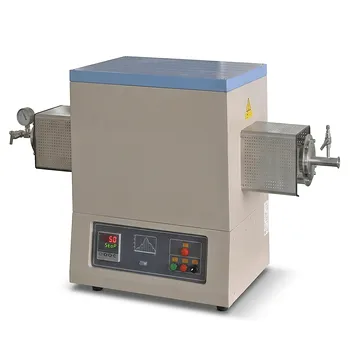
High Temperature 1700C Tube Furnace with 4 Inch OD Alumina Tube and Vacuum Sealing Flanges

High Temperature 1700C Vertical Tube Furnace for Powder Spherification and Material Sintering
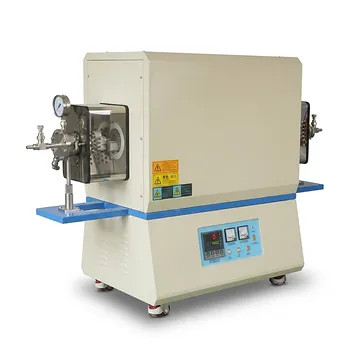
High Temperature 1800C Atmosphere Tube Furnace for CVD Research and Vacuum Sintering Precision Heat Treatment
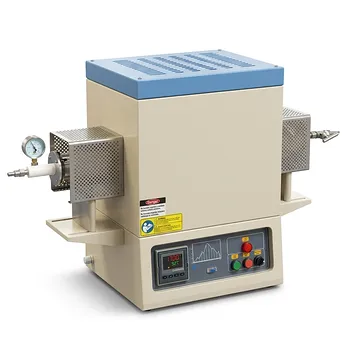
High Temperature Three Zone Tube Furnace 1700C with Alumina Tube and Water Cooled Flanges

1800C High Temperature Compact Vacuum Tube Furnace with 60mm OD Alumina Tube and Kanthal MoSi2 Heating Elements
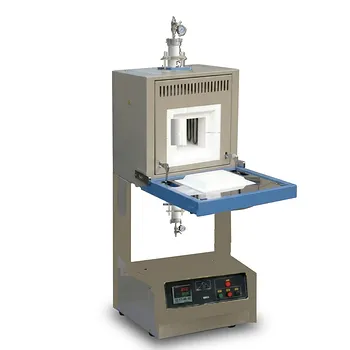
High Temperature Vertical Hybrid Furnace with Alumina Tube and SiC Heating for SOFC Coin Cell Testing and Atmosphere Processing
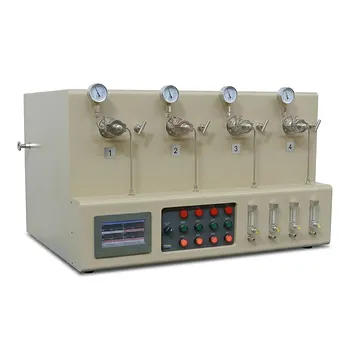
High Temperature 1700C 4 Channel Tube Furnace 1 Inch Alumina Tube for Hi-Throughput Annealing

High Temperature 1700C Benchtop Tube Furnace with 5 Inch Heating Zone High Purity Alumina Tube and Vacuum Sealing Flanges

1700C High Temperature Alumina Tube Furnace with 18 Inch Heated Zone and Vacuum Sealing Flanges

High Temperature Tube Furnace 1500C with Sliding Flanges and 50mm OD for Rapid Thermal Processing Fast Heating and Cooling
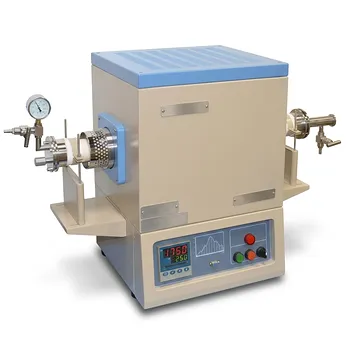
High Temperature Compact Vacuum Tube Furnace 1750C Max 60mm OD Alumina Tube
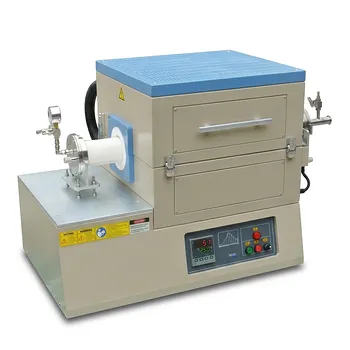
High Temperature 1700C Split Tube Furnace with Vacuum Flanges Valves and 60mm Alumina Tube

1700C Hydrogen Gas Tube Furnace with 60mm Alumina Process Tube and Integrated Hydrogen Safety Detector
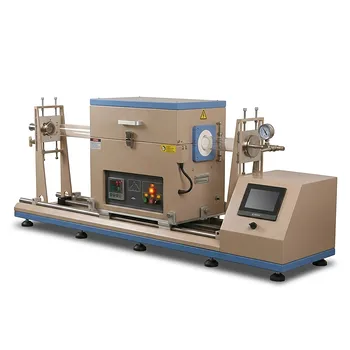
1200C Sliding Tube Furnace for Rapid Thermal Processing and CVD Graphene Growth with 100mm OD Capacity
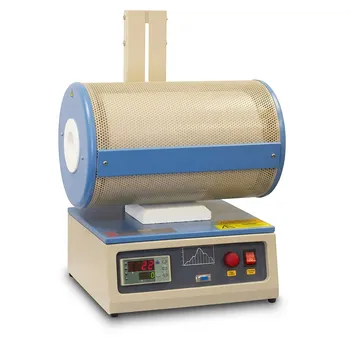
Multi Position Tube Furnace 1100C for Laboratory Material Research and Advanced Industrial Thermal Processing

High Temperature 1700C Tube Furnace with High Vacuum Turbomolecular Pump System and Multi Channel Mass Flow Controller Gas Mixer
