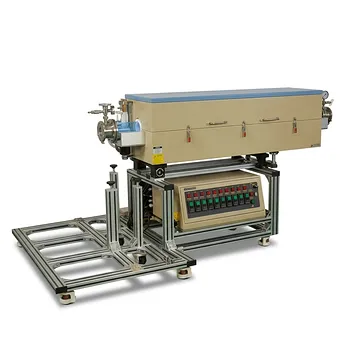
What critical process conditions does a high-temperature tube furnace provide for CVD? Precision ZnO Synthesis Guide
Updated 3 months ago
In the synthesis of Co-Mn co-doped ZnO via chemical vapor deposition (CVD), a high-temperature tube furnace provides a precisely controlled thermal environment, established at 760°C for 120 minutes. This specific environment facilitates the essential stages of gasification, chemical reaction, and subsequent deposition of solid precursors onto a substrate. By maintaining these conditions, the furnace ensures that cobalt and manganese atoms are successfully integrated into the ZnO crystal lattice to form complex, hierarchical nanostructures.
Core Takeaway: The high-temperature tube furnace acts as the primary reactor that enables co-doping and nanostructure growth by precisely regulating thermal energy, chemical vapor transport, and reaction kinetics. It transforms solid precursors into a dopant-rich crystal lattice through stable, high-heat dwell times.
Thermal Field and Kinetic Control
Rapid Heating and Precise Dwell Time
The furnace is responsible for rapidly escalating the temperature to the critical reaction point of 760°C. Maintaining this temperature for a dwell time of 120 minutes ensures that the reaction reaches a steady state, allowing for complete phase transformation.
Facilitating Gasification and Deposition
High-temperature stability is required to convert solid precursors into their vapor phase. Once gasified, the furnace provides the energy necessary for these vapors to react and deposit onto the substrate surface.
Managing Temperature Gradients
The furnace creates a specific thermal gradient within the tube. These variations in temperature across different zones are essential for directing the flow of vapor and controlling the rate at which the nanostructures grow and organize into hierarchical patterns.
Atmosphere and Material Integration
Controlled Reaction Environment
The furnace chamber provides a controlled atmosphere that prevents unwanted oxidation or contamination. This environment is critical for ensuring that the chemical precursors react only with the intended materials, preserving the purity of the ZnO structure.
Cobalt and Manganese Lattice Integration
The thermal energy provided by the furnace is the catalyst for doping. It allows cobalt (Co) and manganese (Mn) atoms to overcome energy barriers and integrate directly into the ZnO crystal lattice, rather than simply coating the surface.
Formation of Hierarchical Nanostructures
The synergy between the temperature gradients and the atmospheric pressure within the furnace dictates the final morphology. By regulating these process conditions, the furnace enables the growth of advanced "hierarchical" shapes that increase the surface area and functional properties of the material.
Understanding the Trade-offs
Temperature Sensitivity and Uniformity
If the temperature deviates even slightly from the 760°C setpoint, the doping concentration may become uneven. Excessively high temperatures can lead to unwanted grain growth or precursor evaporation that is too rapid to control, while lower temperatures may fail to activate the co-doping process.
Atmosphere and Flow Rate Risks
While the furnace controls the environment, an unstable carrier gas flow can disrupt the thermal equilibrium. If the gas velocity is inconsistent, it can lead to non-uniform deposition thicknesses across the substrate, compromising the continuity of the synthesized film.
Contamination and Precursor Purity
High-temperature environments are highly susceptible to cross-contamination from the furnace walls or residual materials. Regular cleaning and high-vacuum cycles are often necessary to ensure that the hierarchical nanostructures remain free of organic impurities and volatile components.
How to Apply This to Your Process
When configuring your high-temperature tube furnace for Co-Mn co-doped ZnO synthesis, tailor your parameters based on your specific material requirements:
- If your primary focus is lattice doping accuracy: Prioritize a stable dwell time and high-precision temperature sensors to ensure Co and Mn atoms integrate uniformly without forming secondary phases.
- If your primary focus is nanostructure morphology: Fine-tune the temperature gradients and the positioning of the substrate within the tube to maximize the growth of hierarchical structures.
- If your primary focus is crystal purity: Ensure a strict controlled atmosphere and utilize a slow heating rate (e.g., 5°C per minute) to facilitate the thorough removal of organic impurities.
Successful synthesis depends on viewing the tube furnace not just as a heater, but as a precision instrument for governing the thermodynamics of crystal growth.
Summary Table:
| Process Parameter | Optimal Condition | Impact on Co-Mn ZnO Synthesis |
|---|---|---|
| Reaction Temperature | 760°C | Enables precursor gasification and lattice integration |
| Dwell Time | 120 Minutes | Ensures steady-state reaction and complete phase transformation |
| Thermal Gradient | Precision Zoning | Directs vapor flow and controls hierarchical growth |
| Atmosphere Control | Controlled/Inert | Prevents oxidation and ensures high crystal purity |
Elevate Your Material Research with THERMUNITS Precision
Are you looking to achieve precise lattice integration and perfect hierarchical nanostructures in your CVD processes? THERMUNITS is a leading manufacturer of high-temperature laboratory equipment designed specifically for material science and industrial R&D. We provide the thermal stability and atmospheric control necessary for sensitive synthesis like Co-Mn co-doped ZnO.
Our comprehensive range of thermal processing solutions includes:
- Furnaces: Tube, Muffle, Vacuum, Atmosphere, Rotary, and Hot Press Furnaces.
- Specialized Systems: CVD/PECVD systems, Vacuum Induction Melting (VIM) furnaces, and Dental Furnaces.
- Components: High-quality Thermal Elements and electric rotary kilns.
Contact our experts today to find the perfect heat treatment solution for your laboratory and experience the THERMUNITS advantage in precision engineering.
References
- Yuwei Qu, Jun Zhang. Bimetallic Co–Mn catalysts for synergistic enhancement of VOC gas-sensing performance of ZnO hierarchical nanostructures. DOI: 10.1039/d4ra00553h
Mentioned Products
- High Temperature Tube Furnace 1500C with Sliding Flanges and 50mm OD for Rapid Thermal Processing Fast Heating and Cooling
- High Temperature 1700C Tube Furnace with High Vacuum Turbomolecular Pump System and Multi Channel Mass Flow Controller Gas Mixer
- High Temperature 1700C Benchtop Tube Furnace with 5 Inch Heating Zone High Purity Alumina Tube and Vacuum Sealing Flanges
- 1750°C High Temperature Benchtop Vacuum Atmosphere Tube Furnace with Kanthal Super 1800 Heating Elements and 60mm Alumina Processing Tube
- Compact High Temperature 1600C Tube Furnace with 50mm Alumina Tube and Vacuum Flanges for Material Sintering
People Also Ask
- How are high-temperature tube furnaces utilized to repair etching damage? Precision Lattice Restoration Solutions
- What core conditions does a high-temperature tube furnace provide for rGO aerogels? Mastering Precision Synthesis.
- What role does a high-temperature tube furnace play in CVD synthesis of silicon nanowires? Master VLS Growth Precision.
- How does precision tube furnace control influence CoFe nanoparticle formation? Master Your Bimetallic Synthesis.
- What role does a high-temperature tube furnace play in the sulfidation heat treatment of CoS@C/MXene nanocomposites? Guide

Tech Team · ThermUnits
Last updated on Jun 02, 2026
Related Products
High Temperature Tube Furnace 1500C with Sliding Flanges and 50mm OD for Rapid Thermal Processing Fast Heating and Cooling

High Temperature 1700C Tube Furnace with High Vacuum Turbomolecular Pump System and Multi Channel Mass Flow Controller Gas Mixer

High Temperature 1700C Benchtop Tube Furnace with 5 Inch Heating Zone High Purity Alumina Tube and Vacuum Sealing Flanges
1750°C High Temperature Benchtop Vacuum Atmosphere Tube Furnace with Kanthal Super 1800 Heating Elements and 60mm Alumina Processing Tube

Compact High Temperature 1600C Tube Furnace with 50mm Alumina Tube and Vacuum Flanges for Material Sintering
1700C High Temperature Alumina Tube Furnace with 18 Inch Heated Zone and Vacuum Sealing Flanges

1800C High Temperature Compact Vacuum Tube Furnace with 60mm OD Alumina Tube and Kanthal MoSi2 Heating Elements
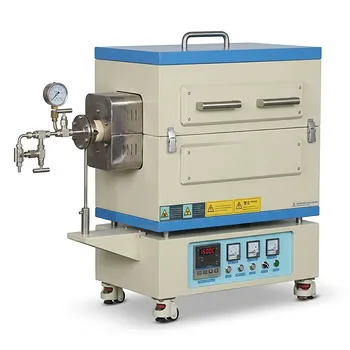
High Temperature Split Tube Furnace 1500C for Material Research Vacuum and Atmosphere Thermal Processing

High Temperature 1700C Vertical Tube Furnace for Powder Spherification and Material Sintering
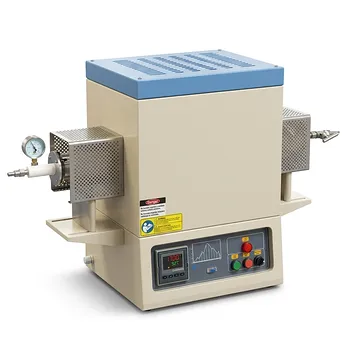
High Temperature Three Zone Tube Furnace 1700C with Alumina Tube and Water Cooled Flanges

High Temperature 1700C Six Zone Split Tube Furnace with Alumina Tube and Water Cooled Flanges
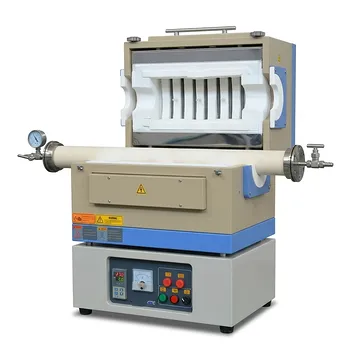
High Temperature 1600C Split Tube Furnace Vacuum Flanges Valves Optional 60mm 80mm Alumina Tube

High Temperature Automated 5 Inch Tube Furnace for Autonomous Material Research and Advanced Laboratory R&D

1100C Tube Furnace with Vacuum Flange and Programmable Temperature Controller for Material Science and Industrial Heat Treatment
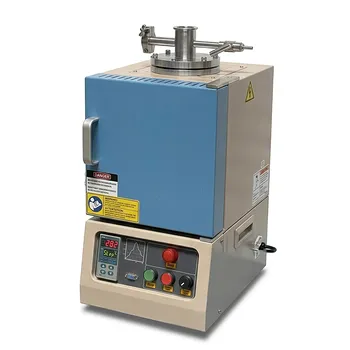
High Temperature Hybrid Muffle and Tube Furnace with Vacuum Capability and PID Control
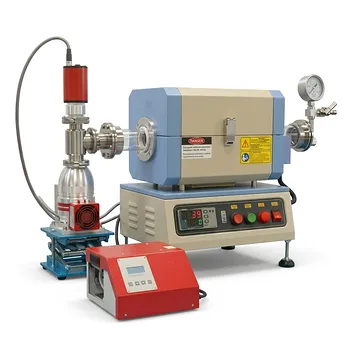
High Vacuum Compact Tube Furnace 1200C with Integrated Turbo Pump System and 8 Inch Heating Zone
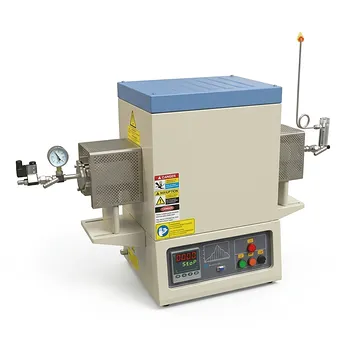
1700C Hydrogen Gas Tube Furnace with 60mm Alumina Process Tube and Integrated Hydrogen Safety Detector
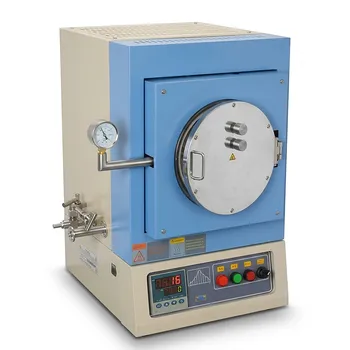
1100°C High Temperature Quartz Chamber Furnace 8 Inch OD with 7.6 Liter Capacity and Vacuum Atmosphere Capability
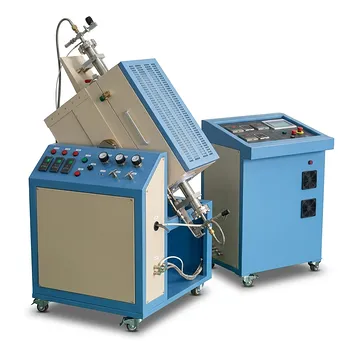
1100C High Pressure Rocking Tube Furnace with 2 Inch Super Alloy Processing Tube for Material Synthesis