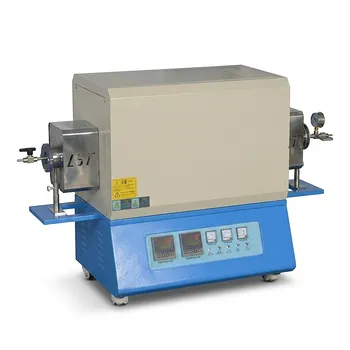
What dual roles does high-purity nitrogen (N2) play in a mist delivery system for CVD? Enhance Film Quality & Precision
Updated 3 months ago
High-purity nitrogen (N2) serves two fundamental roles in a mist delivery system: it acts as a carrier gas to transport the aerosolized mist and as a dilution gas to regulate precursor concentration. By modulating these two functions, operators can precisely manage the residence time and droplet behavior within the reaction zone, directly influencing the final film quality.
Core Takeaway: In mist-based chemical vapor deposition (CVD), high-purity nitrogen acts as the primary mechanical force for precursor transport and the primary chemical regulator for mist density, enabling fine-tuned control over film thickness and uniformity.
The Primary Mechanics of Nitrogen in Mist Delivery
Functioning as a Carrier Gas
As a carrier gas, nitrogen provides the physical momentum required to move the generated mist from the atomization chamber into the tubular furnace. It acts as a continuous medium that "pushes" the droplets, ensuring a steady stream of precursors reaches the substrate.
Without this pressurized flow, the mist would remain stagnant in the generation chamber or settle prematurely. The stability of this carrier flow is essential for maintaining a consistent deposition rate over time.
Functioning as a Dilution Gas
In its role as a dilution gas, nitrogen is used to adjust the volume of the mist relative to the total gas flow. This allows the operator to regulate the concentration of the precursors before they enter the high-temperature reaction zone.
By increasing or decreasing the dilution ratio, the system can prevent oversaturation of the reaction environment. This ensures that the precursor density remains within the "sweet spot" for optimal chemical reactions on the substrate surface.
The Impact on Film Morphology and Quality
Optimizing Residence Time and Collision Frequency
The flow rate of nitrogen directly dictates the residence time, which is the duration the precursor droplets stay within the heated furnace. Faster flow rates decrease residence time, while slower rates allow for more interaction within the reaction zone.
Furthermore, nitrogen flow influences the collision frequency of the droplets. Precise control here is critical to prevent unwanted droplet coalescence, which can lead to uneven film growth or structural defects.
Controlling Thickness Uniformity and Step Coverage
By balancing the carrier and dilution functions, nitrogen flow ensures that the precursor is distributed evenly across the entire substrate. This is the primary mechanism for achieving high-thickness uniformity, even on complex geometries.
Effective nitrogen regulation also improves step coverage, the ability of the film to maintain consistent thickness over topographical features like trenches or ridges. This makes high-purity nitrogen indispensable for manufacturing high-precision electronic components.
Understanding the Trade-offs
Flow Rate vs. Deposition Efficiency
Increasing the nitrogen flow rate can improve uniformity, but it often comes at the cost of precursor utilization. High flow rates may sweep the precursor through the furnace so quickly that it does not have sufficient time to react with the substrate, leading to wasted material.
Conversely, a flow rate that is too low may increase the deposition rate but risk non-uniformity. Slow-moving mist can lead to "heavy" deposition near the inlet and depleted growth further down the tube.
Inert Protection vs. Dilution Levels
While nitrogen provides an inert, oxidation-free environment, excessive dilution can lower the partial pressure of the reactants too significantly. If the nitrogen-to-mist ratio is too high, the deposition process may become too slow to be commercially or experimentally viable.
How to Apply This to Your Project
Optimal nitrogen management depends on whether your priority is the speed of production or the precision of the film's crystalline structure.
- If your primary focus is film uniformity and step coverage: Increase the dilution gas flow to ensure a low-density, highly mobile mist that can navigate complex substrate surfaces evenly.
- If your primary focus is rapid growth and material efficiency: Maintain the carrier gas at the minimum velocity required for transport to maximize the residence time of the droplets in the reaction zone.
- If your primary focus is preventing oxidation or contamination: Ensure the high-purity nitrogen flow is initiated as a purge before heating to effectively displace oxygen and moisture from the furnace environment.
Mastering the dual-flow dynamics of high-purity nitrogen transforms the mist delivery system from a simple transport mechanism into a high-precision tool for advanced material synthesis.
Summary Table:
| Role | Primary Function | Impact on Deposition |
|---|---|---|
| Carrier Gas | Physical precursor transport | Ensures steady flow and consistent deposition rate |
| Dilution Gas | Precursor concentration regulation | Controls mist density to prevent reaction oversaturation |
| Inert Medium | Atmosphere protection | Prevents oxidation and contamination during heating |
Optimize Your CVD Process with THERMUNITS
As a leading manufacturer of high-temperature laboratory equipment, THERMUNITS provides the precision tools required for advanced material science and industrial R&D. Our comprehensive range of CVD/PECVD systems, Tube furnaces, and Atmosphere furnaces is engineered to give you absolute control over carrier and dilution gas dynamics, ensuring superior film uniformity and step coverage.
Whether you are refining thin-film morphology or scaling up chemical vapor deposition, our thermal processing solutions offer the reliability your research demands. Contact us today to discuss your specific heat treatment requirements and discover how our expertise can accelerate your innovation.
References
- Abdul Kuddus, Hajime Shirai. Spatial and Size Distributions of Ti(C<sub>5</sub>H<sub>7</sub>O<sub>2</sub>)<sub>2</sub>[(CH<sub>3</sub>)<sub>2</sub>CHO]<sub>2</sub> Mist Particles in a Tubular Furnace for Conformal and Uniform Deposition of Amorphous TiO<sub>2</sub> Thin Films. DOI: 10.1002/pssa.202400383
Mentioned Products
- 5 Inch Three Zone Rotary Tube Furnace with Integrated Gas Delivery System and 1200C Capability for Advanced Material CVD Processing
- Two Zone Rotary CVD Furnace with Automatic Feeding and Receiving System for Powder Processing
- Chemical Vapor Deposition CVD System Slide PECVD Tube Furnace with Liquid Gasifier PECVD Machine
- Versatile Chemical Vapor Deposition Tube Furnace System for Advanced Material Research and Industrial Coating Processes
- 5 Inch Rotary Tube Furnace with Automatic Feeding and Receiving System 1200C Three Zone CVD Powder Processing
People Also Ask
- What is the primary function of a three-zone tube furnace in the synthesis process of corn-derived carbon nanotubes?
- What role does an industrial-grade three-zone tube furnace play in VOx@VACNT synthesis? Precision Phase-State Control
- Why Use a Three-Zone vs. Single-Zone Furnace for Fe-Ni-Cu Diffusion? Key Benefits for Lab Accuracy
- What advantages does a three-zone tube furnace offer for nanoparticle synthesis? Unlock Superior Thermal Precision.
- What is the core function of an industrial-grade three-zone tube furnace in MgCO3 layer formation?

Tech Team · ThermUnits
Last updated on Jun 02, 2026
Related Products
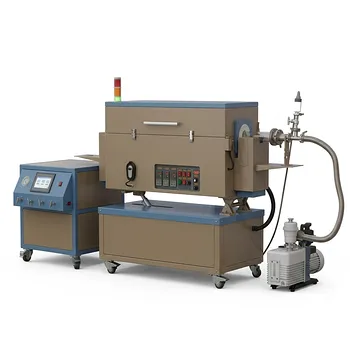
5 Inch Three Zone Rotary Tube Furnace with Integrated Gas Delivery System and 1200C Capability for Advanced Material CVD Processing
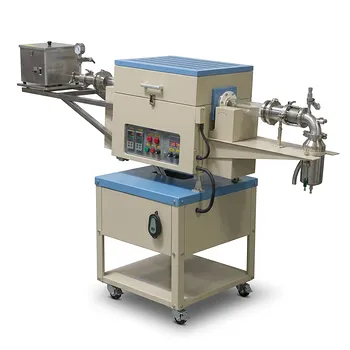
Two Zone Rotary CVD Furnace with Automatic Feeding and Receiving System for Powder Processing
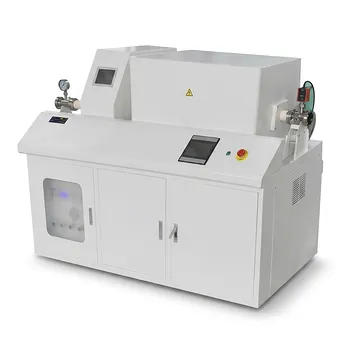
Chemical Vapor Deposition CVD System Slide PECVD Tube Furnace with Liquid Gasifier PECVD Machine
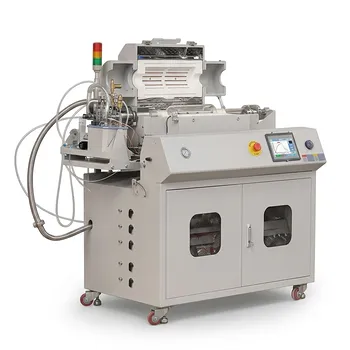
Versatile Chemical Vapor Deposition Tube Furnace System for Advanced Material Research and Industrial Coating Processes
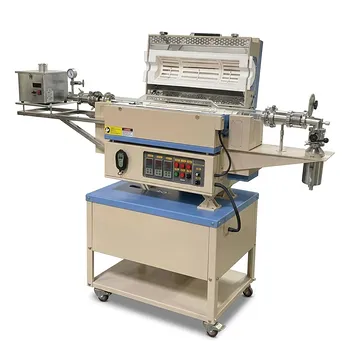
5 Inch Rotary Tube Furnace with Automatic Feeding and Receiving System 1200C Three Zone CVD Powder Processing
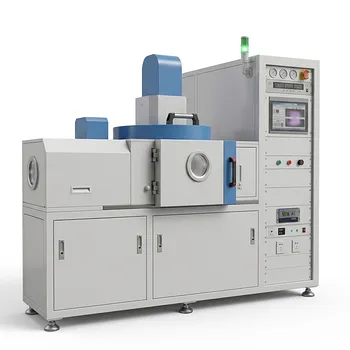
Radio Frequency Plasma Enhanced Chemical Vapor Deposition RF PECVD System for Laboratory and Industrial Thin Film Growth
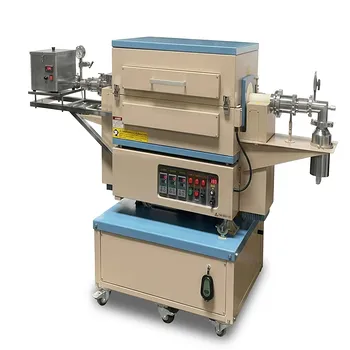
1500C 3-Zone Rotary Tube Furnace 60mm with Automatic Powder Feeding and Receiving System for Continuous Material Synthesis
HFCVD Machine System for Nano Diamond Coating on Drawing Dies and Industrial Tools
915MHz MPCVD Diamond Machine Microwave Plasma Chemical Vapor Deposition System Reactor
Cylindrical Resonator MPCVD Machine System for Microwave Plasma Chemical Vapor Deposition and Lab Diamond Growth
Multi Heating Zones CVD Tube Furnace System for Precision Chemical Vapor Deposition and Advanced Material Synthesis
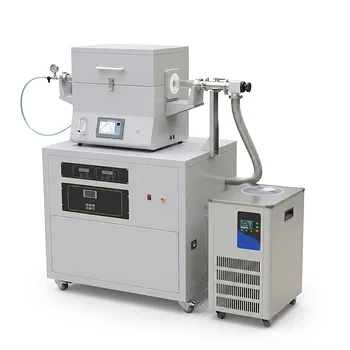
Split Chamber CVD Tube Furnace with Vacuum Station Chemical Vapor Deposition System Machine
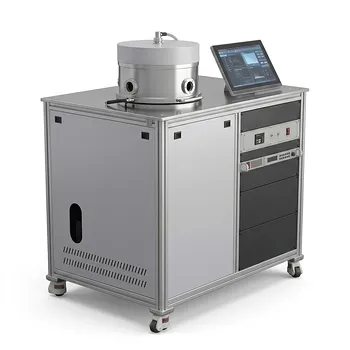
Inclined Rotary Plasma Enhanced Chemical Vapor Deposition PECVD System for Thin Film Deposition and Nanomaterial Synthesis
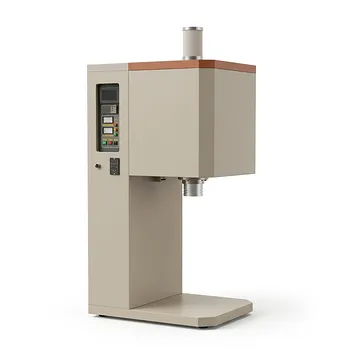
Vertical Openable Tube Furnace 0-1700c High Temperature Laboratory System for CVD and Vacuum Heat Treatment
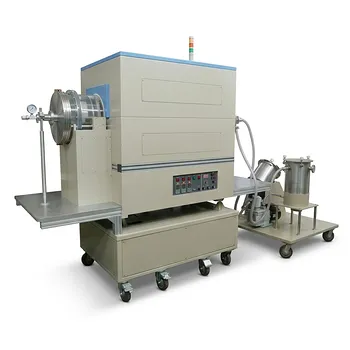
Three Zone Rotary Tube Furnace with Automatic Powder Feeding for Large Scale CVD Coating 1100C
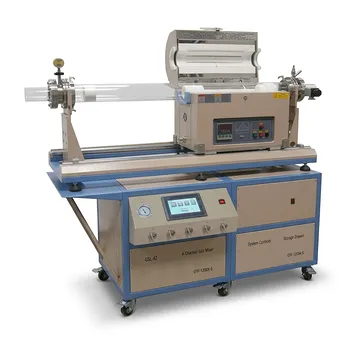
Dual Tube 100mm 80mm CVD Sliding Furnace with 4 Channel Gas Mixing and Vacuum System

High Temperature 1700C Tube Furnace with High Vacuum Turbomolecular Pump System and Multi Channel Mass Flow Controller Gas Mixer
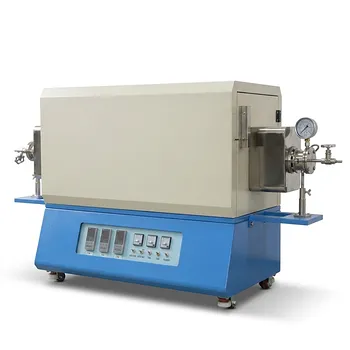
Three Temperature Zone High Temperature Vacuum Tube Furnace for CVD and Material Sintering
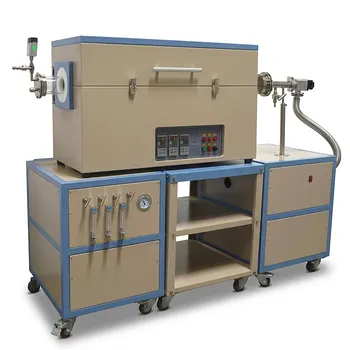
Three Zone Quartz Tube Furnace with 3 Channel Gas Mixer Vacuum Pump and Anti Corrosive Vacuum Gauge