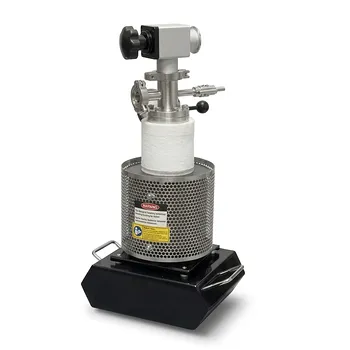
What environmental conditions does a laboratory vacuum oven provide for bonding polystyrene? Learn Key Parameters
Updated 3 months ago
A laboratory vacuum oven creates a highly controlled atmosphere that is essential for the thermal annealing of polymer coatings. Specifically, it provides a sustained high-temperature environment (typically 170°C) coupled with an oxygen-free vacuum to facilitate chemical bonding over a 24-hour period. This dual-action environment ensures that polystyrene brushes anchor firmly to the substrate without undergoing chemical breakdown.
Core Takeaway: The vacuum oven provides a stable thermal energy source while simultaneously removing oxygen to prevent polymer oxidation. This specific combination allows for the long-duration annealing required to chemically bond polystyrene chains to substrate hydroxyl groups.
The Role of Controlled Thermal Energy
Maintaining Sustained High Temperatures
The oven is calibrated to provide a constant heat of 170°C for a duration of 24 hours. This sustained thermal energy is required to mobilize the polymer chains and provide the activation energy for the bonding process.
Driving the Chemical Reaction
The heat promotes a specific chemical reaction between the polystyrene chain ends and the hydroxyl (-OH) groups found on the substrate surface. Without this precise thermal input, the polymer would remain physically deposited rather than chemically "brushed" or anchored to the surface.
Formation of the Protective Layer
Once the reaction is complete, the process results in a stable, hydrophobic ultra-thin protective layer. This layer is characterized by its durability and its ability to resist environmental moisture, a direct result of the high-temperature annealing process.
The Necessity of an Oxygen-Free Atmosphere
Preventing Polymer Oxidation
Polymers are highly susceptible to oxidation and degradation when exposed to high heat in the presence of oxygen. By establishing a vacuum, the oven removes air, ensuring the polystyrene molecules remain chemically intact during the long 24-hour treatment.
Preserving Molecular Integrity
The vacuum environment prevents the polymer chains from breaking down or cross-linking prematurely. This preservation is vital for maintaining the intended properties of the polystyrene brushes, such as their specific hydrophobicity and thickness.
Eliminating Contaminants
A vacuum environment reduces the presence of moisture and other atmospheric contaminants that might interfere with the surface chemistry. This ensures that the only reaction occurring is the intended bond between the polymer and the substrate hydroxyl groups.
Understanding the Trade-offs and Risks
Time and Energy Intensity
The requirement for 24 hours of continuous heating makes this a time-intensive process. Any fluctuation in temperature or a breach in the vacuum seal during this window can lead to inconsistent bonding or total sample degradation.
Sensitivity to Vacuum Integrity
If the vacuum is not absolute or if a leak occurs, the introduction of even trace amounts of oxygen at 170°C will cause the polymer to oxidize rapidly. This results in a compromised, brittle layer rather than a stable, ultra-thin protective coating.
Equipment Limitations
Not all laboratory ovens can maintain the strict stability required for such a long duration. Precision in both thermal distribution and vacuum pressure is non-negotiable to achieve a uniform hydrophobic surface across the entire substrate.
How to Apply This to Your Project
To successfully bond polystyrene brushes to a substrate, your process should be guided by these environmental requirements:
- If your primary focus is Maximum Bond Stability: Ensure the oven is pre-stabilized at 170°C and that the substrate surface is rich in hydroxyl groups before beginning the 24-hour cycle.
- If your primary focus is Polymer Purity: Prioritize the integrity of the vacuum seal and use a high-quality pump to ensure an oxygen-free environment, preventing any oxidative degradation.
- If your primary focus is Layer Uniformity: Verify the thermal distribution within your vacuum oven to ensure the entire substrate experiences a consistent temperature for the full duration of the annealing process.
By precisely balancing high-temperature energy with an oxygen-free vacuum, you can transform a temporary coating into a permanent, ultra-thin protective shield.
Summary Table:
| Environmental Factor | Requirement/Value | Purpose in Bonding Process |
|---|---|---|
| Temperature | Sustained 170°C | Mobilizes polymer chains & provides activation energy |
| Atmosphere | Oxygen-Free Vacuum | Prevents polymer oxidation and molecular degradation |
| Duration | 24 Hours | Ensures complete chemical anchoring to substrate hydroxyl groups |
| Surface Chemistry | Hydroxyl-rich Surface | Facilitates the formation of a stable, hydrophobic layer |
Elevate Your Research with Precision Thermal Solutions
Achieving the perfect chemical bond requires uncompromising control over temperature and atmosphere. THERMUNITS is a leading manufacturer of high-temperature laboratory equipment specifically engineered for material science and industrial R&D.
Our comprehensive range of thermal processing solutions—including Vacuum and Atmosphere Furnaces, Muffle, Tube, Rotary, and Hot Press furnaces, as well as CVD/PECVD systems—ensures the stability and uniformity your experiments demand. Whether you are working on polymer brushes, advanced ceramics, or metal alloys using our vacuum induction melting furnaces (VIM), we provide the tools to turn your research into reality.
Ready to optimize your heat treatment process?
Contact our technical team today to discuss your specific requirements and find the ideal furnace for your laboratory!
References
- Hyunmin Cho, Ji Hoon Park. Ultrathin LiF Insertion and Ensued Contact Resistance Reduction in MoS<sub>2</sub> Channel Transistors. DOI: 10.1002/pssr.202400121
Mentioned Products
- High Temperature 1000C Vacuum Furnace with 8 Inch ID Chamber for Material Sintering and Research Annealing
- 1800C High Temperature Compact Vacuum Tube Furnace with 60mm OD Alumina Tube and Kanthal MoSi2 Heating Elements
- High Temperature Cold Wall High Vacuum Chamber Furnace 1400C for Advanced Material Processing
- Compact Split Tube Furnace with Integrated Vacuum System and Precision Temperature Calibrator
- Bottom Loading Vacuum Furnace 1200C Rapid Cooling Atmosphere Control Quartz Chamber
People Also Ask
- How does the temperature control precision of a high-temperature sintering furnace affect Na1+xLa1-xZr2O6-δ ceramics?
- How does a high-temperature sintering furnace environment enhance NdFeB magnets? Achieve 98%+ density with precision.
- What role does a high-temperature annealing furnace play in forming ordered Pt3(CoNi) intermetallic catalysts?
- What is the function of high-vacuum furnaces in (Mo2/3V1/3)n+1AlCn MAX phase synthesis? Ensure Purity & Diffusion.
- How does a vacuum or atmosphere sintering furnace contribute to the congener-welding process of carbon nitride membranes?

Tech Team · ThermUnits
Last updated on Jun 02, 2026
Related Products
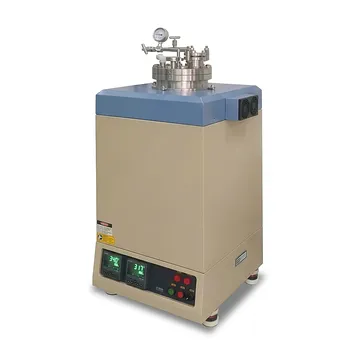
High Temperature 1000C Vacuum Furnace with 8 Inch ID Chamber for Material Sintering and Research Annealing

1800C High Temperature Compact Vacuum Tube Furnace with 60mm OD Alumina Tube and Kanthal MoSi2 Heating Elements
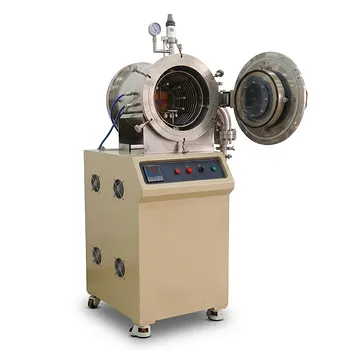
High Temperature Cold Wall High Vacuum Chamber Furnace 1400C for Advanced Material Processing
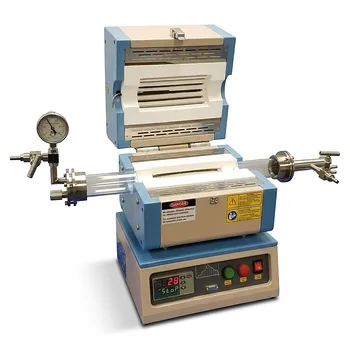
Compact Split Tube Furnace with Integrated Vacuum System and Precision Temperature Calibrator
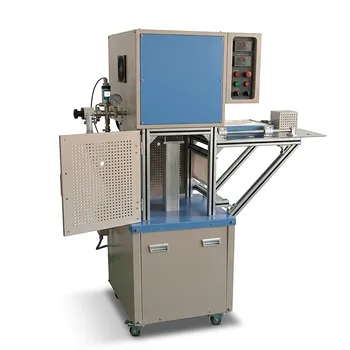
Bottom Loading Vacuum Furnace 1200C Rapid Cooling Atmosphere Control Quartz Chamber

High Vacuum Compact Tube Furnace 1200C with Integrated Turbo Pump System and 8 Inch Heating Zone
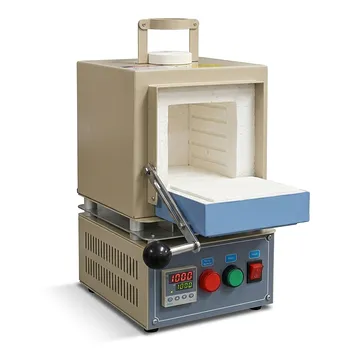
Compact 1000C Muffle Furnace with Programmable Controller and 2 Inch Top Port for Vacuum and Atmosphere Material Research
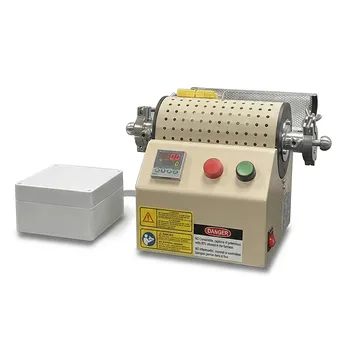
1000C Mini Tube Furnace with 20mm Quartz Tube and Vacuum Flanges for Material Science Research and Controlled Atmosphere Small Sample Processing
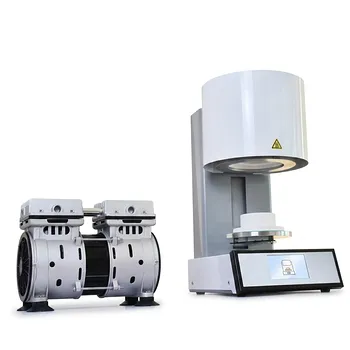
Vacuum Dental Porcelain Sintering Furnace for High Precision Ceramic Restorations
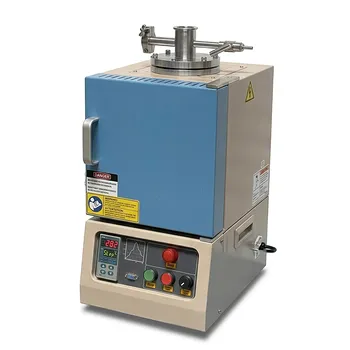
High Temperature Hybrid Muffle and Tube Furnace with Vacuum Capability and PID Control

Vertical 1700C Vacuum and Atmosphere Tube Furnace with 80mm Alumina Tube
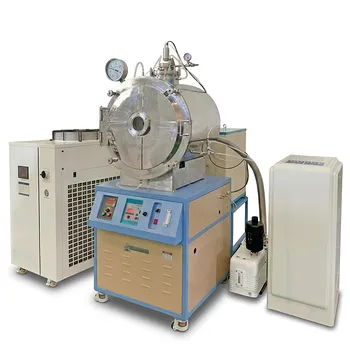
Ultra High Temperature Induction Heated Vacuum Furnace with Molten Salt Electrolysis Capability and 3000 Degree Precision Control
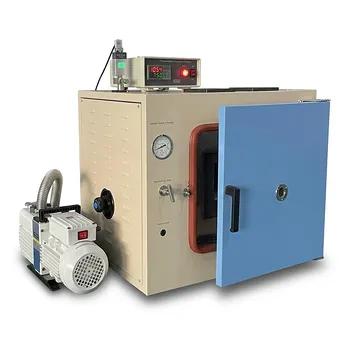
Compact High Vacuum Box Furnace 1050C Max 6.2L Ceramic Chamber Stainless Steel Shell Programmable Temperature Controller for Material Science Research
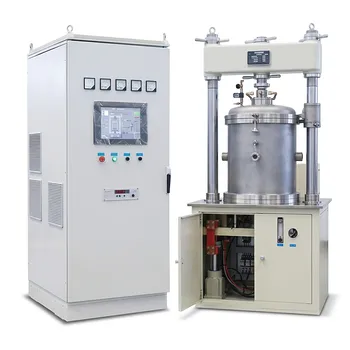
Industrial Vacuum Hot Press Furnace Machine and High Temperature Heated Vacuum Press for Advanced Material Sintering
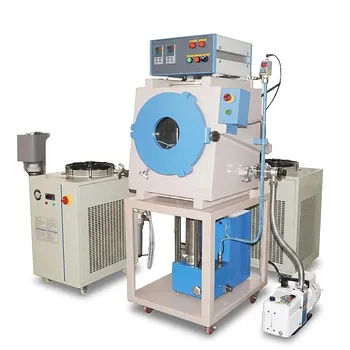
High Temperature Vacuum Lamination Hot Press Furnace Machine for Semiconductor Wafer Bonding and Advanced Composite Thermal Processing
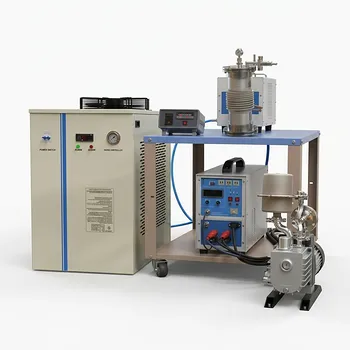
Induction Heating System with Temperature Control for High Temperature Vacuum Sintering and Melting
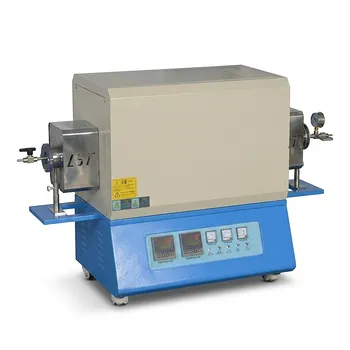
High Temperature Dual Zone Vacuum Tube Furnace for Material Research and CVD Processing
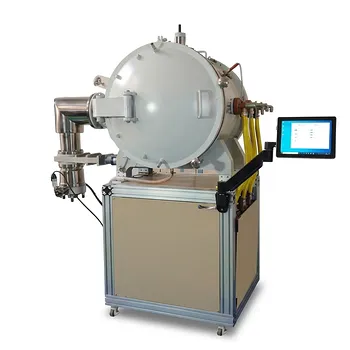
High Temperature Cold Wall Vacuum Furnace for Advanced Material Sintering and Annealing 1600C Heating Area 200x200x300mm
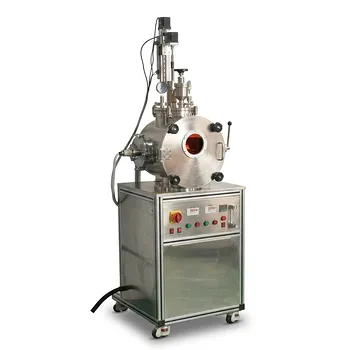
High Vacuum Melting Casting Furnace with Mechanical Stirring and Secondary Charge for Metallic Alloy Research