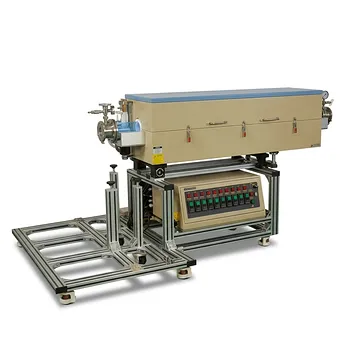
What function does a high-temp tube furnace serve in NiO film processing? Achieve Superior Porous Structures
Updated 3 months ago
In the fabrication of advanced nickel oxide thin films, the high-temperature tube furnace acts as a precision reactor for structural and chemical metamorphosis. By providing a strictly controlled thermal environment—typically maintained at 500 °C in an air atmosphere—the furnace facilitates the thermal degradation of polymer additives (such as PVB) and the simultaneous crystallization of the nickel oxide matrix. This dual-action process is what generates the essential micro-void structures required for high-performance optoelectronic applications.
The tube furnace serves as the critical tool for "templating" thin films, using heat to remove organic sacrificial layers while freezing the surrounding metal oxide into a crystalline, porous structure. This process transforms a dense precursor into a high-surface-area scaffold optimized for light management and electronic interaction.
Inducing Controlled Porosity and Void Formation
The Role of Sacrificial Polymer Templates
To create a film with internal voids, manufacturers incorporate polymers like polyvinyl butyral (PVB) into the precursor material. The high-temperature tube furnace provides the energy necessary to trigger the thermal degradation of these polymers, effectively "burning" them away to leave behind a network of micro-voids.
Engineering the Specific Surface Area
As the polymer residues are eliminated, the remaining nickel oxide matrix forms a porous architecture. This significantly increases the specific surface area of the film, which is a vital requirement for the subsequent deposition of materials like perovskite layers.
Managing the Reaction Atmosphere
Operating the furnace in an air atmosphere ensures that oxygen is available to facilitate the complete oxidation of the nickel species. This environment also helps in the efficient combustion and removal of organic ligands and carbon-based residues that could otherwise contaminate the film.
Driving Phase Transformation and Crystallization
From Precursor to Crystalline Matrix
The furnace provides the sustained thermal energy required to reorganize the amorphous precursor into a highly crystalline nickel oxide lattice. This transition is essential for ensuring the film possesses the necessary mechanical and chemical stability for long-term use.
Removal of Volatile Impurities
Beyond the primary polymer template, the high-heat environment eliminates solvent molecules and residual organic acids. Clearing these impurities ensures the resulting film is of high purity, which prevents unpredictable electronic behavior or premature degradation of the final device.
Optimizing Optoelectronic Response
The structural changes induced by the furnace directly impact how the film interacts with light. The formation of voids and the improvement in crystallinity work together to increase light transmittance, making the film more effective as a transparent conductive component in solar cells or sensors.
Understanding the Trade-offs in Porous Film Processing
Structural Integrity vs. High Porosity
While increasing the volume of voids improves surface area, it can also weaken the mechanical stability of the thin film. If the furnace temperature is too high or the heating duration too long, the porous structure may collapse, leading to a loss of the very surface area the process was intended to create.
Crystallinity vs. Grain Size
Higher temperatures generally improve crystallinity, which is beneficial for stability, but they also promote grain growth. Excessively large grains can reduce the uniformity of the film and create "shunts" or defects that hinder the efficient separation of excitons at the interface.
The Risk of Residual Carbon
If the airflow within the tube furnace is insufficient or the temperature is too low, the thermal degradation of the polymer may be incomplete. This leaves residual carbon trapped within the nickel oxide matrix, which can significantly decrease light transmittance and interfere with the film's electrical properties.
How to Apply This to Your Project
When utilizing a high-temperature tube furnace for nickel oxide processing, your technical strategy should align with your specific performance metrics:
- If your primary focus is Maximum Light Transmittance: Prioritize a precise 500 °C air-calcination to ensure the complete removal of all organic binders while maintaining a thin, crystalline matrix.
- If your primary focus is Enhanced Exciton Separation: Optimize the furnace dwell time to maximize the specific surface area, providing more interface sites for the subsequent perovskite layer.
- If your primary focus is Chemical Stability: Focus on the crystallization phase by ensuring a uniform temperature distribution across the furnace chamber to eliminate amorphous regions.
The precise control of the thermal budget within the tube furnace is the single most important factor in determining the final structural and electronic quality of nickel oxide thin films.
Summary Table:
| Process Stage | Furnace Role | Key Outcome |
|---|---|---|
| Template Removal | Thermal degradation of polymers (PVB) | Creation of essential micro-void networks |
| Phase Change | High-energy crystallization at 500°C | Enhanced mechanical and chemical stability |
| Oxidation | Air atmosphere management | Complete conversion to pure nickel oxide |
| Purification | Volatile impurity elimination | Optimized light transmittance and purity |
Elevate Your Material Research with THERMUNITS
Precision thermal processing is the backbone of high-performance material science. THERMUNITS is a leading manufacturer specializing in high-temperature laboratory equipment for industrial R&D. From advanced Tube and Vacuum furnaces to CVD/PECVD systems and Hot Press furnaces, we provide the exact thermal control required for complex processes like nickel oxide thin film fabrication.
Whether you are engineering porous scaffolds or high-purity crystalline matrices, our solutions ensure uniform heat distribution and reliable atmospheric management. Contact our technical experts today to find the perfect thermal processing solution for your laboratory needs.
References
- You-Wei Wu, Sheng‐Hsiung Yang. Exploration and Optimization of the Polymer-Modified NiOx Hole Transport Layer for Fabricating Inverted Perovskite Solar Cells. DOI: 10.3390/nano14121054
Mentioned Products
- High Temperature Tube Furnace 1500C with Sliding Flanges and 50mm OD for Rapid Thermal Processing Fast Heating and Cooling
- High Temperature 1700C Tube Furnace with High Vacuum Turbomolecular Pump System and Multi Channel Mass Flow Controller Gas Mixer
- High Temperature 1700C Benchtop Tube Furnace with 5 Inch Heating Zone High Purity Alumina Tube and Vacuum Sealing Flanges
- 1750°C High Temperature Benchtop Vacuum Atmosphere Tube Furnace with Kanthal Super 1800 Heating Elements and 60mm Alumina Processing Tube
- Compact High Temperature 1600C Tube Furnace with 50mm Alumina Tube and Vacuum Flanges for Material Sintering
People Also Ask
- How are high-temperature tube furnaces utilized to repair etching damage? Precision Lattice Restoration Solutions
- What core conditions does a high-temperature tube furnace provide for rGO aerogels? Mastering Precision Synthesis.
- What role does a high-temperature tube furnace play in CVD synthesis of silicon nanowires? Master VLS Growth Precision.
- How does precision tube furnace control influence CoFe nanoparticle formation? Master Your Bimetallic Synthesis.
- What role does a high-temperature tube furnace play in the sulfidation heat treatment of CoS@C/MXene nanocomposites? Guide

Tech Team · ThermUnits
Last updated on Jun 02, 2026
Related Products

High Temperature Tube Furnace 1500C with Sliding Flanges and 50mm OD for Rapid Thermal Processing Fast Heating and Cooling

High Temperature 1700C Tube Furnace with High Vacuum Turbomolecular Pump System and Multi Channel Mass Flow Controller Gas Mixer

High Temperature 1700C Benchtop Tube Furnace with 5 Inch Heating Zone High Purity Alumina Tube and Vacuum Sealing Flanges
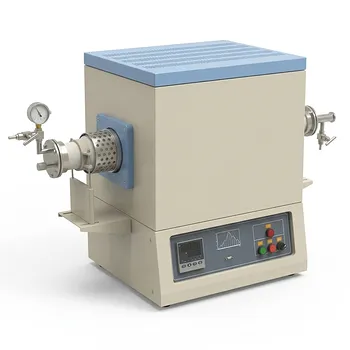
1750°C High Temperature Benchtop Vacuum Atmosphere Tube Furnace with Kanthal Super 1800 Heating Elements and 60mm Alumina Processing Tube

Compact High Temperature 1600C Tube Furnace with 50mm Alumina Tube and Vacuum Flanges for Material Sintering
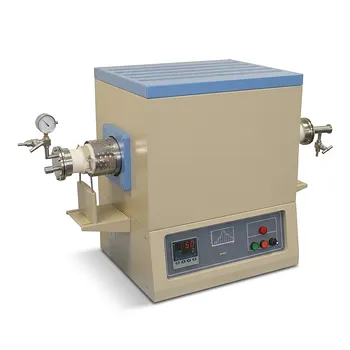
1700C High Temperature Alumina Tube Furnace with 18 Inch Heated Zone and Vacuum Sealing Flanges

1800C High Temperature Compact Vacuum Tube Furnace with 60mm OD Alumina Tube and Kanthal MoSi2 Heating Elements
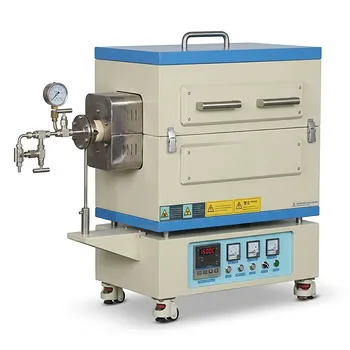
High Temperature Split Tube Furnace 1500C for Material Research Vacuum and Atmosphere Thermal Processing

High Temperature 1700C Vertical Tube Furnace for Powder Spherification and Material Sintering
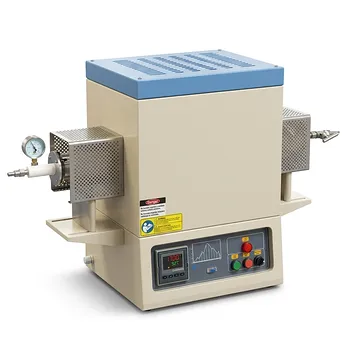
High Temperature Three Zone Tube Furnace 1700C with Alumina Tube and Water Cooled Flanges

High Temperature 1700C Six Zone Split Tube Furnace with Alumina Tube and Water Cooled Flanges
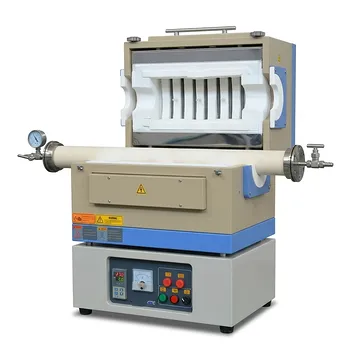
High Temperature 1600C Split Tube Furnace Vacuum Flanges Valves Optional 60mm 80mm Alumina Tube

High Temperature Automated 5 Inch Tube Furnace for Autonomous Material Research and Advanced Laboratory R&D

1100C Tube Furnace with Vacuum Flange and Programmable Temperature Controller for Material Science and Industrial Heat Treatment
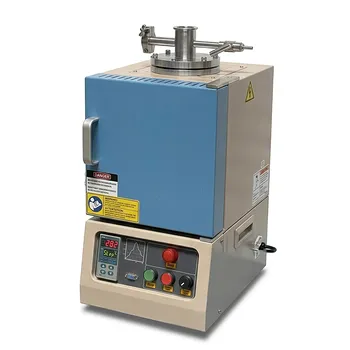
High Temperature Hybrid Muffle and Tube Furnace with Vacuum Capability and PID Control
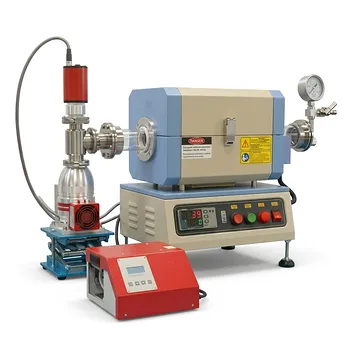
High Vacuum Compact Tube Furnace 1200C with Integrated Turbo Pump System and 8 Inch Heating Zone

1700C Hydrogen Gas Tube Furnace with 60mm Alumina Process Tube and Integrated Hydrogen Safety Detector
1100°C High Temperature Quartz Chamber Furnace 8 Inch OD with 7.6 Liter Capacity and Vacuum Atmosphere Capability
1100C High Pressure Rocking Tube Furnace with 2 Inch Super Alloy Processing Tube for Material Synthesis