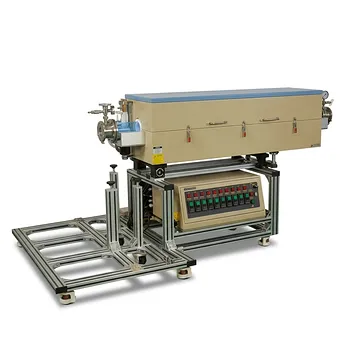
Tube furnace function in sintering lithium mica tailings composites: Achieve superior structural integrity.
Updated 3 months ago
The high-temperature tube furnace functions as the essential reactor for creating structural integrity in composite materials. In the context of lithium mica tailings-based composites, it provides the precise thermal environment required to trigger a chemical reaction between amorphous silica and sulfates. This reaction generates a sodium silicate colloid in situ, which transforms into a high-temperature binder upon cooling to establish the material's final strength.
The core function of the tube furnace is to facilitate a specific chemical synthesis where amorphous silica reacts with sulfates to form a structural binder. This process ensures the creation of strong chemical bonds between the material's skeleton and the phase change components, which is the primary driver of high compressive strength.
Facilitating In-Situ Chemical Synthesis
The Silica-Sulfate Reaction Mechanism
The furnace provides the sustained heat necessary to break chemical bonds in the amorphous silica found within lithium mica tailings. This liberated silica reacts with sulfates under high temperatures to create a sodium silicate colloid.
Creation of the High-Temperature Binder
As the furnace moves through its programmed cooling cycle, this colloid stabilizes and solidifies. It acts as a permanent binder, interlocking the various components of the composite into a rigid, durable matrix.
Achieving Structural and Mechanical Integrity
Strengthening the Material Skeleton
The thermal energy within the tube furnace enables the formation of strong chemical bonds between the structural skeleton and the phase change material (PCM). This bonding is critical because it prevents the PCM from leaking and ensures the composite can withstand mechanical stress.
Enhancing Compressive Strength
By managing the reaction kinetics of the binder formation, the furnace directly determines the final density of the product. Proper sintering parameters result in a material with the high compressive strength required for industrial energy storage applications.
Precise Control of the Sintering Environment
Regulation of Heating Rates and Soaking
The furnace allows for programmed heating rates (often measured in Kelvin per minute) and specific soaking durations. These factors are vital for ensuring that the solid-state diffusion of atoms occurs uniformly throughout the lithium mica tailings.
Managing Phase Transitions
Precision temperature control ensures that the material achieves its target phase structure without over-sintering. This prevents the degradation of the tailings or the unwanted transformation of the phase change material, which would compromise thermal performance.
Understanding the Trade-offs
Temperature Precision vs. Energy Consumption
Achieving the high temperatures required for silica-sulfate reactions demands significant energy input. While higher temperatures may accelerate binder formation, exceeding the optimal threshold can cause the liquid phase to become too volatile, leading to structural deformation or "slumping" of the composite.
Sintering Duration and Microstructure
Shortening the sintering time to increase production throughput often results in incomplete chemical bonding. Conversely, excessively long soaking times can lead to grain overgrowth, which may reduce the overall mechanical toughness and thermal cycling stability of the phase change material.
How to Apply This to Your Project
Optimizing Your Sintering Profile
- If your primary focus is Maximum Compressive Strength: Prioritize a longer soaking time at the peak reaction temperature to ensure the complete conversion of amorphous silica into the sodium silicate binder.
- If your primary focus is Theoretical Thermal Capacity: Use a strictly controlled atmosphere (such as argon or nitrogen) to prevent the oxidation of the phase change material during the high-temperature binder formation.
- If your primary focus is Microstructural Uniformity: Implement a slow, programmed cooling rate to allow the sodium silicate colloid to solidify evenly, preventing internal micro-cracks.
By precisely governing the chemical evolution of the binder through controlled heat, the high-temperature tube furnace transforms waste tailings into a high-performance structural composite.
Summary Table:
| Feature | Core Function in Sintering Process |
|---|---|
| In-Situ Synthesis | Triggers reaction between amorphous silica and sulfates to form sodium silicate colloid. |
| Structural Binding | Colloid solidifies into a permanent binder, interlocking the material skeleton and PCM components. |
| Mechanical Integrity | Ensures strong chemical bonds to prevent PCM leakage and maximize compressive strength. |
| Process Control | Regulates heating rates and soaking times for uniform solid-state diffusion and density. |
Advance Your Material Research with THERMUNITS
Achieve unmatched precision in the sintering of composite phase change materials with THERMUNITS. As a leading manufacturer of high-temperature laboratory equipment for material science and industrial R&D, we empower researchers to optimize chemical reactions and structural integrity.
Our comprehensive range of thermal processing solutions includes:
- Tube & Atmosphere Furnaces for controlled chemical synthesis.
- Muffle, Vacuum, Rotary, and Hot Press Furnaces for versatile heat treatments.
- CVD/PECVD Systems and Vacuum Induction Melting (VIM) for advanced material fabrication.
- Dental Furnaces, Electric Rotary Kilns, and premium Thermal Elements.
Whether you are repurposing lithium mica tailings or developing next-generation energy storage, THERMUNITS provides the reliability and technical excellence your lab demands.
Contact us today to find the perfect furnace for your project!
References
- Yahui Chen, Yanqi Zhao. High-temperature (800 °C) performance of spodumene slag-based ternary sulphate composite phase change materials with improved mechanical property. DOI: 10.1016/j.cej.2024.157936
Mentioned Products
- High Temperature Tube Furnace 1500C with Sliding Flanges and 50mm OD for Rapid Thermal Processing Fast Heating and Cooling
- High Temperature 1700C Tube Furnace with High Vacuum Turbomolecular Pump System and Multi Channel Mass Flow Controller Gas Mixer
- High Temperature 1700C Benchtop Tube Furnace with 5 Inch Heating Zone High Purity Alumina Tube and Vacuum Sealing Flanges
- 1700C High Temperature Alumina Tube Furnace with 18 Inch Heated Zone and Vacuum Sealing Flanges
- 1750°C High Temperature Benchtop Vacuum Atmosphere Tube Furnace with Kanthal Super 1800 Heating Elements and 60mm Alumina Processing Tube
People Also Ask
- How are high-temperature tube furnaces utilized to repair etching damage? Precision Lattice Restoration Solutions
- What role does a high-temperature tube furnace play in CVD synthesis of silicon nanowires? Master VLS Growth Precision.
- What core conditions does a high-temperature tube furnace provide for rGO aerogels? Mastering Precision Synthesis.
- What role does a high-temperature tube furnace play in the sulfidation heat treatment of CoS@C/MXene nanocomposites? Guide
- How does precision tube furnace control influence CoFe nanoparticle formation? Master Your Bimetallic Synthesis.

Tech Team · ThermUnits
Last updated on Jun 02, 2026
Related Products

High Temperature Tube Furnace 1500C with Sliding Flanges and 50mm OD for Rapid Thermal Processing Fast Heating and Cooling

High Temperature 1700C Tube Furnace with High Vacuum Turbomolecular Pump System and Multi Channel Mass Flow Controller Gas Mixer

High Temperature 1700C Benchtop Tube Furnace with 5 Inch Heating Zone High Purity Alumina Tube and Vacuum Sealing Flanges
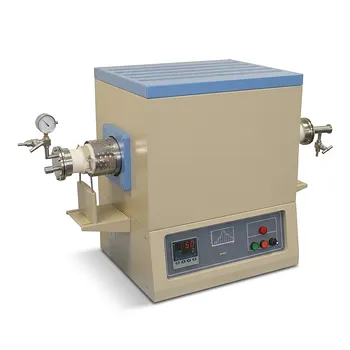
1700C High Temperature Alumina Tube Furnace with 18 Inch Heated Zone and Vacuum Sealing Flanges
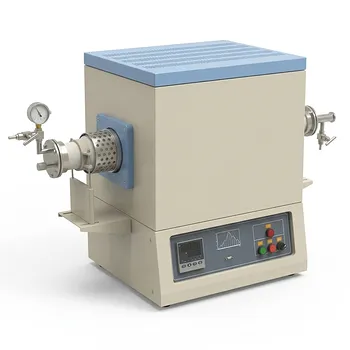
1750°C High Temperature Benchtop Vacuum Atmosphere Tube Furnace with Kanthal Super 1800 Heating Elements and 60mm Alumina Processing Tube

Compact High Temperature 1600C Tube Furnace with 50mm Alumina Tube and Vacuum Flanges for Material Sintering

1800C High Temperature Compact Vacuum Tube Furnace with 60mm OD Alumina Tube and Kanthal MoSi2 Heating Elements
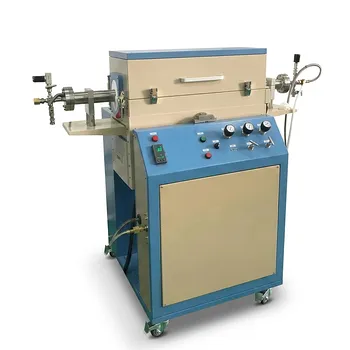
High Temperature Rocking Tube Furnace 1700°C Alumina Processing Tube with Precision Oscillation for Material Synthesis
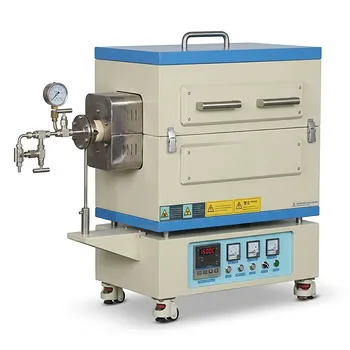
High Temperature Split Tube Furnace 1500C for Material Research Vacuum and Atmosphere Thermal Processing
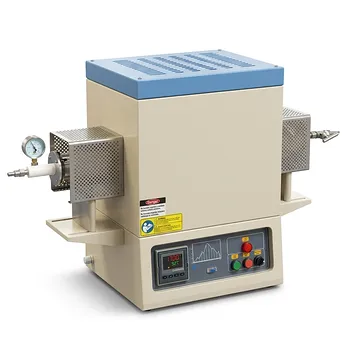
High Temperature Three Zone Tube Furnace 1700C with Alumina Tube and Water Cooled Flanges

High Temperature 1700C Vertical Tube Furnace for Powder Spherification and Material Sintering

High Temperature 1700C Six Zone Split Tube Furnace with Alumina Tube and Water Cooled Flanges
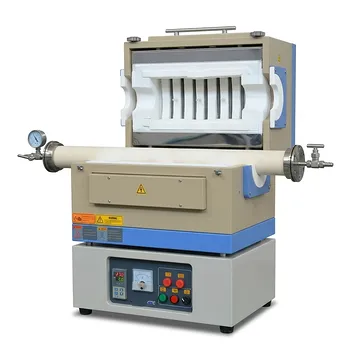
High Temperature 1600C Split Tube Furnace Vacuum Flanges Valves Optional 60mm 80mm Alumina Tube

High Temperature Automated 5 Inch Tube Furnace for Autonomous Material Research and Advanced Laboratory R&D
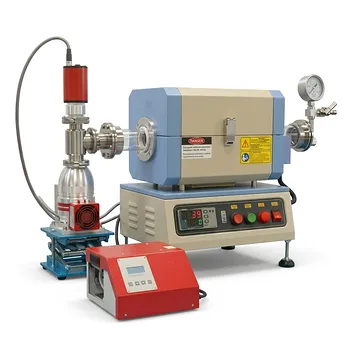
High Vacuum Compact Tube Furnace 1200C with Integrated Turbo Pump System and 8 Inch Heating Zone
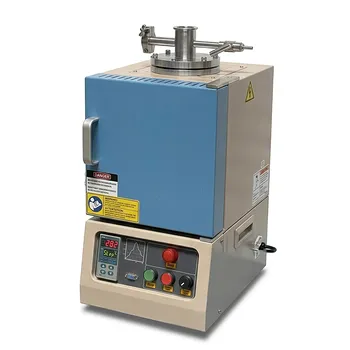
High Temperature Hybrid Muffle and Tube Furnace with Vacuum Capability and PID Control

1100C Tube Furnace with Vacuum Flange and Programmable Temperature Controller for Material Science and Industrial Heat Treatment
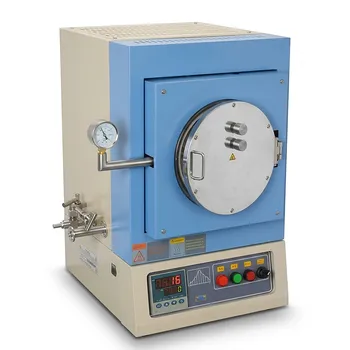
1100°C High Temperature Quartz Chamber Furnace 8 Inch OD with 7.6 Liter Capacity and Vacuum Atmosphere Capability

1700C Hydrogen Gas Tube Furnace with 60mm Alumina Process Tube and Integrated Hydrogen Safety Detector