What is the core function of a tube furnace in TiO2 modification? Control Phase, Purity & Photocatalytic Performance
Updated 3 months ago
High-temperature tube and atmosphere furnaces are the primary tools used to drive the structural and chemical evolution of titanium dioxide ($TiO_2$) through controlled thermal treatment. These furnaces enable precise calcination and annealing, allowing researchers to induce phase transformations (such as moving from an amorphous state to anatase), remove residual organic impurities, and tailor the material's grain size and crystallinity.
Core Takeaway: The central function of these furnaces is to provide a highly stable, programmable thermal and chemical environment that dictates the final crystal structure, purity, and surface activity of $TiO_2$ materials. By manipulating temperature and atmosphere, you can transform a raw precursor into a high-performance photocatalytic or conductive material.
The Mechanisms of Phase Transformation and Crystallinity
Inducing the Transition to Active Phases
High-temperature treatment is essential for converting amorphous titanium dioxide into active crystalline phases. In a tube furnace, precisely controlled heating—typically between 250°C and 450°C—triggers the transition to the anatase phase, which is preferred for its superior photocatalytic activity.
Eliminating Lattice Defects and Enhancing Stability
Extended annealing at higher temperatures, such as 600°C, helps eliminate lattice defects within the material. This process enhances the overall crystallinity, which is fundamental for ensuring the long-term physicochemical stability of specialized structures like $TiO_2$ nanobelts.
Tailoring Grain Size and Surface Area
The heating rate and peak temperature in a tube furnace directly influence grain growth. By adjusting these parameters, operators can find the balance between high crystallinity and the high specific surface area required for effective catalysis.
Atmosphere Control and Chemical Modification
Preventing Oxidation in Composites
When creating titania-carbon composites, an atmosphere furnace provides an inert environment using high-purity argon or nitrogen. This prevents the carbon component from oxidizing at elevated temperatures (e.g., 800°C), ensuring the $TiO_2$ particles remain successfully encapsulated in a conductive shell.
Driving In-Situ Chemical Reactions
Atmosphere furnaces allow for the introduction of specific gases to ensure reactions occur at precise stoichiometric ratios. This is critical for post-modifying $TiO_2$ to incorporate other functional elements or to create complex inorganic materials that require a reducing or oxidizing environment.
Carbonization of Precursors
For advanced applications like carbon nanofibers or aerogels, these furnaces facilitate carbonization at temperatures up to 1000°C. The superior sealing performance of modern tube furnaces ensures an oxygen-free environment, which is vital for maintaining the structural integrity of the resulting material.
Purification and Surface Optimization
Removal of Organic Residuals
The calcination process effectively burns off residual organic impurities left over from the synthesis of $TiO_2$ gels or powders. Removing these contaminants is crucial because it exposes active catalytic sites that would otherwise be blocked, significantly increasing the material's efficiency.
Degassing and Hydrogen Removal
In vacuum-integrated furnaces, thermal treatment under low pressure removes residual hydrogen and other trapped gases. This level of purification ensures that the final $TiO_2$ product achieves the microstructural integrity required for sensitive industrial applications.
Understanding the Trade-offs
The Risk of Over-Calcination
While heat is necessary for crystallinity, excessive temperatures can lead to sintering and uncontrolled grain growth. This reduces the surface-area-to-volume ratio, which can significantly diminish the photocatalytic performance of the $TiO_2$.
Phase Instability at High Temperatures
Heating beyond certain thresholds (often above 600°C-800°C) can cause anatase to transform into the rutile phase. While rutile is more thermally stable, it often possesses lower photocatalytic activity, potentially making it unsuitable for specific environmental or energy applications.
Sealing and Atmosphere Purity
The effectiveness of an atmosphere furnace is entirely dependent on its sealing performance. Even trace amounts of oxygen leakage during high-temperature carbonization can result in the combustion of the carbon matrix, ruining the batch.
How to Apply This to Your Project
- If your primary focus is Photocatalytic Activity: Target a calcination temperature between 400°C and 450°C in a standard tube furnace to maximize anatase phase formation and surface area.
- If your primary focus is Conductivity and Carbon Composites: Use an atmosphere tube furnace with a continuous flow of high-purity Argon (Ar) at temperatures near 800°C to prevent carbon oxidation.
- If your primary focus is Structural Purity and Stability: Utilize a vacuum or muffle furnace at 600°C to eliminate lattice defects and ensure the removal of all organic precursors.
By mastering the variables of temperature, ramp rate, and atmosphere, you can precisely engineer the physical and chemical properties of titanium dioxide for any technical application.
Summary Table:
| Process Type | Temperature Range | Atmosphere Requirement | Core Objective |
|---|---|---|---|
| Phase Transition | 250°C - 450°C | Air / Oxygen | Inducing active Anatase phase |
| Annealing | ~600°C | Vacuum / Inert | Eliminating lattice defects & enhancing stability |
| Carbon Composites | ~800°C | High-purity Argon / N2 | Preventing carbon oxidation & ensuring encapsulation |
| Carbonization | Up to 1000°C | Oxygen-free / Vacuum | Structural integrity for nanofibers or aerogels |
Elevate Your Material Research with THERMUNITS
As a leading manufacturer of high-temperature laboratory equipment for material science and industrial R&D, THERMUNITS offers the precision heating solutions required for advanced $TiO_2$ modification.
Our comprehensive range of thermal processing solutions—including Tube, Atmosphere, Vacuum, Muffle, and Rotary furnaces, as well as CVD/PECVD systems—ensures the highly stable, programmable environments necessary for phase control and chemical purity. Whether you are scaling up industrial production or conducting sensitive laboratory heat treatments, our equipment provides the reliability your project demands.
Contact our technical team today to discuss your specific requirements and discover how our furnace technology can optimize your material performance.
References
- Iwona Pełech, Urszula Narkiewicz. Thermal and/or Microwave Treatment: Insight into the Preparation of Titania-Based Materials for CO2 Photoreduction to Green Chemicals. DOI: 10.3390/molecules29153646
Mentioned Products
- High Temperature Tube Furnace 1500C with Sliding Flanges and 50mm OD for Rapid Thermal Processing Fast Heating and Cooling
- High Temperature 1700C Tube Furnace with High Vacuum Turbomolecular Pump System and Multi Channel Mass Flow Controller Gas Mixer
- High Temperature 1700C Benchtop Tube Furnace with 5 Inch Heating Zone High Purity Alumina Tube and Vacuum Sealing Flanges
- 1750°C High Temperature Benchtop Vacuum Atmosphere Tube Furnace with Kanthal Super 1800 Heating Elements and 60mm Alumina Processing Tube
- Compact High Temperature 1600C Tube Furnace with 50mm Alumina Tube and Vacuum Flanges for Material Sintering
People Also Ask
- How are high-temperature tube furnaces utilized to repair etching damage? Precision Lattice Restoration Solutions
- What core conditions does a high-temperature tube furnace provide for rGO aerogels? Mastering Precision Synthesis.
- What role does a high-temperature tube furnace play in CVD synthesis of silicon nanowires? Master VLS Growth Precision.
- How does precision tube furnace control influence CoFe nanoparticle formation? Master Your Bimetallic Synthesis.
- What role does a high-temperature tube furnace play in the sulfidation heat treatment of CoS@C/MXene nanocomposites? Guide

Tech Team · ThermUnits
Last updated on Jun 03, 2026
Related Products

High Temperature Tube Furnace 1500C with Sliding Flanges and 50mm OD for Rapid Thermal Processing Fast Heating and Cooling

High Temperature 1700C Tube Furnace with High Vacuum Turbomolecular Pump System and Multi Channel Mass Flow Controller Gas Mixer

High Temperature 1700C Benchtop Tube Furnace with 5 Inch Heating Zone High Purity Alumina Tube and Vacuum Sealing Flanges

1750°C High Temperature Benchtop Vacuum Atmosphere Tube Furnace with Kanthal Super 1800 Heating Elements and 60mm Alumina Processing Tube

Compact High Temperature 1600C Tube Furnace with 50mm Alumina Tube and Vacuum Flanges for Material Sintering
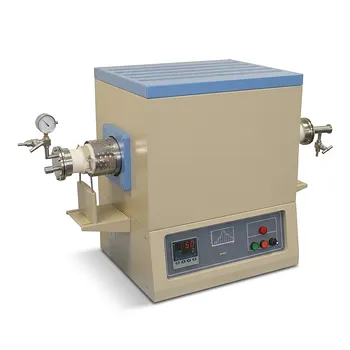
1700C High Temperature Alumina Tube Furnace with 18 Inch Heated Zone and Vacuum Sealing Flanges

1800C High Temperature Compact Vacuum Tube Furnace with 60mm OD Alumina Tube and Kanthal MoSi2 Heating Elements
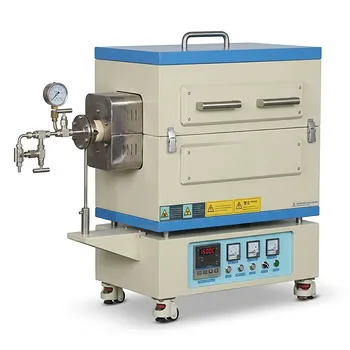
High Temperature Split Tube Furnace 1500C for Material Research Vacuum and Atmosphere Thermal Processing

High Temperature 1700C Vertical Tube Furnace for Powder Spherification and Material Sintering
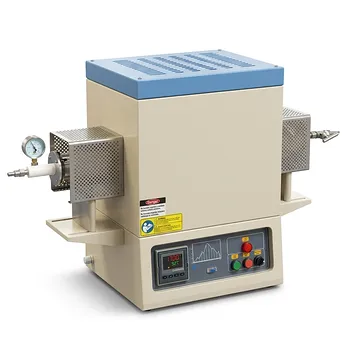
High Temperature Three Zone Tube Furnace 1700C with Alumina Tube and Water Cooled Flanges

High Temperature 1700C Six Zone Split Tube Furnace with Alumina Tube and Water Cooled Flanges
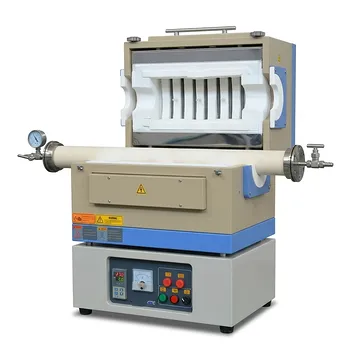
High Temperature 1600C Split Tube Furnace Vacuum Flanges Valves Optional 60mm 80mm Alumina Tube

High Temperature Automated 5 Inch Tube Furnace for Autonomous Material Research and Advanced Laboratory R&D

1100C Tube Furnace with Vacuum Flange and Programmable Temperature Controller for Material Science and Industrial Heat Treatment
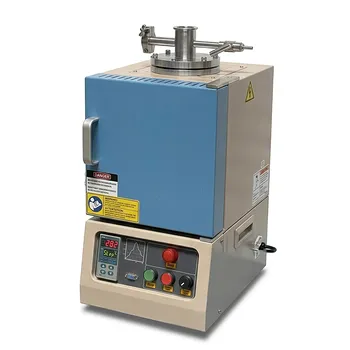
High Temperature Hybrid Muffle and Tube Furnace with Vacuum Capability and PID Control
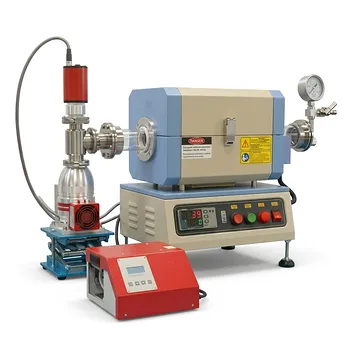
High Vacuum Compact Tube Furnace 1200C with Integrated Turbo Pump System and 8 Inch Heating Zone
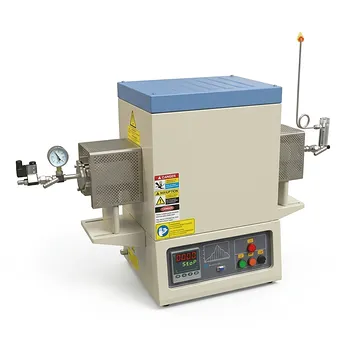
1700C Hydrogen Gas Tube Furnace with 60mm Alumina Process Tube and Integrated Hydrogen Safety Detector
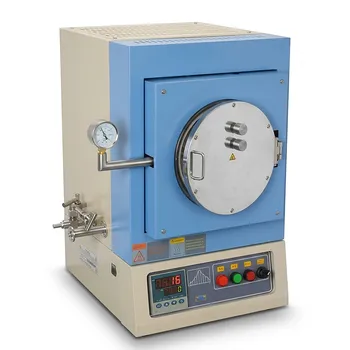
1100°C High Temperature Quartz Chamber Furnace 8 Inch OD with 7.6 Liter Capacity and Vacuum Atmosphere Capability
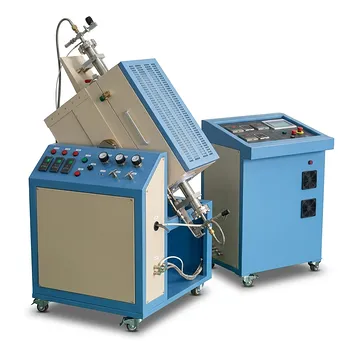
1100C High Pressure Rocking Tube Furnace with 2 Inch Super Alloy Processing Tube for Material Synthesis