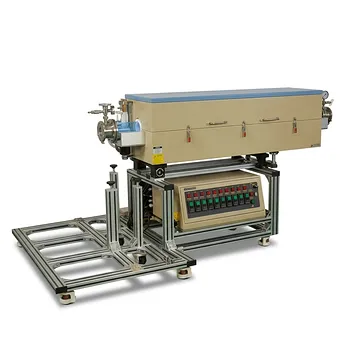
What is the function of a High-Temperature Tube Furnace? Achieve Precise Austenitization for Micro-Alloyed Steel
Updated 5 months ago
The High-Temperature Tube Furnace serves as a precision thermal reactor that provides a stable environment up to 1500 °C to facilitate the complete phase transformation of steel into austenite. By utilizing an inert argon atmosphere, it prevents surface decarburization and oxidation, ensuring that the material's chemical integrity remains intact for subsequent thermal compression testing and grain size analysis.
The core function of the High-Temperature Tube Furnace in this context is to create a pristine, uniform microstructural foundation. It achieves this by balancing extreme thermal energy with a controlled chemical environment to eliminate prior processing history and prepare the steel for accurate scientific observation.
Establishing a Controlled Thermal Environment
Precise Temperature Management
The furnace provides a stable heating environment capable of reaching 1500 °C, which is essential for the austenitization of medium carbon micro-alloyed steel. This high-temperature capability ensures that the material reaches the necessary energy levels to transition fully into the austenite phase.
Dissolution of Micro-Alloy Precipitates
At these elevated temperatures, the furnace allows for the re-dissolution of micro-alloy precipitates and carbides (such as M7C3 types) into the austenite matrix. This process is critical for eliminating chemical segregation and ensuring that alloying elements are uniformly distributed throughout the specimen.
Adjustment of Initial Grain Size
By accurately controlling the heating temperature and the duration of the "dwell" time, researchers can manipulate the prior austenite grain size. This provides a standardized starting point for studying how the material behaves during subsequent deformation or cooling stages.
Preserving Chemical and Surface Integrity
Prevention of Surface Oxidation
The tube furnace is designed to introduce a protective argon atmosphere, which displaces oxygen within the heating chamber. This prevents the formation of scale and oxide layers on the steel's surface, which would otherwise interfere with the accuracy of thermal compression tests.
Eliminating Decarburization
High-temperature exposure often causes carbon to migrate out of the steel's surface, a process known as decarburization. The controlled atmosphere within the tube furnace effectively halts this loss, preserving the specific carbon concentration required for valid metallurgical research.
Maintaining Chemical Composition
Because the furnace prevents atmospheric reactions, the integrity of the material’s chemical composition is maintained from the core to the surface. This consistency is vital for acquiring accurate data regarding the steel's mechanical properties and phase transformation behavior.
Understanding the Trade-offs and Limitations
Thermal Gradients and Uniformity
While tube furnaces offer excellent atmosphere control, the heating elements can sometimes create thermal gradients if the specimen is not positioned correctly within the "hot zone." If the sample is too large or misplaced, the microstructural transformation may be non-uniform across its length.
Gas Flow and Contamination Risks
The effectiveness of the protective environment depends entirely on the purity and flow rate of the argon gas. Even minor leaks in the tube seals or impurities in the gas supply can lead to localized oxidation, potentially ruining the specimen's surface for high-resolution microscopy.
Cooling Rate Constraints
Most high-temperature tube furnaces are optimized for heating and holding rather than rapid cooling. If the research requires a specific "quench" to freeze the austenite structure, the thermal inertia of the furnace tube can make it difficult to achieve high cooling rates without specialized auxiliary equipment.
How to Apply This to Your Project
Recommendations for Pretreatment Success
- If your primary focus is Grain Size Evolution: Prioritize precise "soak times" at specific temperatures to ensure all prior structures are erased before testing begins.
- If your primary focus is Surface Sensitive Testing: Ensure a high-purity argon flow is established well before the temperature exceeds 400 °C to prevent early-stage oxidation.
- If your primary focus is Alloy Homogenization: Use higher temperatures (near the 1500 °C limit) for longer durations to ensure refractory carbides are fully dissolved into the matrix.
The High-Temperature Tube Furnace is not merely a heater, but a critical tool for isolating the variables of temperature and time from the interference of atmospheric chemistry.
Summary Table:
| Function | Key Benefit | Critical Feature |
|---|---|---|
| Thermal Stability | Complete phase transformation into austenite | 1500°C High-temperature capability |
| Atmosphere Control | Prevents surface oxidation and decarburization | High-purity Inert Argon gas flow |
| Microstructure Prep | Ensures uniform alloy & precipitate distribution | Precise PID dwell time control |
| Grain Size Tuning | Provides a standardized start for research | Accurate heating/soak management |
Elevate Your Material Research with THERMUNITS
As a leading manufacturer of high-temperature laboratory equipment, THERMUNITS provides the precision tools required for advanced material science and industrial R&D. Our high-performance tube furnaces ensure the chemical integrity and microstructural uniformity your research demands.
Our comprehensive range of thermal processing solutions includes:
- Laboratory Furnaces: Muffle, Vacuum, Atmosphere, Tube, and Rotary models.
- Advanced Systems: CVD/PECVD systems, Hot Press furnaces, and Vacuum Induction Melting (VIM) furnaces.
- Specialized Equipment: Dental Furnaces, Electric Rotary Kilns, and high-quality Thermal Elements.
Ready to optimize your heat treatment process? Contact our technical team today to discuss your specific requirements and find the ideal furnace solution for your lab!
References
- A. Al Omar, Esteban Peña Pitarch. Development of Neural Networks to Study Flow Behavior of Medium Carbon Microalloyed Steel during Hot Forming. DOI: 10.3390/met14050554
Mentioned Products
- High Temperature Tube Furnace 1500C with Sliding Flanges and 50mm OD for Rapid Thermal Processing Fast Heating and Cooling
- High Temperature 1700C Tube Furnace with High Vacuum Turbomolecular Pump System and Multi Channel Mass Flow Controller Gas Mixer
- High Temperature 1700C Benchtop Tube Furnace with 5 Inch Heating Zone High Purity Alumina Tube and Vacuum Sealing Flanges
- 1750°C High Temperature Benchtop Vacuum Atmosphere Tube Furnace with Kanthal Super 1800 Heating Elements and 60mm Alumina Processing Tube
- Compact High Temperature 1600C Tube Furnace with 50mm Alumina Tube and Vacuum Flanges for Material Sintering
People Also Ask
- How are high-temperature tube furnaces utilized to repair etching damage? Precision Lattice Restoration Solutions
- What role does a high-temperature tube furnace play in CVD synthesis of silicon nanowires? Master VLS Growth Precision.
- What core conditions does a high-temperature tube furnace provide for rGO aerogels? Mastering Precision Synthesis.
- What role does a high-temperature tube furnace play in the sulfidation heat treatment of CoS@C/MXene nanocomposites? Guide
- How does precision tube furnace control influence CoFe nanoparticle formation? Master Your Bimetallic Synthesis.

Tech Team · ThermUnits
Last updated on Apr 14, 2026
Related Products

High Temperature Tube Furnace 1500C with Sliding Flanges and 50mm OD for Rapid Thermal Processing Fast Heating and Cooling

High Temperature 1700C Tube Furnace with High Vacuum Turbomolecular Pump System and Multi Channel Mass Flow Controller Gas Mixer

High Temperature 1700C Benchtop Tube Furnace with 5 Inch Heating Zone High Purity Alumina Tube and Vacuum Sealing Flanges

1750°C High Temperature Benchtop Vacuum Atmosphere Tube Furnace with Kanthal Super 1800 Heating Elements and 60mm Alumina Processing Tube

Compact High Temperature 1600C Tube Furnace with 50mm Alumina Tube and Vacuum Flanges for Material Sintering

1700C High Temperature Alumina Tube Furnace with 18 Inch Heated Zone and Vacuum Sealing Flanges

1800C High Temperature Compact Vacuum Tube Furnace with 60mm OD Alumina Tube and Kanthal MoSi2 Heating Elements
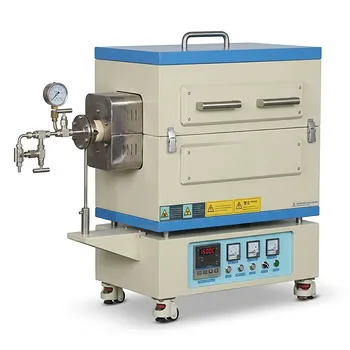
High Temperature Split Tube Furnace 1500C for Material Research Vacuum and Atmosphere Thermal Processing

High Temperature 1700C Vertical Tube Furnace for Powder Spherification and Material Sintering
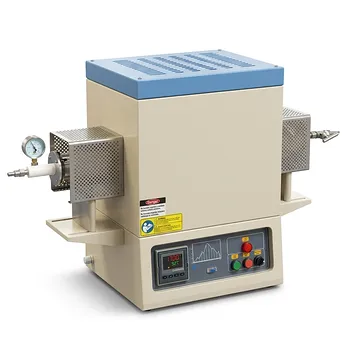
High Temperature Three Zone Tube Furnace 1700C with Alumina Tube and Water Cooled Flanges

High Temperature 1700C Six Zone Split Tube Furnace with Alumina Tube and Water Cooled Flanges
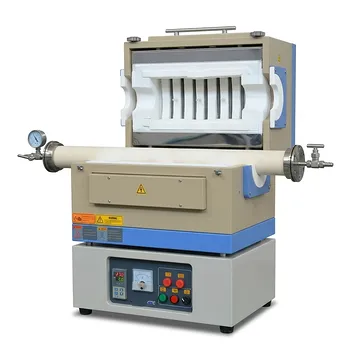
High Temperature 1600C Split Tube Furnace Vacuum Flanges Valves Optional 60mm 80mm Alumina Tube

High Temperature Automated 5 Inch Tube Furnace for Autonomous Material Research and Advanced Laboratory R&D

1100C Tube Furnace with Vacuum Flange and Programmable Temperature Controller for Material Science and Industrial Heat Treatment
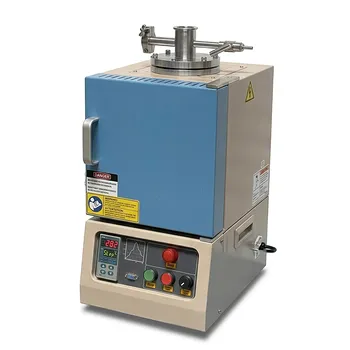
High Temperature Hybrid Muffle and Tube Furnace with Vacuum Capability and PID Control
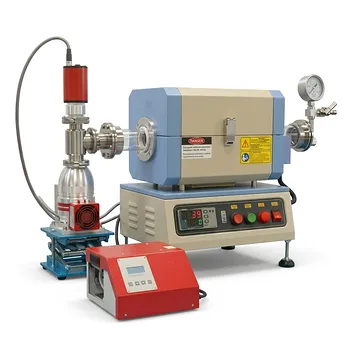
High Vacuum Compact Tube Furnace 1200C with Integrated Turbo Pump System and 8 Inch Heating Zone

1700C Hydrogen Gas Tube Furnace with 60mm Alumina Process Tube and Integrated Hydrogen Safety Detector
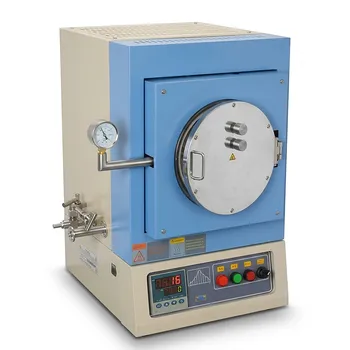
1100°C High Temperature Quartz Chamber Furnace 8 Inch OD with 7.6 Liter Capacity and Vacuum Atmosphere Capability
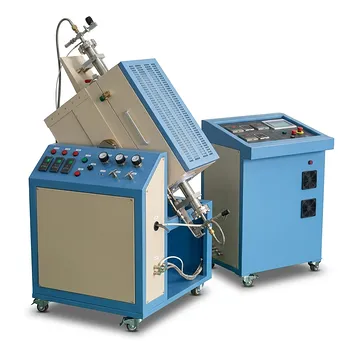
1100C High Pressure Rocking Tube Furnace with 2 Inch Super Alloy Processing Tube for Material Synthesis