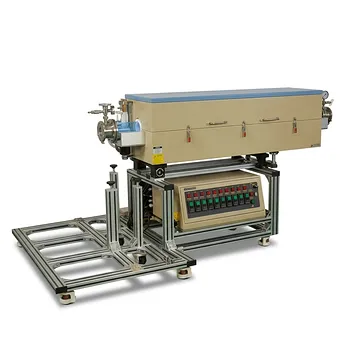
What is the function of a tube furnace in RF gel carbonization? Mastering Precision Carbon Synthesis
Updated 3 months ago
The high-temperature tube furnace is the critical environment for the structural transformation of Resorcinol-Formaldehyde (RF) gels. It provides a controlled, oxygen-free thermal field that pyrolyzes the organic polymer framework at approximately 800°C, converting it into amorphous carbon. This process simultaneously decomposes and volatilizes internal templates, such as polystyrene nanospheres, to create a precise network of hollow carbon structures.
The furnace acts as a thermal reactor that facilitates the chemical reorganization of the RF gel into a stable carbon nanomaterial. By maintaining an inert atmosphere and uniform heat, it ensures the polymer framework survives the transition to carbon while ensuring internal templates are cleanly removed to define the material's porosity.
Thermal Decomposition and Molecular Transformation
Conversion to Amorphous Carbon
The primary role of the furnace is to provide the thermal energy required for pyrolysis. At temperatures near 800°C, the organic Resorcinol-Formaldehyde bonds break down and reorganize into an amorphous carbon framework.
Elimination of Non-Carbon Elements
During this phase, the furnace facilitates dehydration, decarboxylation, and dehydrogenation. These reactions remove volatile components and non-carbon elements, leaving behind a chemically stable and rigid carbon network.
Solid-State Pyrolysis and Shrinkage
The uniform temperature field within the tube is essential for even solid-state pyrolysis. This ensures that as the material contracts and transforms, it maintains its structural integrity without developing cracks or uneven density.
Precision Atmosphere Control and Sealing
Preventing Oxidative Loss
The tube furnace is specifically designed for superior sealing performance. By maintaining a strict inert atmosphere (using gases like argon or nitrogen), the furnace prevents oxygen from entering, which would otherwise cause the carbon material to combust and vanish at high temperatures.
Facilitating Template Volatilization
In RF gel synthesis, polystyrene nanospheres are often used as templates to create hollow structures. The furnace provides the high-temperature environment necessary for these templates to decompose and volatilize, escaping through the furnace exhaust while the surrounding carbon wall hardens.
Adjusting Chemical Stability
The controlled environment ensures the chemical stability of the final product. By excluding reactive gases, the furnace allows for the formation of a pure carbon lattice or a specific composite membrane, depending on the initial gel composition.
Structural Engineering via Temperature Uniformity
Control of Lattice Order and Graphitization
The furnace's ability to maintain stable heating curves directly influences the lattice order of the carbon. Precise control over the "soak time" (the duration at peak temperature) can adjust the degree of graphitization, which dictates the material's electrical conductivity and mechanical strength.
Developing Precise Pore Architectures
Temperature uniformity is vital for creating an in-situ network of hollow carbon nanospheres. If the temperature fluctuates, the wall thicknesses of these nanospheres become inconsistent, compromising the material's performance in applications like energy storage or catalysis.
Ramped Temperature Programs
Advanced tube furnaces allow for programmable heating rates. For instance, a slow ramp-up may be used for pre-treatment to remove moisture, followed by a rapid rise to 800°C to finalize the carbonization without collapsing the delicate gel pores.
Understanding the Trade-offs
Temperature vs. Surface Area
Higher carbonization temperatures generally increase the degree of graphitization and conductivity. However, exceeding optimal temperatures can cause the carbon framework to over-shrink or pores to collapse, significantly reducing the specific surface area.
Inert Gas Selection
While argon is often preferred for its total inertness in high-end RF gel processing, nitrogen is a more cost-effective alternative. However, at extremely high temperatures (above 1000°C), some carbon materials can react with nitrogen to form trace nitrides, which may or may not be desirable for the final application.
Heating Rate Sensitivity
Fast heating rates can increase throughput but risk structural failure. Rapid volatilization of templates or moisture can create internal pressure that ruptures the hollow nanospheres, leading to a fragmented rather than a continuous carbon network.
How to Apply This to Your Project
Making the Right Choice for Your Goal
To achieve the best results when carbonizing RF gels, your furnace settings must align with your desired material properties.
- If your primary focus is high surface area and porosity: Use a moderate carbonization temperature (approx. 600°C–800°C) and a slow heating ramp to prevent pore collapse.
- If your primary focus is electrical conductivity: Increase the furnace temperature toward 1000°C or higher to promote better lattice order and a higher degree of graphitization.
- If your primary focus is structural precision of hollow spheres: Ensure the furnace has a long "hot zone" for maximum temperature uniformity and use argon to maintain a strictly inert environment.
The tube furnace is not merely a heater but a precision tool that determines the final morphology, conductivity, and chemical identity of the carbonized RF gel.
Summary Table:
| Key Function | Technical Process | Impact on Material |
|---|---|---|
| Pyrolysis | High-temp thermal decomposition | Converts RF polymer framework to amorphous carbon |
| Atmosphere Control | Inert gas sealing (Argon/Nitrogen) | Prevents oxidative loss and ensures chemical stability |
| Pore Engineering | Controlled template volatilization | Defines precise hollow nanostructures and porosity |
| Thermal Uniformity | Stable heating and soak times | Influences lattice order, conductivity, and strength |
Optimize Your Carbon Synthesis with THERMUNITS Precision Technology
Achieving the perfect carbon architecture requires more than just heat; it requires absolute control over atmosphere and thermal uniformity. THERMUNITS is a leading manufacturer of high-temperature laboratory equipment, providing the specialized tools needed for advanced material science and industrial R&D.
Our high-performance Tube Furnaces and Atmosphere Furnaces are engineered to handle delicate processes like RF gel carbonization, ensuring your materials maintain structural integrity and optimal porosity. Beyond tube furnaces, we offer a comprehensive range of thermal solutions, including:
- Muffle & Vacuum Furnaces for high-purity sintering.
- CVD/PECVD Systems for cutting-edge carbon nanotubes and graphene research.
- Rotary Kilns & Vacuum Induction Melting (VIM) for industrial-scale development.
- Hot Press & Dental Furnaces for specialized material densification.
Ready to elevate your research outcomes? Contact our engineering experts today to find the ideal thermal processing solution tailored to your laboratory's unique requirements.
References
- Miralem Salihović, Michael S. Elsaesser. Black goes green: single-step solvent exchange for sol-gel synthesis of carbon spherogels as high-performance supercapacitor electrodes. DOI: 10.1039/d3ya00480e
Mentioned Products
- High Temperature Tube Furnace 1500C with Sliding Flanges and 50mm OD for Rapid Thermal Processing Fast Heating and Cooling
- High Temperature 1700C Tube Furnace with High Vacuum Turbomolecular Pump System and Multi Channel Mass Flow Controller Gas Mixer
- High Temperature 1700C Benchtop Tube Furnace with 5 Inch Heating Zone High Purity Alumina Tube and Vacuum Sealing Flanges
- 1750°C High Temperature Benchtop Vacuum Atmosphere Tube Furnace with Kanthal Super 1800 Heating Elements and 60mm Alumina Processing Tube
- Compact High Temperature 1600C Tube Furnace with 50mm Alumina Tube and Vacuum Flanges for Material Sintering
People Also Ask
- How are high-temperature tube furnaces utilized to repair etching damage? Precision Lattice Restoration Solutions
- What core conditions does a high-temperature tube furnace provide for rGO aerogels? Mastering Precision Synthesis.
- What role does a high-temperature tube furnace play in CVD synthesis of silicon nanowires? Master VLS Growth Precision.
- How does precision tube furnace control influence CoFe nanoparticle formation? Master Your Bimetallic Synthesis.
- What role does a high-temperature tube furnace play in the sulfidation heat treatment of CoS@C/MXene nanocomposites? Guide

Tech Team · ThermUnits
Last updated on Jun 03, 2026
Related Products
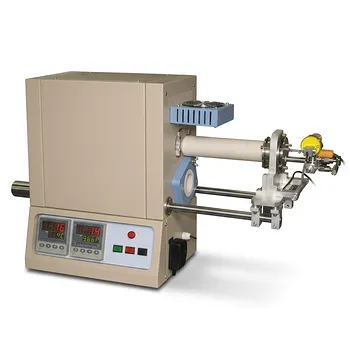
High Temperature Tube Furnace 1500C with Sliding Flanges and 50mm OD for Rapid Thermal Processing Fast Heating and Cooling

High Temperature 1700C Tube Furnace with High Vacuum Turbomolecular Pump System and Multi Channel Mass Flow Controller Gas Mixer

High Temperature 1700C Benchtop Tube Furnace with 5 Inch Heating Zone High Purity Alumina Tube and Vacuum Sealing Flanges
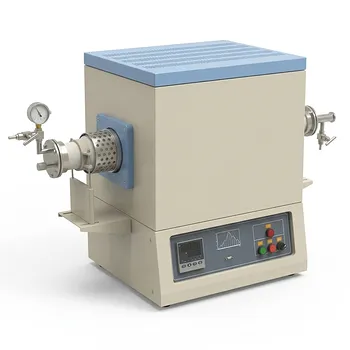
1750°C High Temperature Benchtop Vacuum Atmosphere Tube Furnace with Kanthal Super 1800 Heating Elements and 60mm Alumina Processing Tube

Compact High Temperature 1600C Tube Furnace with 50mm Alumina Tube and Vacuum Flanges for Material Sintering
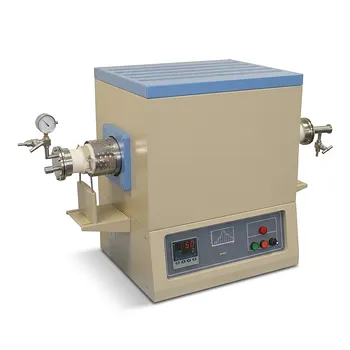
1700C High Temperature Alumina Tube Furnace with 18 Inch Heated Zone and Vacuum Sealing Flanges

1800C High Temperature Compact Vacuum Tube Furnace with 60mm OD Alumina Tube and Kanthal MoSi2 Heating Elements
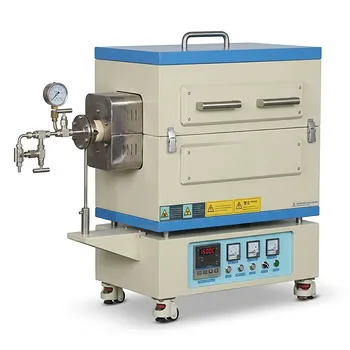
High Temperature Split Tube Furnace 1500C for Material Research Vacuum and Atmosphere Thermal Processing

High Temperature 1700C Vertical Tube Furnace for Powder Spherification and Material Sintering
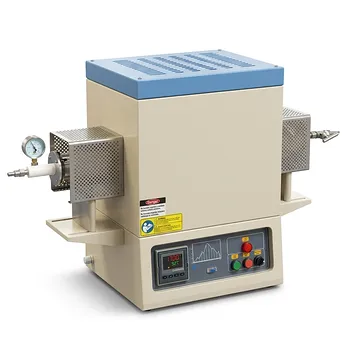
High Temperature Three Zone Tube Furnace 1700C with Alumina Tube and Water Cooled Flanges

High Temperature 1700C Six Zone Split Tube Furnace with Alumina Tube and Water Cooled Flanges
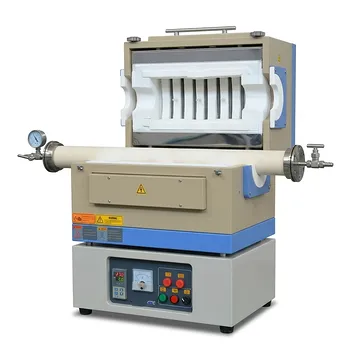
High Temperature 1600C Split Tube Furnace Vacuum Flanges Valves Optional 60mm 80mm Alumina Tube

High Temperature Automated 5 Inch Tube Furnace for Autonomous Material Research and Advanced Laboratory R&D
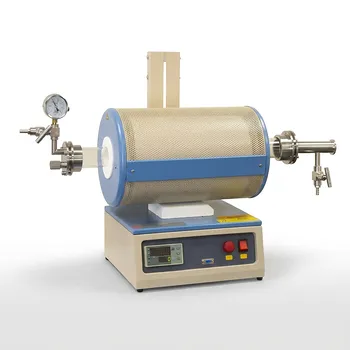
1100C Tube Furnace with Vacuum Flange and Programmable Temperature Controller for Material Science and Industrial Heat Treatment
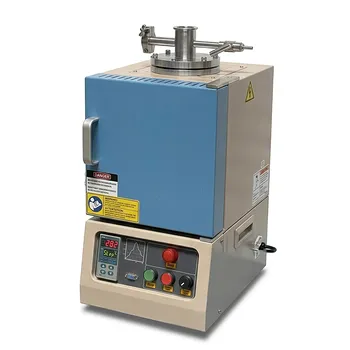
High Temperature Hybrid Muffle and Tube Furnace with Vacuum Capability and PID Control
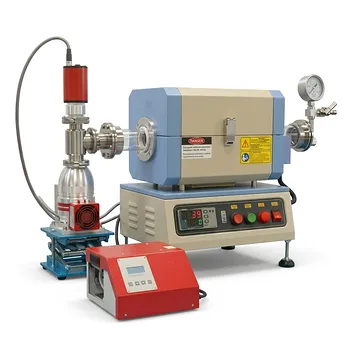
High Vacuum Compact Tube Furnace 1200C with Integrated Turbo Pump System and 8 Inch Heating Zone
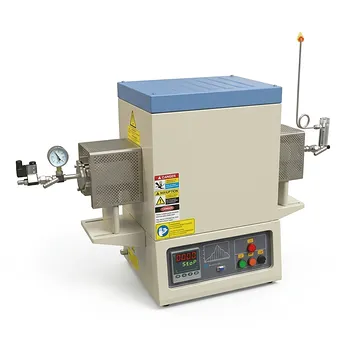
1700C Hydrogen Gas Tube Furnace with 60mm Alumina Process Tube and Integrated Hydrogen Safety Detector
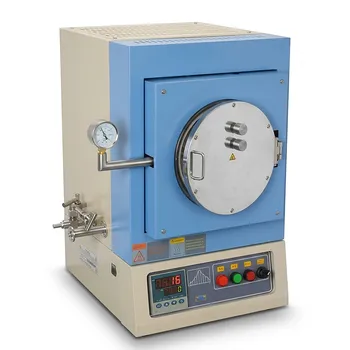
1100°C High Temperature Quartz Chamber Furnace 8 Inch OD with 7.6 Liter Capacity and Vacuum Atmosphere Capability
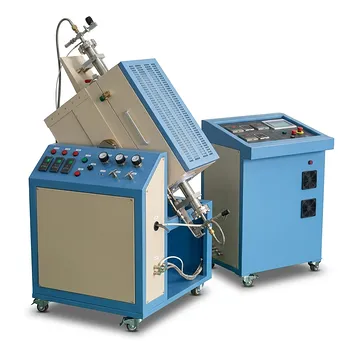
1100C High Pressure Rocking Tube Furnace with 2 Inch Super Alloy Processing Tube for Material Synthesis