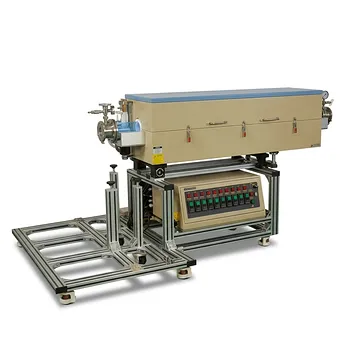
What is the function of a high-temperature tube furnace in the pyrolysis step of the CB@Cu catalyst? Optimize Synthesis
Updated 3 months ago
The high-temperature tube furnace serves as the precision reactor required to transform CB@Cu precursors into a functional catalyst. By maintaining a strictly controlled environment of 600°C for two hours with a gradual heating rate of 3°C/min, the furnace facilitates the thermal decomposition and reduction of metal complexes. This specific process allows copper atoms to be successfully anchored to the carbon black surface, creating the highly dispersed active sites necessary for catalytic performance.
The core function of the tube furnace in CB@Cu synthesis is to provide a uniform thermal field that balances the decomposition of precursors with the atomic-level anchoring of copper. This precision prevents metal aggregation and ensures the catalyst develops a stable, high-surface-area architecture.
Facilitating Controlled Chemical Transformation
Thermal Decomposition of Metal Complexes
The primary role of the furnace is to provide the energy needed to break the chemical bonds within the precursor. At 600°C, the organic or nitrate components of the copper precursor decompose, leaving behind the metal species.
Reduction and Phase Formation
The thermal environment facilitates the reduction of copper ions into their active catalytic state. This transformation is essential for shifting the material from an inactive mixture into a functional composite.
Controlled Reaction Kinetics
The slow ramp rate of 3°C/min is a deliberate strategy to control the speed of the reaction. Rapid heating can lead to uncontrolled gas evolution and structural defects, whereas a slow ramp ensures a steady transition.
Engineering the Catalyst Structure
Atomic Anchoring on Carbon Black
The tube furnace provides the thermodynamic conditions necessary for copper atoms to bond securely to the carbon substrate. This "anchoring" prevents the copper from leaching or moving during subsequent chemical reactions.
Achieving High Dispersion
A uniform thermal field is critical for ensuring that copper atoms do not clump together, a process known as sintering. By maintaining a constant temperature, the furnace ensures that the active sites remain small and widely distributed across the carbon black.
Atmospheric Control and Protection
Though not the heat source itself, the sealed tube design allows for the displacement of oxygen with inert gases like Argon. This prevents the copper from oxidizing prematurely, which would render the catalyst ineffective.
Understanding the Trade-offs
Precision vs. Throughput
While a tube furnace offers unmatched control over the heating profile, it is typically limited to small batch sizes. Scaling this process to industrial levels requires significant engineering to ensure that larger volumes of material receive the same uniform heat treatment.
Energy Consumption and Time
The requirement for a slow heating rate and a multi-hour "soak" time makes this a time-intensive process. Attempting to accelerate this cycle often results in a "sintering" effect, where the copper particles aggregate, drastically reducing the total active surface area.
Sensitivity to Seal Integrity
The effectiveness of the pyrolysis depends entirely on the furnace’s ability to exclude oxygen. Even a minor leak in the tube seals at 600°C can result in the total oxidation of the copper, turning a high-performance catalyst into an inert oxide.
How to Apply This to Your Catalyst Synthesis
- If your primary focus is maximizing catalytic activity: Adhere strictly to the 3°C/min ramp rate to ensure the copper remains in a highly dispersed, "single-atom-like" state.
- If your primary focus is long-term stability: Ensure the 600°C dwell time is fully observed to allow for the complete thermodynamic anchoring of metal atoms to the carbon lattice.
- If your primary focus is material purity: Use a continuous inert gas purge throughout both the heating and the cooling phases to prevent atmospheric contamination.
The high-temperature tube furnace is the fundamental tool for transitioning from a raw chemical mixture to a sophisticated, atomic-scale engineered catalyst.
Summary Table:
| Process Element | Furnace Role | Impact on CB@Cu Catalyst |
|---|---|---|
| Thermal Decomposition | Provides energy to break chemical bonds | Converts precursors into metal species |
| Reduction & Phase Formation | Facilitates transformation into active state | Activates the catalyst for chemical reactions |
| Controlled Ramp (3°C/min) | Manages reaction kinetics | Prevents sintering and structural defects |
| Uniform Thermal Field | Enables thermodynamic atomic anchoring | Ensures high dispersion of copper on carbon |
| Atmospheric Control | Sealed tube design for inert gas (Argon) | Prevents premature copper oxidation |
Master Your Catalyst Synthesis with THERMUNITS Precision
Achieving perfect atomic anchoring and high dispersion for CB@Cu catalysts requires uncompromising thermal control. THERMUNITS is a leading manufacturer of high-temperature laboratory equipment dedicated to advancing material science and industrial R&D. Our systems are engineered to provide the stable, uniform thermal environments necessary for sophisticated heat treatments.
We offer a comprehensive range of thermal solutions tailored to your research needs, including:
- Tube Furnaces (Ideal for precise catalyst pyrolysis and CVD/PECVD)
- Muffle, Vacuum, and Atmosphere Furnaces
- Rotary Furnaces & Electric Rotary Kilns
- Hot Press & Vacuum Induction Melting (VIM) Furnaces
- Dental Furnaces and High-Quality Thermal Elements
Ready to enhance your lab's efficiency and catalyst performance?
Contact our experts today to find the perfect thermal processing solution for your specific application!
References
- Yajing Yao, Shuangqi Hu. Preparation, characterization, and thermal decomposition catalytic activity of novel combustion rate catalysts. DOI: 10.2478/msp-2024-0036
Mentioned Products
- High Temperature Tube Furnace 1500C with Sliding Flanges and 50mm OD for Rapid Thermal Processing Fast Heating and Cooling
- High Temperature 1700C Tube Furnace with High Vacuum Turbomolecular Pump System and Multi Channel Mass Flow Controller Gas Mixer
- High Temperature 1700C Benchtop Tube Furnace with 5 Inch Heating Zone High Purity Alumina Tube and Vacuum Sealing Flanges
- 1750°C High Temperature Benchtop Vacuum Atmosphere Tube Furnace with Kanthal Super 1800 Heating Elements and 60mm Alumina Processing Tube
- Compact High Temperature 1600C Tube Furnace with 50mm Alumina Tube and Vacuum Flanges for Material Sintering
People Also Ask
- How are high-temperature tube furnaces utilized to repair etching damage? Precision Lattice Restoration Solutions
- What role does a high-temperature tube furnace play in the sulfidation heat treatment of CoS@C/MXene nanocomposites? Guide
- What core conditions does a high-temperature tube furnace provide for rGO aerogels? Mastering Precision Synthesis.
- How does precision tube furnace control influence CoFe nanoparticle formation? Master Your Bimetallic Synthesis.
- What role does a high-temperature tube furnace play in CVD synthesis of silicon nanowires? Master VLS Growth Precision.

Tech Team · ThermUnits
Last updated on Jun 02, 2026
Related Products

High Temperature Tube Furnace 1500C with Sliding Flanges and 50mm OD for Rapid Thermal Processing Fast Heating and Cooling

High Temperature 1700C Tube Furnace with High Vacuum Turbomolecular Pump System and Multi Channel Mass Flow Controller Gas Mixer

High Temperature 1700C Benchtop Tube Furnace with 5 Inch Heating Zone High Purity Alumina Tube and Vacuum Sealing Flanges

1750°C High Temperature Benchtop Vacuum Atmosphere Tube Furnace with Kanthal Super 1800 Heating Elements and 60mm Alumina Processing Tube

Compact High Temperature 1600C Tube Furnace with 50mm Alumina Tube and Vacuum Flanges for Material Sintering
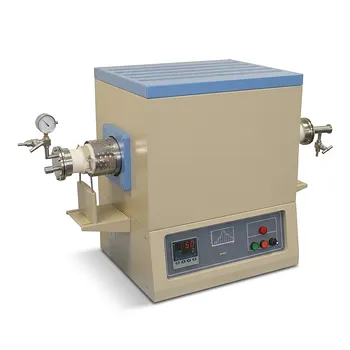
1700C High Temperature Alumina Tube Furnace with 18 Inch Heated Zone and Vacuum Sealing Flanges

1800C High Temperature Compact Vacuum Tube Furnace with 60mm OD Alumina Tube and Kanthal MoSi2 Heating Elements
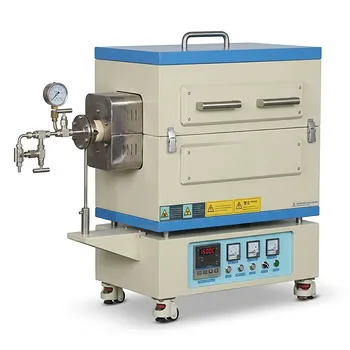
High Temperature Split Tube Furnace 1500C for Material Research Vacuum and Atmosphere Thermal Processing

High Temperature 1700C Vertical Tube Furnace for Powder Spherification and Material Sintering
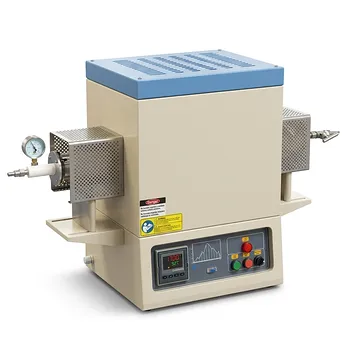
High Temperature Three Zone Tube Furnace 1700C with Alumina Tube and Water Cooled Flanges

High Temperature 1700C Six Zone Split Tube Furnace with Alumina Tube and Water Cooled Flanges
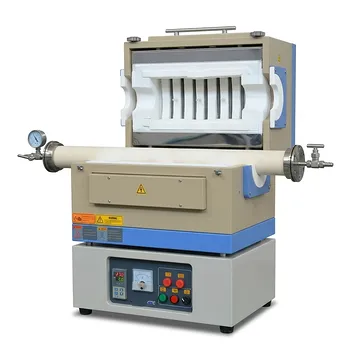
High Temperature 1600C Split Tube Furnace Vacuum Flanges Valves Optional 60mm 80mm Alumina Tube

High Temperature Automated 5 Inch Tube Furnace for Autonomous Material Research and Advanced Laboratory R&D

1100C Tube Furnace with Vacuum Flange and Programmable Temperature Controller for Material Science and Industrial Heat Treatment
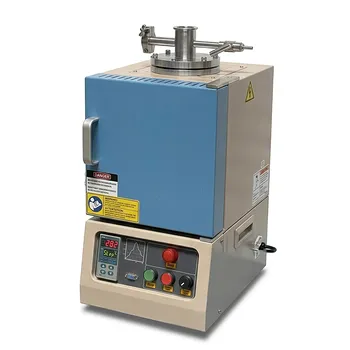
High Temperature Hybrid Muffle and Tube Furnace with Vacuum Capability and PID Control

High Vacuum Compact Tube Furnace 1200C with Integrated Turbo Pump System and 8 Inch Heating Zone
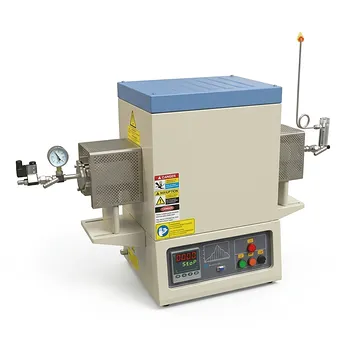
1700C Hydrogen Gas Tube Furnace with 60mm Alumina Process Tube and Integrated Hydrogen Safety Detector

1100°C High Temperature Quartz Chamber Furnace 8 Inch OD with 7.6 Liter Capacity and Vacuum Atmosphere Capability
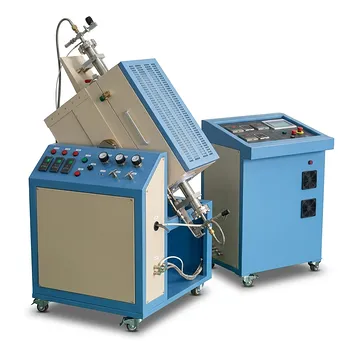
1100C High Pressure Rocking Tube Furnace with 2 Inch Super Alloy Processing Tube for Material Synthesis