What is the function of a high-temperature tube furnace in the sintering process of CoFe2O4/BaTiO3 ceramic targets?
Updated 3 months ago
The high-temperature tube furnace is the critical catalyst for achieving the structural integrity and chemical purity required for ceramic targets. It provides a stable 1000 °C environment with prolonged soaking times—typically between 18 and 24 hours—to drive solid-state reactions and eliminate internal stresses. This process transforms raw powder mixtures into high-density, high-purity CoFe2O4/BaTiO3 targets essential for high-quality pulsed laser deposition (PLD).
The furnace acts as a controlled thermal reactor that facilitates material densification and grain growth through long-range solid-state diffusion. By maintaining a precise 1000 °C environment, it ensures the resulting ceramic target is homogeneous, stress-free, and structurally prepared for the rigors of thin-film deposition.
Facilitating Solid-State Reactions and Phase Formation
Driving Long-Range Cation Diffusion
The primary role of the furnace is to provide the thermal energy necessary for cations to migrate across particle boundaries. At 1000 °C, atoms in the CoFe2O4 and BaTiO3 precursors gain sufficient mobility to move through the lattice, allowing the two phases to bond effectively.
Ensuring Chemical Homogeneity
Stable, extended soaking times allow the chemical composition to become uniform throughout the target. This prevents localized "hot spots" of unreacted material, ensuring that when the target is later used in PLD, the ejected plume accurately represents the intended stoichiometry.
Achieving High-Purity Phase Stability
The furnace environment supports the formation of specific crystal structures while minimizing secondary, unwanted phases. This precision is vital for CoFe2O4/BaTiO3 composites, where the magnetic and ferroelectric properties depend heavily on the purity of the final phase.
Enhancing Physical Properties and Density
Promoting Grain Growth and Coalescence
The high-temperature environment encourages smaller particles to merge into larger, more stable grains. This grain growth is essential for reducing the total surface energy of the material, leading to a more robust ceramic body.
Eliminating Internal Porosity and Voids
As sintering progresses, the interfaces between particles disappear and pores are gradually eliminated. This densification is critical for PLD targets, as any trapped gas or voids can cause the target to crack or "spit" during the laser ablation process.
Relieving Internal Mechanical Stresses
The high-temperature annealing effect of the tube furnace allows the material to relax. By slowly heating and cooling within a controlled environment, the furnace removes the internal stresses generated during the initial pressing of the ceramic "green body."
Understanding the Trade-offs and Pitfalls
The Risk of Over-Sintering
While long soaking times (up to 24 hours) promote density, excessive time or temperature can lead to exaggerated grain growth. This can make the target brittle or alter the intended electromagnetic properties of the CoFe2O4/BaTiO3 composite.
Managing Thermal Gradients
If the heating or cooling rates are too aggressive, the ceramic target may develop thermal shock cracks. Even a high-purity target becomes useless if it loses its structural integrity due to a poorly managed temperature ramp.
Atmospheric Sensitivity
Although the primary focus is temperature, the atmosphere within the tube must be managed. Contaminants or incorrect oxygen levels can introduce defects into the crystal lattice, potentially degrading the performance of the final thin films.
How to Optimize Your Sintering Process
Success in producing high-quality ceramic targets depends on aligning your furnace parameters with your specific material requirements.
- If your primary focus is Pulsed Laser Deposition (PLD) quality: Prioritize the maximum 24-hour soaking time to ensure total densification and minimize target "spitting" during ablation.
- If your primary focus is maintaining precise stoichiometry: Closely monitor the 1000 °C stability to prevent the volatilization of sensitive elements while ensuring solid-state reactions are complete.
- If your primary focus is mechanical durability: Use a slow, controlled cooling ramp (annealing) within the furnace to ensure all internal stresses are fully eliminated before the target is removed.
A properly executed sintering cycle in a high-temperature tube furnace is the fundamental prerequisite for any high-performance electronic or magnetic ceramic application.
Summary Table:
| Key Sintering Function | Impact on CoFe2O4/BaTiO3 Targets |
|---|---|
| 1000°C Thermal Stability | Drives solid-state reaction and cation diffusion for phase bonding. |
| 18-24 Hour Soaking | Ensures chemical homogeneity and eliminates unreacted "hot spots." |
| Controlled Densification | Eliminates pores and voids to prevent "spitting" during laser ablation. |
| Annealing & Stress Relief | Removes internal mechanical stresses to prevent target cracking. |
| Grain Growth Control | Optimizes crystal structure for superior electromagnetic properties. |
Elevate Your Material Research with THERMUNITS Precision
Achieving the perfect stoichiometry and density in CoFe2O4/BaTiO3 ceramic targets requires absolute thermal precision. THERMUNITS is a leading manufacturer of high-performance laboratory equipment, providing the specialized thermal solutions needed for advanced material science and industrial R&D.
Whether you are performing solid-state synthesis or complex thin-film deposition preparations, our comprehensive range of equipment—including Tube Furnaces, Vacuum and Atmosphere Furnaces, Muffle Furnaces, and CVD/PECVD systems—ensures uniform heat distribution and stable soaking environments.
Why partner with THERMUNITS?
- Precision Control: Master your sintering cycles with advanced temperature accuracy.
- Versatile Solutions: From Rotary and Hot Press furnaces to Vacuum Induction Melting (VIM), we cover all heat treatment needs.
- Expert Support: Our equipment is designed to minimize thermal gradients and maximize target integrity.
Ready to optimize your high-temperature processing? Contact our technical team today to find the ideal furnace solution for your laboratory.
References
- João Oliveira, Bernardo Almeida. Structural, Magnetic, and Dielectric Properties of Laser-Ablated CoFe2O4/BaTiO3 Bilayers Deposited over Highly Doped Si(100). DOI: 10.3390/ma17235707
Mentioned Products
- High Temperature Tube Furnace 1500C with Sliding Flanges and 50mm OD for Rapid Thermal Processing Fast Heating and Cooling
- High Temperature 1700C Tube Furnace with High Vacuum Turbomolecular Pump System and Multi Channel Mass Flow Controller Gas Mixer
- High Temperature 1700C Benchtop Tube Furnace with 5 Inch Heating Zone High Purity Alumina Tube and Vacuum Sealing Flanges
- 1750°C High Temperature Benchtop Vacuum Atmosphere Tube Furnace with Kanthal Super 1800 Heating Elements and 60mm Alumina Processing Tube
- Compact High Temperature 1600C Tube Furnace with 50mm Alumina Tube and Vacuum Flanges for Material Sintering
People Also Ask
- How are high-temperature tube furnaces utilized to repair etching damage? Precision Lattice Restoration Solutions
- What role does a high-temperature tube furnace play in CVD synthesis of silicon nanowires? Master VLS Growth Precision.
- What core conditions does a high-temperature tube furnace provide for rGO aerogels? Mastering Precision Synthesis.
- What role does a high-temperature tube furnace play in the sulfidation heat treatment of CoS@C/MXene nanocomposites? Guide
- How does precision tube furnace control influence CoFe nanoparticle formation? Master Your Bimetallic Synthesis.

Tech Team · ThermUnits
Last updated on Jun 03, 2026
Related Products

High Temperature Tube Furnace 1500C with Sliding Flanges and 50mm OD for Rapid Thermal Processing Fast Heating and Cooling

High Temperature 1700C Tube Furnace with High Vacuum Turbomolecular Pump System and Multi Channel Mass Flow Controller Gas Mixer

High Temperature 1700C Benchtop Tube Furnace with 5 Inch Heating Zone High Purity Alumina Tube and Vacuum Sealing Flanges

1750°C High Temperature Benchtop Vacuum Atmosphere Tube Furnace with Kanthal Super 1800 Heating Elements and 60mm Alumina Processing Tube

Compact High Temperature 1600C Tube Furnace with 50mm Alumina Tube and Vacuum Flanges for Material Sintering
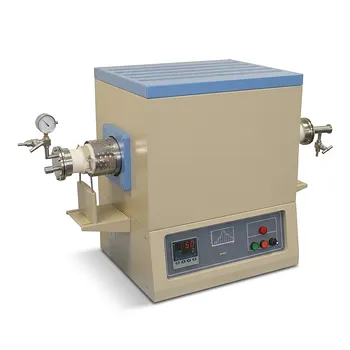
1700C High Temperature Alumina Tube Furnace with 18 Inch Heated Zone and Vacuum Sealing Flanges

1800C High Temperature Compact Vacuum Tube Furnace with 60mm OD Alumina Tube and Kanthal MoSi2 Heating Elements
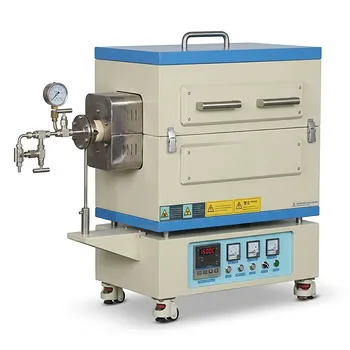
High Temperature Split Tube Furnace 1500C for Material Research Vacuum and Atmosphere Thermal Processing

High Temperature 1700C Vertical Tube Furnace for Powder Spherification and Material Sintering
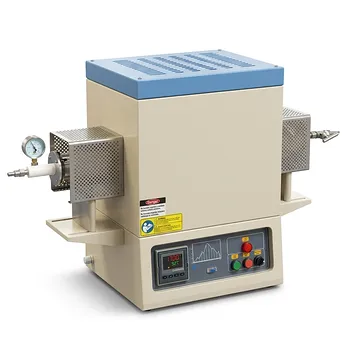
High Temperature Three Zone Tube Furnace 1700C with Alumina Tube and Water Cooled Flanges

High Temperature 1700C Six Zone Split Tube Furnace with Alumina Tube and Water Cooled Flanges
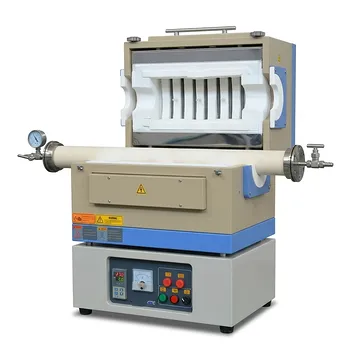
High Temperature 1600C Split Tube Furnace Vacuum Flanges Valves Optional 60mm 80mm Alumina Tube

High Temperature Automated 5 Inch Tube Furnace for Autonomous Material Research and Advanced Laboratory R&D

1100C Tube Furnace with Vacuum Flange and Programmable Temperature Controller for Material Science and Industrial Heat Treatment
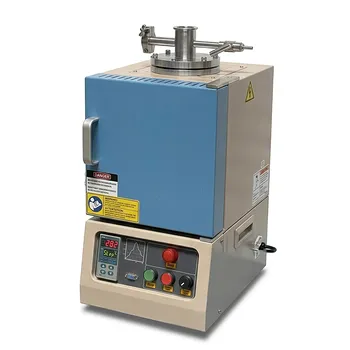
High Temperature Hybrid Muffle and Tube Furnace with Vacuum Capability and PID Control

High Vacuum Compact Tube Furnace 1200C with Integrated Turbo Pump System and 8 Inch Heating Zone
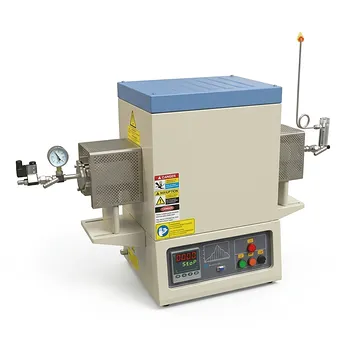
1700C Hydrogen Gas Tube Furnace with 60mm Alumina Process Tube and Integrated Hydrogen Safety Detector

1100°C High Temperature Quartz Chamber Furnace 8 Inch OD with 7.6 Liter Capacity and Vacuum Atmosphere Capability
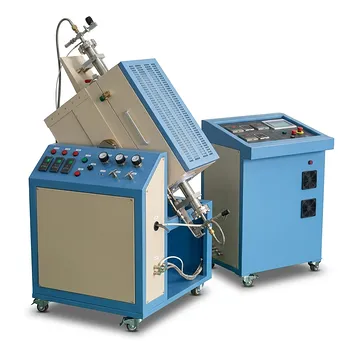
1100C High Pressure Rocking Tube Furnace with 2 Inch Super Alloy Processing Tube for Material Synthesis