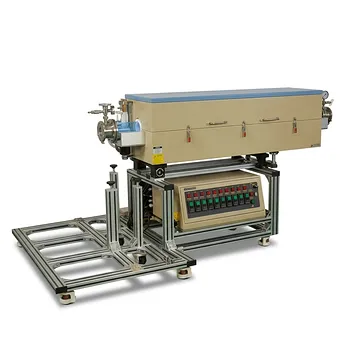
What is the function of a high-temperature tube furnace in the two-step synthesis of LiNiO2? Phase & Purity Control
Updated 3 months ago
The high-temperature tube furnace is the critical vessel for achieving the precise phase transformation and structural purity required in $LiNiO_2$ (LNO) synthesis. Specifically, it provides the multi-stage thermal environment—ranging from initial synthesis at 550°C to final thermal decomposition between 725°C and 900°C—necessary to convert lithium-rich precursors into a high-performance layered hexagonal structure.
The tube furnace acts as a high-precision reactor that facilitates the structural transition from monoclinic to hexagonal phases while maintaining the strict oxygen-rich atmosphere needed to stabilize nickel oxidation states. It serves as the primary tool for controlling grain growth, reducing internal point defects, and suppressing cation mixing.
Orchestrating Multi-Stage Phase Transformations
Executing the Two-Step Synthesis
The furnace allows for a distinct two-step thermal profile essential for LNO production. The first stage, often a pre-annealing or initial synthesis at 480°C to 550°C, facilitates the early solid-state reactions between lithium salts and precursors.
Driving Hexagonal Phase Conversion
During the second stage, typically ranging from 710°C to 900°C, the furnace induces thermal decomposition. This process is what drives the structural shift from a lithium-rich monoclinic phase ($Li_{1.2}Ni_{0.8}O_2$) into the desired layered hexagonal phase characteristic of high-capacity cathode materials.
Promoting Grain Growth and Crystallinity
By maintaining a stable high-temperature environment over prolonged periods, the furnace facilitates the migration and arrangement of metal ions. This thermal induction promotes grain growth and significantly reduces the density of internal point defects, which are detrimental to battery cycle life.
Critical Control of the Synthesis Environment
Suppressing Cation Mixing
One of the most vital functions of the tube furnace is its ability to maintain a constant oxygen flow atmosphere. This specific environment is required to suppress cation mixing, a phenomenon where nickel ions occupy lithium sites, which would otherwise degrade the electrochemical performance of the LNO.
Stabilizing Nickel Oxidation States
The furnace’s sealed environment ensures that nickel remains in the correct oxidation state during the heating process. Precise temperature regulation prevents the unintended reduction of $Ni^{3+}$ to $Ni^{2+}$, which is a common challenge in synthesizing pure $LiNiO_2$.
Regulating Atomic Diffusion Depth
The furnace control system dictates the sintering duration, which directly influences how atoms diffuse within the cathode particles. This precision allows researchers to fine-tune element concentration gradients, such as aluminum dopants, to enhance the structural stability of the material.
Understanding the Trade-offs and Pitfalls
Temperature Sensitivity and Phase Purity
If the furnace temperature exceeds the optimal range (e.g., above 900°C), it can lead to thermal instability and the loss of lithium from the lattice. This results in a non-stoichiometric product that lacks the high energy density expected from LNO.
Atmospheric Consistency Challenges
Failure to maintain a uniform oxygen flow throughout the tube can lead to localized variations in the material's properties. Even slight fluctuations in oxygen pressure within the furnace can cause inhomogeneous phase distribution, leading to "dead spots" in the final battery cell.
Sintering Time vs. Particle Agglomeration
While longer sintering times in the furnace improve crystallinity, they can also lead to excessive particle agglomeration. This reduces the surface area available for lithium-ion exchange, potentially lowering the rate capability of the resulting cathode.
How to Apply This to Your Synthesis Goals
Optimizing Your LNO Production
To achieve the best results in your $LiNiO_2$ synthesis, tailor your tube furnace parameters to your specific performance targets:
- If your primary focus is Maximum Specific Capacity: Prioritize a stable oxygen-rich atmosphere and a final annealing temperature near 710°C to ensure high phase purity and minimal cation mixing.
- If your primary focus is Long-Term Cycle Stability: Use a multi-stage heating profile that includes a prolonged final soak at higher temperatures (800°C+) to minimize point defects and maximize grain crystallinity.
- If your primary focus is Doping or Surface Modification: Carefully regulate the sintering duration to control the diffusion depth of dopants like aluminum, ensuring a stable concentration gradient.
The tube furnace is not merely a heat source, but a precision instrument that dictates the fundamental atomic architecture of the $LiNiO_2$ cathode.
Summary Table:
| Key Function | Synthesis Condition | Primary Benefit |
|---|---|---|
| Phase Conversion | 710°C – 900°C | Drives transition from monoclinic to hexagonal structure |
| Atmosphere Control | Constant Oxygen Flow | Suppresses cation mixing and stabilizes $Ni^{3+}$ states |
| Thermal Induction | Prolonged High Temp | Promotes grain growth and minimizes internal point defects |
| Diffusion Control | Sintering Duration | Regulates atomic diffusion depth for stable doping profiles |
| Phase Stabilization | 480°C – 550°C | Facilitates initial solid-state reactions in pre-annealing |
Elevate Your Battery Material Research with THERMUNITS
Precision is the backbone of high-performance cathode synthesis. THERMUNITS is a leading manufacturer of high-temperature laboratory equipment specifically designed for material science and industrial R&D. Our advanced Tube Furnaces and Atmosphere Furnaces provide the ultra-stable thermal environments and precise oxygen-flow control necessary to eliminate cation mixing and ensure phase purity in $LiNiO_2$ production.
From Vacuum and CVD systems to Rotary Kilns and Hot Press Furnaces, we offer a comprehensive range of thermal processing solutions tailored to your specific research goals. Let us help you achieve superior crystallinity and electrochemical performance.
Ready to optimize your heat treatment process? Contact our technical experts today to find the perfect furnace solution for your laboratory!
References
- Leonhard Karger, Torsten Brezesinski. From Li<sub>2</sub>NiO<sub>3</sub> to high-performance LiNiO<sub>2</sub> cathodes for application in Li-ion and all-solid-state batteries. DOI: 10.1039/d4cc03873h
Mentioned Products
- High Temperature Tube Furnace 1500C with Sliding Flanges and 50mm OD for Rapid Thermal Processing Fast Heating and Cooling
- High Temperature 1700C Tube Furnace with High Vacuum Turbomolecular Pump System and Multi Channel Mass Flow Controller Gas Mixer
- High Temperature 1700C Benchtop Tube Furnace with 5 Inch Heating Zone High Purity Alumina Tube and Vacuum Sealing Flanges
- 1750°C High Temperature Benchtop Vacuum Atmosphere Tube Furnace with Kanthal Super 1800 Heating Elements and 60mm Alumina Processing Tube
- Compact High Temperature 1600C Tube Furnace with 50mm Alumina Tube and Vacuum Flanges for Material Sintering
People Also Ask
- How are high-temperature tube furnaces utilized to repair etching damage? Precision Lattice Restoration Solutions
- What core conditions does a high-temperature tube furnace provide for rGO aerogels? Mastering Precision Synthesis.
- What role does a high-temperature tube furnace play in CVD synthesis of silicon nanowires? Master VLS Growth Precision.
- How does precision tube furnace control influence CoFe nanoparticle formation? Master Your Bimetallic Synthesis.
- What role does a high-temperature tube furnace play in the sulfidation heat treatment of CoS@C/MXene nanocomposites? Guide

Tech Team · ThermUnits
Last updated on Jun 02, 2026
Related Products

High Temperature Tube Furnace 1500C with Sliding Flanges and 50mm OD for Rapid Thermal Processing Fast Heating and Cooling

High Temperature 1700C Tube Furnace with High Vacuum Turbomolecular Pump System and Multi Channel Mass Flow Controller Gas Mixer

High Temperature 1700C Benchtop Tube Furnace with 5 Inch Heating Zone High Purity Alumina Tube and Vacuum Sealing Flanges

1750°C High Temperature Benchtop Vacuum Atmosphere Tube Furnace with Kanthal Super 1800 Heating Elements and 60mm Alumina Processing Tube

Compact High Temperature 1600C Tube Furnace with 50mm Alumina Tube and Vacuum Flanges for Material Sintering
1700C High Temperature Alumina Tube Furnace with 18 Inch Heated Zone and Vacuum Sealing Flanges

1800C High Temperature Compact Vacuum Tube Furnace with 60mm OD Alumina Tube and Kanthal MoSi2 Heating Elements
High Temperature Split Tube Furnace 1500C for Material Research Vacuum and Atmosphere Thermal Processing

High Temperature 1700C Vertical Tube Furnace for Powder Spherification and Material Sintering
High Temperature Three Zone Tube Furnace 1700C with Alumina Tube and Water Cooled Flanges

High Temperature 1700C Six Zone Split Tube Furnace with Alumina Tube and Water Cooled Flanges
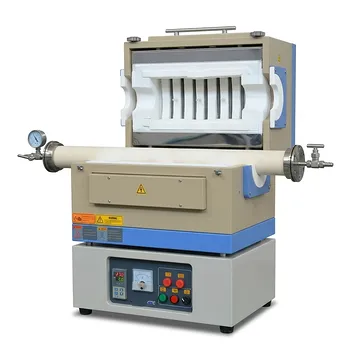
High Temperature 1600C Split Tube Furnace Vacuum Flanges Valves Optional 60mm 80mm Alumina Tube

High Temperature Automated 5 Inch Tube Furnace for Autonomous Material Research and Advanced Laboratory R&D

1100C Tube Furnace with Vacuum Flange and Programmable Temperature Controller for Material Science and Industrial Heat Treatment
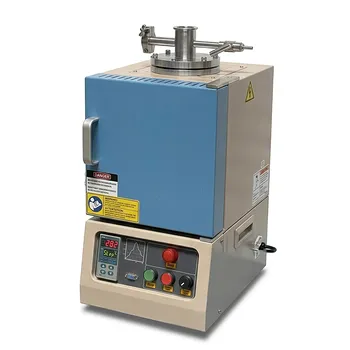
High Temperature Hybrid Muffle and Tube Furnace with Vacuum Capability and PID Control
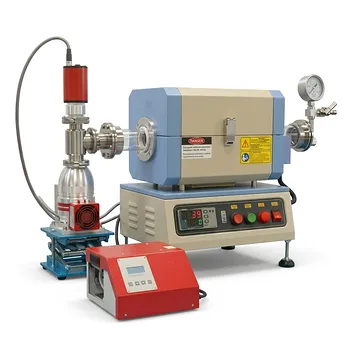
High Vacuum Compact Tube Furnace 1200C with Integrated Turbo Pump System and 8 Inch Heating Zone

1700C Hydrogen Gas Tube Furnace with 60mm Alumina Process Tube and Integrated Hydrogen Safety Detector
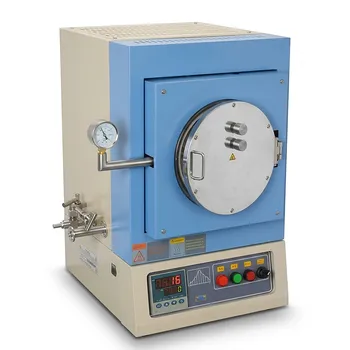
1100°C High Temperature Quartz Chamber Furnace 8 Inch OD with 7.6 Liter Capacity and Vacuum Atmosphere Capability
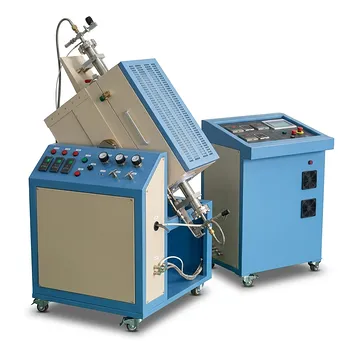
1100C High Pressure Rocking Tube Furnace with 2 Inch Super Alloy Processing Tube for Material Synthesis