What is the function of a K-type thermocouple in monitoring the temperature of a catalytic oxidation reaction zone?
Updated 3 months ago
The K-type thermocouple functions as the critical sensory link between the chemical reaction and the heating control system. In a catalytic oxidation reaction zone, it provides real-time data to detect the light-off temperature (the point where the reaction begins) and allows for the precise adjustment of external heating to maintain isothermal conditions.
The K-type thermocouple is not merely a thermometer but a feedback sensor that enables researchers to stabilize a volatile, exothermic process. By capturing sudden temperature jumps, it ensures the reactor remains within specific kinetic boundaries required for accurate data and material safety.
Monitoring Exothermic Thermal Dynamics
Detecting the Reaction "Light-Off"
In volatile organic compound (VOC) oxidation, the process is exothermic, meaning it generates its own heat. A K-type thermocouple placed in direct contact with the catalyst bed is sensitive enough to detect the "light-off" point where the temperature suddenly jumps.
Tracking Internal vs. Ambient Heat
In many reactor configurations, thermocouples are used in a dual-channel setup. One monitors the ambient furnace temperature while the other tracks the material core, allowing technicians to identify exactly when the sample's internal heat exceeds the chamber's temperature.
Visualizing Thermal Inflection Points
By recording the inflection point of temperature changes, the thermocouple helps determine induction times and material reactivity. This is vital for evaluating how different catalysts behave under varying thermal loads.
Precision Control and System Feedback
Maintaining Isothermal Conditions
For kinetic testing to be valid, the temperature must remain constant. The thermocouple provides the feedback necessary to regulate the power of the external heating furnace, offsetting the heat produced by the chemical reaction itself.
Integration with Closed-Loop Systems
The thermocouple converts thermal energy into electrical signals that feed into a closed-loop control system. This integration allows the system to follow strict heating programs, such as maintaining a specific rate like 10 °C/min or holding steady between 600°C and 800°C.
Ensuring Multi-Point Accuracy
In larger or more complex reaction zones, multi-point K-type thermocouples are used to capture thermal fluctuations across different axes. This redundancy validates the accuracy of the heating furnace and ensures that the reaction zone is uniform.
Understanding the Trade-offs and Limitations
Environmental Interference
K-type thermocouples can be susceptible to electromagnetic interference and measurement noise in industrial environments. To ensure stable control, they must be paired with high-quality signal transmitters and proper shielding.
Durability and Calibration
While versatile, these sensors can degrade over time when exposed to the harsh, high-temperature environments of a catalytic reactor (often exceeding 1000 K). Regular calibration is required to prevent "drift," where the reported temperature begins to deviate from the actual temperature.
Response Time Lag
The physical placement of the thermocouple—whether it is embedded in a wall or placed in direct contact with the catalyst—affects its response time. A slight lag in measurement can lead to "overshooting" the target temperature if the control system is not properly tuned to the sensor's speed.
Applying This to Your Project
Recommendations for Implementation
- If your primary focus is kinetic accuracy: Place the thermocouple in direct, physical contact with the catalyst bed to capture the most immediate thermal shifts.
- If your primary focus is reactor safety: Utilize a dual-channel configuration to monitor the delta between the furnace chamber and the reaction core to prevent thermal runaway.
- If your primary focus is experimental repeatability: Use a multi-point K-type array to ensure the entire reaction zone adheres to your preset temperature profile.
- If your primary focus is high-temperature durability: Ensure your thermocouples are housed in appropriate protective sheathing and use precision transmitters to filter out electrical noise.
Precise thermal monitoring transforms a volatile oxidation process into a controlled, measurable scientific experiment.
Summary Table:
| Key Function | Benefit for Research | Implementation Tip |
|---|---|---|
| Light-Off Detection | Captures the exact start of exothermic reactions | Place probe in physical contact with catalyst |
| Isothermal Stability | Ensures valid kinetic data by fixing temperatures | Use as feedback for closed-loop power control |
| Dual-Channel Tracking | Differentiates reaction heat from furnace heat | Monitor both the furnace ambient and sample core |
| Multi-Point Accuracy | Validates uniformity across the reaction zone | Use sensor arrays to map thermal fluctuations |
Optimize Your Thermal Research with THERMUNITS
Precise temperature control is the backbone of successful material science and industrial R&D. As a leading manufacturer of high-temperature laboratory equipment, THERMUNITS offers the specialized tools you need to stabilize volatile reactions and ensure experimental repeatability.
From high-precision Muffle, Vacuum, and Tube furnaces to advanced CVD/PECVD systems and Rotary Kilns, our thermal processing solutions are engineered for accuracy and durability. Whether you are monitoring catalytic oxidation or developing new materials, our expertise in thermal elements and furnace design ensures your lab stays within exact kinetic boundaries.
Ready to elevate your heat treatment precision?
Contact our experts today to find the perfect solution for your R&D goals!
References
- Ramunė Sidaraitė, Tadas Dambrauskas. Kinetic Study and Catalytic Activity of Cr3+ Catalyst Supported on Calcium Silicate Hydrates for VOC Oxidation. DOI: 10.3390/ma17143489
Mentioned Products
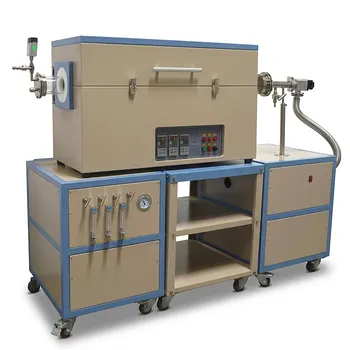
- High Temperature Three Zone Tube Furnace 1700C with Alumina Tube and Water Cooled Flanges
- Triple Tube Compact Hybrid Muffle Furnace 1000C High Vacuum Thermal Processing System
- High Temperature Benchtop Muffle Furnace with Quartz Observation Window for Thermal Imaging and Material Analysis
- High Temperature Tube Furnace 1500C with Sliding Flanges and 50mm OD for Rapid Thermal Processing Fast Heating and Cooling
- 5 Inch Three Zone Rotary Tube Furnace with Integrated Gas Delivery System and 1200C Capability for Advanced Material CVD Processing
People Also Ask
- What functions does a 3-zone tube furnace provide for graphene-coated alumina fibers? Expert CVD Heat Treatment Guide
- What is the role of a high-temperature tube furnace in the calcination process of ZnO/In2O3 nanocomposites?
- How are high-temperature tube furnaces utilized to repair etching damage? Precision Lattice Restoration Solutions
- What is the function of a high-temperature tube furnace in the synthesis of graphene oxide? Mastering LPCVD Processes
- How does a high-temperature tube furnace facilitate MOF-derived Co3O4 synthesis? Precision Control for Advanced Materials

Tech Team · ThermUnits
Last updated on Jun 03, 2026
Related Products
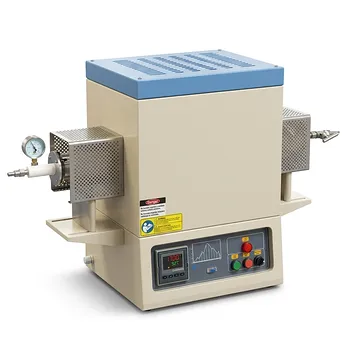
High Temperature Three Zone Tube Furnace 1700C with Alumina Tube and Water Cooled Flanges
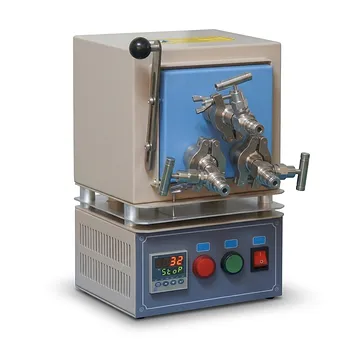
Triple Tube Compact Hybrid Muffle Furnace 1000C High Vacuum Thermal Processing System
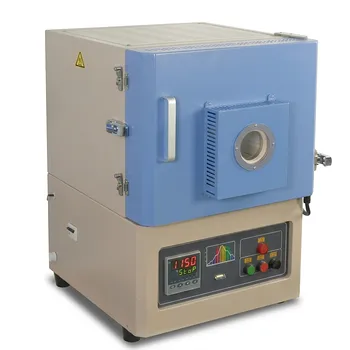
High Temperature Benchtop Muffle Furnace with Quartz Observation Window for Thermal Imaging and Material Analysis

High Temperature Tube Furnace 1500C with Sliding Flanges and 50mm OD for Rapid Thermal Processing Fast Heating and Cooling

5 Inch Three Zone Rotary Tube Furnace with Integrated Gas Delivery System and 1200C Capability for Advanced Material CVD Processing
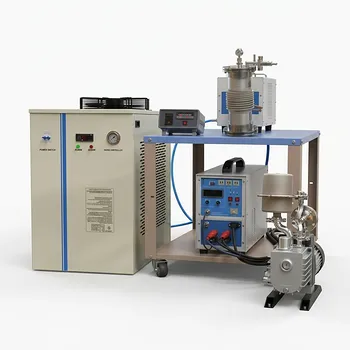
Induction Heating System with Temperature Control for High Temperature Vacuum Sintering and Melting
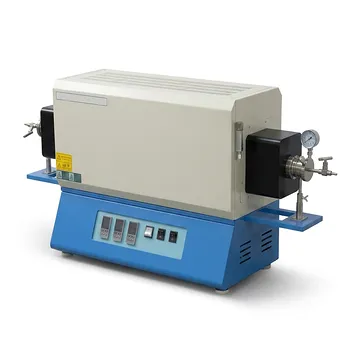
High Temperature Three Temperature Zone Tube Furnace for Advanced Material Science Sintering and Chemical Vapor Deposition Applications
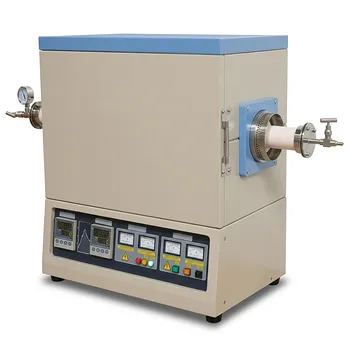
High Temperature 1700C Dual Zone Tube Furnace for Material Science and Industrial Chemical Vapor Deposition Research
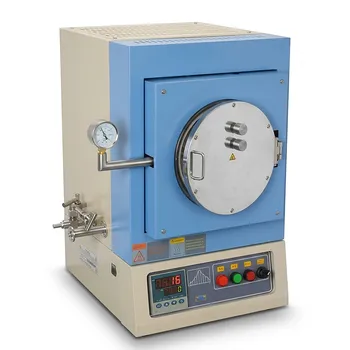
1100°C High Temperature Quartz Chamber Furnace 8 Inch OD with 7.6 Liter Capacity and Vacuum Atmosphere Capability
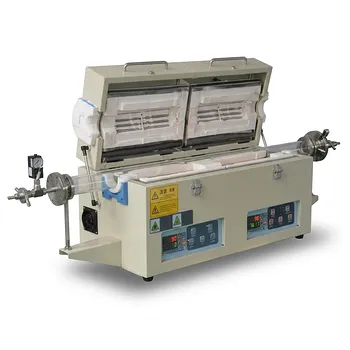
Elongated Two Temperature Zone Pipe Furnace for Industrial Heat Treatment and Material Science Research
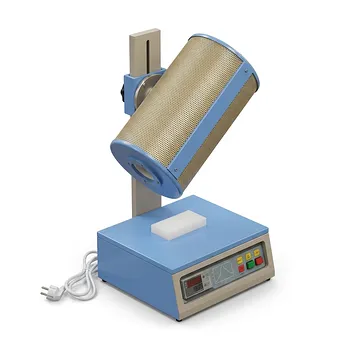
1100°C Vertical Laboratory Furnace for DIY Tubular Reactors with PID Temperature Controller
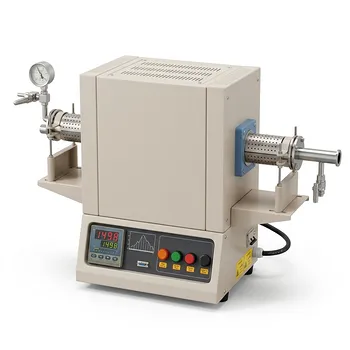
1500C High Temperature Compact Tube Furnace 2 Inch OD with Vacuum Flanges and Complete Accessories
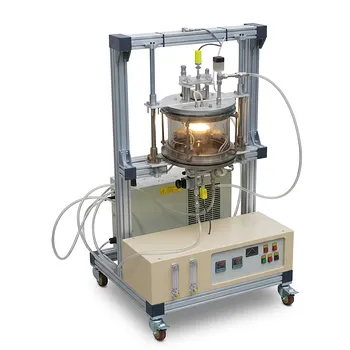
Two Zones CSS Furnace for Rapid Thermal Processing Thin Film Coating 3 Inch Diameter 650C
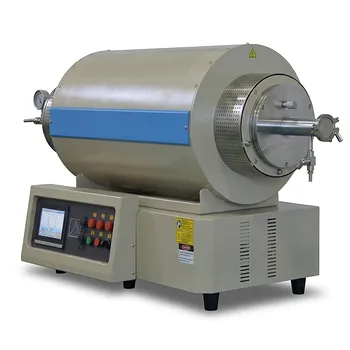
1200C Max Three Zone Tube Furnace 6 Inch OD Max with Tube and Flange
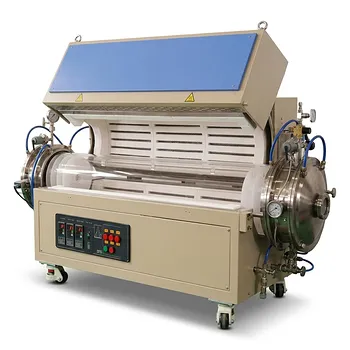
High Temperature Three Zone Split Tube Furnace 1200C Max 35.4 Inch Heating Length 8 Inch ID Tube
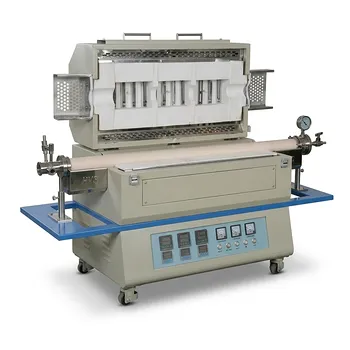
Three Temperature Zone Fast Heating Furnace 1500C Laboratory High Precision Thermal Processing System
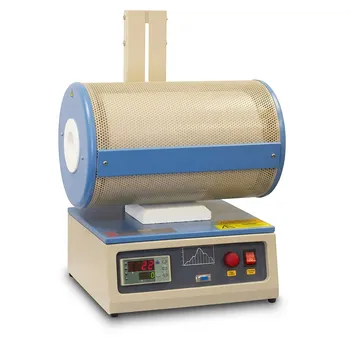
Multi Position Tube Furnace 1100C for Laboratory Material Research and Advanced Industrial Thermal Processing
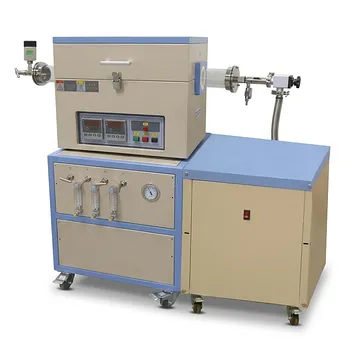
Dual Zone Quartz Tube Furnace with 80mm Diameter 1200C Max Temperature 3 Channel Gas Mixer and Vacuum Pump System
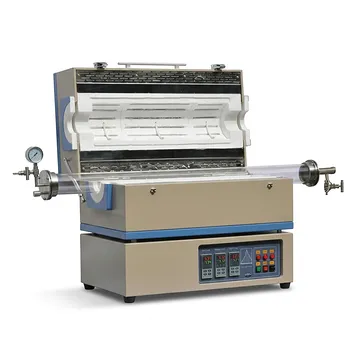
24 Inch Three Zone Split Tube Furnace with Optional Quartz Tube and Vacuum Flange System for High Temperature Material Synthesis