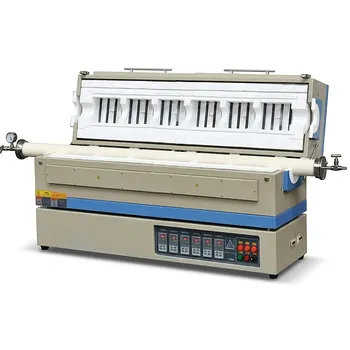
What is the function of a tube furnace equipped with atmosphere control during the nickel electrode reduction process?
Updated 3 months ago
The primary function of a tube furnace with atmosphere control in nickel electrode reduction is to provide a strictly regulated thermal and chemical environment that transforms nickel oxides or precursors into a metallic state. This process utilizes reducing gas mixtures, such as hydrogen-argon (Ar/H2), to drive the chemical reaction while simultaneously managing the material's final physical properties. Precise control is essential for creating the microporous structures and surface characteristics required for high-performance electrochemical applications.
Core Takeaway: Atmosphere-controlled tube furnaces serve as the catalyst for phase transformation, providing the chemical driving force to reduce nickel while fine-tuning the electrode’s microstructure, nanoparticle distribution, and bonding integrity.
Driving Chemical Transformation and Phase Change
Precise Reduction of Nickel Precursors
The furnace provides the high-temperature thermal field necessary to fully reduce nickel oxide or catalyst precursors into their metallic state. By introducing reducing gases like hydrogen-argon or hydrogen-nitrogen mixtures, the furnace creates a chemical environment that strips oxygen from the nickel compounds.
Facilitating Nickel Exsolution
In advanced electrode synthesis, the furnace regulates the driving force required for nickel cations to migrate from within a ceramic lattice (such as a perovskite) to the surface. This "exsolution" process, often occurring between 600°C and 800°C, creates highly dispersed metallic nanoparticles that are partially embedded in the substrate.
Enabling In-Situ Alloying
The controlled environment allows for complex, in-situ reactions where exsolved nickel can interact with other surface elements. For instance, the furnace can be used to guide the formation of platinum-nickel (Pt-Ni) alloy nanoparticles with a narrow size distribution, which significantly enhances catalytic activity.
Engineering Electrode Microstructure
Introduction of Microporous Structures
As nickel oxide reduces to metallic nickel, the material undergoes volume contraction. The tube furnace manages this transition to introduce specific microporous structures into the electrode, which increases the active surface area available for electrochemical reactions.
Maintaining Surface Roughness and Bonding
Precise atmospheric control ensures that the reduction process does not smooth out necessary surface irregularities. It maintains the surface roughness required for performance and ensures a strong mechanical bond between the reduced catalyst particles and the underlying substrate.
Tuning Nanoparticle Size
By adjusting the annealing temperature and the duration of the thermal treatment, operators can finely tune the particle size of the nickel. This is critical for gas sensing and catalytic applications, where the number of active sites is directly tied to the size and distribution of the metallic nanoparticles.
Managing Complex Reduction Kinetics
Selective Reduction and Oxidation Prevention
The furnace allows for the prioritized reduction of specific elements, such as reducing nickel while controlling the reduction levels of iron in laterite ores. Simultaneously, the controlled atmosphere (often using inert gases like Argon or Nitrogen) prevents the unwanted oxidation of sensitive components during high-temperature processing.
Creating Oxygen Vacancies
Beyond simple metal reduction, the furnace can be used to precisely introduce defects or oxygen vacancies into a material's lattice. This is achieved by regulating the gas composition and temperature to facilitate specific surface reactions that enhance properties like visible light absorption or ionic conductivity.
Understanding the Trade-offs and Challenges
Thermal Gradients and Gas Flow
While tube furnaces offer high precision, the internal environment can suffer from temperature gradients or uneven gas flow. If the reducing gas does not reach all parts of the sample uniformly, the electrode may exhibit inconsistent catalytic activity or structural weak points.
Risk of Sintering and Over-Reduction
Maintaining the balance between complete reduction and over-exposure is difficult. Excessive temperatures or prolonged dwell times can lead to "sintering," where nanoparticles merge into larger clusters, drastically reducing the surface area and the effectiveness of the electrode.
How to Apply This to Your Project
Making the Right Choice for Your Goal
- If your primary focus is maximizing catalytic surface area: Prioritize precise control over the heating curve and cooling rates to maximize volume contraction and prevent nanoparticle sintering.
- If your primary focus is alloy formation (e.g., Pt-Ni): Use a furnace with high-precision mass flow controllers to maintain an exact hydrogen-to-argon ratio, ensuring the chemical driving force is consistent for alloy nucleation.
- If your primary focus is preventing secondary phase oxidation: Ensure the furnace system has a high-integrity vacuum or purging system to eliminate residual oxygen before the heating cycle begins.
The controlled environment of a tube furnace is the decisive factor in transforming a simple oxide precursor into a high-performance, nanostructured metallic electrode.
Summary Table:
| Key Function | Impact on Nickel Electrode | Technical Benefit |
|---|---|---|
| Chemical Reduction | Transforms nickel oxides into metallic state | High-purity phase conversion via Ar/H2 gas |
| Microstructure Engineering | Creates microporous structures and surface roughness | Increases active surface area for catalysis |
| Exsolution Control | Migrates Ni cations to form surface nanoparticles | Enhances dispersion and catalytic activity |
| Atmosphere Regulation | Prevents unwanted oxidation of sensitive components | Ensures selective reduction and alloying integrity |
| Kinetics Management | Tunes nanoparticle size and oxygen vacancies | Optimizes ionic conductivity and sensor response |
Optimize Your Nickel Reduction Process with THERMUNITS
Achieve precision in every thermal cycle with THERMUNITS, a leading manufacturer of high-temperature laboratory equipment for material science and industrial R&D. Whether you are focused on catalyst exsolution, in-situ alloying, or complex electrode synthesis, our advanced thermal processing solutions deliver the uniformity and atmospheric integrity your research demands.
Our comprehensive product range includes:
- Tube & Atmosphere Furnaces (Ideal for Nickel Reduction)
- Vacuum, Muffle, & Rotary Furnaces
- CVD/PECVD Systems for advanced coating
- Hot Press & Vacuum Induction Melting (VIM) Furnaces
- Dental Furnaces & High-Quality Thermal Elements
Ready to enhance your lab's efficiency and material performance? Contact our technical experts today to find the perfect heat treatment solution tailored to your specific R&D requirements.
References
- Guanzhi Wang, Michael C. Tucker. Simple processing via thermal treatment and catalyst infiltration to enhance nickel electrode performance for liquid alkaline water electrolyzers. DOI: 10.1016/j.ijhydene.2024.06.246
Mentioned Products
- Compact Hybrid Muffle and Tube Furnace for 1000C Controlled Atmosphere Laboratory Material Sintering
- 1200C High Temperature Atmosphere Controlled Vertical Quenching Tube Furnace with 4 Inch Quartz Tube
- Compact Vertical Split Quartz Tube Furnace with Stainless Steel Vacuum Flanges for Rapid Thermal Quenching and Controlled Atmosphere Material Processing
- 1200°C Atmosphere Controlled Automatic Bottom Loading Furnace with 6 Inch Quartz Tube
- Compact Atmosphere Controlled Rapid Thermal Processing RTP Furnace with 4 Inch ID Quartz Tube 1100C
People Also Ask
- Why is an atmosphere-controlled tube furnace required for the pre-sulfidation of NiMo/gamma-Al2O3 catalysts?
- Why is an atmosphere-controlled tube furnace required for 800 °C CNF annealing? Essential for Oxidative Protection.
- Why is an atmosphere-controlled tube furnace required for [email protected]/C preparation? Key for Purity & Structure
- Why is an atmosphere-controlled tube furnace required for single-atom sensor calcination? Ensure Atomic Dispersion.
- What is the function of a controlled atmosphere tube furnace in LiGa alloying? Achieving High-Purity Thermal Synthesis

Tech Team · ThermUnits
Last updated on Jun 03, 2026
Related Products
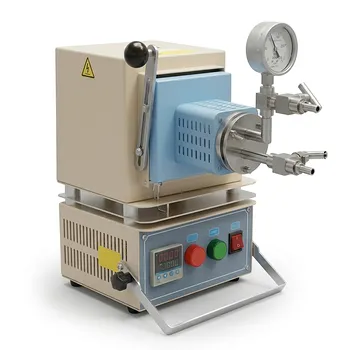
Compact Hybrid Muffle and Tube Furnace for 1000C Controlled Atmosphere Laboratory Material Sintering
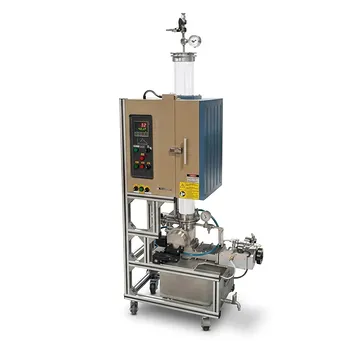
1200C High Temperature Atmosphere Controlled Vertical Quenching Tube Furnace with 4 Inch Quartz Tube
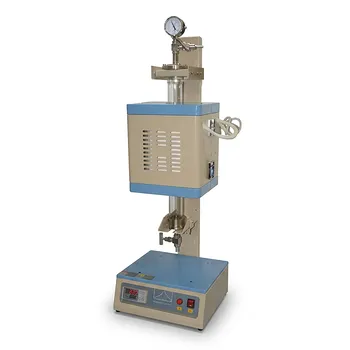
Compact Vertical Split Quartz Tube Furnace with Stainless Steel Vacuum Flanges for Rapid Thermal Quenching and Controlled Atmosphere Material Processing
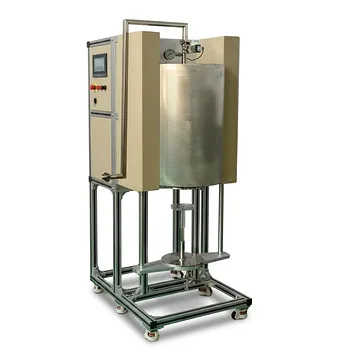
1200°C Atmosphere Controlled Automatic Bottom Loading Furnace with 6 Inch Quartz Tube
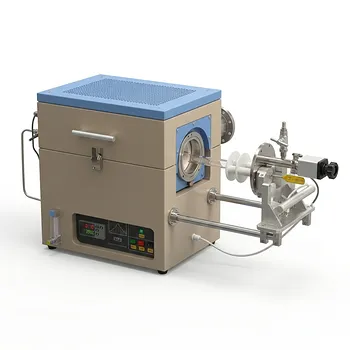
Compact Atmosphere Controlled Rapid Thermal Processing RTP Furnace with 4 Inch ID Quartz Tube 1100C
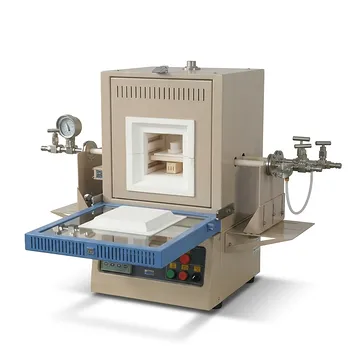
1700C Compact Hybrid Furnace with Dual Layer Box Sintering and Controlled Atmosphere Alumina Tubes
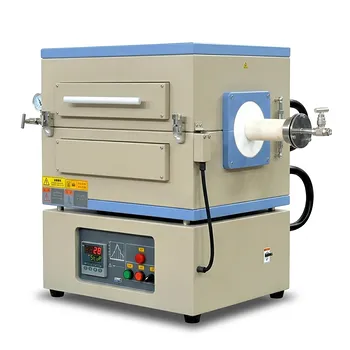
1500°C Split Tube Furnace with Alumina Tube and Vacuum Sealing Flanges for Material Research
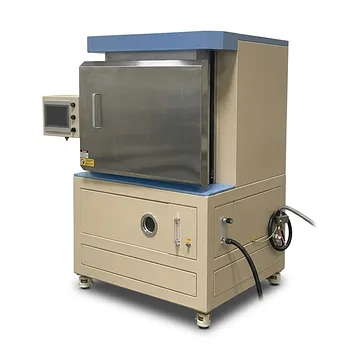
1650C High Temperature Atmosphere Controlled Box Furnace with 65L Chamber for Advanced Material Sintering and Industrial Heat Treatment
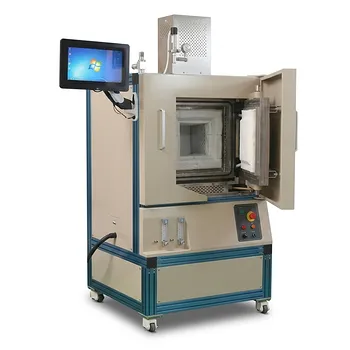
High Temperature Oxygen and Inert Atmosphere Controlled Furnace 8 Liter 1700C Sintering System for Advanced Materials RD
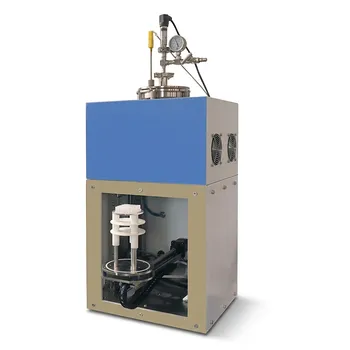
Rapid Thermal Processing RTP Atmosphere Controlled Bottom Loading Furnace 1100C High Throughput 50C per Second Heating Rate
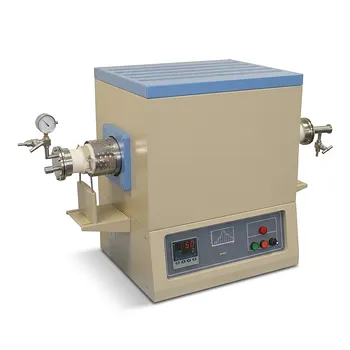
1700C High Temperature Alumina Tube Furnace with 18 Inch Heated Zone and Vacuum Sealing Flanges
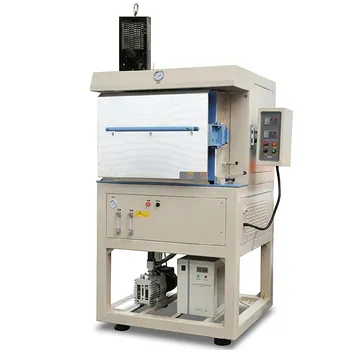
1200C Hydrogen Atmosphere Box Furnace with 5 Heated Sides and 64L Chamber
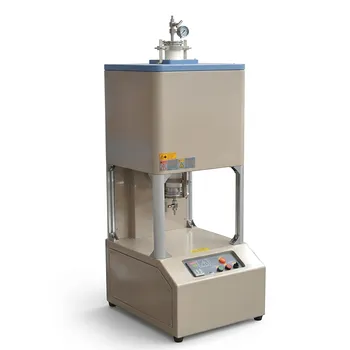
Vertical 1700C Vacuum and Atmosphere Tube Furnace with 80mm Alumina Tube
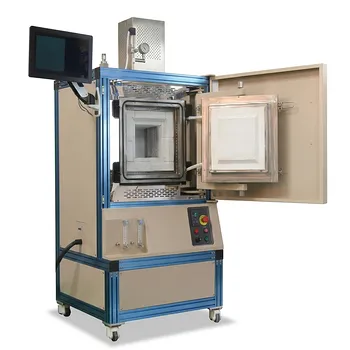
High Temperature Hydrogen Atmosphere Box Furnace 1650C Max Reducing Environment Material Synthesis System 8x8x8 Chamber
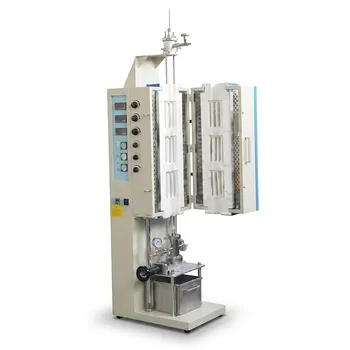
High Temperature Dual Zone Tube Furnace for Material Science Research and Professional Thermal Processing
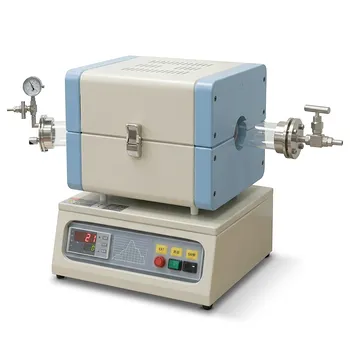
1200C Tube Furnace with Internal Magnetic Sample Sliding for Direct Vaporizing Deposition and Rapid Thermal Processing

High Temperature 1700C Vertical Tube Furnace for Powder Spherification and Material Sintering

High Temperature Automated 5 Inch Tube Furnace for Autonomous Material Research and Advanced Laboratory R&D
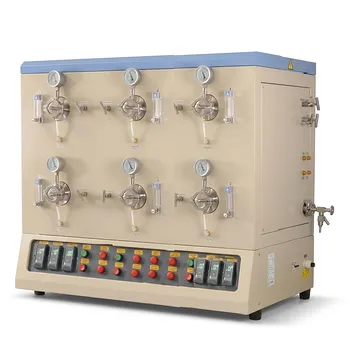
1200C High Throughput Multi Channel Tube Furnace with 50mm Quartz Tubes for Annealing and Material Phase Diagram Research