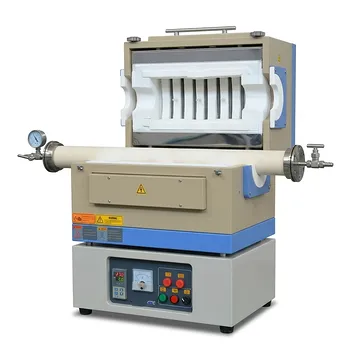
What is the function of an industrial-grade tube furnace in the synthesis of Ni-SAC? Optimize Your Atomic Dispersion
Updated 3 months ago
The industrial-grade tube furnace is the critical thermal reactor used to facilitate the pyrolysis, carbonization, and atomic anchoring required to produce Nickel-based Single-Atom Catalysts (Ni-SAC). By providing a precisely controlled high-temperature environment (typically between 650°C and 800°C) and a strictly inert atmosphere, the furnace ensures that nickel atoms are uniformly dispersed and stabilized on a high-conductivity carbon support rather than clustering into inactive nanoparticles.
Core Takeaway: The tube furnace transforms precursor polymers into conductive carbon frameworks while simultaneously anchoring nickel atoms at the atomic scale. This dual-action process—combining extreme temperature stability with atmospheric purity—is the decisive factor in preventing metal agglomeration and achieving high catalytic activity.
Thermal Transformation of Catalyst Supports
Facilitating Carbonization and Pyrolysis
The primary role of the tube furnace is to drive the pyrolysis of precursor polymers or organic frameworks. Under intense heat, these precursors undergo a chemical breakdown to form high-conductivity carbon supports, such as nitrogen-doped carbon or carbon nitride.
Maintaining High-Temperature Stability
Stability is essential for the formation of precise crystalline structures. The furnace maintains constant temperatures, often at 800°C or 650°C, ensuring the support material develops the necessary morphology and surface area to host metal atoms effectively.
Enabling Structural Foundation Synthesis
By providing a steady thermal environment, the furnace allows for the synthesis of carbon nitride (PCN) or nitrogen-doped carbon (NC). These materials serve as the structural foundation that stabilizes the nickel atoms through coordination with nitrogen or other heteroatoms.
Atmospheric Control and Metal Dispersion
Providing an Inert and Oxygen-Free Environment
The tube furnace uses a continuous flow of Argon (Ar) or Nitrogen (N₂) to create a strictly anaerobic environment. This prevents the premature oxidation of the nickel and ensures that the carbonization process occurs without the interference of oxygen, which would otherwise destroy the carbon framework.
Facilitating Single-Atom Anchoring
A critical function of the furnace is to promote the anchoring of metal atoms onto the carbon lattice. The controlled heat treatment allows nickel atoms to migrate and bond to specific nitrogen sites (Ni-Nx), creating a high density of isolated active centers instead of metallic clusters.
Supporting Multi-Stage Gas Chemistry
Advanced synthesis often requires switching between atmospheres, such as moving from an inert gas to a reducing gas (Ar/H₂). This flexibility allows the furnace to reduce nickel salts into metallic nickel while maintaining the atomic dispersion required for a true single-atom catalyst.
Understanding the Technical Trade-offs
Temperature Uniformity vs. Scaling
While industrial tube furnaces offer excellent temperature uniformity, which is critical for consistent crystalline phases, they often face limitations in throughput compared to rotary kilns. Any temperature gradient within the tube can lead to "hot spots" that cause nickel atoms to aggregate into nanoparticles, ruining the SAC properties.
Atmospheric Purity vs. Seal Integrity
Maintaining an oxygen-free environment is paramount, but the integrity of the tube seals can degrade over repeated high-temperature cycles. Even minor leaks can introduce oxygen, leading to the formation of nickel oxides rather than the desired nitrogen-coordinated nickel single atoms.
Energy Consumption and Heat-up Rates
Achieving temperatures up to 1,000°C requires significant energy and precise control over ramp rates. If the heating is too rapid, the precursor may decompose inconsistently, resulting in a support structure with poor electrical conductivity or low surface area.
Applying Furnace Technology to Your Synthesis Goal
Choosing the Right Protocol
- If your primary focus is maximizing atomic dispersion: Use a slow temperature ramp rate under high-purity Argon to ensure nickel atoms have sufficient time to anchor to nitrogen sites without clustering.
- If your primary focus is increasing support conductivity: Prioritize higher carbonization temperatures (800°C - 1,000°C) to ensure the graphitization of the carbon framework, which enhances electron transfer during catalysis.
- If your primary focus is creating bimetallic alloys: Utilize a furnace capable of switching to a hydrogen-reducing atmosphere to facilitate the co-reduction of different metal nitrates into stabilized nanoparticles or clusters.
The industrial-grade tube furnace is the indispensable tool that bridges the gap between raw chemical precursors and highly efficient, atomically dispersed catalytic materials.
Summary Table:
| Process Phase | Furnace Function | Key Outcome for Ni-SAC |
|---|---|---|
| Pyrolysis | Controlled heating (650°C - 800°C) | Transformation of precursors into conductive carbon supports. |
| Atmospheric Control | Inert Ar/N₂ flow & oxygen-free sealing | Prevents metal oxidation and maintains structural purity. |
| Atomic Anchoring | Precise thermal migration | Stabilizes isolated nickel atoms (Ni-Nx) and prevents clustering. |
| Gas Chemistry | Multi-stage atmosphere switching | Enables reduction of nickel salts while maintaining atomic dispersion. |
Elevate Your Ni-SAC Synthesis with THERMUNITS Precision
Achieving perfect atomic dispersion requires absolute thermal control. THERMUNITS is a leading manufacturer of high-temperature laboratory equipment, providing the specialized thermal processing solutions needed for cutting-edge material science and industrial R&D.
Our comprehensive range includes:
- Tube & Rotary Furnaces for consistent carbonization and pyrolysis.
- CVD/PECVD Systems for advanced chemical vapor deposition.
- Vacuum, Atmosphere, & Muffle Furnaces for diverse heat treatments.
- Specialized Equipment: Dental Furnaces, Electric Rotary Kilns, and Vacuum Induction Melting (VIM) systems.
Whether you are anchoring single atoms or scaling carbon framework production, our equipment delivers the temperature uniformity and atmospheric purity your research demands.
Ready to optimize your laboratory's capabilities?
Contact our technical experts today to discuss your specific furnace requirements and discover the THERMUNITS advantage.
References
- Fuqing Yu, Hongming Wang. Enhancing CO<sub>2</sub> Electroreduction Precision to Ethylene and Ethanol: The Role of Additional Boron Catalytic Sites in Cu‐Based Tandem Catalysts. DOI: 10.1002/advs.202410118
Mentioned Products
- 1100C Tube Furnace with Vacuum Flange and Programmable Temperature Controller for Material Science and Industrial Heat Treatment
- 900°C Max Rotary Tube Furnace with 8 Inch 310S Alloy Tube and Optional Multi Zone Heating for Industrial Material Calcination
- Compact High Temperature 1600C Tube Furnace with 50mm Alumina Tube and Vacuum Flanges for Material Sintering
- Ten Zone Multi Orientation Laboratory Tube Furnace for 1200C High Temperature Gradient Thermal Processing
- High Temperature 1700C Tube Furnace with High Vacuum Turbomolecular Pump System and Multi Channel Mass Flow Controller Gas Mixer
People Also Ask
- What are the advantages of 1100°C tube furnaces for ORR catalysts? Boost Conductivity and Structural Stability.
- What role does a tube furnace play in PS template removal? Ensure ZnO/SiO2 Structural Integrity & High Performance.
- What core functions does a high-temperature vacuum tube furnace provide? Optimize np-CuSn Sintering & Joint Integrity
- What is the role of a high-temperature tube furnace in the calcination process of ZnO/In2O3 nanocomposites?
- What impact does the heating rate of a tube furnace have on biochar microstructure? Optimize Your Material R&D.

Tech Team · ThermUnits
Last updated on Jun 03, 2026
Related Products
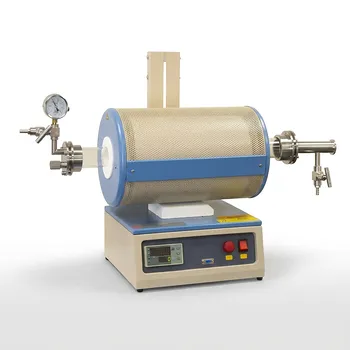
1100C Tube Furnace with Vacuum Flange and Programmable Temperature Controller for Material Science and Industrial Heat Treatment
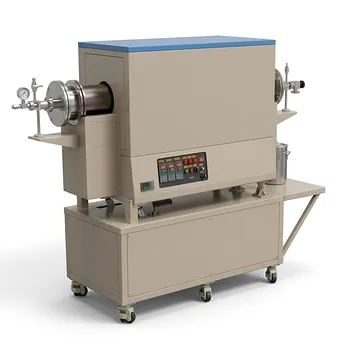
900°C Max Rotary Tube Furnace with 8 Inch 310S Alloy Tube and Optional Multi Zone Heating for Industrial Material Calcination

Compact High Temperature 1600C Tube Furnace with 50mm Alumina Tube and Vacuum Flanges for Material Sintering
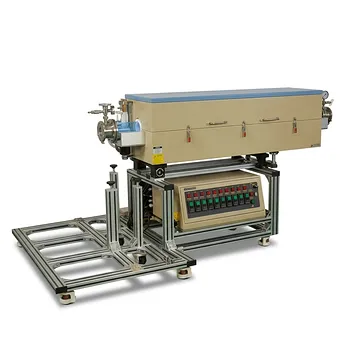
Ten Zone Multi Orientation Laboratory Tube Furnace for 1200C High Temperature Gradient Thermal Processing

High Temperature 1700C Tube Furnace with High Vacuum Turbomolecular Pump System and Multi Channel Mass Flow Controller Gas Mixer
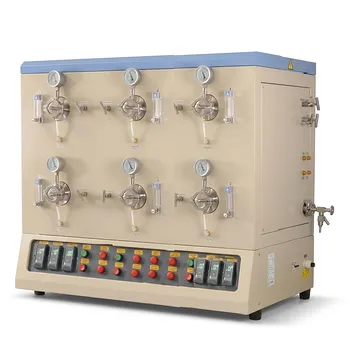
1200C High Throughput Multi Channel Tube Furnace with 50mm Quartz Tubes for Annealing and Material Phase Diagram Research

1800C High Temperature Compact Vacuum Tube Furnace with 60mm OD Alumina Tube and Kanthal MoSi2 Heating Elements

Vertical 1700C Vacuum and Atmosphere Tube Furnace with 80mm Alumina Tube
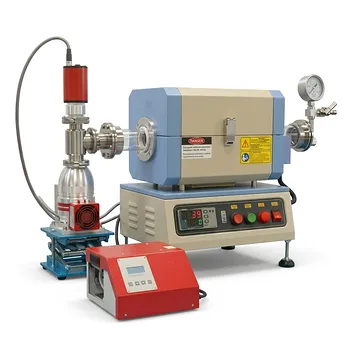
High Vacuum Compact Tube Furnace 1200C with Integrated Turbo Pump System and 8 Inch Heating Zone
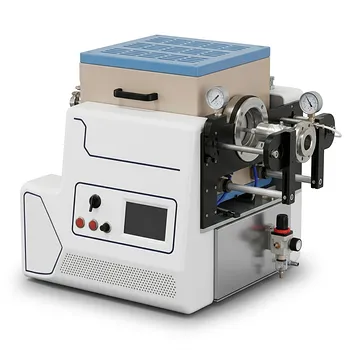
High Temperature Automated 5 Inch Tube Furnace for Autonomous Material Research and Advanced Laboratory R&D

High Temperature 1700C Vertical Tube Furnace for Powder Spherification and Material Sintering
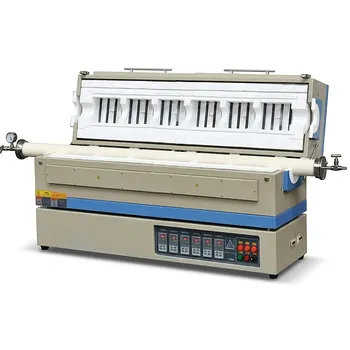
High Temperature 1700C Six Zone Split Tube Furnace with Alumina Tube and Water Cooled Flanges
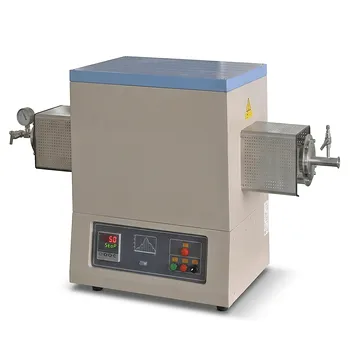
High Temperature 1700C Tube Furnace with 4 Inch OD Alumina Tube and Vacuum Sealing Flanges

High Temperature 1700C Benchtop Tube Furnace with 5 Inch Heating Zone High Purity Alumina Tube and Vacuum Sealing Flanges
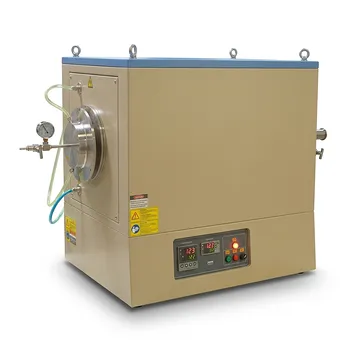
1100°C Large Diameter Quartz Tube Furnace with 24 Inch Heating Zone and Water Cooled Flanges
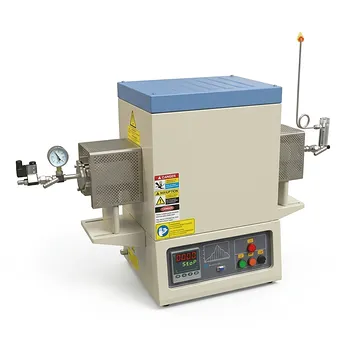
1700C Hydrogen Gas Tube Furnace with 60mm Alumina Process Tube and Integrated Hydrogen Safety Detector
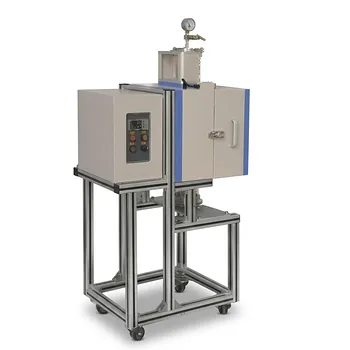
1200°C 5 Inch Vertical Quartz Tube Furnace with Stainless Steel Vacuum Flanges
1750°C High Temperature Benchtop Vacuum Atmosphere Tube Furnace with Kanthal Super 1800 Heating Elements and 60mm Alumina Processing Tube
1200C Max Three Zone Tube Furnace 6 Inch OD Max with Tube and Flange