What is the impact of using an atmosphere-controlled tube furnace for air annealing? Optimize TiO2 Nanotube Uniformity
Updated 3 months ago
Atmosphere-controlled tube furnaces facilitate a precise, slow-growth oxidation process that is critical for material uniformity. Using this equipment for air annealing ensures a highly uniform distribution of copper oxides along the internal and external walls of titanium dioxide (TiO2) nanotubes. The slow, progressive heating rate—typically around 2 °C/min—allows copper species to fully oxidize and settle evenly, creating a distinct chemical and morphological profile that differs significantly from rapid thermal processes.
Core Takeaway: Atmosphere-controlled air annealing utilizes slow heating kinetics to ensure copper species achieve full oxidation and uniform spatial distribution across TiO2 nanotubes, directly optimizing the material's photoelectrochemical efficiency.
The Mechanics of Uniform Copper Distribution
Achieving Morphological Consistency
The primary advantage of a tube furnace is its ability to maintain a slow and progressive heating ramp. This controlled temperature increase prevents the "clumping" or localized aggregation of copper species that often occurs during flash heating.
By allowing the copper to oxidize gradually, the furnace ensures the metal species have sufficient time to migrate and coat the nanotube walls evenly. This results in a stable, integrated structure rather than a superficial or patchy coating.
Regulating Oxidation States and Band Gaps
Precise air flow control within the tube furnace maintains a constant oxygen concentration throughout the reaction. This stability is vital for regulating the specific ratio between CuO (Cupric oxide) and Cu2O (Cuprous oxide).
The balance of these oxidation states directly determines the band gap structure of the final nanoparticle coating. Proper regulation allows the material to capture visible light more effectively, which is essential for applications like organic pollutant degradation.
Structural Evolution Under Air Annealing
The Impact of Carbon Dissipation
If the precursor material contains carbon components, air annealing in a tube furnace will cause these components to undergo high-temperature combustion. As the carbon dissipates, the physical restrictions on TiO2 grain growth are removed.
Without a carbon skeleton to pin the boundaries, the TiO2 crystal grains tend to grow larger. While this can increase surface roughness, it also alters the initial Coulombic efficiency (ICE) and the overall microsphere integrity.
Chemical Composition vs. Rapid Annealing
In contrast to Rapid Thermal Annealing (RTA), which uses speeds up to 37.5 °C/s to induce oxygen vacancies, the tube furnace focuses on equilibrium oxidation.
While RTA is better for inducing specific states like Cu0 or Cu+, the atmosphere-controlled tube furnace is the superior choice for creating a fully oxidized, CuO-dominant phase. This phase provides the structural foundation required for specific photoelectrochemical conversion and carbon dioxide reduction reactions.
Understanding the Trade-offs
Thermal Efficiency vs. Structural Precision
The primary trade-off when using a tube furnace is the extended processing time. The slow ramp rate required for uniform distribution means a significantly longer duty cycle compared to RTA methods.
Grain Growth vs. Surface Area
Because air annealing removes carbon layers, you must account for unrestricted grain growth. If your application requires extremely small TiO2 grains, the air-annealing process in a tube furnace may be counterproductive unless temperatures are strictly limited.
Oxidation Completeness vs. Defect Engineering
Tube furnaces are excellent for achieving full oxidation, but they are less effective at "defect engineering." If your goal is to create oxygen vacancies or maintain lower oxidation states ($Cu^+$), a reduction atmosphere or a faster thermal cycle would be necessary.
How to Apply This to Your Project
When deciding whether to utilize an atmosphere-controlled tube furnace for your TiO2@Cu project, consider your primary performance metric:
- If your primary focus is uniform coating and full oxidation: Use the tube furnace with a slow heating ramp (2 °C/min) and constant air flow to ensure the copper oxides are evenly distributed along the nanotube walls.
- If your primary focus is minimizing grain size: Avoid high-temperature air annealing that burns off carbon precursors, or switch to an inert gas (Argon) to preserve the carbon skeleton that restricts grain growth.
- If your primary focus is inducing oxygen vacancies: Consider Rapid Thermal Annealing (RTA) in a reducing atmosphere rather than a standard tube furnace to achieve higher densities of $Cu^0$ and $Cu^+$ states.
The precision of your atmosphere control ultimately dictates the microstructural phase and functional efficiency of your final material.
Summary Table:
| Feature | Impact of Atmosphere-Controlled Tube Furnace | Benefit to Material Performance |
|---|---|---|
| Heating Kinetics | Slow ramp rate (approx. 2 °C/min) | Prevents clumping; ensures uniform Cu distribution. |
| Atmosphere Control | Constant oxygen concentration | Regulates CuO/Cu2O ratios and band gap capture. |
| Structural Phase | Equilibrium oxidation | Creates stable, CuO-dominant phases for catalysts. |
| Grain Growth | Carbon dissipation via air annealing | Enhances microsphere integrity and surface roughness. |
Elevate Your Material Research with THERMUNITS
Precision in thermal processing is the key to unlocking superior material properties. THERMUNITS is a leading manufacturer of high-temperature laboratory equipment specifically designed for material science and industrial R&D. We offer a comprehensive range of solutions, including Tube, Atmosphere, Vacuum, Muffle, and CVD/PECVD furnaces, as well as specialized Rotary and Hot Press systems.
Whether you are working on photoelectrochemical conversion or advanced carbon dioxide reduction, our equipment ensures the exact atmosphere and temperature control required for your project success.
Ready to enhance your lab's efficiency? Contact us today to find your custom thermal solution!
References
- Wiktoria Lipińska, Katarzyna Siuzdak. Coupling between the photoactivity and CO2 adsorption on rapidly thermal hydrogenated vs. conventionally annealed copper oxides deposited on TiO2 nanotubes. DOI: 10.1007/s10853-024-10223-4
Mentioned Products
- 1200°C Atmosphere Controlled Automatic Bottom Loading Furnace with 6 Inch Quartz Tube
- Compact Hybrid Muffle and Tube Furnace for 1000C Controlled Atmosphere Laboratory Material Sintering
- Compact Vertical Split Quartz Tube Furnace with Stainless Steel Vacuum Flanges for Rapid Thermal Quenching and Controlled Atmosphere Material Processing
- 1700C Compact Hybrid Furnace with Dual Layer Box Sintering and Controlled Atmosphere Alumina Tubes
- 1500°C Split Tube Furnace with Alumina Tube and Vacuum Sealing Flanges for Material Research
People Also Ask
- Why is a tube furnace required for FGM-PhG structural color ceramics? Key to Carbon Preservation & Vibrant Color
- Why is an atmosphere-controlled tube furnace required for the pre-sulfidation of NiMo/gamma-Al2O3 catalysts?
- Why is an atmosphere-controlled tube furnace required for 800 °C CNF annealing? Essential for Oxidative Protection.
- Why is an atmosphere-controlled tube furnace required for [email protected]/C preparation? Key for Purity & Structure
- Why is an atmosphere-controlled tube furnace required for single-atom sensor calcination? Ensure Atomic Dispersion.

Tech Team · ThermUnits
Last updated on Jun 03, 2026
Related Products
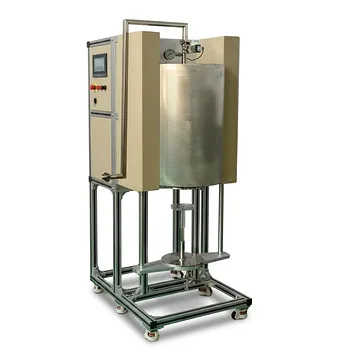
1200°C Atmosphere Controlled Automatic Bottom Loading Furnace with 6 Inch Quartz Tube
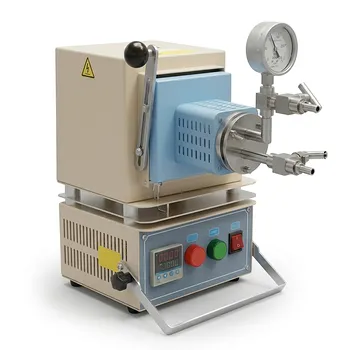
Compact Hybrid Muffle and Tube Furnace for 1000C Controlled Atmosphere Laboratory Material Sintering

Compact Vertical Split Quartz Tube Furnace with Stainless Steel Vacuum Flanges for Rapid Thermal Quenching and Controlled Atmosphere Material Processing
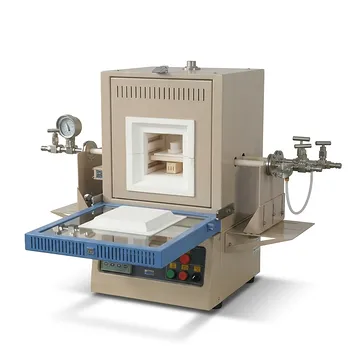
1700C Compact Hybrid Furnace with Dual Layer Box Sintering and Controlled Atmosphere Alumina Tubes
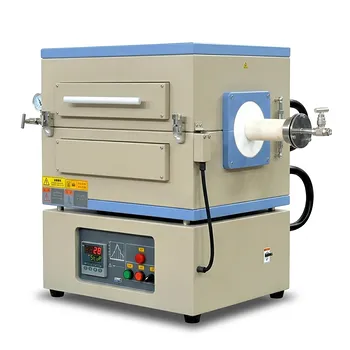
1500°C Split Tube Furnace with Alumina Tube and Vacuum Sealing Flanges for Material Research
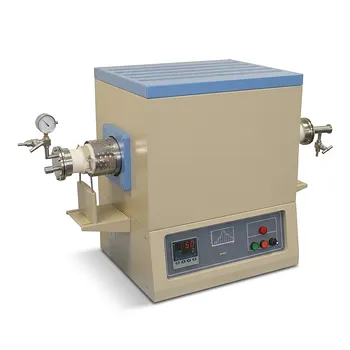
1700C High Temperature Alumina Tube Furnace with 18 Inch Heated Zone and Vacuum Sealing Flanges
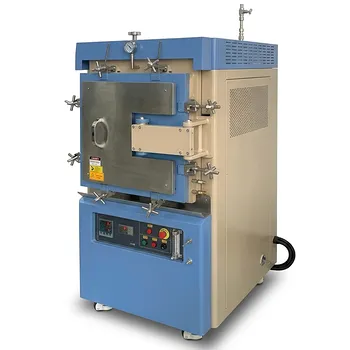
Atmosphere Controlled Muffle Furnace 1700C Maximum Temperature 80L High Capacity Vacuum Inert Gas Box Furnace

Vertical 1700C Vacuum and Atmosphere Tube Furnace with 80mm Alumina Tube
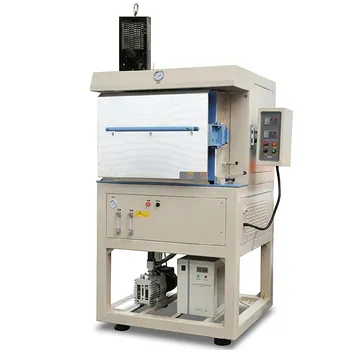
1200C Hydrogen Atmosphere Box Furnace with 5 Heated Sides and 64L Chamber

Three Zone Tube Furnace with 11 Inch or 15 Inch Quartz Tube and Hinged Flanges for Vacuum Atmosphere Heat Treatment
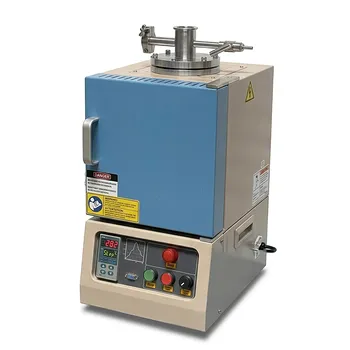
High Temperature Hybrid Muffle and Tube Furnace with Vacuum Capability and PID Control
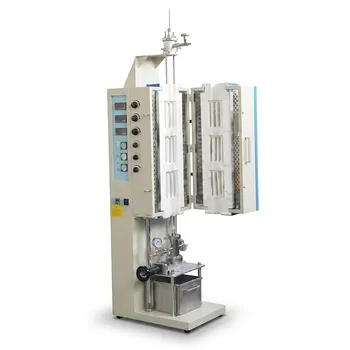
High Temperature Dual Zone Tube Furnace for Material Science Research and Professional Thermal Processing
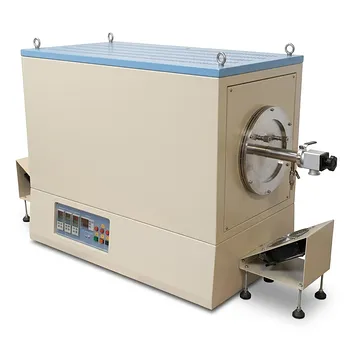
Four Zone Tube Furnace 1100C with 600mm Large Diameter Quartz Tube and Vacuum Flanges

High Temperature 1700C Tube Furnace with High Vacuum Turbomolecular Pump System and Multi Channel Mass Flow Controller Gas Mixer

1200°C 5 Inch Vertical Quartz Tube Furnace with Stainless Steel Vacuum Flanges
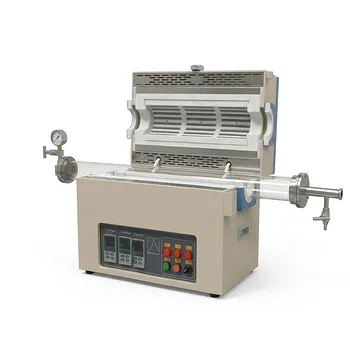
1200°C Three Zone Split Tube Furnace with 18 Inch Heating Length and Vacuum Flanges
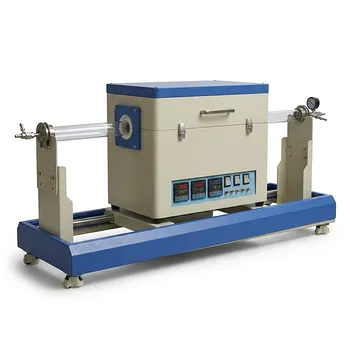
Double Temperature Zone Double Cover Tube Furnace for High Temperature CVD and Vacuum Annealing

High Temperature Automated 5 Inch Tube Furnace for Autonomous Material Research and Advanced Laboratory R&D
5 Inch Rotary Tube Furnace with Automatic Feeding and Receiving System 1200C Three Zone CVD Powder Processing
