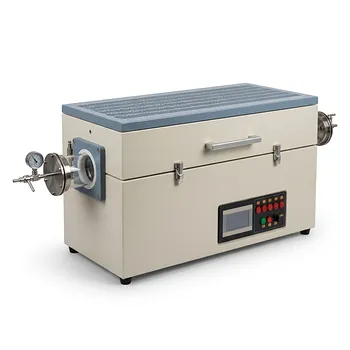
Why use tube furnaces for copper-graphene sintering? Prevent oxidation and ensure superior material conductivity.
Updated 6 months ago
Precise atmosphere control is mandatory for sintering copper-graphene composites because copper is highly susceptible to rapid oxidation at elevated temperatures. This oxidation severely impairs the material’s mechanical, electrical, and tribological properties by introducing brittle oxide phases. Specialized tube or atmosphere furnaces facilitate a continuous flow of high-purity inert gases (like Argon) or reducing gases (like Hydrogen) to isolate the composite from oxygen and ensure successful material consolidation.
Core Takeaway: Utilizing controlled atmosphere furnaces is the only way to prevent the oxidative degradation of both the copper matrix and the graphene reinforcement during high-temperature sintering, thereby ensuring superior electrical conductivity and structural integrity.
Preventing Matrix Degradation and Oxidation
Mitigation of Copper Oxidation at High Temperatures
Copper begins to oxidize aggressively as temperatures rise, particularly in the 1025°C to 1050°C range required for full sintering. By maintaining a continuous flow of high-purity Argon (Ar), a tube furnace creates an inert environment that prevents oxygen from reacting with the copper powder.
Preserving Electrical and Thermal Conductivity
The formation of copper oxide layers acts as an insulator, significantly degrading the composite’s ability to transport electrons and heat. A precise atmosphere ensures the copper remains in its pure metallic state, which is critical for achieving the high-performance benchmarks expected of metal matrix composites.
Removal of Pre-existing Oxide Layers
Even before sintering, copper powders often carry a thin surface oxide layer from storage. Specialized furnaces can introduce a reducing atmosphere (such as a H2/N2 or H2/Ar mixture) to chemically strip these oxides, allowing for true metallurgical bonding between particles.
Protecting the Graphene Reinforcement
Preventing Oxidative Loss of Carbon
Graphene and other graphite-based carriers are vulnerable to "burning" or oxidative gasification when heated in the presence of even trace amounts of oxygen. Atmosphere-controlled furnaces shield the graphene, ensuring the reinforcement phase remains intact within the copper matrix rather than being lost as carbon dioxide gas.
In-situ Reduction of Graphene Oxide (GO)
If the composite uses graphene oxide, the furnace environment can be tuned to provide a strong reducing atmosphere at approximately 400°C to 450°C. This process removes oxygen-containing functional groups and repairs lattice defects in the graphene, restoring its superior properties during the sintering cycle.
Establishing the Copper-Graphene Interface
A controlled environment promotes the formation of a tight, low-defect interface between the graphene layers and the copper matrix. This interface is essential for effective load transfer and thermal dissipation across the composite structure.
Facilitating Proper Material Consolidation
Promoting Atomic Diffusion
In an oxygen-free environment, metal atoms can migrate more freely across particle boundaries. This thermal diffusion is necessary for proper consolidation, leading to a denser material with fewer internal voids and defects.
Controlling Phase Transitions
Tube furnaces provide a highly stable and precise temperature field, which is necessary for driving specific chemical reactions or phase transitions. This level of control ensures that additives or salts on the graphene surface decompose into the desired crystalline forms without uncontrolled side reactions.
Maintaining Chemical Stability
Precise atmosphere control allows researchers to maintain specific chemical ratios within the composite. By isolating the material from the ambient environment, the furnace ensures that the final product's chemical composition matches the intended design precisely.
Understanding the Trade-offs
Equipment Complexity and Cost
Implementing precise atmosphere control requires sophisticated gas delivery systems and high-quality seals. This increases both the initial capital expenditure and the ongoing operational costs compared to standard air-sintering equipment.
Safety Concerns with Reducing Gases
The use of hydrogen (H2) for oxide reduction introduces significant safety risks, including flammability and potential explosion hazards. This necessitates the installation of gas sensors, specialized ventilation, and rigorous safety protocols.
Gas Purity Requirements
The effectiveness of the furnace is entirely dependent on the purity of the gas supply. Even minor contaminants in "industrial grade" Argon can lead to localized oxidation, making the use of ultra-high-purity (UHP) gases a mandatory, yet more expensive, requirement.
Implementing Atmosphere Control for Your Project
Recommendations for Sintering Success
Determining the correct furnace configuration depends on your specific material precursors and desired end-state.
- If your primary focus is preventing basic oxidation: Utilize a high-purity Argon flow to maintain a strictly inert environment throughout the heating and cooling cycles.
- If your primary focus is maximizing electrical conductivity: Employ a reducing atmosphere (H2/N2 or H2/Ar) to actively remove surface oxides from the copper particles before final consolidation.
- If your primary focus is the reduction of Graphene Oxide: Ensure the furnace can maintain a precise, constant temperature zone between 400°C and 450°C in a reducing environment to repair the graphene lattice.
Mastering the atmosphere within the furnace is the definitive factor in transforming a mixture of copper and graphene into a high-performance engineering composite.
Summary Table:
| Necessity Factor | Furnace Function | Material Impact |
|---|---|---|
| Oxidation Prevention | High-purity Argon (Ar) flow | Maintains copper in pure metallic state |
| Oxide Removal | Reducing gases (H2/Ar) | Strips surface oxides for better bonding |
| Graphene Protection | Oxygen-free environment | Prevents oxidative loss/gasification of carbon |
| GO Reduction | Precise 400°C-450°C control | Repairs graphene lattice and restores properties |
| Consolidation | Stable temperature field | Promotes atomic diffusion and higher density |
Elevate Your Materials Research with THERMUNITS
Achieving the perfect copper-graphene interface requires the highest level of thermal precision. As a leading manufacturer of high-temperature laboratory equipment, THERMUNITS provides specialized solutions for material science and industrial R&D.
Our comprehensive range of thermal processing equipment includes:
- Atmosphere & Tube Furnaces for precise gas control.
- Vacuum, Muffle, & Hot Press Furnaces for diverse sintering needs.
- CVD/PECVD Systems for advanced graphene synthesis.
- Electric Rotary Kilns, VIM, and Dental Furnaces.
Don't let oxidation compromise your composite's performance. Contact us today to discuss how our advanced heat treatment solutions can optimize your sintering process and ensure superior electrical and mechanical properties.
References
- Changjie Huang, Jinhua Sun. Binder assisted graphene derivatives as lubricants in copper: Improved tribological performance for industrial application. DOI: 10.1016/j.isci.2024.109429
Mentioned Products
- Compact Hybrid Muffle and Tube Furnace for 1000C Controlled Atmosphere Laboratory Material Sintering
- High Temperature Dual Zone Split Tube Furnace for Advanced Atmosphere Sintering and Vacuum CVD Applications
- High Temperature Tilting Rotary Tubular Furnace for Continuous Powder Thermal Processing and Controlled Atmosphere Sintering
- High Temperature Vertical Atmosphere Controlled Furnace with Automatic Bottom Loading and 1700°C Capacity for Advanced Material Research
- 1650C High Temperature Atmosphere Controlled Box Furnace with 65L Chamber for Advanced Material Sintering and Industrial Heat Treatment
People Also Ask
- Why is an atmosphere-controlled tube furnace required for 800 °C CNF annealing? Essential for Oxidative Protection.
- Why is an atmosphere-controlled tube furnace required for the pre-sulfidation of NiMo/gamma-Al2O3 catalysts?
- Why is an atmosphere-controlled tube furnace required for [email protected]/C preparation? Key for Purity & Structure
- Why is an atmosphere-controlled tube furnace required for single-atom sensor calcination? Ensure Atomic Dispersion.
- What is the function of a controlled atmosphere tube furnace in LiGa alloying? Achieving High-Purity Thermal Synthesis

Tech Team · ThermUnits
Last updated on Apr 14, 2026
Related Products
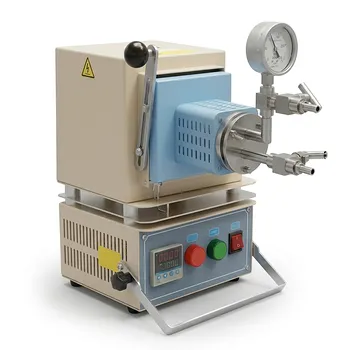
Compact Hybrid Muffle and Tube Furnace for 1000C Controlled Atmosphere Laboratory Material Sintering
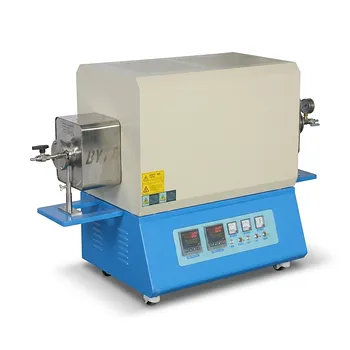
High Temperature Dual Zone Split Tube Furnace for Advanced Atmosphere Sintering and Vacuum CVD Applications
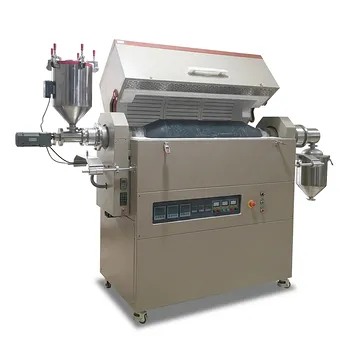
High Temperature Tilting Rotary Tubular Furnace for Continuous Powder Thermal Processing and Controlled Atmosphere Sintering
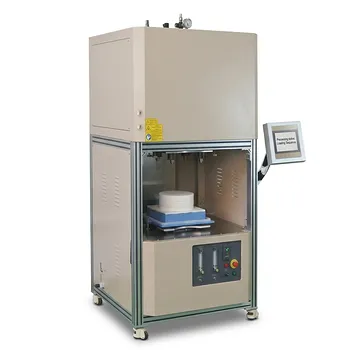
High Temperature Vertical Atmosphere Controlled Furnace with Automatic Bottom Loading and 1700°C Capacity for Advanced Material Research
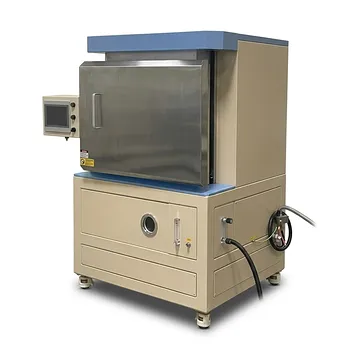
1650C High Temperature Atmosphere Controlled Box Furnace with 65L Chamber for Advanced Material Sintering and Industrial Heat Treatment
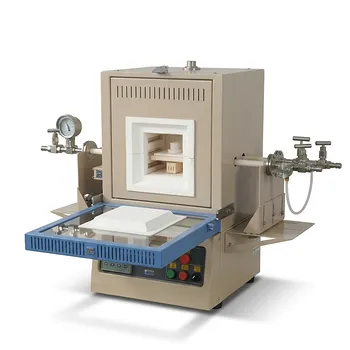
1700C Compact Hybrid Furnace with Dual Layer Box Sintering and Controlled Atmosphere Alumina Tubes
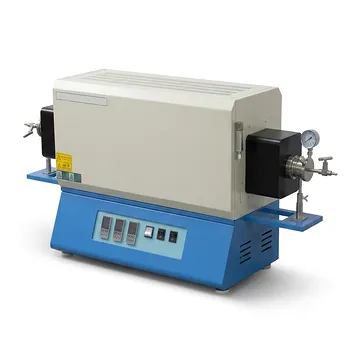
High Temperature Three Temperature Zone Tube Furnace for Advanced Material Science Sintering and Chemical Vapor Deposition Applications
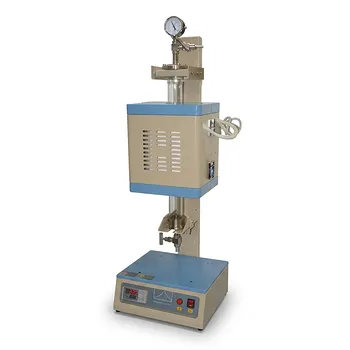
Compact Vertical Split Quartz Tube Furnace with Stainless Steel Vacuum Flanges for Rapid Thermal Quenching and Controlled Atmosphere Material Processing
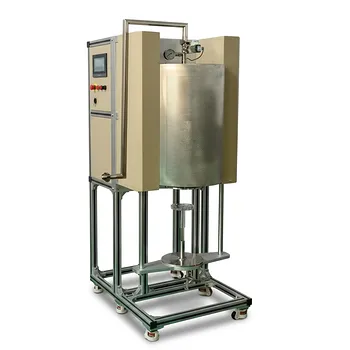
1200°C Atmosphere Controlled Automatic Bottom Loading Furnace with 6 Inch Quartz Tube
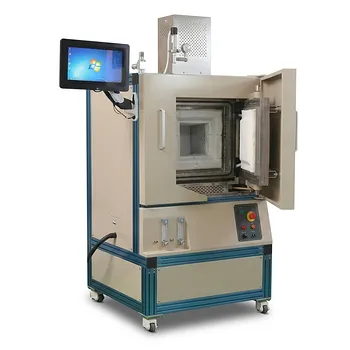
High Temperature Oxygen and Inert Atmosphere Controlled Furnace 8 Liter 1700C Sintering System for Advanced Materials RD
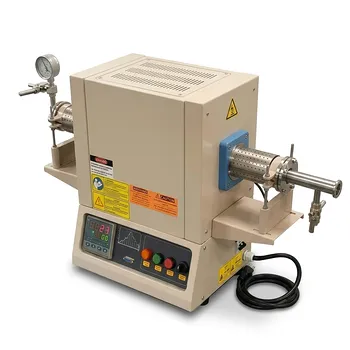
Compact High Temperature 1600C Tube Furnace with 50mm Alumina Tube and Vacuum Flanges for Material Sintering
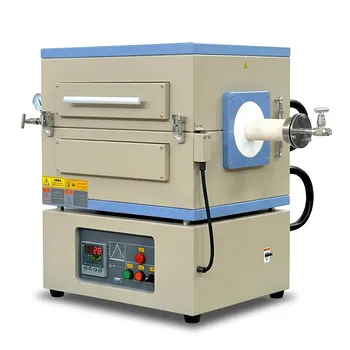
1500°C Split Tube Furnace with Alumina Tube and Vacuum Sealing Flanges for Material Research
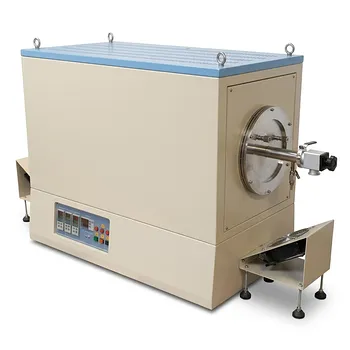
Four Zone Tube Furnace 1100C with 600mm Large Diameter Quartz Tube and Vacuum Flanges
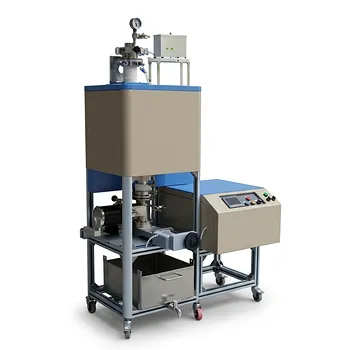
High Temperature 1700C Vertical Tube Furnace for Powder Spherification and Material Sintering
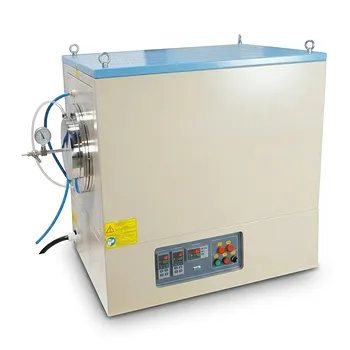
Dual Zone Tube Furnace 1100C with 11 Inch Quartz Tube and Vacuum Flanges for 8 Inch Wafer Processing
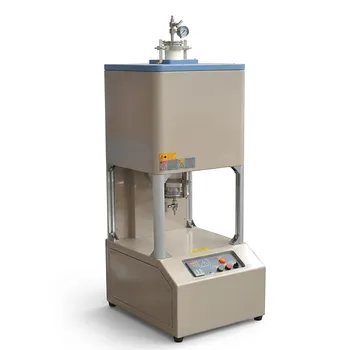
Vertical 1700C Vacuum and Atmosphere Tube Furnace with 80mm Alumina Tube
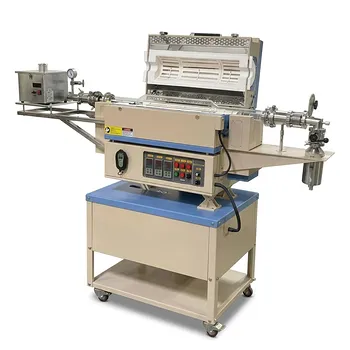
5 Inch Rotary Tube Furnace with Automatic Feeding and Receiving System 1200C Three Zone CVD Powder Processing
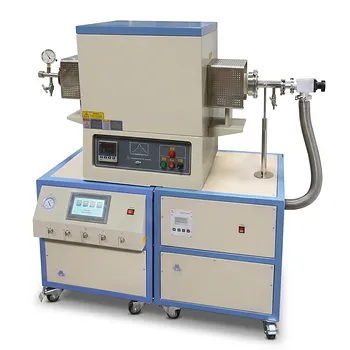
High Temperature 1700C Tube Furnace with High Vacuum Turbomolecular Pump System and Multi Channel Mass Flow Controller Gas Mixer
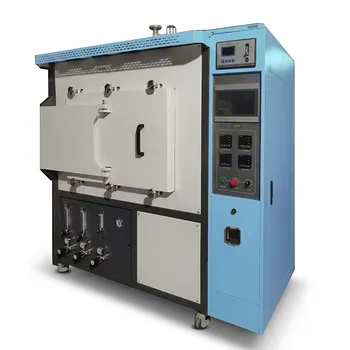
Roller Table Atmosphere Furnace 1500C High Temperature Battery Material Sintering System 112L Capacity