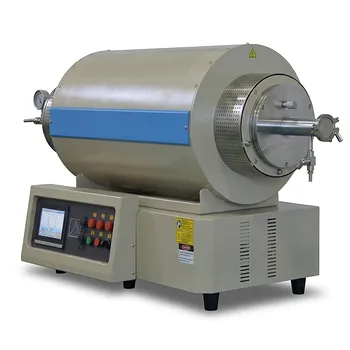
What is the primary function of a high-pressure horizontal tube furnace in ammonia-coal co-firing? Precision R&D Guide
Updated 3 months ago
The primary function of a high-pressure horizontal tube furnace in ammonia-coal co-firing experiments is to establish a strictly controlled, high-temperature reaction environment. This specialized equipment provides a stable thermal field—typically ranging from 800°C to 1200°C—to isolate and study the chemical interactions between ammonia and pulverized coal. By maintaining this precise environment, researchers can accurately measure the impact of ammonia injection on combustion efficiency and the levels of unburned carbon (UBC) in the residual ash.
Core Takeaway: The high-pressure horizontal tube furnace acts as a high-precision combustion reactor that ensures experimental reproducibility, allowing researchers to simulate specific boiler conditions and analyze how ammonia-coal mixtures behave under varying thermal and atmospheric pressures.
Establishing the Core Thermal Environment
Precision Temperature Regulation
The furnace provides a constant and uniform heating zone that is essential for studying combustion kinetics. By precisely controlling temperatures between 800 and 1200 °C, the equipment ensures that thermal variables remain constant while other parameters, such as ammonia concentration, are adjusted.
Simulating Real-World Boiler Conditions
In industrial applications, coal is burned in complex, high-heat environments. The horizontal tube furnace mimics these core thermal environments, allowing for a laboratory-scale assessment of how new fuel mixtures, like ammonia and coal, will perform in large-scale utility boilers.
Ensuring Data Reproducibility
Consistency is critical in scientific research. The furnace’s ability to maintain a stable heating field ensures that every experiment is conducted under identical conditions, making the resulting data regarding combustion efficiency and fuel behavior highly reliable.
Facilitating Advanced Chemical and Gas Analysis
Monitoring Ammonia-Coal Interactions
The furnace serves as the stage for observing how ammonia injection influences the overall combustion process. It specifically helps researchers understand the trade-off between nitrogen-based fuel additives and the resulting unburned carbon (UBC) content in the coal ash.
Integrated Atmosphere Control
Beyond temperature, these furnaces utilize a sealed design to manage the internal atmosphere. This allows for the introduction of specific gas mixtures, such as argon for inert environments or simulated air, to observe reactions without outside contamination.
Accurate Flue Gas Collection
The sealed tube structure is vital for downstream equipment integration. Because the furnace is airtight, the flue gases generated during the ammonia-coal reaction can be captured and analyzed to determine emission profiles and chemical byproduct concentrations.
Understanding the Trade-offs
Scale vs. Precision
While the tube furnace provides exceptional control and precision, it operates on a much smaller scale than industrial furnaces. This means that while chemical kinetics are accurately captured, the physical flow dynamics of a massive boiler may not be fully represented.
Pressure and Seal Integrity
Operating a furnace under high pressure introduces mechanical complexity. Maintaining the integrity of the seals at temperatures exceeding 1000°C is challenging, and any leak can compromise both the safety of the lab and the accuracy of the gas analysis data.
Thermal Lag in Coal Samples
Because the heat is transferred via conduction and radiation through a tube, there can be a slight thermal lag in how quickly the coal particles reach the target temperature. Researchers must account for this timing to ensure the "reaction time" recorded is accurate.
Applying This Research to Your Goals
Successful ammonia-coal co-firing requires balancing fuel costs, emissions, and boiler efficiency. The data gathered from a horizontal tube furnace provides the baseline for these critical decisions.
- If your primary focus is Reducing Emissions: Use the furnace to identify the "sweet spot" temperature where ammonia injection most effectively reduces nitrogen oxides without increasing unburned carbon.
- If your primary focus is Maximizing Combustion Efficiency: Prioritize experiments that track UBC levels at the higher end of the temperature spectrum (1100-1200 °C) to ensure full fuel utilization.
- If your primary focus is Fuel Flexibility: Utilize the furnace to test different ratios of ammonia to pulverized coal to determine the stability limits of the flame under high-pressure conditions.
By leveraging the precision of a high-pressure horizontal tube furnace, you can transform theoretical combustion models into validated, high-performance energy strategies.
Summary Table:
| Feature | Function/Benefit | Experimental Impact |
|---|---|---|
| Temperature (800-1200°C) | Precise Thermal Control | Consistent Combustion Kinetics |
| High-Pressure Design | Real-world Simulation | Accurate Industrial Modeling |
| Airtight Tube Structure | Controlled Atmosphere | Pure Flue Gas Analysis |
| Horizontal Layout | Uniform Heating Zone | Enhanced Data Reproducibility |
Accelerate Your Research with THERMUNITS
As a leading manufacturer of high-temperature laboratory equipment, THERMUNITS empowers researchers in material science and industrial R&D. Whether you are conducting ammonia-coal co-firing experiments or exploring advanced chemical kinetics, our comprehensive range of solutions—including Tube Furnaces, Atmosphere Furnaces, Vacuum Furnaces, CVD/PECVD Systems, Hot Press Furnaces, and Electric Rotary Kilns—ensures unmatched precision and reliability.
Why Partner with THERMUNITS?
- Unmatched Precision: Industry-leading stability for temperature and atmospheric control.
- Versatile Solutions: Specialized equipment including Dental Furnaces, Vacuum Induction Melting (VIM), and high-quality Thermal Elements.
- Expert Support: Tailored thermal processing solutions designed to meet the rigorous demands of your laboratory.
Ready to optimize your thermal processing? Contact us today to discuss how our high-pressure systems can enhance your laboratory’s efficiency and data accuracy!
References
- Machodi Mathaba. Effect of combustion temperature on the unburnt carbon during ammonia co-firing with coal combustion. DOI: 10.1038/s41598-024-73553-y
Mentioned Products
- Multi Position Tube Furnace 1100C for Laboratory Material Research and Advanced Industrial Thermal Processing
- 1100C High Pressure Rocking Tube Furnace with 2 Inch Super Alloy Processing Tube for Material Synthesis
- 1100C Eight Zone High Pressure Super Alloy Tube Furnace with Integrated High Pressure Gas Control System
- 1200°C 10-Zone Split Tube Furnace with Horizontal and Vertical Mounting for Multi-Zone Thermal Gradients and Large Diameter Material Processing
- Ten Zone Multi Orientation Laboratory Tube Furnace for 1200C High Temperature Gradient Thermal Processing
People Also Ask
- Why use a tube furnace for oxygen annealing LaCrO3/LaMnO3? Optimize Phase Transition & Magnetic Performance.
- What key role does a laboratory high-temperature tube furnace play in the production of carbon nanofibers? Guide
- How is a laboratory high-temperature tube furnace utilized to research the products of aluminothermic reduction? Advanced Metallurgical Solutions
- What is the role of a laboratory tube furnace in the carbonization process of porous carbon foam (PCF)? Master 3D Synthesis
- What role does a laboratory tube furnace play in the pyrolysis and carbonization of biomass? Optimize Thermal Research.

Tech Team · ThermUnits
Last updated on Jun 03, 2026
Related Products
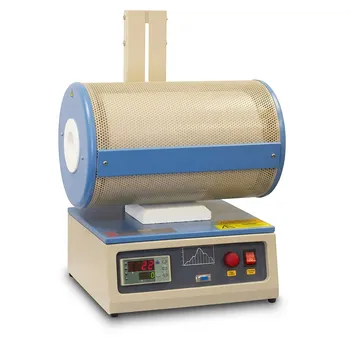
Multi Position Tube Furnace 1100C for Laboratory Material Research and Advanced Industrial Thermal Processing
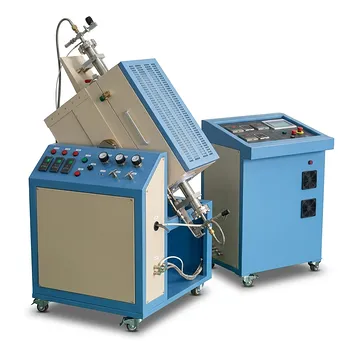
1100C High Pressure Rocking Tube Furnace with 2 Inch Super Alloy Processing Tube for Material Synthesis
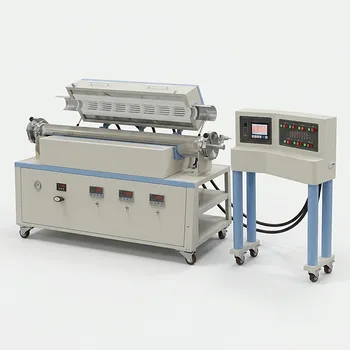
1100C Eight Zone High Pressure Super Alloy Tube Furnace with Integrated High Pressure Gas Control System
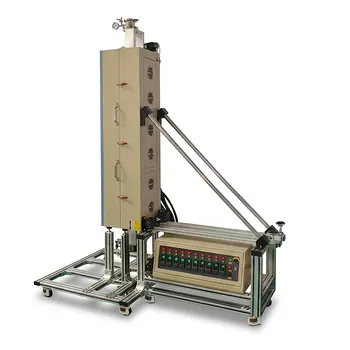
1200°C 10-Zone Split Tube Furnace with Horizontal and Vertical Mounting for Multi-Zone Thermal Gradients and Large Diameter Material Processing
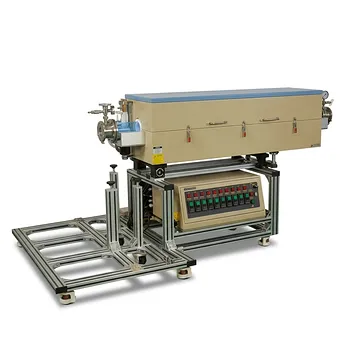
Ten Zone Multi Orientation Laboratory Tube Furnace for 1200C High Temperature Gradient Thermal Processing

High Temperature 1700C Vertical Tube Furnace for Powder Spherification and Material Sintering
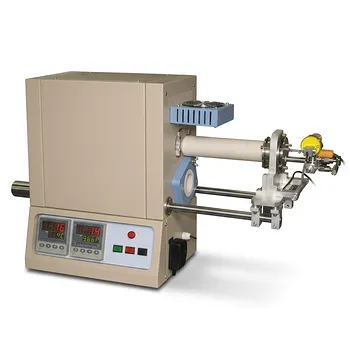
High Temperature Tube Furnace 1500C with Sliding Flanges and 50mm OD for Rapid Thermal Processing Fast Heating and Cooling

Vertical 1700C Vacuum and Atmosphere Tube Furnace with 80mm Alumina Tube
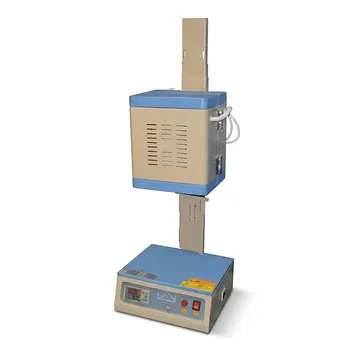
High Temperature Vertical Split Tube Furnace with PID Temperature Controller for 1 and 2 Inch Processing Tubes
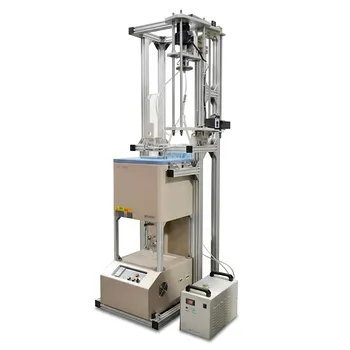
500C Vacuum Vertical Tube Furnace 84mm OD Sample Rotation Lifting System
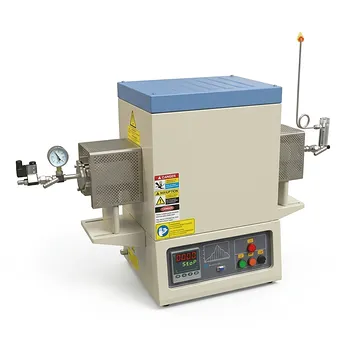
1700C Hydrogen Gas Tube Furnace with 60mm Alumina Process Tube and Integrated Hydrogen Safety Detector
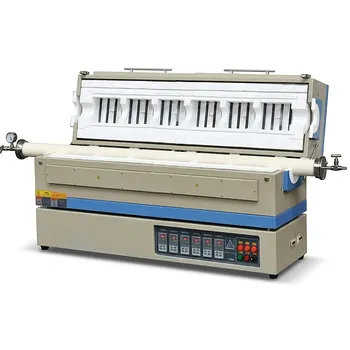
High Temperature 1700C Six Zone Split Tube Furnace with Alumina Tube and Water Cooled Flanges
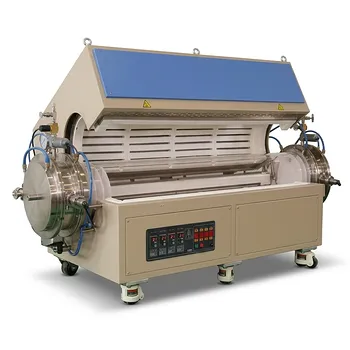
1200C Max Four Zone Split Tube Furnace with Optional Large Diameter Quartz Tubes
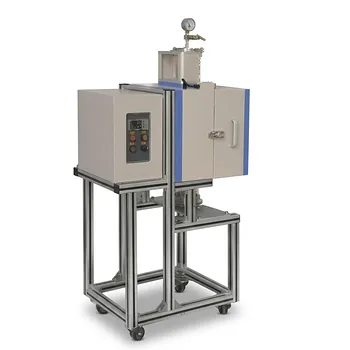
1200°C 5 Inch Vertical Quartz Tube Furnace with Stainless Steel Vacuum Flanges

High Temperature 1700C Tube Furnace with High Vacuum Turbomolecular Pump System and Multi Channel Mass Flow Controller Gas Mixer
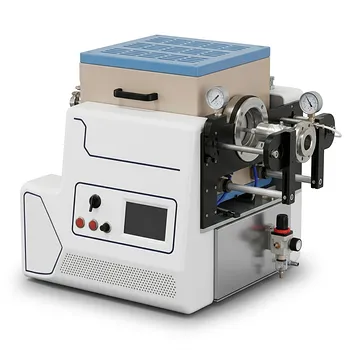
High Temperature Automated 5 Inch Tube Furnace for Autonomous Material Research and Advanced Laboratory R&D
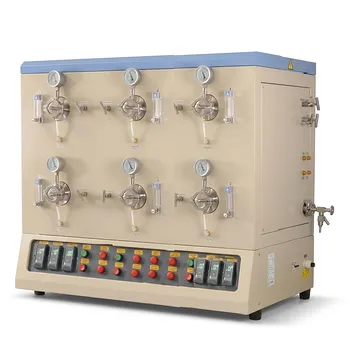
1200C High Throughput Multi Channel Tube Furnace with 50mm Quartz Tubes for Annealing and Material Phase Diagram Research
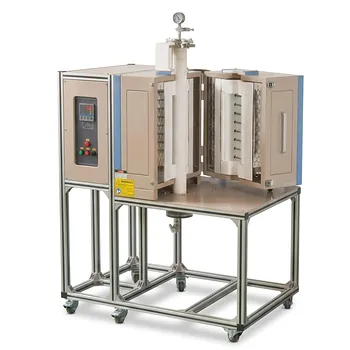
High Temperature 1700C Vertical Split Tube Furnace for Material Quenching and Single Crystal Growth

High Temperature 1700C Benchtop Tube Furnace with 5 Inch Heating Zone High Purity Alumina Tube and Vacuum Sealing Flanges