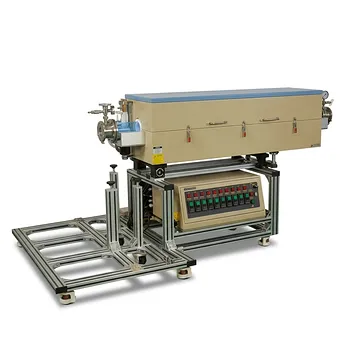
What is the primary function of a high-temperature tube furnace? Precision Industrial Combustion & Emission Simulation
Updated 3 months ago
In industrial combustion research, the high-temperature tube furnace serves as the foundational reactor for replicating complex thermal environments. It functions primarily by providing a precisely controlled, constant-temperature heating field and a simulated air atmosphere to ensure the complete reaction of coal and bio-heavy oil blends. This isolated environment allows researchers to precisely collect and analyze the resulting flue gas components, which is essential for understanding emission profiles.
The primary function of a high-temperature tube furnace is to act as a stable, sealed combustion reactor that isolates the chemical reaction from external variables. By providing uniform thermal fields and programmable atmospheres, it enables the accurate measurement of fuel performance and gaseous emissions under specific industrial conditions.
The Role of Controlled Thermal Fields
Achieving Uniform Radial Heating
The cylindrical geometry of a tube furnace is designed to provide highly uniform radial heating. This ensures that the coal and bio-heavy oil mixture is exposed to an identical temperature gradient across the entire sample.
Without this uniformity, inconsistent reaction rates would occur, leading to inaccurate data regarding fuel efficiency and burnout times. The furnace effectively eliminates cold spots that could skew experimental results.
Precision Temperature Regulation
In experiments involving coal and bio-heavy oil blends, maintaining a specific temperature—such as 1100°C—is critical for simulating industrial boiler conditions. The furnace uses advanced control systems to maintain a constant-temperature heating field.
This stability allows for the observation of specific chemical phenomena, such as the breaking of stable carbon-sulfur (C-S) bonds or the onset of devolatilization. Precision control ensures that the thermal energy supplied is consistent throughout the duration of the test.
Simulating Industrial Atmospheres
Creating Precise Gaseous Environments
Beyond temperature, the furnace facilitates the introduction of specific gas mixtures, such as Ar-CO2-CO or simulated air. This allows researchers to mimic the exact atmosphere found inside an industrial sinter machine or a utility boiler.
By controlling the gas flow rates, scientists can study how different oxygen levels affect the ignition characteristics and burnout times of blended fuels. This is vital for determining the optimal ratio of biomass to coal for large-scale power generation.
Isolating the Reaction Space
The sealed design of the tube furnace is its most critical feature for emission analysis. It ensures that the atmosphere inside the tube is entirely decoupled from the outside environment.
This isolation prevents oxygen contamination during sensitive processes like pyrolysis or carbonization. It also ensures that 100% of the generated flue gas is directed toward downstream analytical equipment for measurement.
Understanding Technical Trade-offs
Scale vs. Real-World Complexity
While tube furnaces provide unmatched precision, they are typically laboratory-scale devices. This means they may not fully capture the turbulent flow dynamics or the massive pressure variations found in full-scale industrial furnaces.
Researchers must account for these scaling effects when translating lab results to industrial applications. The furnace provides the chemical baseline, but fluid dynamics may differ in larger systems.
Material Integrity and Contamination
Operating at temperatures up to 1500°C places extreme stress on the furnace tube and heating elements. Over time, trace residues from coal or bio-heavy oil can accumulate on the tube walls.
If not meticulously maintained, these residues can act as catalysts or contaminants in subsequent experiments. Choosing the right tube material, such as quartz or alumina, is a necessary trade-off between thermal shock resistance and chemical inertness.
How to Apply This to Your Research Goals
Making the Right Choice for Your Project
To get the most out of high-temperature tube furnace experiments, you must align the furnace configuration with your specific analytical objectives.
- If your primary focus is emission monitoring: Utilize a strictly sealed system with integrated gas sampling ports to ensure no flue gases escape before analysis.
- If your primary focus is fuel ignition behavior: Prioritize a furnace with a transparent viewing window or high-speed data logging to capture the exact moment of ignition and burnout.
- If your primary focus is material degradation: Use a vertical tube furnace configuration to better simulate the "fireside" exposure that superheater and reheater materials experience in power plants.
By mastering the controlled environment of the tube furnace, you can transform complex combustion variables into predictable, actionable data for industrial optimization.
Summary Table:
| Feature | Description |
|---|---|
| Core Function | Acts as a stable, sealed reactor for simulating industrial combustion environments. |
| Thermal Field | Provides uniform radial heating and precision regulation (e.g., up to 1500°C). |
| Atmosphere Control | Enables simulation of specific gas environments like Ar-CO2-CO or synthetic air. |
| Analytical Value | Isolates reactions for accurate collection and analysis of flue gas and emissions. |
| Ideal Applications | Coal/Bio-oil blend research, pyrolysis, carbonization, and material degradation. |
Optimize Your Thermal Processing with THERMUNITS
Accelerate your material science and industrial R&D with THERMUNITS, a leading manufacturer of high-temperature laboratory equipment. Whether you are conducting complex combustion simulations or advanced material synthesis, our comprehensive range of thermal solutions—including Tube, Muffle, Vacuum, and Rotary Furnaces, CVD/PECVD systems, and Hot Press furnaces—provides the precision and reliability your research demands.
Ready to enhance your lab’s efficiency and data accuracy? Contact our technical experts today to find your custom solution!
References
- Yuan Bai, Wenheng Jing. Combustion properties and pollutant analysis of coal-blended bio-heavy oil fuel. DOI: 10.1039/d3ra08748d
Mentioned Products
- High Temperature Tube Furnace 1500C with Sliding Flanges and 50mm OD for Rapid Thermal Processing Fast Heating and Cooling
- High Temperature 1700C Tube Furnace with High Vacuum Turbomolecular Pump System and Multi Channel Mass Flow Controller Gas Mixer
- High Temperature 1700C Benchtop Tube Furnace with 5 Inch Heating Zone High Purity Alumina Tube and Vacuum Sealing Flanges
- 1750°C High Temperature Benchtop Vacuum Atmosphere Tube Furnace with Kanthal Super 1800 Heating Elements and 60mm Alumina Processing Tube
- Compact High Temperature 1600C Tube Furnace with 50mm Alumina Tube and Vacuum Flanges for Material Sintering
People Also Ask
- How are high-temperature tube furnaces utilized to repair etching damage? Precision Lattice Restoration Solutions
- What role does a high-temperature tube furnace play in CVD synthesis of silicon nanowires? Master VLS Growth Precision.
- What core conditions does a high-temperature tube furnace provide for rGO aerogels? Mastering Precision Synthesis.
- What role does a high-temperature tube furnace play in the sulfidation heat treatment of CoS@C/MXene nanocomposites? Guide
- How does precision tube furnace control influence CoFe nanoparticle formation? Master Your Bimetallic Synthesis.

Tech Team · ThermUnits
Last updated on Jun 03, 2026
Related Products

High Temperature Tube Furnace 1500C with Sliding Flanges and 50mm OD for Rapid Thermal Processing Fast Heating and Cooling

High Temperature 1700C Tube Furnace with High Vacuum Turbomolecular Pump System and Multi Channel Mass Flow Controller Gas Mixer

High Temperature 1700C Benchtop Tube Furnace with 5 Inch Heating Zone High Purity Alumina Tube and Vacuum Sealing Flanges

1750°C High Temperature Benchtop Vacuum Atmosphere Tube Furnace with Kanthal Super 1800 Heating Elements and 60mm Alumina Processing Tube

Compact High Temperature 1600C Tube Furnace with 50mm Alumina Tube and Vacuum Flanges for Material Sintering
1700C High Temperature Alumina Tube Furnace with 18 Inch Heated Zone and Vacuum Sealing Flanges

1800C High Temperature Compact Vacuum Tube Furnace with 60mm OD Alumina Tube and Kanthal MoSi2 Heating Elements
High Temperature Split Tube Furnace 1500C for Material Research Vacuum and Atmosphere Thermal Processing

High Temperature 1700C Vertical Tube Furnace for Powder Spherification and Material Sintering
High Temperature Three Zone Tube Furnace 1700C with Alumina Tube and Water Cooled Flanges

High Temperature 1700C Six Zone Split Tube Furnace with Alumina Tube and Water Cooled Flanges
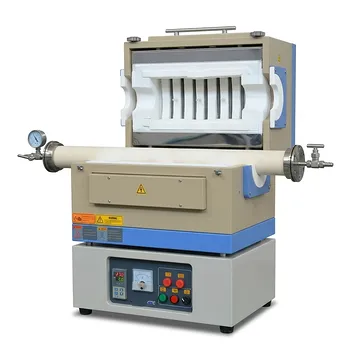
High Temperature 1600C Split Tube Furnace Vacuum Flanges Valves Optional 60mm 80mm Alumina Tube

High Temperature Automated 5 Inch Tube Furnace for Autonomous Material Research and Advanced Laboratory R&D

1100C Tube Furnace with Vacuum Flange and Programmable Temperature Controller for Material Science and Industrial Heat Treatment
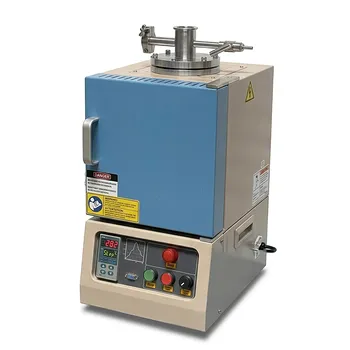
High Temperature Hybrid Muffle and Tube Furnace with Vacuum Capability and PID Control
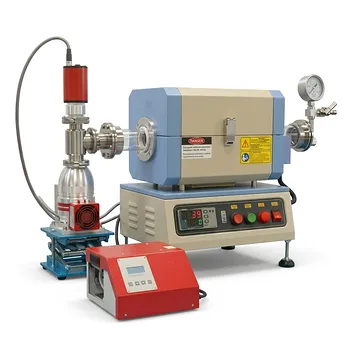
High Vacuum Compact Tube Furnace 1200C with Integrated Turbo Pump System and 8 Inch Heating Zone
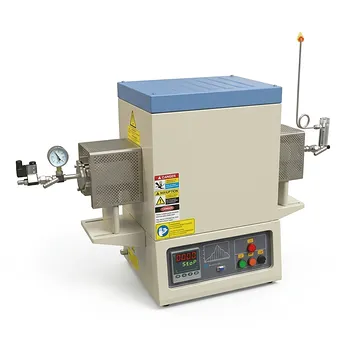
1700C Hydrogen Gas Tube Furnace with 60mm Alumina Process Tube and Integrated Hydrogen Safety Detector
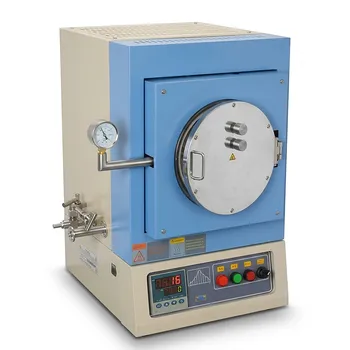
1100°C High Temperature Quartz Chamber Furnace 8 Inch OD with 7.6 Liter Capacity and Vacuum Atmosphere Capability
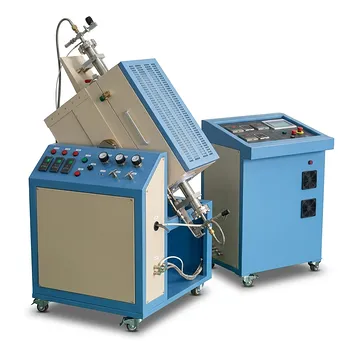
1100C High Pressure Rocking Tube Furnace with 2 Inch Super Alloy Processing Tube for Material Synthesis