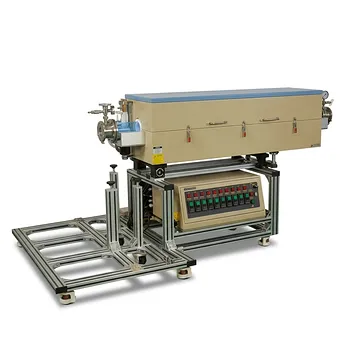
What is the role of a tube furnace in Cr2O3 substrate pretreatment? Achieve High-Quality Epitaxial Thin Films
Updated 3 months ago
The primary function of a high-temperature tube furnace during substrate pretreatment is the thermal decontamination of the sapphire surface. By heating the substrate to 1000°C in an air environment, the furnace facilitates the complete removal of adsorbed contaminants and organic residues. This creates a chemically clean and well-defined surface necessary for the subsequent high-quality heteroepitaxial growth of Ruthenium (Ru) and chromium oxide ($Cr_2O_3$) layers.
Core Takeaway: High-temperature pretreatment acts as a critical "reset" for the sapphire substrate, ensuring that the atomic lattice of the growth layers interacts directly with the substrate rather than a layer of surface impurities.
The Role of Thermal Pretreatment in Thin Film Epitaxy
Eliminating Surface Barriers
In epitaxial growth, the alignment of the new crystal lattice depends entirely on the quality of the starting surface. Organic residues and adsorbed moisture act as physical barriers that prevent proper atomic bonding at the interface.
The tube furnace uses intense thermal energy to volatilize these impurities, effectively stripping the sapphire surface of any remnants from previous handling or environmental exposure. This results in a "pristine" environment where the deposited Ruthenium or chromium oxide atoms can find their correct lattice positions.
Defining the Growth Template
Beyond simple cleaning, high temperatures assist in preparing a well-defined initial surface for heteroepitaxial growth. A clean surface allows for better wetting and adhesion of the subsequent metal and oxide layers.
Without this step, the resulting thin films would likely suffer from defects, poor crystallinity, or delamination. The furnace provides the stable, high-energy environment required to reach the specific 1000°C threshold necessary for sapphire preparation.
Technical Principles of the Tube Furnace Environment
Precision Atmospheric Control
A tube furnace is chosen for this process because it allows for a controlled air environment during the heating cycle. While some processes require inert gases like nitrogen or argon, the pretreatment of sapphire for $Cr_2O_3$ specifically utilizes air to oxidize and remove organic carbon-based contaminants.
The design of the furnace ensures that the temperature is uniform across the substrate, preventing localized hot spots that could cause uneven cleaning. This uniformity is vital for maintaining the structural integrity of the sapphire substrate while it is subjected to extreme heat.
Atomic Surface Rearrangement
While the primary reference focuses on cleaning, high-temperature treatments often facilitate the diffusion and rearrangement of atoms on the substrate surface. This can transform a rough or mechanically polished surface into one that is atomically flat.
Such a transformation is critical for eliminating pits, cracks, and surface roughness that would otherwise be "mirrored" into the epitaxial layer. The thermal energy provided by the furnace allows the surface to reach a lower energy, more stable state before growth begins.
Understanding the Trade-offs and Risks
Potential for Thermal Stress
Subjecting sapphire to 1000°C introduces the risk of thermal shock if the heating and cooling rates are not strictly managed. Rapid temperature changes can lead to micro-cracking or warping of the substrate, which would ruin its utility as an epitaxial template.
To mitigate this, technical experts must implement precise ramping programs within the furnace controller. The "staged heating" mentioned in related ceramic processes is often mirrored here to ensure the substrate expands and contracts homogeneously.
Risk of Cross-Contamination
If the tube furnace has been used for different materials (such as selenium or metal vapors), there is a significant risk of cross-contamination. At 1000°C, trace elements from previous runs can become mobile and redeposit onto the sapphire substrate.
Maintaining a dedicated quartz tube or implementing rigorous bake-out cycles between different material runs is essential for ensuring the "clean" surface remains uncontaminated by the equipment itself.
How to Optimize Your Substrate Pretreatment
To achieve the highest quality epitaxial $Cr_2O_3$ thin films, the pretreatment phase must be tailored to the specific substrate and subsequent growth goals.
- If your primary focus is maximum crystalline purity: Ensure the furnace is held at the 1000°C peak for a sufficient duration to allow for full volatilization of deep-seated organic residues.
- If your primary focus is surface morphology (flatness): Carefully control the cooling rate after the 1000°C soak to prevent the formation of thermal etch pits or surface defects.
- If your primary focus is high-throughput production: Utilize a multi-zone tube furnace to maintain a stable "hot zone" while allowing for faster loading and unloading in the cooler transition zones.
The success of epitaxial growth is determined before the first atom of $Cr_2O_3$ is ever deposited.
Summary Table:
| Feature | Details |
|---|---|
| Primary Function | Thermal decontamination of sapphire surfaces |
| Target Temperature | 1000°C in a controlled air environment |
| Impurity Removal | Volatilizes organic residues and adsorbed moisture |
| Growth Benefit | Enables proper atomic bonding and heteroepitaxial alignment |
| Risk Mitigation | Precise temperature ramping to prevent thermal stress |
Elevate Your Thin Film Research with THERMUNITS
High-quality epitaxial growth begins with precise substrate preparation. THERMUNITS is a leading manufacturer of high-temperature laboratory equipment for material science and industrial R&D. We offer a comprehensive range of thermal processing solutions tailored for thin-film applications, including Tube Furnaces, CVD/PECVD systems, Vacuum/Atmosphere furnaces, and Muffle furnaces.
Our equipment provides the uniform heating and atmospheric precision required for critical decontamination and atomic surface rearrangement.
Ready to optimize your lab’s heat treatment efficiency? Contact our technical experts today for a customized solution!
References
- Quintin Cumston, William E. Kaden. Wafer-scale development, characterization, and high temperature stabilization of epitaxial Cr2O3 films grown on Ru(0001). DOI: 10.1063/5.0201818
Mentioned Products
- High Temperature Tube Furnace 1500C with Sliding Flanges and 50mm OD for Rapid Thermal Processing Fast Heating and Cooling
- High Temperature 1700C Tube Furnace with High Vacuum Turbomolecular Pump System and Multi Channel Mass Flow Controller Gas Mixer
- High Temperature 1700C Benchtop Tube Furnace with 5 Inch Heating Zone High Purity Alumina Tube and Vacuum Sealing Flanges
- 1700C High Temperature Alumina Tube Furnace with 18 Inch Heated Zone and Vacuum Sealing Flanges
- 1750°C High Temperature Benchtop Vacuum Atmosphere Tube Furnace with Kanthal Super 1800 Heating Elements and 60mm Alumina Processing Tube
People Also Ask
- How are high-temperature tube furnaces utilized to repair etching damage? Precision Lattice Restoration Solutions
- What role does a high-temperature tube furnace play in CVD synthesis of silicon nanowires? Master VLS Growth Precision.
- What core conditions does a high-temperature tube furnace provide for rGO aerogels? Mastering Precision Synthesis.
- What role does a high-temperature tube furnace play in the sulfidation heat treatment of CoS@C/MXene nanocomposites? Guide
- How does precision tube furnace control influence CoFe nanoparticle formation? Master Your Bimetallic Synthesis.

Tech Team · ThermUnits
Last updated on Jun 03, 2026
Related Products
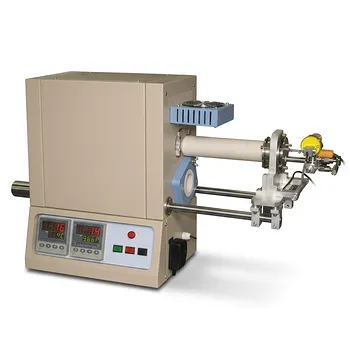
High Temperature Tube Furnace 1500C with Sliding Flanges and 50mm OD for Rapid Thermal Processing Fast Heating and Cooling

High Temperature 1700C Tube Furnace with High Vacuum Turbomolecular Pump System and Multi Channel Mass Flow Controller Gas Mixer
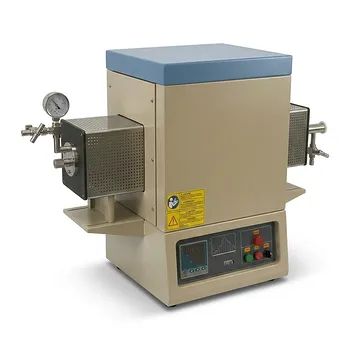
High Temperature 1700C Benchtop Tube Furnace with 5 Inch Heating Zone High Purity Alumina Tube and Vacuum Sealing Flanges
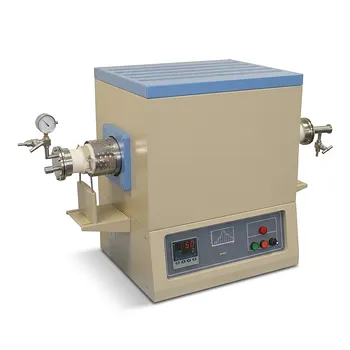
1700C High Temperature Alumina Tube Furnace with 18 Inch Heated Zone and Vacuum Sealing Flanges
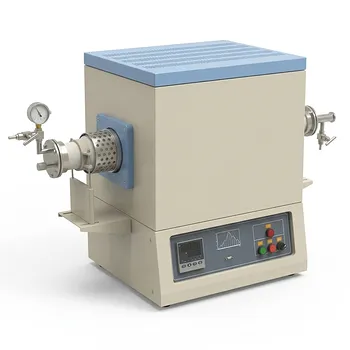
1750°C High Temperature Benchtop Vacuum Atmosphere Tube Furnace with Kanthal Super 1800 Heating Elements and 60mm Alumina Processing Tube

Compact High Temperature 1600C Tube Furnace with 50mm Alumina Tube and Vacuum Flanges for Material Sintering

1800C High Temperature Compact Vacuum Tube Furnace with 60mm OD Alumina Tube and Kanthal MoSi2 Heating Elements
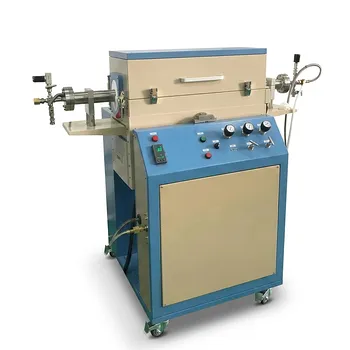
High Temperature Rocking Tube Furnace 1700°C Alumina Processing Tube with Precision Oscillation for Material Synthesis
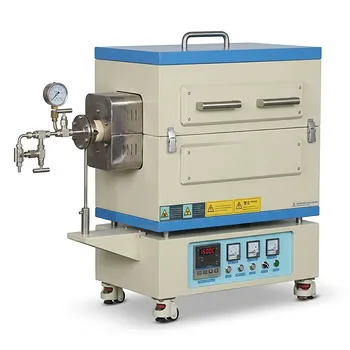
High Temperature Split Tube Furnace 1500C for Material Research Vacuum and Atmosphere Thermal Processing
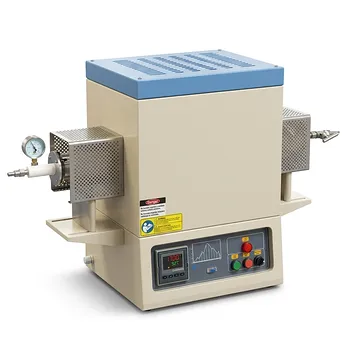
High Temperature Three Zone Tube Furnace 1700C with Alumina Tube and Water Cooled Flanges

High Temperature 1700C Vertical Tube Furnace for Powder Spherification and Material Sintering
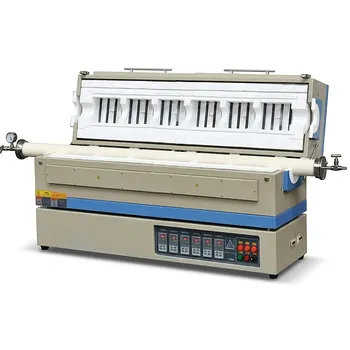
High Temperature 1700C Six Zone Split Tube Furnace with Alumina Tube and Water Cooled Flanges
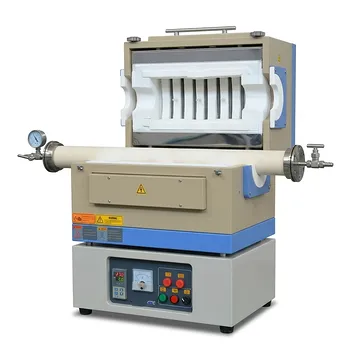
High Temperature 1600C Split Tube Furnace Vacuum Flanges Valves Optional 60mm 80mm Alumina Tube

High Temperature Automated 5 Inch Tube Furnace for Autonomous Material Research and Advanced Laboratory R&D
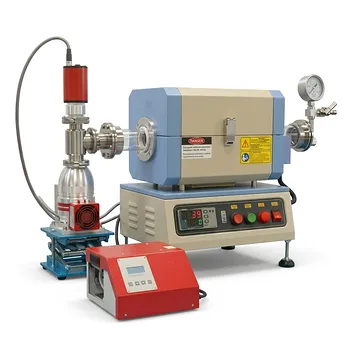
High Vacuum Compact Tube Furnace 1200C with Integrated Turbo Pump System and 8 Inch Heating Zone
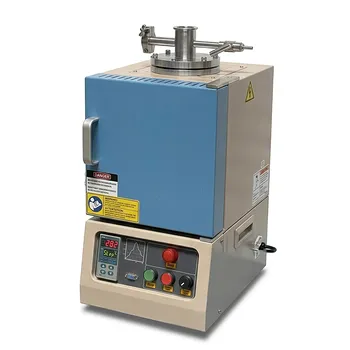
High Temperature Hybrid Muffle and Tube Furnace with Vacuum Capability and PID Control
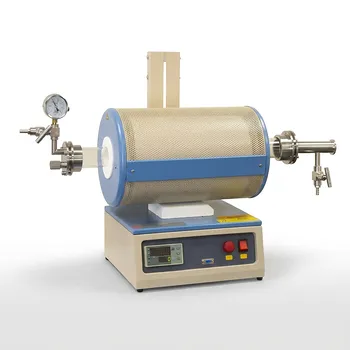
1100C Tube Furnace with Vacuum Flange and Programmable Temperature Controller for Material Science and Industrial Heat Treatment
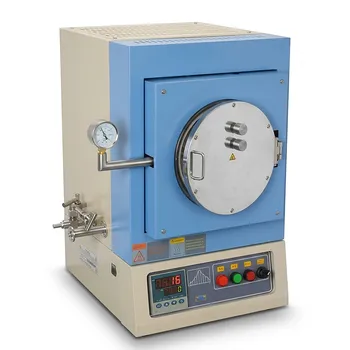
1100°C High Temperature Quartz Chamber Furnace 8 Inch OD with 7.6 Liter Capacity and Vacuum Atmosphere Capability
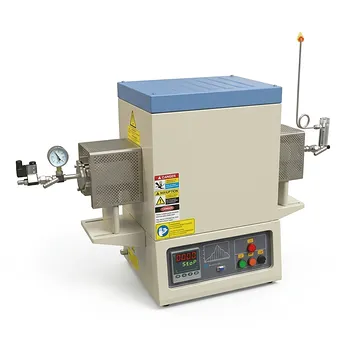
1700C Hydrogen Gas Tube Furnace with 60mm Alumina Process Tube and Integrated Hydrogen Safety Detector