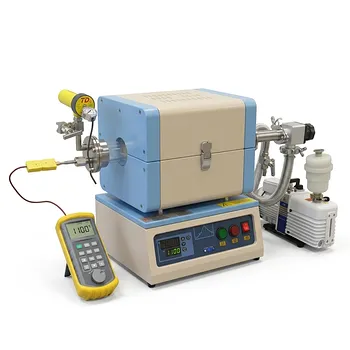
What is the primary function of a vacuum atmosphere tube furnace in Fe@Fe2O3/PCNFs prep? Master Carbonization Success
Updated 3 months ago
The primary function of a vacuum atmosphere tube furnace is to provide a strictly controlled, anaerobic thermal environment that prevents fiber oxidation while facilitating the chemical transformation of the precursor into a structured carbon framework. During the carbonization of Fe@Fe2O3/PCNFs, the furnace maintains a high-purity Argon atmosphere at temperatures up to 600 °C. This specific environment drives the conversion of the polymer matrix into a conductive carbon scaffold and triggers the thermal decomposition of pore-forming agents like PMMA to create essential hierarchical pore structures.
Core Takeaway: The vacuum atmosphere tube furnace serves as a specialized reactor that simultaneously protects carbon fibers from oxidative degradation and enables the molecular restructuring of polymers into a conductive, porous carrier.
Preventing Oxidative Degradation
Maintaining Inert Environments
The furnace utilizes a vacuum-sealed chamber backfilled with high-purity Argon to displace all oxygen. This is critical because carbon fibers and polymer precursors will rapidly oxidize and combust if exposed to atmospheric oxygen at temperatures required for carbonization.
Protecting Structural Integrity
By maintaining this strictly inert shield, the equipment ensures that the nanofibers retain their physical form throughout the heating cycle. This protection allows the material to develop high chemical stability and electrical conductivity without losing its morphological characteristics to premature combustion.
Thermal Conversion and Framework Development
Polymer Pyrolysis at 600 °C
The furnace provides the precise thermal energy—typically targeted at 600 °C—required to initiate the pyrolysis of the polymer matrix. This process strips away non-carbon elements, leaving behind a robust and highly conductive carbon framework that acts as the backbone for the Fe@Fe2O3 composite.
Facilitating Electrical Conductivity
As the heat treatment progresses, the chemical bonds within the precursor are reorganized into a graphitic or amorphous carbon structure. This transition is essential for creating electrode materials that can efficiently transport electrons during electrochemical applications.
In-Situ Engineering of Pore Structures
Decomposition of Pore-Forming Agents
A critical secondary function of the furnace is the controlled thermal decomposition of Poly(methyl methacrylate) (PMMA). At the specified carbonization temperatures, PMMA acts as a sacrificial template, breaking down into volatile components that exit the furnace system.
Generating Hierarchical Porosity
As the PMMA decomposes, it leaves behind a network of "voids" or pores within the accumulating carbon nanofibers. This in-situ pore generation creates a hierarchical structure that significantly increases the surface area and improves the accessibility of active sites within the Fe@Fe2O3/PCNFs.
Understanding the Trade-offs
Temperature Precision vs. Material Aggregation
While higher temperatures generally improve carbon conductivity, exceeding the optimal 600 °C threshold can lead to the excessive aggregation of metal atoms. Precise temperature control is required to balance the crystallinity of the iron oxides with the structural integrity of the carbon pores.
Inert Gas Purity Challenges
The effectiveness of the furnace is entirely dependent on the seal integrity and gas purity. Even trace amounts of oxygen leakage can lead to localized "pitting" or weakening of the carbon nanofibers, which compromises the final material’s mechanical and electrochemical performance.
How to Apply This to Your Project
Optimizing Carbonization Parameters
- If your primary focus is Maximum Conductivity: Prioritize higher carbonization temperatures and longer holding times under high-purity Nitrogen or Argon to maximize graphitization.
- If your primary focus is High Surface Area: Focus on the precise ramp rate and decomposition temperature of your pore-forming agent (such as PMMA) to ensure uniform pore distribution.
- If your primary focus is Preventing Metallic Oxidation: Ensure a strictly maintained reducing or inert atmosphere (such as Ar/H2 or pure Ar) to keep the metallic phases from over-oxidizing during the thermal cycle.
By mastering the atmospheric and thermal variables within the tube furnace, researchers can precisely tune the physicochemical properties of carbon-based nanocomposites.
Summary Table:
| Function | Benefit to Fe@Fe2O3/PCNFs | Key Parameter |
|---|---|---|
| Inert Shielding | Prevents fiber oxidation & structural loss | High-purity Argon flow |
| Thermal Pyrolysis | Converts polymers into conductive carbon | Constant 600 °C heating |
| Pore Engineering | Facilitates PMMA decomposition for porosity | Controlled ramp rate |
| Atmosphere Control | Stabilizes metallic phases & surface area | Vacuum/Gas seal integrity |
Elevate Your Material Research with THERMUNITS
Precision is non-negotiable in carbonization and high-temperature synthesis. THERMUNITS is a leading manufacturer of high-performance laboratory equipment tailored for material science and industrial R&D. We provide the control you need to achieve uniform pore structures and perfect conductivity.
Our comprehensive thermal solutions include:
- Tube & Atmosphere Furnaces: Optimized for inert/reducing environments and CVD/PECVD.
- Specialized Systems: Vacuum Induction Melting (VIM), Rotary Kilns, and Hot Press furnaces.
- Advanced Processing: Muffle, Vacuum, and Dental furnaces designed for durability and accuracy.
Ready to optimize your Fe@Fe2O3/PCNFs preparation? Contact our technical experts today to find the perfect furnace configuration for your laboratory goals!
References
- Ruiqi Shao, Zhiwei Xu. SAXS unveils porous anodes for potassium-ion batteries: dynamic evolution of pore structures in Fe@Fe<sub>2</sub>O<sub>3</sub>/PCNFs composite nanofibers. DOI: 10.1039/d3cp05994d
Mentioned Products
- 1750°C High Temperature Benchtop Vacuum Atmosphere Tube Furnace with Kanthal Super 1800 Heating Elements and 60mm Alumina Processing Tube
- Vertical 1700C Vacuum and Atmosphere Tube Furnace with 80mm Alumina Tube
- Three Zone Tube Furnace with 11 Inch or 15 Inch Quartz Tube and Hinged Flanges for Vacuum Atmosphere Heat Treatment
- Three Zone Heating Split Vertical Tube Furnace 1700 High Temperature Vacuum Atmosphere Thermal Process System
- Compact Vertical Split Quartz Tube Furnace with Stainless Steel Vacuum Flanges for Rapid Thermal Quenching and Controlled Atmosphere Material Processing
People Also Ask
- What core functions does a high-temperature vacuum tube furnace provide? Optimize np-CuSn Sintering & Joint Integrity
- What is the role of a high-temperature tube furnace in the calcination process of ZnO/In2O3 nanocomposites?
- What role does a high-temperature tube furnace play in the sulfidation heat treatment of CoS@C/MXene nanocomposites? Guide
- Why is a high-temperature tube furnace required for CuAlO2 heat treatment? Master Phase Transformation Today
- What role does a high-temperature tube furnace play in executing nitrogen absorption kinetic experiments? Expert Insights

Tech Team · ThermUnits
Last updated on Jun 03, 2026
Related Products

1750°C High Temperature Benchtop Vacuum Atmosphere Tube Furnace with Kanthal Super 1800 Heating Elements and 60mm Alumina Processing Tube

Vertical 1700C Vacuum and Atmosphere Tube Furnace with 80mm Alumina Tube

Three Zone Tube Furnace with 11 Inch or 15 Inch Quartz Tube and Hinged Flanges for Vacuum Atmosphere Heat Treatment
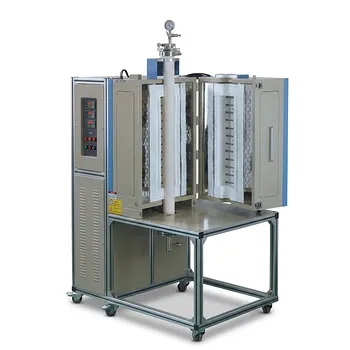
Three Zone Heating Split Vertical Tube Furnace 1700 High Temperature Vacuum Atmosphere Thermal Process System

Compact Vertical Split Quartz Tube Furnace with Stainless Steel Vacuum Flanges for Rapid Thermal Quenching and Controlled Atmosphere Material Processing
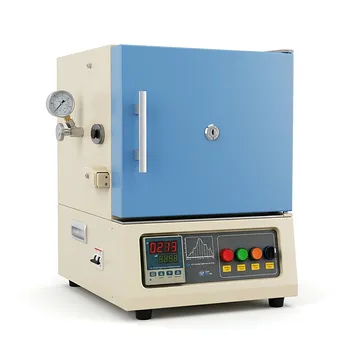
1200C Hybrid Muffle and Tube Furnace for Material Research with Dual Atmosphere Control Quartz Tubes
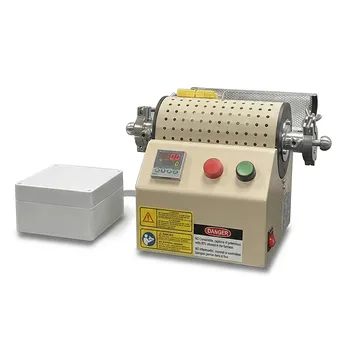
1000C Mini Tube Furnace with 20mm Quartz Tube and Vacuum Flanges for Material Science Research and Controlled Atmosphere Small Sample Processing
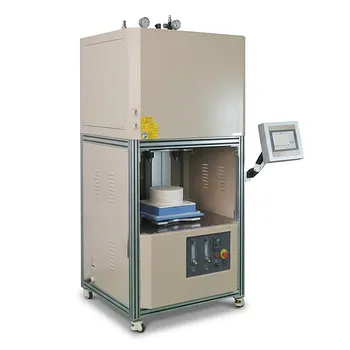
High Temperature Vertical Atmosphere Controlled Furnace 1700C Automatic Bottom Loading 13 Liter Vacuum Thermal System

1800C High Temperature Compact Vacuum Tube Furnace with 60mm OD Alumina Tube and Kanthal MoSi2 Heating Elements
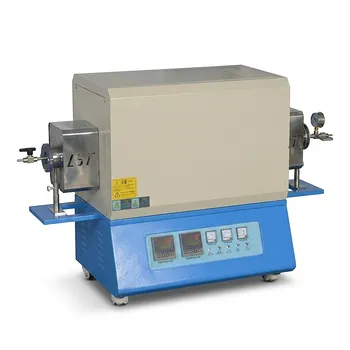
High Temperature Dual Zone Vacuum Tube Furnace for Material Research and CVD Processing
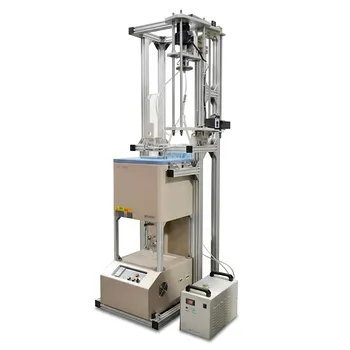
500C Vacuum Vertical Tube Furnace 84mm OD Sample Rotation Lifting System
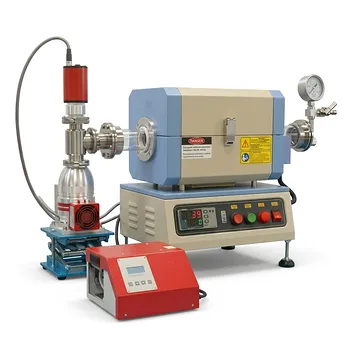
High Vacuum Compact Tube Furnace 1200C with Integrated Turbo Pump System and 8 Inch Heating Zone
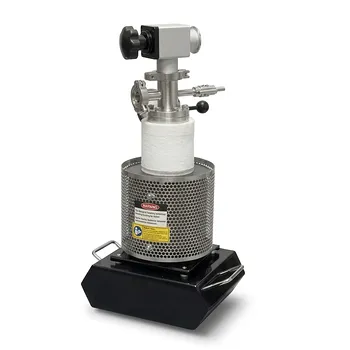
High Temperature 1100C Compact Top Loading Vertical Vacuum Tube Furnace for High Vacuum Noble Metal Melting and Material Research
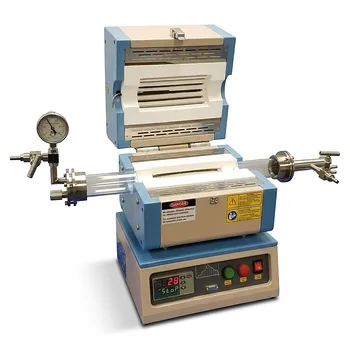
Compact Split Tube Furnace with Integrated Vacuum System and Precision Temperature Calibrator
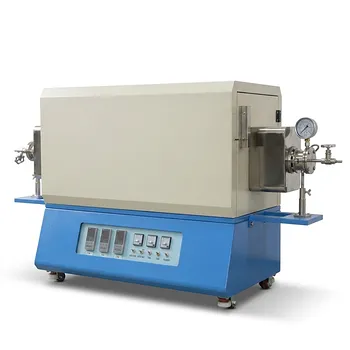
Three Temperature Zone High Temperature Vacuum Tube Furnace for CVD and Material Sintering

High Temperature 1700C Tube Furnace with High Vacuum Turbomolecular Pump System and Multi Channel Mass Flow Controller Gas Mixer
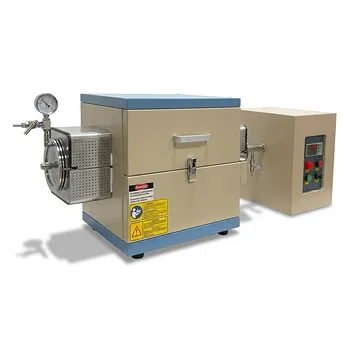
1200C High Temperature 5 Inch Split Vacuum Tube Furnace with 12 Inch Heating Zone and Separated PID Controller

High Temperature 1700C Vertical Tube Furnace for Powder Spherification and Material Sintering

1100C Tube Furnace with Vacuum Flange and Programmable Temperature Controller for Material Science and Industrial Heat Treatment