What is the purpose of sealing Nickel Alloy 718 specimens in argon-filled quartz tubes before heat treatment? Prevent Oxidation
Updated 3 months ago
The primary purpose of sealing Nickel Alloy 718 in argon-filled quartz tubes is to isolate the specimen from atmospheric oxygen and impurities. This encapsulation creates a controlled, inert micro-environment that prevents surface oxidation and elemental loss during high-temperature processes like homogenization or aging. By maintaining the chemical integrity of the material, researchers can ensure that any observed changes in the microstructure are purely the result of internal thermodynamic conditions.
Core Takeaway: Quartz tube encapsulation acts as a high-purity barrier that preserves the alloy's precise chemical composition at temperatures up to 1175 °C, allowing for the accurate study of phase evolution and the elimination of compositional segregation.
Preserving Chemical Integrity at High Temperatures
Preventing Surface Oxidation
At temperatures reaching 1175 °C, Nickel Alloy 718 reacts aggressively with ambient oxygen to form thick oxide scales. Sealing the specimen in a vacuum-evacuated tube backfilled with high-purity argon eliminates this reactive oxygen.
This protection is vital for ensuring that the surface of the specimen remains representative of the bulk material. Without it, the loss of material to oxidation can skew experimental results and degrade the specimen's surface quality.
Avoiding Elemental Depletion
High-temperature exposure can cause volatile alloying elements to migrate to the surface and evaporate or react, a process known as elemental depletion. Encapsulation creates a closed system that maintains the partial pressure of these elements, keeping the alloy's chemistry stable.
Maintaining this chemical uniformity is essential for subsequent thermal processing. If the surface composition changes, the mechanical properties and corrosion resistance of the final component may be compromised.
Facilitating Controlled Microstructural Evolution
Promoting Uniform Atomic Diffusion
The homogenization of Nickel Alloy 718 requires the atomic diffusion of key solute elements, such as Niobium (Nb). This diffusion is necessary to dissolve brittle, non-equilibrium Laves phases that often form during initial casting or 3D printing.
An inert environment ensures that these elements move according to the desired thermodynamic gradients. If oxygen were present, it could interfere with this diffusion or pin grain boundaries, leading to an inconsistent microstructure.
Ensuring Precise Phase Analysis
When scientists study how phases evolve over time, they must eliminate external variables. The quartz tube provides a "clean room" environment that ensures the resulting data is a true reflection of the alloy's internal physics.
This level of control is particularly important for long-term aging treatments. Even trace impurities can lead to contamination over extended periods, making the isolated environment of the quartz tube a gold standard for metallurgical research.
Understanding the Trade-offs and Risks
Temperature and Pressure Limitations
While quartz is an excellent insulator and container, it has physical limits, particularly near its softening point. Exceeding 1175 °C can lead to the deformation of the tube or a breach in the seal, which would immediately contaminate the specimen.
Furthermore, the argon gas inside the tube expands as it heats. If the tube is backfilled with too much pressure at room temperature, it may explode inside the furnace due to the internal pressure generated at high heat.
The Necessity of Pre-Cleaning
Encapsulation is only as effective as the cleanliness of the components inside. Any oils, fingerprints, or residues left on the Alloy 718 specimen or the inner wall of the quartz tube will be "baked" into the material.
These trapped impurities can cause surface decarburization or localized reactions. Therefore, rigorous cleaning protocols are required before the tube is evacuated and sealed to ensure the micro-environment remains truly inert.
How to Apply This to Your Project
Making the Right Choice for Your Goal
- If your primary focus is fundamental research on phase evolution: Use high-purity argon backfilling and a high-vacuum draw to ensure the most accurate thermodynamic data possible.
- If your primary focus is industrial homogenization of large parts: Transition from quartz tubes to industrial-grade vacuum furnaces or inert-atmosphere furnaces to handle larger volumes while maintaining similar protective principles.
- If your primary focus is preventing Niobium segregation: Ensure your heat treatment reaches the 1175 °C threshold while encapsulated to facilitate the complete dissolution of Laves phases.
By meticulously controlling the high-temperature environment through quartz encapsulation, you transform a potentially chaotic thermal event into a precise, repeatable metallurgical process.
Summary Table:
| Feature | Purpose in Heat Treatment | Benefit for Alloy 718 |
|---|---|---|
| Inert Argon Fill | Prevents reaction with ambient oxygen | Eliminates surface oxidation and scaling |
| Quartz Encapsulation | Creates a closed micro-environment | Maintains chemical integrity up to 1175 °C |
| Vacuum Evacuation | Removes moisture and volatile impurities | Ensures accurate microstructural phase analysis |
| Pressure Control | Manages partial pressure of alloying elements | Prevents elemental depletion (e.g., Niobium) |
Achieve Precision in Your Thermal Processing
THERMUNITS is a leading manufacturer of high-temperature laboratory equipment for material science and industrial R&D. Whether you are performing fundamental research on Nickel Alloy 718 or industrial-scale homogenization, we offer a comprehensive range of thermal solutions to meet your exact specifications.
Our product lineup includes:
- Tube Furnaces & Vacuum Furnaces for precise gas-controlled environments.
- Muffle, Atmosphere, and Hot Press Furnaces for versatile material processing.
- CVD/PECVD Systems & Vacuum Induction Melting (VIM) Furnaces for advanced material synthesis.
- Rotary Kilns, Dental Furnaces, and high-quality Thermal Elements.
Ensure the integrity of your heat treatment and eliminate experimental variables with our state-of-the-art equipment.
Ready to elevate your lab's performance?
Contact us today for a professional consultation and custom solution!
References
- Fan Zhang, Ján Ilavský. Phase Composition and Phase Transformation of Additively Manufactured Nickel Alloy 718 AM Bench Artifacts. DOI: 10.1007/s40192-023-00338-y
Mentioned Products
- Three Zone Tube Furnace with 11 Inch or 15 Inch Quartz Tube and Hinged Flanges for Vacuum Atmosphere Heat Treatment
- Rapid Thermal Processing Sliding Tube Furnace with 4 Inch OD Quartz Tube and 900C IR Heating
- 1100°C Large Diameter Quartz Tube Furnace with 24 Inch Heating Zone and Water Cooled Flanges
- Three Zone Tube Furnace with 24 Inch Heating Length and Hinged Flange Quartz Tube System
- Single Zone Tube Furnace 5 Inch Quartz Tube 36 Inch Heating Zone Vacuum Flanges
People Also Ask
- What is the primary function of a three-zone tube furnace in the synthesis process of corn-derived carbon nanotubes?
- What role does an industrial-grade three-zone tube furnace play in VOx@VACNT synthesis? Precision Phase-State Control
- What advantages does a three-zone tube furnace offer for nanoparticle synthesis? Unlock Superior Thermal Precision.
- Why Use a Three-Zone vs. Single-Zone Furnace for Fe-Ni-Cu Diffusion? Key Benefits for Lab Accuracy
- What role does a 3-zone tube furnace play in CCO ceramic conductivity testing? Ensure Isothermal Precision.

Tech Team · ThermUnits
Last updated on Jun 02, 2026
Related Products

Three Zone Tube Furnace with 11 Inch or 15 Inch Quartz Tube and Hinged Flanges for Vacuum Atmosphere Heat Treatment
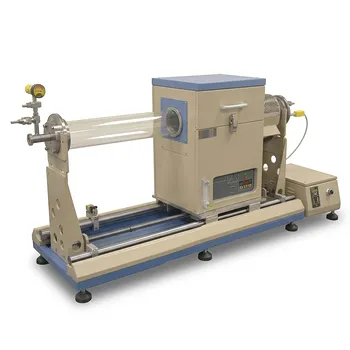
Rapid Thermal Processing Sliding Tube Furnace with 4 Inch OD Quartz Tube and 900C IR Heating
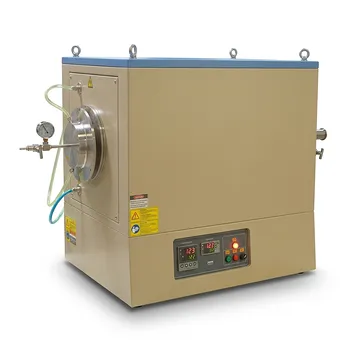
1100°C Large Diameter Quartz Tube Furnace with 24 Inch Heating Zone and Water Cooled Flanges
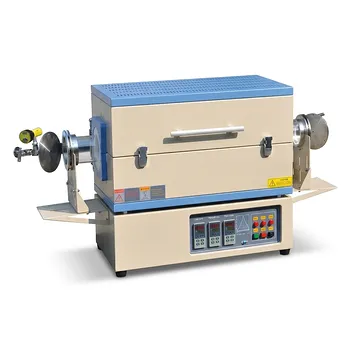
Three Zone Tube Furnace with 24 Inch Heating Length and Hinged Flange Quartz Tube System
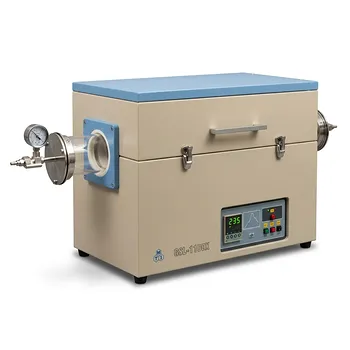
Single Zone Tube Furnace 5 Inch Quartz Tube 36 Inch Heating Zone Vacuum Flanges
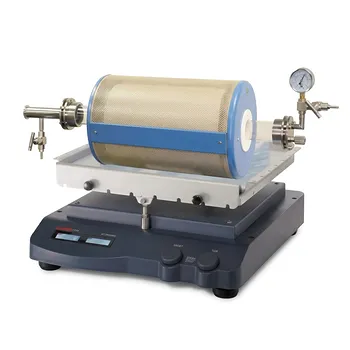
High Temperature Rocking Tube Furnace with Quartz Tube and Vacuum Flange for Materials Synthesis
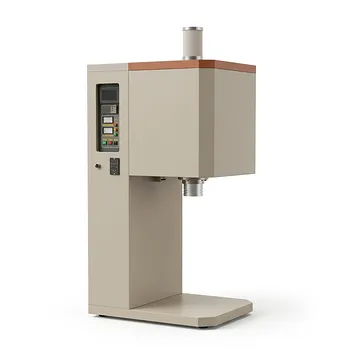
Vertical Openable Tube Furnace 0-1700c High Temperature Laboratory System for CVD and Vacuum Heat Treatment

Compact Vertical Split Quartz Tube Furnace with Stainless Steel Vacuum Flanges for Rapid Thermal Quenching and Controlled Atmosphere Material Processing

1100C Tube Furnace with Vacuum Flange and Programmable Temperature Controller for Material Science and Industrial Heat Treatment
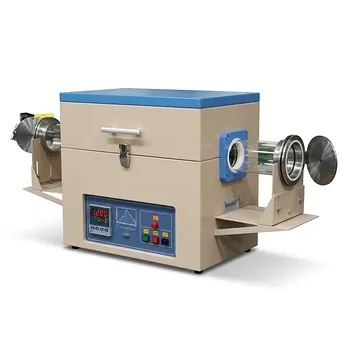
High Temperature 1200C Split Tube Furnace with Hinged Vacuum Flanges and 4 Inch Quartz Tube for Laboratory Research

1200°C 5 Inch Vertical Quartz Tube Furnace with Stainless Steel Vacuum Flanges
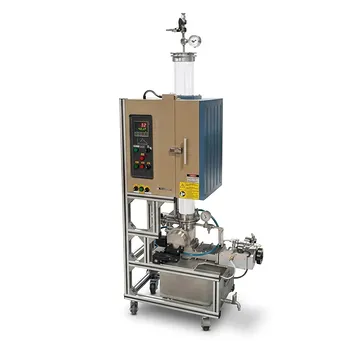
1200C High Temperature Atmosphere Controlled Vertical Quenching Tube Furnace with 4 Inch Quartz Tube
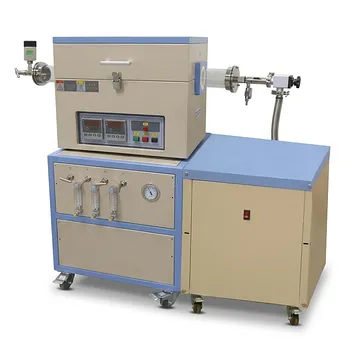
Dual Zone Quartz Tube Furnace with 80mm Diameter 1200C Max Temperature 3 Channel Gas Mixer and Vacuum Pump System
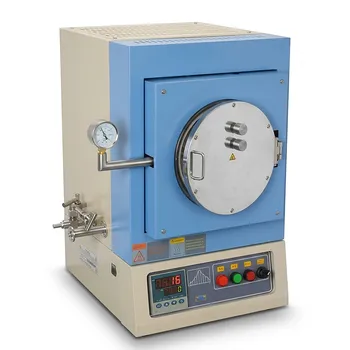
1100°C High Temperature Quartz Chamber Furnace 8 Inch OD with 7.6 Liter Capacity and Vacuum Atmosphere Capability

High Temperature Automated 5 Inch Tube Furnace for Autonomous Material Research and Advanced Laboratory R&D
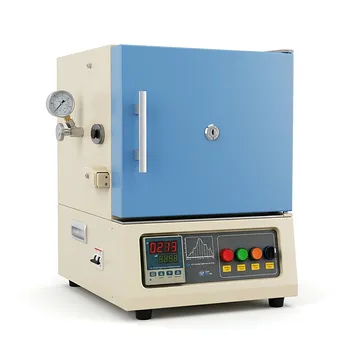
1200C Hybrid Muffle and Tube Furnace for Material Research with Dual Atmosphere Control Quartz Tubes
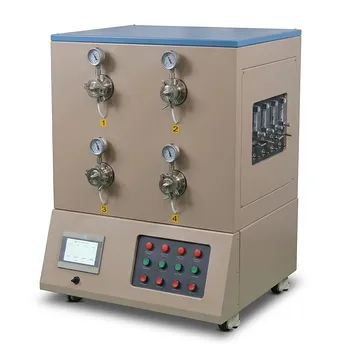
High Throughput 1200C Four Channel Tube Furnace with 3 Inch Quartz Tubes for Multi Zone Annealing and Material Research

1800C High Temperature Compact Vacuum Tube Furnace with 60mm OD Alumina Tube and Kanthal MoSi2 Heating Elements
1100°C Split Vertical Tube Furnace with 80mm Quartz Tube and Stainless Steel Vacuum Flanges
