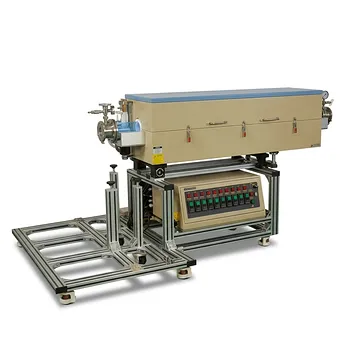
What is the purpose of using a high-temperature tube furnace during anthracite coal pyrolysis? Establish Thermal Baselines
Updated 3 months ago
The high-temperature tube furnace serves as the vital experimental "control group," providing a precisely calibrated thermal baseline to isolate and quantify the unique effects of microwave energy. By establishing a standard pyrolysis environment—typically reaching 900°C at controlled rates—researchers can distinguish between traditional heat-conduction effects and the advanced kinetic enhancements, such as plasma-induced cracking, found in microwave processes.
Core Takeaway: The tube furnace acts as the definitive benchmark for "pure thermal" reactions, allowing scientists to prove that microwave pyrolysis achieves superior results through electromagnetic kinetic effects rather than just heat alone.
Establishing the Scientific Baseline
Pure Thermal vs. Kinetic Effects
The primary reason for using a high-temperature tube furnace is to generate standard pyrolysis data. This data represents how anthracite coal behaves when subjected to conventional heat conduction alone.
By comparing this baseline to microwave results, researchers can quantitatively evaluate the additional gains provided by microwave-induced plasma. This comparison is essential for demonstrating that microwave methods can outperform pure thermal effects in cracking complex molecules like polycyclic aromatic hydrocarbons (PAH).
Heat Transfer Mechanisms
Tube furnaces rely on external heat conduction, where energy moves from the heating elements through the tube wall and into the coal sample layer-by-layer.
In contrast, microwave methods utilize electromagnetic induction for direct volumetric heating. The furnace's slower, more traditional mechanism is necessary to prove the efficiency and energy-saving claims of the microwave approach.
Precision Control and Atmosphere Integrity
Maintaining a Strict Reducing Atmosphere
The sealed structure of a tube furnace is critical for creating an oxygen-free environment. Using an inert gas purge, such as Argon or Nitrogen, prevents combustion and ensures the resulting tar reflects the coal's original structural characteristics.
This controlled atmosphere allows for the study of secondary tar cracking without interference from oxidation. It provides a stable thermochemical platform that is often easier to monitor and replicate than the dynamic environment of a microwave reactor.
Thermal Stability and Accuracy
High-temperature tube furnaces offer exceptional temperature stability, often with an accuracy of ±1°C. This precision is vital for long-term constant temperature treatments, such as holding a sample at 700°C to study the breakage of specific chemical bonds.
This level of steady-state control allows researchers to map the structural evolution of coal molecules into semi-coke (char). Without this stable reference point, it would be impossible to determine if microwave-driven changes are due to temperature or specific electromagnetic interactions.
Understanding the Trade-offs
Limitations of Conventional Heating
While the tube furnace provides the "gold standard" for control, it is inherently less efficient than microwave methods. The reliance on heat conduction results in longer processing times and higher activation energy requirements for the coal molecules.
Microwave Advantages and Complexity
Microwave pyrolysis can significantly lower the activation energy of reactions—in some studies reducing it from approximately 147 kJ/mol to 81 kJ/mol. However, the complexity of microwave-matter interactions makes it difficult to isolate variables, which is why the tube furnace remains an indispensable comparative tool.
Applying This to Your Research Goals
Making the Right Choice for Your Goal
To determine which method or combination is best for your specific pyrolysis experiment, consider your primary objective:
- If your primary focus is validating a new pyrolysis mechanism: Use the high-temperature tube furnace as your primary control to isolate thermal variables from kinetic ones.
- If your primary focus is industrial throughput and energy efficiency: Prioritize microwave methods, as they offer direct volumetric heating and drastically shorter process times.
- If your primary focus is characterizing original coal structures: Utilize the tube furnace’s stable inert atmosphere to ensure produced samples are not altered by uneven heating or oxidation.
The high-temperature tube furnace remains the essential anchor of pyrolysis research, ensuring that every microwave-driven breakthrough is measured against a rigorous, purely thermal standard.
Summary Table:
| Feature | High-Temperature Tube Furnace | Microwave Pyrolysis |
|---|---|---|
| Heating Mechanism | External Heat Conduction | Electromagnetic Induction |
| Research Role | Scientific Control / Thermal Baseline | Experimental Advanced Method |
| Atmosphere Control | Stable & Inert (Argon/Nitrogen) | Dynamic & Plasma-Induced |
| Temperature Stability | Precise (±1°C) | Rapid & Volumetric |
| Activation Energy | Higher (Traditional Baseline) | Significantly Lowered |
Elevate Your Material Research with THERMUNITS
Precise thermal baselines are the foundation of breakthrough discoveries. As a leading manufacturer of high-temperature laboratory equipment, THERMUNITS provides the precision and reliability required for advanced material science and industrial R&D.
Whether you are validating pyrolysis mechanisms or scaling industrial throughput, our comprehensive range of solutions—including Tube Furnaces, Vacuum and Atmosphere Furnaces, CVD/PECVD Systems, and Vacuum Induction Melting (VIM)—are engineered to meet the strictest scientific standards.
Ready to optimize your heat treatment process?
Contact our experts today to find the perfect furnace for your anthracite coal experiments and beyond.
References
- Lei Zhang, Guangbo Zhao. Production Characteristics of Volatiles from Anthracite Cracking via Microwave-Induced Discharge. DOI: 10.1021/acsomega.3c05977
Mentioned Products
- High Temperature Tube Furnace 1500C with Sliding Flanges and 50mm OD for Rapid Thermal Processing Fast Heating and Cooling
- High Temperature 1700C Tube Furnace with High Vacuum Turbomolecular Pump System and Multi Channel Mass Flow Controller Gas Mixer
- High Temperature 1700C Benchtop Tube Furnace with 5 Inch Heating Zone High Purity Alumina Tube and Vacuum Sealing Flanges
- 1750°C High Temperature Benchtop Vacuum Atmosphere Tube Furnace with Kanthal Super 1800 Heating Elements and 60mm Alumina Processing Tube
- Compact High Temperature 1600C Tube Furnace with 50mm Alumina Tube and Vacuum Flanges for Material Sintering
People Also Ask
- How are high-temperature tube furnaces utilized to repair etching damage? Precision Lattice Restoration Solutions
- What role does a high-temperature tube furnace play in CVD synthesis of silicon nanowires? Master VLS Growth Precision.
- What core conditions does a high-temperature tube furnace provide for rGO aerogels? Mastering Precision Synthesis.
- What role does a high-temperature tube furnace play in the sulfidation heat treatment of CoS@C/MXene nanocomposites? Guide
- How does precision tube furnace control influence CoFe nanoparticle formation? Master Your Bimetallic Synthesis.

Tech Team · ThermUnits
Last updated on Jun 02, 2026
Related Products
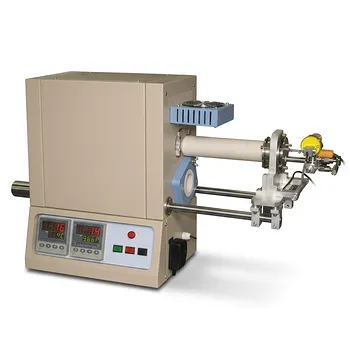
High Temperature Tube Furnace 1500C with Sliding Flanges and 50mm OD for Rapid Thermal Processing Fast Heating and Cooling

High Temperature 1700C Tube Furnace with High Vacuum Turbomolecular Pump System and Multi Channel Mass Flow Controller Gas Mixer
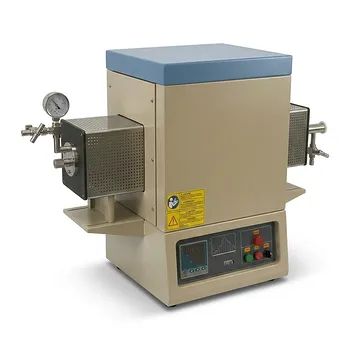
High Temperature 1700C Benchtop Tube Furnace with 5 Inch Heating Zone High Purity Alumina Tube and Vacuum Sealing Flanges
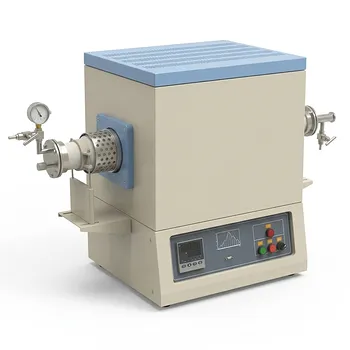
1750°C High Temperature Benchtop Vacuum Atmosphere Tube Furnace with Kanthal Super 1800 Heating Elements and 60mm Alumina Processing Tube

Compact High Temperature 1600C Tube Furnace with 50mm Alumina Tube and Vacuum Flanges for Material Sintering
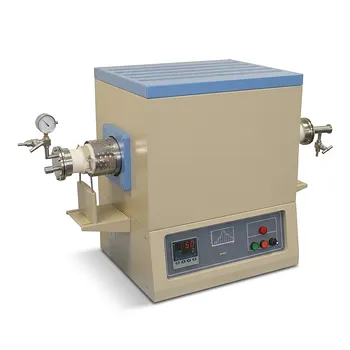
1700C High Temperature Alumina Tube Furnace with 18 Inch Heated Zone and Vacuum Sealing Flanges

1800C High Temperature Compact Vacuum Tube Furnace with 60mm OD Alumina Tube and Kanthal MoSi2 Heating Elements
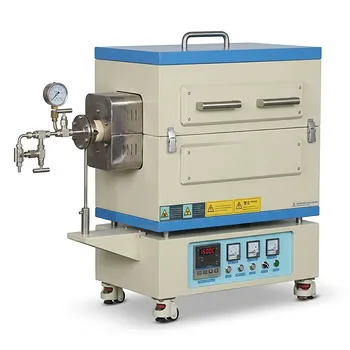
High Temperature Split Tube Furnace 1500C for Material Research Vacuum and Atmosphere Thermal Processing

High Temperature 1700C Vertical Tube Furnace for Powder Spherification and Material Sintering
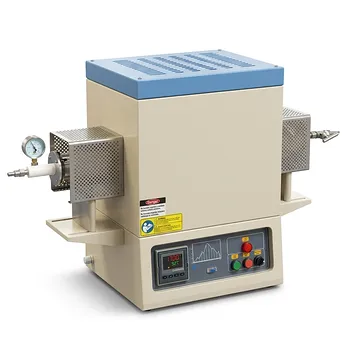
High Temperature Three Zone Tube Furnace 1700C with Alumina Tube and Water Cooled Flanges
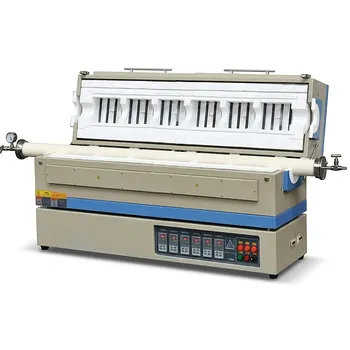
High Temperature 1700C Six Zone Split Tube Furnace with Alumina Tube and Water Cooled Flanges
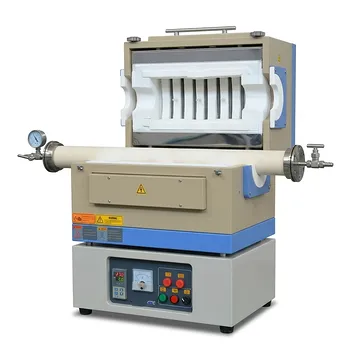
High Temperature 1600C Split Tube Furnace Vacuum Flanges Valves Optional 60mm 80mm Alumina Tube

High Temperature Automated 5 Inch Tube Furnace for Autonomous Material Research and Advanced Laboratory R&D
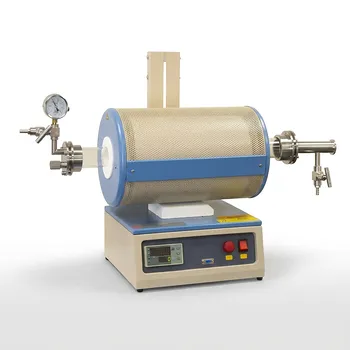
1100C Tube Furnace with Vacuum Flange and Programmable Temperature Controller for Material Science and Industrial Heat Treatment
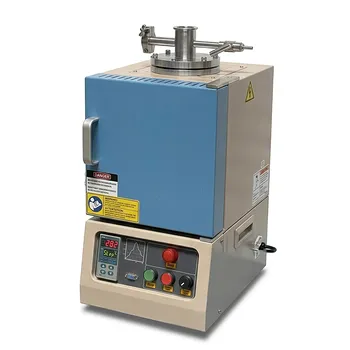
High Temperature Hybrid Muffle and Tube Furnace with Vacuum Capability and PID Control
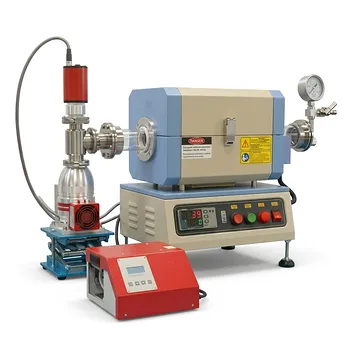
High Vacuum Compact Tube Furnace 1200C with Integrated Turbo Pump System and 8 Inch Heating Zone
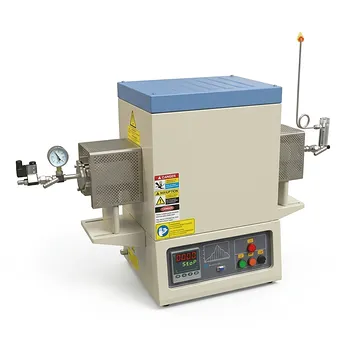
1700C Hydrogen Gas Tube Furnace with 60mm Alumina Process Tube and Integrated Hydrogen Safety Detector
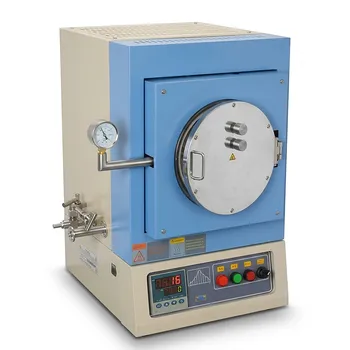
1100°C High Temperature Quartz Chamber Furnace 8 Inch OD with 7.6 Liter Capacity and Vacuum Atmosphere Capability
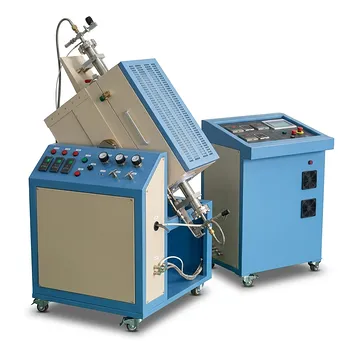
1100C High Pressure Rocking Tube Furnace with 2 Inch Super Alloy Processing Tube for Material Synthesis