Why Use a Quartz Tube Reactor for WO3 Hydrogen Spillover? Visualizing Color Changes and Catalyst Efficiency
Updated 3 months ago
The quartz tube reactor acts as a transparent, chemically inert window that enables researchers to visually track the hydrogen spillover process in real-time. By allowing for the direct observation of tungsten oxide ($WO_3$) transitioning from yellow to deep blue, the reactor provides immediate qualitative proof that active hydrogen atoms are successfully migrating from a metal catalyst to the oxide support.
Using a quartz tube reactor transforms a complex molecular migration into a visible indicator of catalyst performance. Its transparency and chemical stability allow researchers to use the chromatic shift of tungsten oxide as a definitive, qualitative benchmark for hydrogen spillover efficiency.
The Role of Optical Transparency in Reaction Monitoring
Direct Visualization of Phase Transitions
Quartz’s high transparency allows for the unobstructed observation of the reaction zone during high-temperature processes. This is critical for capturing the exact moment the $WO_3$ powder begins to change color under a hydrogen flow.
Identifying the Chromatic Shift
In these experiments, the material transitions from its original yellow powder state to a deep blue hydrogen tungsten bronze ($H_xWO_{3-x}$). This color change is the definitive visual signal that active hydrogen atoms have successfully integrated into the oxide lattice.
Chemical Stability at High Temperatures
Quartz is chosen because it maintains excellent chemical stability, ensuring the reactor itself does not interfere with the sensitive reduction process. This ensures that the observed color changes are strictly due to the interaction between the hydrogen and the $WO_3$ support.
Validating Catalyst Efficiency and Hydrogen Migration
Proving Hydrogen Atom Migration
Hydrogen spillover involves the dissociation of $H_2$ on a metal catalyst, followed by the migration of active hydrogen species to the support surface. The quartz tube allows researchers to see if the catalyst is effectively "spilling" these atoms onto the $WO_3$ surface.
Qualitative Performance Benchmarking
The speed and intensity of the blue coloration serve as a qualitative benchmark for the catalyst's performance. A more efficient catalyst will trigger a faster and more uniform color shift across the support material, indicating high catalytic activity.
Demonstrating the Spillover Effect
The visual change serves as a simplified, yet powerful, verification of the hydrogen spillover effect. It confirms that the metal center is successfully dissociating the gas and that the support is receptive to the migrating species.
Understanding the Trade-offs and Limitations
Qualitative vs. Quantitative Data
While visual observation is a powerful tool for verification, it is primarily qualitative and cannot provide precise measurements of hydrogen concentration or exact reaction rates. For a complete profile, researchers must supplement these observations with quantitative methods like mass spectrometry.
Sensitivity to Surface Contamination
The accuracy of the visual observation depends heavily on the purity of the $WO_3$ surface. Any contaminants present on the support or the tube walls can obscure the color change or provide false indications of catalyst efficiency.
Thermal Shock and Fragility
Although quartz is durable under steady heat, it is mechanically brittle and sensitive to rapid temperature fluctuations. Researchers must implement controlled heating and cooling ramps to prevent the reactor from cracking during the experiment.
Applying These Insights to Your Research
Recommended Approaches Based on Goals
- If your primary focus is rapid catalyst screening: Use the quartz reactor to quickly identify which catalyst formulations produce the fastest yellow-to-blue transition.
- If your primary focus is mechanistic understanding: Combine visual observation with a digital imaging system to map the "front" of the color change as it moves across the catalyst bed.
- If your primary focus is material durability: Monitor the quartz tube for any signs of devitrification or chemical etching over multiple reaction cycles to ensure experimental consistency.
By leveraging the unique properties of a quartz tube reactor, you can turn a microscopic molecular event into a clear, visual demonstration of catalytic efficiency.
Summary Table:
| Feature | Description | Research Benefit |
|---|---|---|
| Transparency | High optical clarity | Enables real-time observation of phase transitions |
| Color Shift | Yellow to Deep Blue | Provides immediate proof of hydrogen migration |
| Chemical Stability | High-temp inertness | Ensures no interference with the reduction process |
| Activity Benchmarking | Reaction speed/intensity | Allows for rapid qualitative catalyst screening |
Elevate your material science research with precision-engineered thermal solutions from THERMUNITS. As a leading manufacturer of high-temperature laboratory equipment, we provide the reliable tools necessary for advanced R&D, including CVD/PECVD systems, Tube furnaces, and Vacuum Induction Melting (VIM) furnaces. Whether you are studying hydrogen spillover or complex phase transitions, our comprehensive range—from Muffle and Atmosphere furnaces to Dental and Hot Press systems—is designed to meet the most demanding heat treatment requirements. Contact THERMUNITS today to discover how our high-performance thermal processing equipment can enhance your lab's experimental accuracy and efficiency.
References
- Rui Zhang, Hongjie Zhang. Synthesis of defect-rich La <sub>2</sub> O <sub>2</sub> CO <sub>3</sub> supports for enhanced CO <sub>2</sub> -to-methanol conversion efficiency. DOI: 10.1126/sciadv.adr3332
Mentioned Products
- Dual Zone Quartz Tube Furnace with 80mm Diameter 1200C Max Temperature 3 Channel Gas Mixer and Vacuum Pump System
- 1100°C Large Diameter Quartz Tube Furnace with 24 Inch Heating Zone and Water Cooled Flanges
- Compact Vertical Split Quartz Tube Furnace with Stainless Steel Vacuum Flanges for Rapid Thermal Quenching and Controlled Atmosphere Material Processing
- 1200°C 5 Inch Vertical Quartz Tube Furnace with Stainless Steel Vacuum Flanges
- 1100°C High Temperature Quartz Chamber Furnace 8 Inch OD with 7.6 Liter Capacity and Vacuum Atmosphere Capability
People Also Ask
- How do dual-zone quartz tube furnaces achieve controllable material preparation? Optimize Perovskite VD Processes
- What are the technical advantages of using a dual-zone tube furnace for growing large PdCoO2 crystals via CVT? Expert Tips
- Purpose of the reverse gradient step in CVT growth? Master Crystal Purity with Dual-Zone Furnaces
- Why is it necessary to place MoS2 devices in a dual-zone tube furnace for annealing? Optimize Lattice Repair & Doping
- Why is a dual-zone tube furnace necessary for ReO3-doped Cu2Te CVD? Essential for precise precursor synchronization.

Tech Team · ThermUnits
Last updated on Jun 03, 2026
Related Products
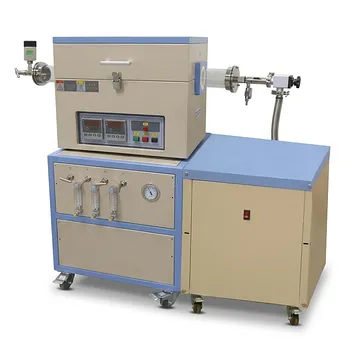
Dual Zone Quartz Tube Furnace with 80mm Diameter 1200C Max Temperature 3 Channel Gas Mixer and Vacuum Pump System
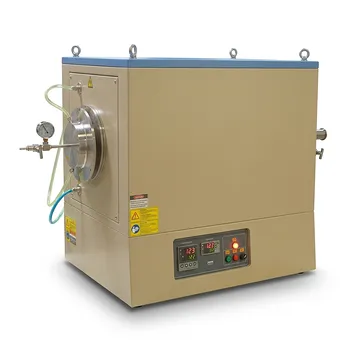
1100°C Large Diameter Quartz Tube Furnace with 24 Inch Heating Zone and Water Cooled Flanges
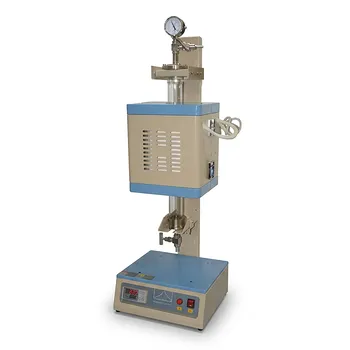
Compact Vertical Split Quartz Tube Furnace with Stainless Steel Vacuum Flanges for Rapid Thermal Quenching and Controlled Atmosphere Material Processing
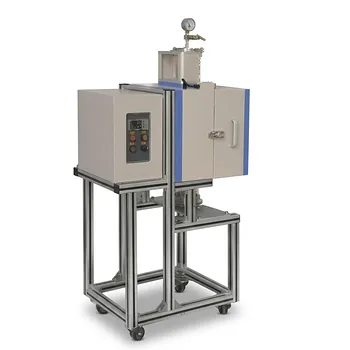
1200°C 5 Inch Vertical Quartz Tube Furnace with Stainless Steel Vacuum Flanges
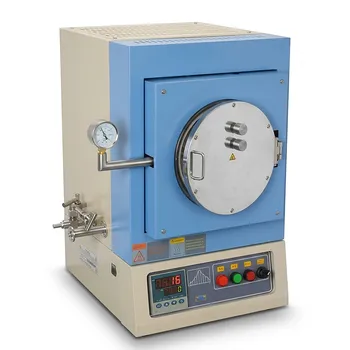
1100°C High Temperature Quartz Chamber Furnace 8 Inch OD with 7.6 Liter Capacity and Vacuum Atmosphere Capability
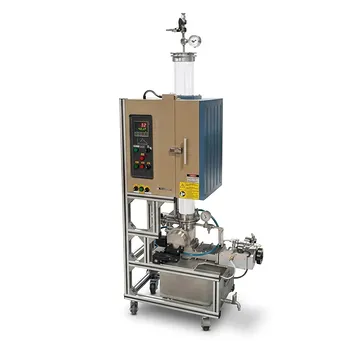
1200C High Temperature Atmosphere Controlled Vertical Quenching Tube Furnace with 4 Inch Quartz Tube

High Temperature Automated 5 Inch Tube Furnace for Autonomous Material Research and Advanced Laboratory R&D
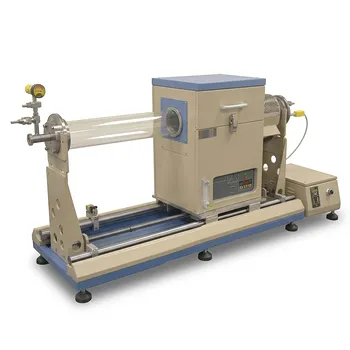
Rapid Thermal Processing Sliding Tube Furnace with 4 Inch OD Quartz Tube and 900C IR Heating
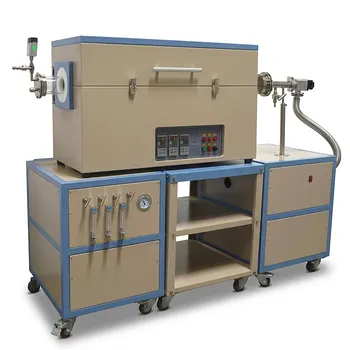
Three Zone Quartz Tube Furnace with 3 Channel Gas Mixer Vacuum Pump and Anti Corrosive Vacuum Gauge
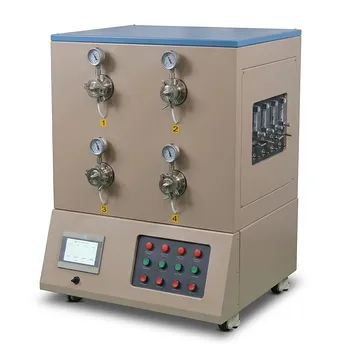
High Throughput 1200C Four Channel Tube Furnace with 3 Inch Quartz Tubes for Multi Zone Annealing and Material Research
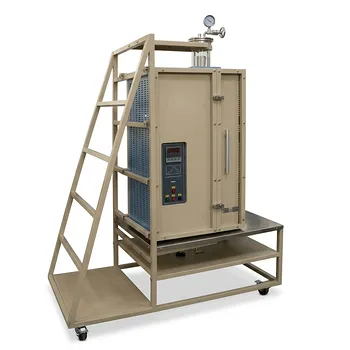
Split Vertical Tube Furnace with 1200C Quartz Tube and Stainless Steel Vacuum Flanges for Rapid Thermal Processing
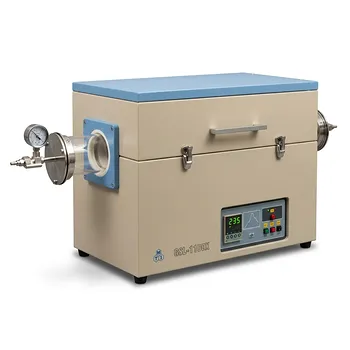
Single Zone Tube Furnace 5 Inch Quartz Tube 36 Inch Heating Zone Vacuum Flanges
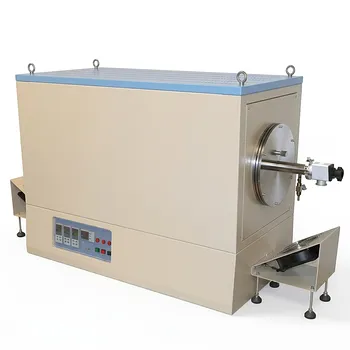
1100°C Three Zone Tube Furnace with 8.5 to 11 Inch OD Quartz Tube and Vacuum Flanges for Large Wafer Processing
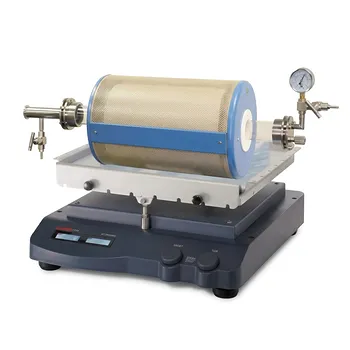
High Temperature Rocking Tube Furnace with Quartz Tube and Vacuum Flange for Materials Synthesis
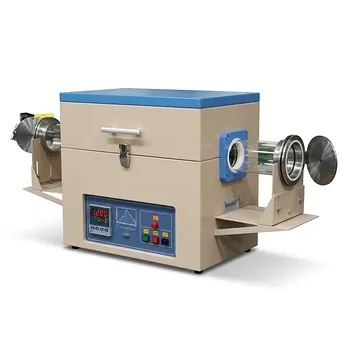
High Temperature 1200C Split Tube Furnace with Hinged Vacuum Flanges and 4 Inch Quartz Tube for Laboratory Research
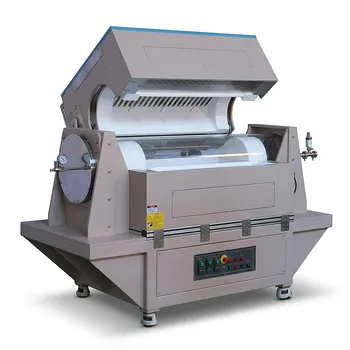
Three Zone Tube Furnace with 11 Inch or 15 Inch Quartz Tube and Hinged Flanges for Vacuum Atmosphere Heat Treatment
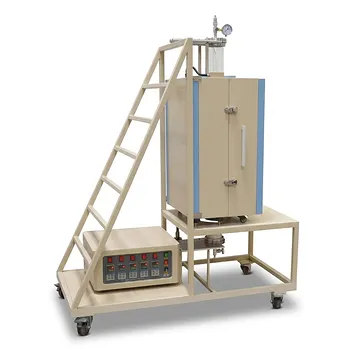
Five Zone Split Vertical Tube Furnace 1200C Max with 4 Inch Quartz Tube and Stainless Steel Vacuum Flanges
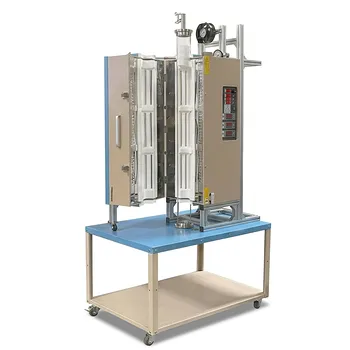
1200C Three Zone Split Vertical Tube Furnace 4 Inch Quartz Tube Stainless Steel Vacuum Flanges
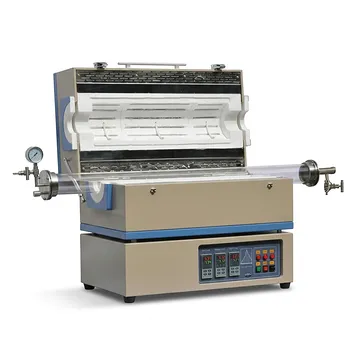
24 Inch Three Zone Split Tube Furnace with Optional Quartz Tube and Vacuum Flange System for High Temperature Material Synthesis