What is the purpose of using a sealed quartz tube in CCVD for BNNT growth? Mastering Growth Vapor Trapping
Updated 3 months ago
The use of a sealed quartz tube in a tube furnace for Boron Nitride Nanotube (BNNT) growth is designed to create a "Growth Vapor Trapping" (GVT) environment. This closed reaction microenvironment captures and restricts the diffusion of growth vapors, maintaining a high concentration of reactants near the substrate. By preventing vapor loss, the system enables precise directional growth of nanotubes via the Vapor-Liquid-Solid (VLS) mechanism, significantly enhancing the purity and structural consistency of the final product.
Core Takeaway: A sealed quartz tube transforms a standard furnace into a closed microreactor that traps precursors. This localized vapor control is essential for driving the VLS mechanism and ensuring high-quality BNNT synthesis.
Creating the Growth Vapor Trapping (GVT) Environment
Restricted Diffusion for Enhanced Growth
In standard Chemical Vapor Deposition (CVD), gases flow through the system, often carrying away critical intermediate vapors before they can react. The sealed quartz tube acts as a physical barrier that restricts the diffusion of these growth vapors.
Concentration of Reactants
By trapping these vapors, the system creates a high-density precursor zone directly above the silicon substrate. This localized concentration is necessary to provide a steady supply of boron and nitrogen atoms to the catalytic nanoparticles.
Facilitating the VLS Mechanism
The trapped environment supports the Vapor-Liquid-Solid (VLS) growth mechanism. Boron-rich vapors dissolve into the liquid catalyst droplet until they reach supersaturation, at which point the solid BNNT precipitates and grows directionally.
Thermal Precision and Reaction Control
High-Temperature Requirements
BNNT synthesis typically requires much higher temperatures than carbon nanotube growth, often reaching up to 1300°C. The tube furnace provides a stable heat field that ensures the thermal decomposition of precursors happens at a controlled, uniform rate.
Managing Temperature Gradients
The furnace allows for precise control over the temperature ramp profile, such as a steady increase of 10°C per minute. This precision prevents thermal shock to the quartz tube and ensures that nucleation occurs only when the optimal growth temperature is reached.
Uniformity of the Heat Field
The structure of the tube furnace ensures that the entire reaction zone is heated evenly. This thermal uniformity is critical for maintaining consistency in nanotube thickness and crystal quality across the entire substrate.
The Role of Quartz as a Reaction Vessel
Chemical Inertness and Purity
High-purity quartz is used because it is chemically stable and does not react with process gases like ammonia (NH3) or nitrogen. This ensures that no impurities are introduced into the growth environment, preserving the dielectric properties of the BNNTs.
Thermal Resistance and Stability
Quartz can withstand the extreme temperatures required for BNNT synthesis without losing structural integrity. It serves as a clean, reliable chamber that can maintain a stable vacuum or a specific internal atmosphere.
Isolation from External Contaminants
The sealed nature of the tube protects the reaction from oxygen or moisture in the external environment. This isolation is vital because even trace amounts of oxygen can interfere with the boron precursors and inhibit nanotube growth.
Understanding the Trade-offs
Pressure Management and Safety
Sealing a quartz tube at high temperatures creates significant internal pressure as gases expand or precursors vaporize. Failure to carefully monitor pressure can lead to tube rupture or mechanical failure of the seals.
Precursor Depletion
In a fully closed GVT system, the amount of available precursor is limited to what is placed inside the tube initially. Unlike flow-through CVD, where reactants are constantly replenished, a sealed system must be perfectly calibrated to avoid "starving" the growth process before completion.
Temperature Limits of Quartz
While quartz is highly resistant, it begins to soften as it approaches 1200°C–1300°C, which is exactly where BNNT growth occurs. Operating at these limits requires precise furnace calibration to prevent the tube from deforming under vacuum or pressure.
How to Apply This to Your Project
Recommendations for BNNT Synthesis
The choice of setup depends on your specific requirements for material quality and experimental control.
- If your primary focus is maximum product purity: Utilize the sealed GVT method to concentrate precursors and minimize the influence of external contaminants.
- If your primary focus is large-scale production: Consider a modified flow-through tube furnace that uses baffles to simulate the "trapping" effect while allowing for continuous precursor feed.
- If your primary focus is structural alignment: Ensure the furnace provides a steep temperature gradient or a stable electric field to guide the directional growth enabled by the trapped vapors.
Precision in trapping growth vapors is the defining factor in transitioning from inconsistent boron deposits to high-quality, directional BNNT structures.
Summary Table:
| Feature | Role in BNNT Growth | Key Benefit |
|---|---|---|
| Sealed Quartz Tube | Creates Growth Vapor Trapping (GVT) | Restricts vapor diffusion; maintains reactant density |
| GVT Environment | Facilitates VLS Mechanism | Drives precise, directional growth of nanotubes |
| High-Purity Quartz | Chemical Inertness & Stability | Prevents contamination; withstands temps up to 1300°C |
| Tube Furnace | Precise Thermal Gradient Control | Ensures uniform nucleation and structural consistency |
Optimize Your BNNT Synthesis with THERMUNITS
Are you aiming for superior purity and structural consistency in your nanomaterial research? THERMUNITS is a leading manufacturer of high-temperature laboratory equipment tailored for material science and industrial R&D. We provide the precise thermal environments necessary for advanced processes like Growth Vapor Trapping (GVT).
Our comprehensive range of thermal solutions includes:
- Tube Furnaces & CVD/PECVD Systems: Engineered for specialized BNNT and carbon nanotube growth.
- Muffle, Vacuum, and Atmosphere Furnaces: For versatile high-temperature heat treatments.
- Specialized Equipment: Rotary, Hot Press, Dental Furnaces, Electric Rotary Kilns, and Vacuum Induction Melting (VIM) furnaces.
- Thermal Elements: High-quality components for long-term operational reliability.
Whether you are scaling up production or refining your synthesis parameters, our expert team can provide the high-performance tools your laboratory requires.
Contact THERMUNITS Today to discover how our heat treatment solutions can enhance your R&D outcomes!
References
- Gunchita Kaur Wadhwa, Shashi Bhushan Sankhyan. 1D and 2D Boron Nitride Nano Structures: A Critical Analysis for Emerging Applications in the Field of Nanocomposites. DOI: 10.1021/acsomega.3c10217
Mentioned Products
- 1100°C Dual Zone Split Vertical Tube Furnace with 4 Inch Quartz Tube and Vacuum Sealing Flanges
- 1000C Mini Tube Furnace with 20mm Quartz Tube and Vacuum Flanges for Material Science Research and Controlled Atmosphere Small Sample Processing
- 1200C Three Zone Vertical Tube Furnace with 2 Inch Quartz Tube and Vacuum Flanges
- Dual Zone Quartz Tube Furnace with 80mm Diameter 1200C Max Temperature 3 Channel Gas Mixer and Vacuum Pump System
- 1100°C Large Diameter Quartz Tube Furnace with 24 Inch Heating Zone and Water Cooled Flanges
People Also Ask
- How do dual-zone quartz tube furnaces achieve controllable material preparation? Optimize Perovskite VD Processes
- Why integrate a vertical split tube furnace with hydraulic loading for HSECC? Essential for In-Situ Fire Simulation.
- What is the role of a split vertical tube furnace during flash sintering of 8YSZ and 20SDC? Master Ultra-Fast R&D
- What are the advantages of using a dual-zone tube furnace for growing Ag8SiS6 single crystals? Achieve Precision Growth
- Why is a Tube Furnace typically utilized for CVD? Achieve Precision in Graphene and 2D Material Synthesis

Tech Team · ThermUnits
Last updated on Jun 02, 2026
Related Products
1100°C Dual Zone Split Vertical Tube Furnace with 4 Inch Quartz Tube and Vacuum Sealing Flanges
1000C Mini Tube Furnace with 20mm Quartz Tube and Vacuum Flanges for Material Science Research and Controlled Atmosphere Small Sample Processing
1200C Three Zone Vertical Tube Furnace with 2 Inch Quartz Tube and Vacuum Flanges
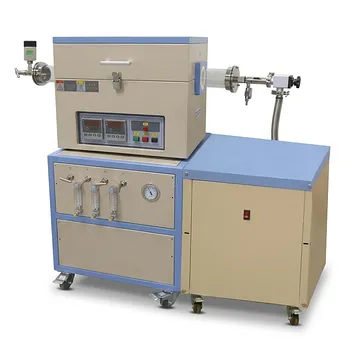
Dual Zone Quartz Tube Furnace with 80mm Diameter 1200C Max Temperature 3 Channel Gas Mixer and Vacuum Pump System
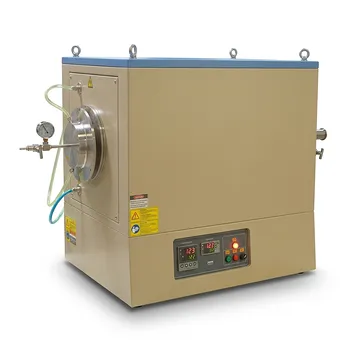
1100°C Large Diameter Quartz Tube Furnace with 24 Inch Heating Zone and Water Cooled Flanges

Compact Vertical Split Quartz Tube Furnace with Stainless Steel Vacuum Flanges for Rapid Thermal Quenching and Controlled Atmosphere Material Processing
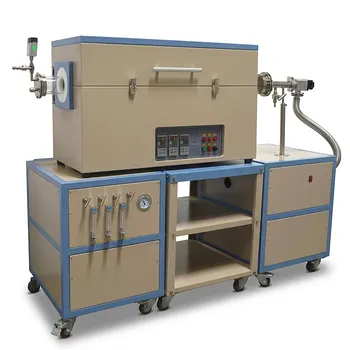
Three Zone Quartz Tube Furnace with 3 Channel Gas Mixer Vacuum Pump and Anti Corrosive Vacuum Gauge
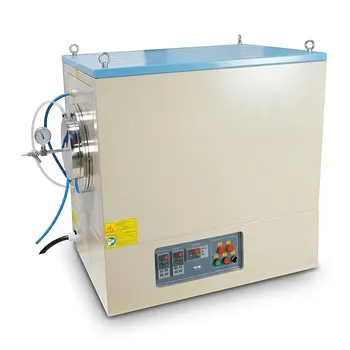
Dual Zone Tube Furnace 1100C with 11 Inch Quartz Tube and Vacuum Flanges for 8 Inch Wafer Processing

High Temperature 1700C Benchtop Tube Furnace with 5 Inch Heating Zone High Purity Alumina Tube and Vacuum Sealing Flanges
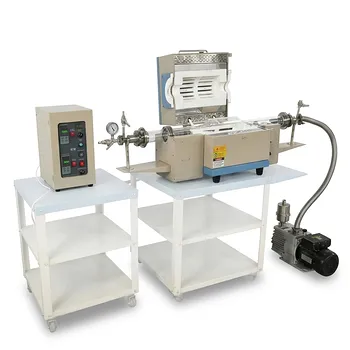
Two Zone Rotary Tube Furnace for Powder CVD Coating and Core Shell Material Synthesis 1100C
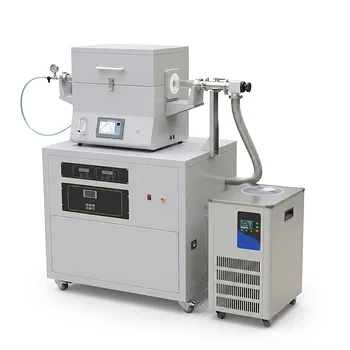
Split Chamber CVD Tube Furnace with Vacuum Station Chemical Vapor Deposition System Machine
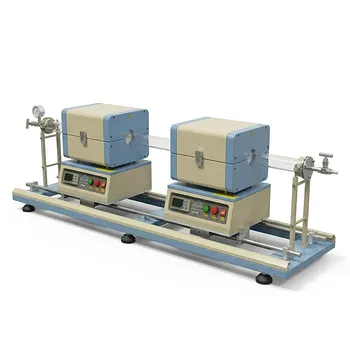
1200C Max Dual Sliding Tube Furnace with 50 mm Tube Flanges for CVD
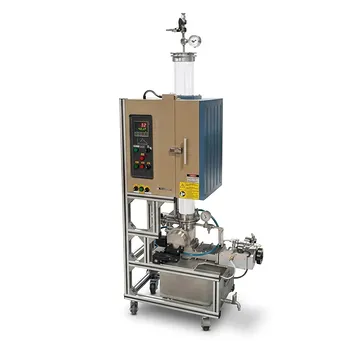
1200C High Temperature Atmosphere Controlled Vertical Quenching Tube Furnace with 4 Inch Quartz Tube

Three Zone Tube Furnace with 11 Inch or 15 Inch Quartz Tube and Hinged Flanges for Vacuum Atmosphere Heat Treatment

5 Inch Three Zone Rotary Tube Furnace with Integrated Gas Delivery System and 1200C Capability for Advanced Material CVD Processing
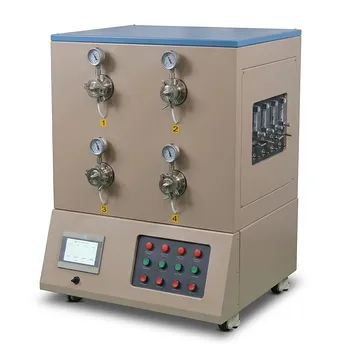
High Throughput 1200C Four Channel Tube Furnace with 3 Inch Quartz Tubes for Multi Zone Annealing and Material Research
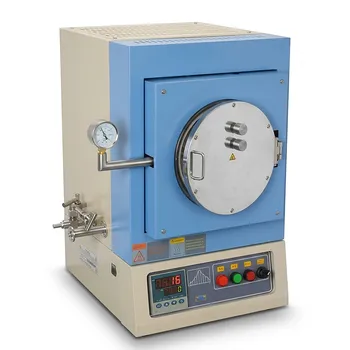
1100°C High Temperature Quartz Chamber Furnace 8 Inch OD with 7.6 Liter Capacity and Vacuum Atmosphere Capability
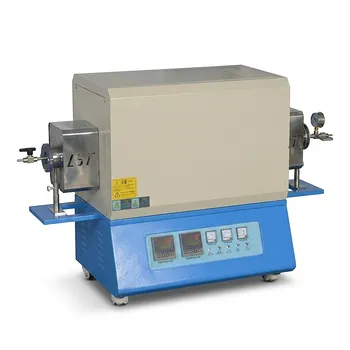
High Temperature Dual Zone Vacuum Tube Furnace for Material Research and CVD Processing
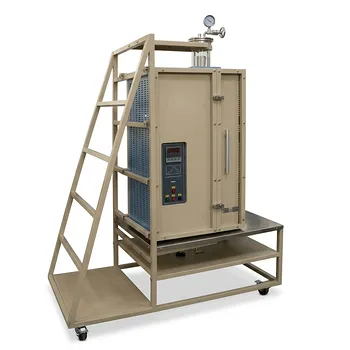
Split Vertical Tube Furnace with 1200C Quartz Tube and Stainless Steel Vacuum Flanges for Rapid Thermal Processing