Why use quartz tubes & high-vacuum sealing for (PbTe)0.97(Ag2Te)0.03 alloys? Ensure optimal purity and stoichiometry.
Updated 3 months ago
The use of high-purity quartz tubes and high-vacuum sealing is fundamental to maintaining the structural and chemical integrity of (PbTe)0.97(Ag2Te)0.03 alloys. During the 1273 K (1000 °C) melting process, these measures strictly isolate the raw materials from oxygen and moisture to prevent unintended oxidation reactions. This controlled environment ensures the alloy retains its precise chemical stoichiometry and high purity, which are the primary requirements for accurately studying the material's microstructural evolution and thermoelectric performance.
The core purpose of high-vacuum quartz encapsulation is to create a chemically inert, low-pressure micro-environment that prevents elemental oxidation and volatilization at temperatures exceeding 1000 °C. This preservation of chemical purity is essential for ensuring that the resulting thermoelectric transport properties are intrinsic to the alloy rather than artifacts of impurities.
Preventing Oxidation and Environmental Contamination
Isolation from Atmospheric Oxygen
At the high melting temperature of 1273 K, lead (Pb), tellurium (Te), and silver (Ag) are highly susceptible to oxidation if exposed to even trace amounts of air. High-vacuum sealing (typically levels better than 10⁻³ Pa) eliminates oxygen and moisture, preventing the formation of metal oxides that would degrade the thermoelectric efficiency.
Maintaining High Material Purity
The use of high-purity quartz ensures that the container itself does not introduce non-target impurities into the melt. This is critical for studying microstructural evolution, as even minor contaminants can act as nucleation sites or alter the phase precipitation of the Ag2Te second phase within the PbTe matrix.
Ensuring Precise Chemical Stoichiometry
Prevention of Element Depletion
Thermoelectric performance is extremely sensitive to the ratio of elements, often requiring precision within fractions of a percent. The sealed quartz tube provides a closed system that prevents the depletion of more volatile components during the multi-hour high-temperature homogenization process.
Support for High-Temperature Reactions
High-purity quartz is selected for its ability to withstand temperatures exceeding 1000 °C without losing structural integrity or reacting with the alloy precursors. This thermal stability allows the materials to reach a fully molten state at 1273 K, ensuring the dopants and matrix elements are uniformly distributed throughout the ingot.
Understanding the Trade-offs
Process Complexity and Equipment Costs
High-vacuum sealing is a technically demanding process that requires specialized glass-blowing skills and high-end vacuum pumps. Failure to achieve a sufficient vacuum or a perfect seal can lead to entire batch failures due to oxidation during the long heating cycles.
Fragility and Thermal Limitations
While quartz is thermally stable, it is also brittle and susceptible to thermal shock or internal pressure build-up from gas-phase substances. Researchers must carefully control heating and cooling rates to prevent the tubes from exploding or cracking, which would expose the high-temperature alloy to the atmosphere.
How to Apply This to Your Synthesis Project
Making the Right Choice for Your Goal
- If your primary focus is microstructural analysis: Use the highest grade of quartz available to ensure that grain boundaries and precipitates are not influenced by external impurities.
- If your primary focus is stoichiometric precision: Ensure the vacuum level reaches at least 10⁻³ Pa before sealing to eliminate gas-phase reactions that could alter the final element ratios.
- If your primary focus is industrial scalability: Consider the trade-offs between the cost of quartz consumables and the necessity of high-purity environments for your specific performance targets.
By meticulously controlling the reaction environment through vacuum encapsulation, you ensure that the observed material properties are a true reflection of the alloy's intrinsic physics.
Summary Table:
| Feature | Key Function | Benefit to Thermoelectric Alloys |
|---|---|---|
| High-Purity Quartz | Eliminates container-based impurities | Ensures intrinsic microstructural evolution |
| High-Vacuum (10⁻³ Pa) | Removes atmospheric O2 and moisture | Prevents metallic oxidation at 1273 K |
| Hermetic Sealing | Creates a closed reaction system | Stops volatile element depletion (Pb, Te) |
| Thermal Stability | Withstands temperatures >1000 °C | Allows uniform melt homogenization |
Elevate Your Material Synthesis with THERMUNITS
Precise thermal processing is the backbone of high-performance material science. At THERMUNITS, we specialize in providing researchers and industrial engineers with the high-precision equipment needed for advanced alloy preparation.
Whether you are synthesizing (PbTe)0.97(Ag2Te)0.03 or developing next-generation materials, our comprehensive range of solutions—including Vacuum, Atmosphere, and Tube Furnaces, CVD/PECVD systems, and Rotary Kilns—ensures stable, high-vacuum environments and uniform heat treatment of the highest caliber.
Ready to optimize your lab’s efficiency and purity? Contact THERMUNITS today to discuss our custom furnace solutions and high-temperature thermal elements tailored for your R&D needs.
References
- Yuan Yu, Siyuan Zhang. Ostwald Ripening of Ag<sub>2</sub>Te Precipitates in Thermoelectric PbTe: Effects of Crystallography, Dislocations, and Interatomic Bonding. DOI: 10.1002/aenm.202304442
Mentioned Products
- 1200C Four Zone Split Tube Furnace with Touch Screen Control and High Purity Quartz Tube and Vacuum Sealing Flanges
- High Throughput 1200C Four Channel Tube Furnace with 3 Inch Quartz Tubes for Multi Zone Annealing and Material Research
- 1100°C High Temperature Quartz Chamber Furnace 8 Inch OD with 7.6 Liter Capacity and Vacuum Atmosphere Capability
- 1100°C Large Diameter Quartz Tube Furnace with 24 Inch Heating Zone and Water Cooled Flanges
- High Temperature 1200C Split Tube Furnace with Hinged Vacuum Flanges and 4 Inch Quartz Tube for Laboratory Research
People Also Ask
- What are the functions of a high-purity quartz tube in IF-MoS2 sulfurization? Ensure Purity and Precise Thermal Control
- What are the primary functions of a high-purity quartz tube furnace during the molten salt treatment of MXene? Expert Guide
- What are the technical advantages of using a multi-zone independently controlled tube furnace in the modified USP process?
- Why is a quartz tube furnace necessary for phosphorus-doped MoS2/GO preparation? Ensure Purity & Precise Synthesis
- What role does a single-temperature zone quartz tube furnace play in the growth of monolayer MoS2? Optimize 2D Synthesis

Tech Team · ThermUnits
Last updated on Jun 02, 2026
Related Products
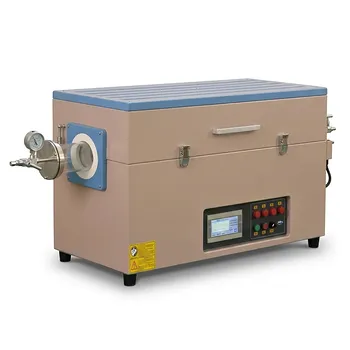
1200C Four Zone Split Tube Furnace with Touch Screen Control and High Purity Quartz Tube and Vacuum Sealing Flanges
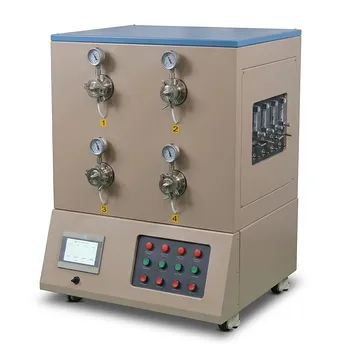
High Throughput 1200C Four Channel Tube Furnace with 3 Inch Quartz Tubes for Multi Zone Annealing and Material Research

1100°C High Temperature Quartz Chamber Furnace 8 Inch OD with 7.6 Liter Capacity and Vacuum Atmosphere Capability
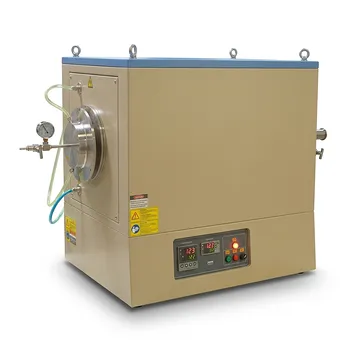
1100°C Large Diameter Quartz Tube Furnace with 24 Inch Heating Zone and Water Cooled Flanges
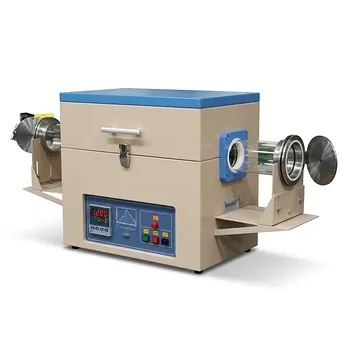
High Temperature 1200C Split Tube Furnace with Hinged Vacuum Flanges and 4 Inch Quartz Tube for Laboratory Research
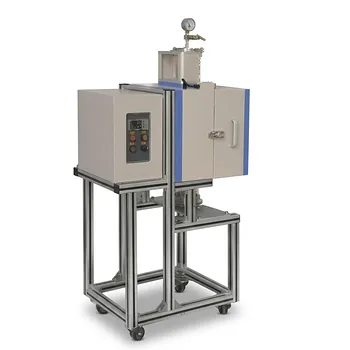
1200°C 5 Inch Vertical Quartz Tube Furnace with Stainless Steel Vacuum Flanges
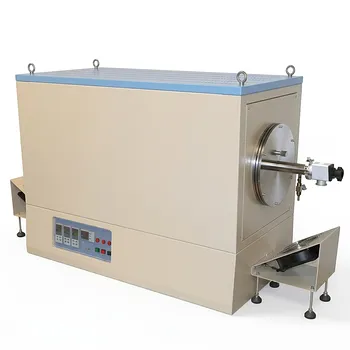
1100°C Three Zone Tube Furnace with 8.5 to 11 Inch OD Quartz Tube and Vacuum Flanges for Large Wafer Processing
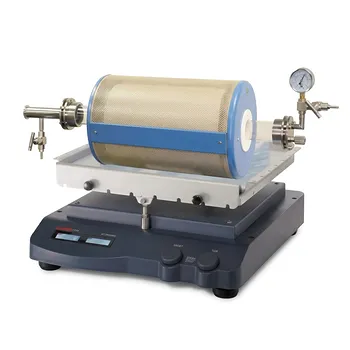
High Temperature Rocking Tube Furnace with Quartz Tube and Vacuum Flange for Materials Synthesis
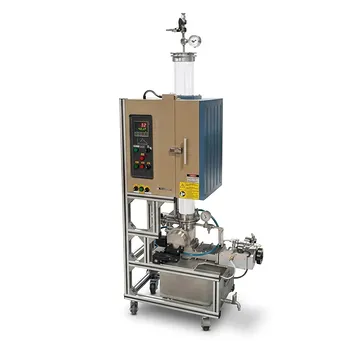
1200C High Temperature Atmosphere Controlled Vertical Quenching Tube Furnace with 4 Inch Quartz Tube

High Temperature Automated 5 Inch Tube Furnace for Autonomous Material Research and Advanced Laboratory R&D
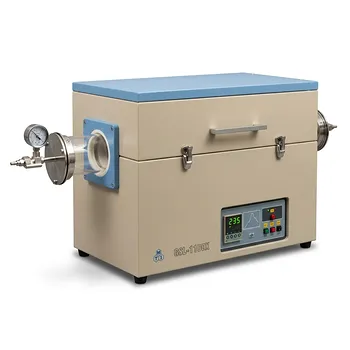
Single Zone Tube Furnace 5 Inch Quartz Tube 36 Inch Heating Zone Vacuum Flanges
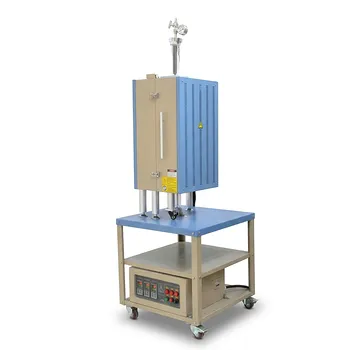
1200C Three Zone Vertical Tube Furnace with 2 Inch Quartz Tube and Vacuum Flanges
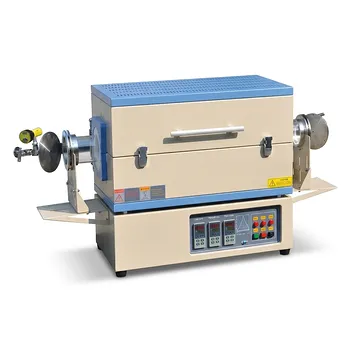
Three Zone Tube Furnace with 24 Inch Heating Length and Hinged Flange Quartz Tube System
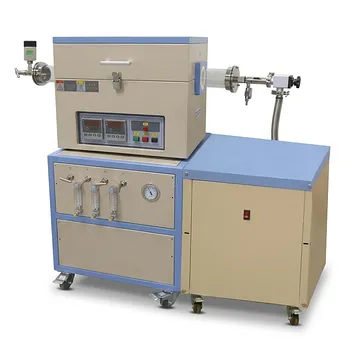
Dual Zone Quartz Tube Furnace with 80mm Diameter 1200C Max Temperature 3 Channel Gas Mixer and Vacuum Pump System
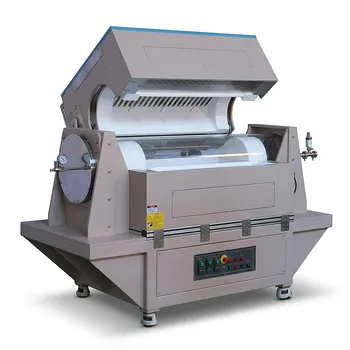
Three Zone Tube Furnace with 11 Inch or 15 Inch Quartz Tube and Hinged Flanges for Vacuum Atmosphere Heat Treatment

Compact Vertical Split Quartz Tube Furnace with Stainless Steel Vacuum Flanges for Rapid Thermal Quenching and Controlled Atmosphere Material Processing
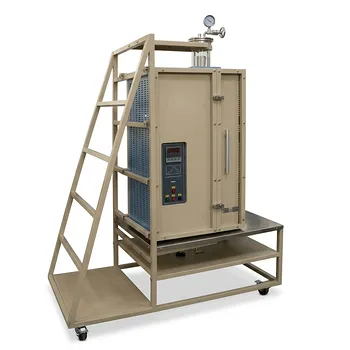
Split Vertical Tube Furnace with 1200C Quartz Tube and Stainless Steel Vacuum Flanges for Rapid Thermal Processing
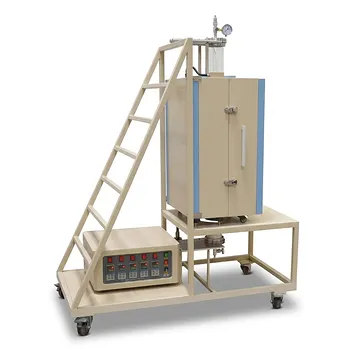
Five Zone Split Vertical Tube Furnace 1200C Max with 4 Inch Quartz Tube and Stainless Steel Vacuum Flanges
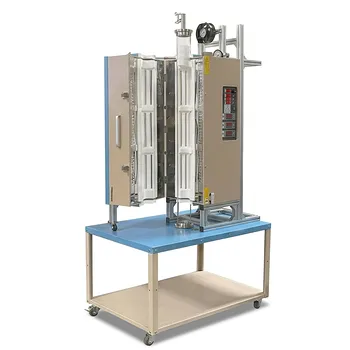
1200C Three Zone Split Vertical Tube Furnace 4 Inch Quartz Tube Stainless Steel Vacuum Flanges