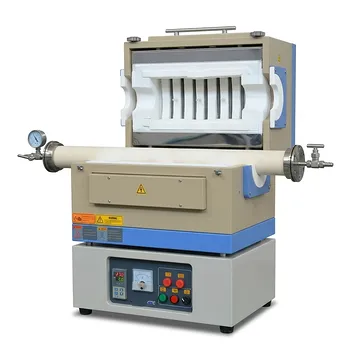
What is the role of nitrogen flow during apricot kernel carbonization? Essential Tips for High-Yield Pyrolysis
Updated 3 months ago
The continuous flow of high-purity nitrogen serves as a critical environmental control mechanism during carbonization. It establishes an inert atmosphere that displaces oxygen within the tube furnace chamber. This ensures the apricot kernels undergo controlled pyrolysis—thermal decomposition in the absence of oxygen—rather than oxidative combustion (burning), which would otherwise destroy the sample at the required 500 °C processing temperature.
Core Takeaway: Nitrogen flow transforms the process from destructive burning into controlled carbonization. By displacing oxygen and sweeping away volatile byproducts, it maximizes the carbon yield and preserves the delicate pore structures and surface chemistry required for high-performance materials.
Preventing Oxidative Destruction
Total Oxygen Displacement
The primary role of high-purity nitrogen (typically 99.99%) is to exclude oxygen from the furnace environment. At temperatures around 500 °C, biomass like apricot kernels will react aggressively with even trace amounts of oxygen.
Pyrolysis vs. Combustion
By maintaining an inert state, the nitrogen ensures the reaction follows the intended pyrolysis path. This allows organic matter to convert into a stable, carbon-rich biochar structure instead of turning into ash through direct combustion.
Preservation of Material Integrity
Maximizing Solid Carbon Yield
Without a steady nitrogen flow, oxidation would consume the carbon framework, leading to significant mass loss. The inert environment ensures that the maximum amount of raw material is converted into the final solid carbon product.
Protecting Surface Active Sites
Nitrogen flow is essential for preserving the surface active sites and chemical functionality of the carbon. High temperatures in the presence of oxygen would cause non-selective oxidation, neutralizing the surface properties needed for subsequent applications like adsorption or catalysis.
Safeguarding Pore Architecture
The nitrogen stream assists in the reconstruction of the carbon framework. By preventing thermal erosion of the cell walls, it guarantees the development of high-quality pores and maintains the structural integrity of the resulting material.
Kinetic and Chemical Management
Removal of Gaseous Byproducts
As apricot kernels decompose, they release gaseous byproducts such as hydrogen (H2), carbon monoxide (CO), and water vapor. A continuous flow (e.g., 200 mL/min) effectively sweeps these gases out of the furnace.
Preventing Secondary Deposition
If byproducts are allowed to linger, they may undergo secondary deposition back into the newly formed pores. The nitrogen flow prevents this "clogging," ensuring the final material maintains high porosity and permeability.
Understanding the Trade-offs
Flow Rate Sensitivity
If the nitrogen flow rate is too low, oxygen may back-diffuse into the system, or byproducts may not be cleared effectively, leading to poor pore quality. Conversely, a flow rate that is too high can lead to excessive cooling of the sample or "thermal shock," potentially cracking delicate carbon structures.
Purity Requirements
Using lower-purity nitrogen introduces the risk of trace oxidation. Even small percentages of oxygen can result in the loss of one-dimensional or two-dimensional nanostructures, which are highly susceptible to thermal erosion at elevated temperatures.
How to Optimize Nitrogen Usage for Your Goal
- If your primary focus is Maximum Carbon Yield: Maintain a steady, moderate nitrogen flow to ensure a strictly oxygen-free environment that prevents any mass loss through combustion.
- If your primary focus is High Adsorption Performance: Prioritize a high-purity nitrogen source and consistent flow to ensure gaseous byproducts are removed before they can clog the developing pore network.
- If your primary focus is Surface Chemistry Preservation: Ensure the furnace is fully purged with nitrogen before heating begins to protect sensitive active sites from early-stage oxidation.
Properly calibrated nitrogen flow is the silent architect of high-quality carbon materials, turning a simple heating process into a precision engineering tool.
Summary Table:
| Key Role | Impact on Material | Benefit to Final Product |
|---|---|---|
| Oxygen Displacement | Prevents oxidative combustion | Ensures pyrolysis instead of burning |
| Byproduct Removal | Sweeps away volatile gases (CO, H2O) | Prevents pore clogging/deposition |
| Structural Support | Safeguards delicate pore architecture | High surface area & permeability |
| Atmosphere Control | Protects surface active sites | Preserves chemical functionality |
Elevate Your Material Research with THERMUNITS Precision Solutions
Achieving the perfect carbon structure requires absolute control over temperature and atmosphere. THERMUNITS is a leading manufacturer of high-performance laboratory equipment tailored for material science and industrial R&D.
We offer a comprehensive range of thermal processing solutions, including:
- Tube Furnaces & Atmosphere Furnaces (Perfect for inert carbonization)
- CVD/PECVD Systems & Vacuum Furnaces
- Muffle, Rotary, and Hot Press Furnaces
- Vacuum Induction Melting (VIM) & Thermal Elements
Whether you are refining biomass or developing advanced nanostructures, our equipment provides the stability and precision your research demands.
Contact THERMUNITS today to find the perfect thermal solution for your lab!
References
- Asma Mokhati, Adrián Bonilla‐Petriciolet. Insights into nitrobenzene adsorption mechanism on apricot stone activated carbon: A study via statistical physics models and thermodynamic analysis. DOI: 10.1016/j.colsurfa.2024.133864
Mentioned Products
- High Temperature Rotary Tube Furnace with Integrated Ball Milling and Gas Flow Function for Powder Nitriding
- High Temperature Vertical Atmosphere Controlled Furnace with Automatic Bottom Loading and 1700°C Capacity for Advanced Material Research
- High Temperature 1700C Vertical Tube Furnace for Powder Spherification and Material Sintering
- 1200C High Throughput Multi Channel Tube Furnace with 50mm Quartz Tubes for Annealing and Material Phase Diagram Research
- High Temperature 1700C Tube Furnace with High Vacuum Turbomolecular Pump System and Multi Channel Mass Flow Controller Gas Mixer
People Also Ask
- How does a rotary tube furnace improve the processing of granular materials? Enhance Uniformity and Reaction Kinetics
- Why use a rotary tube furnace for FACS carbonization? Ensure uniform morphology and prevent sphere agglomeration.
- In what ways do rotary tube furnaces enhance chemical and specialty mineral processing? Drive Precision and Uniformity.
- Why is the precise optimization of residence time essential in the catalyst calcination process? Maximize Your Yields.
- What are the typical operating temperature ranges and mechanical specifications for rotary furnaces? A Complete Guide

Tech Team · ThermUnits
Last updated on Jun 03, 2026
Related Products
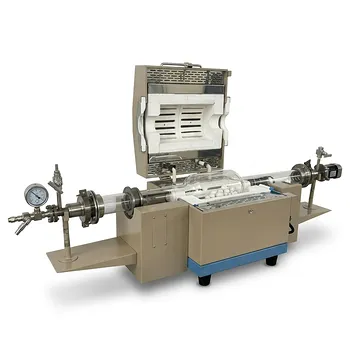
High Temperature Rotary Tube Furnace with Integrated Ball Milling and Gas Flow Function for Powder Nitriding
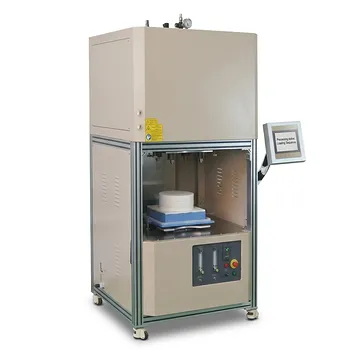
High Temperature Vertical Atmosphere Controlled Furnace with Automatic Bottom Loading and 1700°C Capacity for Advanced Material Research

High Temperature 1700C Vertical Tube Furnace for Powder Spherification and Material Sintering

1200C High Throughput Multi Channel Tube Furnace with 50mm Quartz Tubes for Annealing and Material Phase Diagram Research

High Temperature 1700C Tube Furnace with High Vacuum Turbomolecular Pump System and Multi Channel Mass Flow Controller Gas Mixer

High Temperature 1700C Benchtop Tube Furnace with 5 Inch Heating Zone High Purity Alumina Tube and Vacuum Sealing Flanges
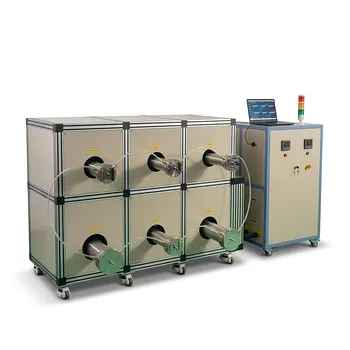
1200C Max 6 Channel High Cleanliness Hydrogen Furnace for High Throughput Annealing
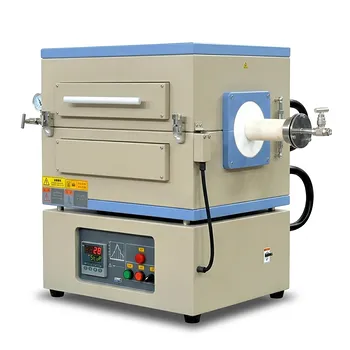
1500°C Split Tube Furnace with Alumina Tube and Vacuum Sealing Flanges for Material Research

High Temperature 1700C Six Zone Split Tube Furnace with Alumina Tube and Water Cooled Flanges
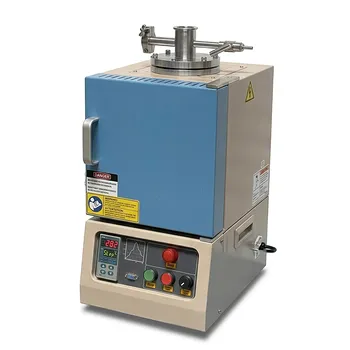
High Temperature Hybrid Muffle and Tube Furnace with Vacuum Capability and PID Control

High Temperature Automated 5 Inch Tube Furnace for Autonomous Material Research and Advanced Laboratory R&D
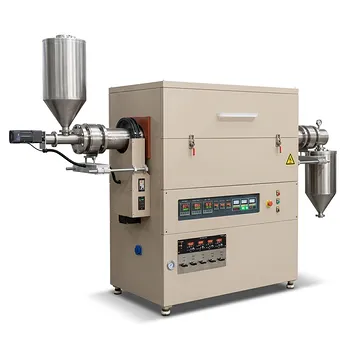
High Temperature Tilting Rotary Tube Furnace with Integrated Mass Flow Control and Multi Zone Heating
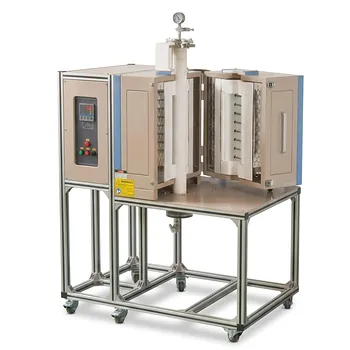
High Temperature 1700C Vertical Split Tube Furnace for Material Quenching and Single Crystal Growth

1700C Hydrogen Gas Tube Furnace with 60mm Alumina Process Tube and Integrated Hydrogen Safety Detector
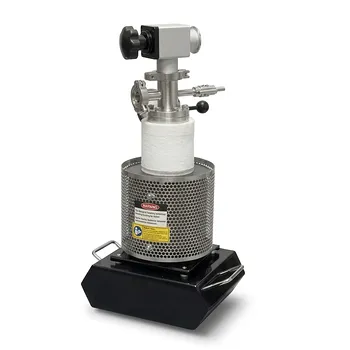
High Temperature 1100C Compact Top Loading Vertical Vacuum Tube Furnace for High Vacuum Noble Metal Melting and Material Research
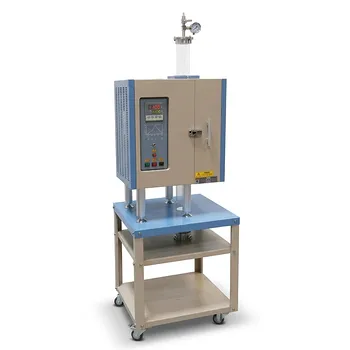
1100°C Split Vertical Tube Furnace with 80mm Quartz Tube and Stainless Steel Vacuum Flanges

Compact High Temperature 1600C Tube Furnace with 50mm Alumina Tube and Vacuum Flanges for Material Sintering

1200°C 5 Inch Vertical Quartz Tube Furnace with Stainless Steel Vacuum Flanges

High Vacuum Compact Tube Furnace 1200C with Integrated Turbo Pump System and 8 Inch Heating Zone