What is the role of a controlled atmosphere tube furnace in the annealing process? Precision NGC-Ti3C2Tx Synthesis.
Updated 3 months ago
The controlled atmosphere tube furnace is the critical reactor for the 600°C annealing process required to synthesize NGC-Ti3C2Tx heterostructures. By providing a uniform thermal environment and a protective argon gas flow, the furnace facilitates the carbonization of dopamine intercalated between MXene layers into nitrogen-doped graphene-like carbon (NGC) while preventing the oxidation of the MXene surface.
This equipment acts as both a chemical reactor and a protective chamber, ensuring the precise conversion of organic precursors into carbon frameworks without compromising the structural integrity of the sensitive MXene substrate. It is the primary tool for engineering the van der Waals heterostructure and expanding the interlayer spacing of the material.
Facilitating Chemical Transformation and Carbonization
The Conversion of Dopamine to NGC
The primary role of the furnace is to provide the 600°C thermal energy necessary to trigger the carbonization of dopamine. During this process, dopamine situated between the MXene layers undergoes a chemical transition into nitrogen-doped graphene-like carbon (NGC).
In-Situ Nitrogen Doping
By maintaining a stable, high-temperature environment, the furnace allows the nitrogen atoms within the dopamine precursor to be integrated directly into the resulting carbon structure. This in-situ doping is essential for creating the electronic properties required for the final heterostructure.
Forming Van der Waals Heterostructures
The precise heat treatment enables the self-assembly of van der Waals heterostructures. The furnace provides the controlled kinetic environment needed for the NGC and Ti3C2Tx layers to interface effectively, creating a stable composite material.
Atmospheric Protection and Surface Stability
Preventing MXene Oxidation
MXenes are highly sensitive to oxygen, especially at the high temperatures required for annealing. The tube furnace provides a controlled argon gas flow that displaces oxygen, preventing the Ti3C2Tx surface from oxidizing into unwanted titanium dioxide (TiO2).
Maintaining the Reducing Environment
Similar to processes used for metal sulfides or high-entropy alloys, the furnace ensures an oxygen-free environment. This is critical for preserving the metallic conductivity and the specific surface chemistry of the MXene layers during the 600°C soak.
Regulation of Oxygen Vacancies
While the primary goal is preventing bulk oxidation, precise atmospheric control allows for the regulation of surface defects. By managing the inert gas flow, researchers can ensure the material maintains the density of active sites required for its intended application.
Engineering Structural and Interfacial Properties
Expansion of Interlayer Spacing
The thermal treatment within the furnace facilitates the expansion of the MXene interlayer spacing. As dopamine carbonizes into NGC, it acts as a physical spacer, increasing the distance between the 2D sheets and improving the accessible surface area.
Introduction of Catalytic Active Sites
The furnace’s ability to maintain a constant temperature is vital for the introduction of active sites. These sites are formed during the carbonization process and are distributed across the heterostructure, enhancing the material's reactivity.
Precision Temperature Control
The high-precision heating elements of the tube furnace ensure that the specific 600°C threshold is met without fluctuations. Inconsistent temperatures could lead to incomplete carbonization or the degradation of the MXene's 2D structure.
Understanding the Trade-offs and Limitations
Gas Flow Dynamics and Uniformity
The success of the annealing process depends heavily on the uniformity of the gas flow. If the argon flow is uneven, portions of the MXene may still face trace oxidation, leading to a heterostructure with inconsistent electrochemical properties.
Thermal Gradients within the Tube
Large batches of material can experience thermal gradients where the center of the sample does not reach the target 600°C as quickly as the exterior. This requires careful calibration of the furnace’s heating ramp and dwell times to ensure the entire sample is carbonized uniformly.
Contamination Risks
Tube furnaces can harbor residual contaminants from previous runs, such as sulfur or nitrogen compounds. These impurities can inadvertently dope the NGC-Ti3C2Tx structure, altering its performance and making experimental results difficult to replicate.
How to Optimize the Annealing Process for Your Goals
The use of a controlled atmosphere tube furnace should be tailored to the specific requirements of the heterostructure being produced.
- If your primary focus is maximizing interlayer spacing: Prioritize the precision of the temperature ramp-up to ensure dopamine carbonizes steadily without collapsing the MXene layers.
- If your primary focus is preventing material degradation: Focus on the purity of the argon gas and the airtight integrity of the furnace seals to eliminate any trace oxygen.
- If your primary focus is enhancing catalytic activity: Optimize the dwell time at 600°C to maximize the formation of nitrogen-doped active sites across the NGC framework.
The controlled atmosphere tube furnace remains the indispensable tool for bridging the gap between raw precursors and high-performance NGC-MXene heterostructures.
Summary Table:
| Role | Impact on NGC-Ti3C2Tx Synthesis | Critical Parameter |
|---|---|---|
| Carbonization | Converts dopamine into Nitrogen-doped Graphene-like Carbon (NGC) | 600°C Stability |
| Atmospheric Protection | Argon flow prevents MXene oxidation into TiO2 | Oxygen-free Integrity |
| Structural Engineering | Expands interlayer spacing for increased surface area | Uniform Thermal Gradient |
| In-situ Doping | Facilitates integration of N-atoms into the carbon framework | Precise Dwell Time |
Elevate Your Material Research with THERMUNITS
Precision is paramount in the synthesis of advanced heterostructures like NGC-Ti3C2Tx. THERMUNITS is a leading manufacturer of high-temperature laboratory equipment for material science and industrial R&D. We provide the specialized tools necessary to ensure uniform heat treatment and strict atmospheric control.
Our comprehensive range includes:
- Atmosphere & Tube Furnaces for precise annealing and carbonization.
- CVD/PECVD Systems for sophisticated 2D material growth.
- Vacuum, Muffle, and Rotary Furnaces for diverse thermal processing.
- Hot Press & VIM Furnaces for high-performance material engineering.
Ensure the integrity of your sensitive MXene substrates and maximize catalytic activity with our industry-leading thermal solutions. Contact THERMUNITS today to discuss your specific heat treatment requirements!
References
- Kun Liang, Michael Naguib. Nitrogen‐Doped Graphene‐Like Carbon Intercalated MXene Heterostructure Electrodes for Enhanced Sodium‐ and Lithium‐Ion Storage. DOI: 10.1002/advs.202402708
Mentioned Products
- 1200°C Atmosphere Controlled Automatic Bottom Loading Furnace with 6 Inch Quartz Tube
- Compact Vertical Split Quartz Tube Furnace with Stainless Steel Vacuum Flanges for Rapid Thermal Quenching and Controlled Atmosphere Material Processing
- Compact Hybrid Muffle and Tube Furnace for 1000C Controlled Atmosphere Laboratory Material Sintering
- 1200C Hybrid Muffle and Tube Furnace for Material Research with Dual Atmosphere Control Quartz Tubes
- 1650C High Temperature Atmosphere Controlled Box Furnace with 65L Chamber for Advanced Material Sintering and Industrial Heat Treatment
People Also Ask
- Why is a tube furnace required for FGM-PhG structural color ceramics? Key to Carbon Preservation & Vibrant Color
- Why is an atmosphere-controlled tube furnace required for the pre-sulfidation of NiMo/gamma-Al2O3 catalysts?
- Why is an atmosphere-controlled tube furnace required for 800 °C CNF annealing? Essential for Oxidative Protection.
- Why is an atmosphere-controlled tube furnace required for [email protected]/C preparation? Key for Purity & Structure
- Why is an atmosphere-controlled tube furnace required for single-atom sensor calcination? Ensure Atomic Dispersion.

Tech Team · ThermUnits
Last updated on Jun 03, 2026
Related Products
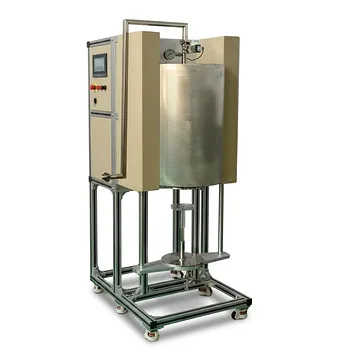
1200°C Atmosphere Controlled Automatic Bottom Loading Furnace with 6 Inch Quartz Tube

Compact Vertical Split Quartz Tube Furnace with Stainless Steel Vacuum Flanges for Rapid Thermal Quenching and Controlled Atmosphere Material Processing
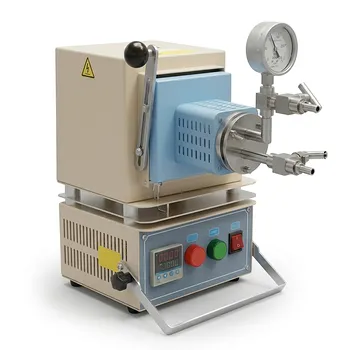
Compact Hybrid Muffle and Tube Furnace for 1000C Controlled Atmosphere Laboratory Material Sintering
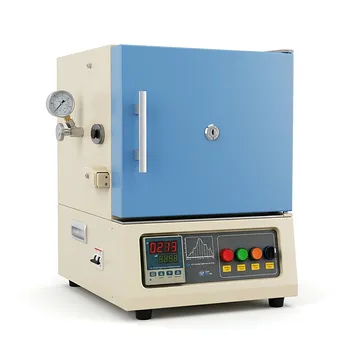
1200C Hybrid Muffle and Tube Furnace for Material Research with Dual Atmosphere Control Quartz Tubes
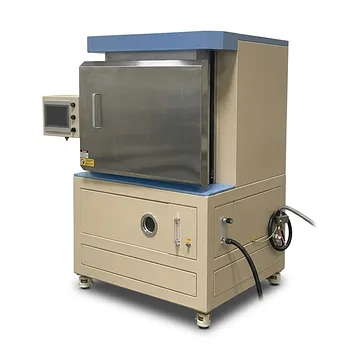
1650C High Temperature Atmosphere Controlled Box Furnace with 65L Chamber for Advanced Material Sintering and Industrial Heat Treatment
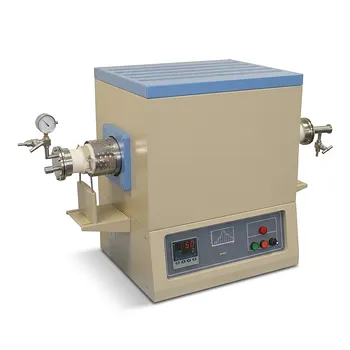
1700C High Temperature Alumina Tube Furnace with 18 Inch Heated Zone and Vacuum Sealing Flanges
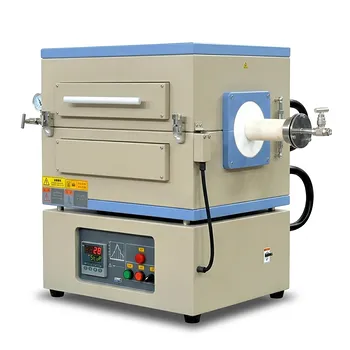
1500°C Split Tube Furnace with Alumina Tube and Vacuum Sealing Flanges for Material Research
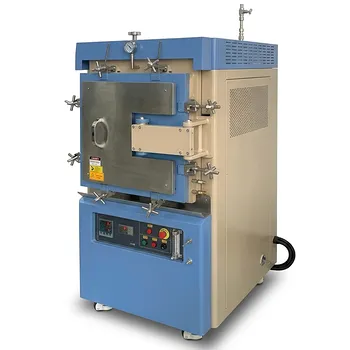
Atmosphere Controlled Muffle Furnace 1700C Maximum Temperature 80L High Capacity Vacuum Inert Gas Box Furnace
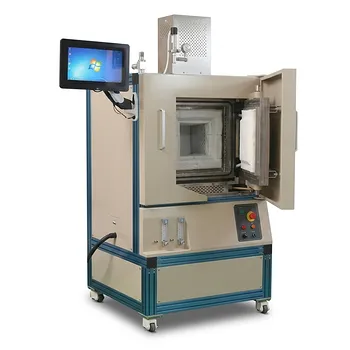
High Temperature Oxygen and Inert Atmosphere Controlled Furnace 8 Liter 1700C Sintering System for Advanced Materials RD
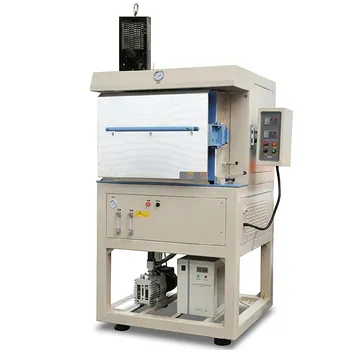
1200C Hydrogen Atmosphere Box Furnace with 5 Heated Sides and 64L Chamber

Vertical 1700C Vacuum and Atmosphere Tube Furnace with 80mm Alumina Tube
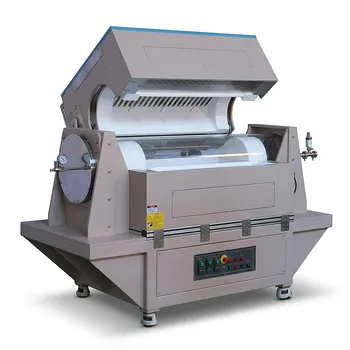
Three Zone Tube Furnace with 11 Inch or 15 Inch Quartz Tube and Hinged Flanges for Vacuum Atmosphere Heat Treatment
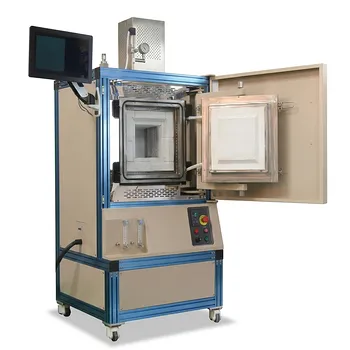
High Temperature Hydrogen Atmosphere Box Furnace 1650C Max Reducing Environment Material Synthesis System 8x8x8 Chamber

High Temperature 1700C Tube Furnace with High Vacuum Turbomolecular Pump System and Multi Channel Mass Flow Controller Gas Mixer
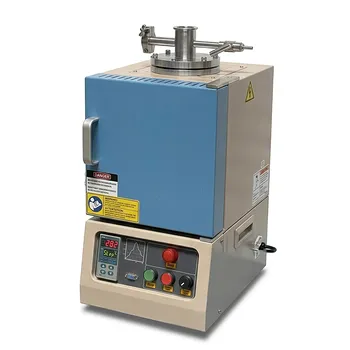
High Temperature Hybrid Muffle and Tube Furnace with Vacuum Capability and PID Control
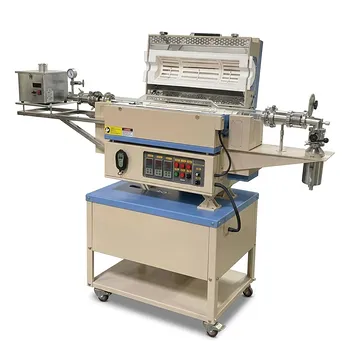
5 Inch Rotary Tube Furnace with Automatic Feeding and Receiving System 1200C Three Zone CVD Powder Processing
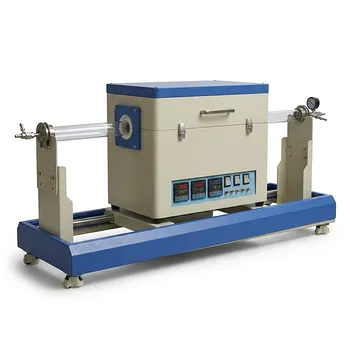
Double Temperature Zone Double Cover Tube Furnace for High Temperature CVD and Vacuum Annealing
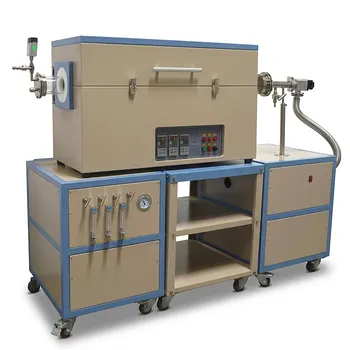
Three Zone Quartz Tube Furnace with 3 Channel Gas Mixer Vacuum Pump and Anti Corrosive Vacuum Gauge
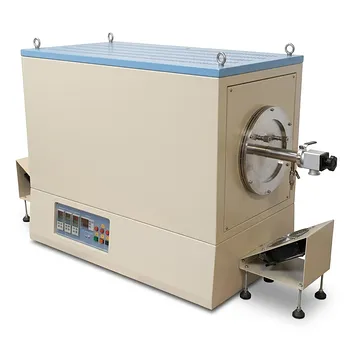
Four Zone Tube Furnace 1100C with 600mm Large Diameter Quartz Tube and Vacuum Flanges
