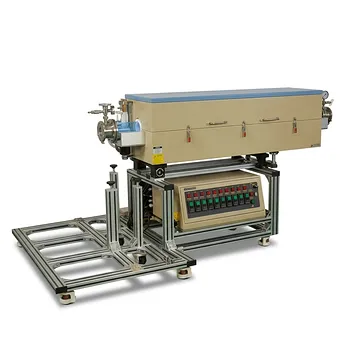
What is the role of a High-Temperature Tube Furnace in the phase transformation of EMD to Hausmannite? Master Precision
Updated 3 months ago
A High-Temperature Tube Furnace serves as the essential thermal reactor for the complete conversion of electrolytic manganese dioxide (EMD) into Hausmannite ($Mn_3O_4$). By maintaining a precise, sustained temperature—typically 1000°C for up to 40 hours—the furnace provides the activation energy required to facilitate a deep crystal phase transformation. This process ensures the resulting Hausmannite achieves the specific structural characteristics necessary for high-performance applications, such as synthesis in electrocatalysis.
Core Takeaway: The High-Temperature Tube Furnace acts as a controlled environment for the long-duration calcination required to restructure manganese dioxide into Hausmannite. This precision ensures full material conversion and crystal stability, which are critical for the chemical performance of the final product.
The Mechanics of Phase Transformation
Driving Chemical Reduction through Heat
The transition from electrolytic manganese dioxide to Hausmannite is a thermally induced phase change that requires breaking existing chemical bonds. The furnace provides a stable thermal energy flux that allows the oxygen-rich manganese dioxide to reduce into the more stable $Mn_3O_4$ structure.
Sustained Isothermal Maintenance
Achieving a pure Hausmannite phase requires more than just high heat; it requires long-term isothermal maintenance. A tube furnace is uniquely capable of holding a constant temperature of 1000°C for 40 hours, ensuring that every particle of the raw material undergoes a complete and uniform transformation.
Facilitating Crystal Grain Growth
Beyond the chemical change, the furnace environment allows for the controlled growth of crystal grains. This growth is vital because the performance of the final Hausmannite powder as an electrocatalyst is directly tied to its specific crystal habit and surface area.
Achieving Structural Homogeneity
Precision in Thermal Processing
The design of a tube furnace ensures a precisely controlled reaction space, which prevents the formation of unwanted intermediate phases. Unlike inconsistent heat sources, the furnace maintains the exact parameters needed to avoid structures like $\beta-MnO_2$ when the goal is specifically Hausmannite.
Removal of Volatile Impurities
During the heating process, the furnace effectively eliminates residual moisture and other volatile components from the EMD. This purification step is critical because any remaining moisture could impede the discharge capacity or catalytic activity of the resulting material.
Uniform Atmospheric Exposure
The geometry of the tube furnace allows for uniform exposure to the internal atmosphere, whether air or an inert gas. This ensures that the oxidative decomposition of the manganese precursor happens at a consistent rate throughout the entire batch of material.
Understanding the Trade-offs
Energy Consumption vs. Phase Purity
Running a furnace at 1000°C for 40 hours represents a significant energy investment. While shorter durations or lower temperatures (such as 800°C) may activate the material, they often fail to achieve the full conversion to Hausmannite, potentially leaving behind unreacted manganese dioxide.
Equipment Wear and Maintenance
Continuous high-temperature operation accelerates the degradation of heating elements and refractory materials. Laboratory or industrial operators must balance the need for perfect phase purity with the long-term maintenance costs of the furnace infrastructure.
Sintering Risks
Excessive dwell times or localized hot spots within the furnace can lead to unintended sintering. If the Hausmannite particles fuse together too aggressively, the material may lose the high surface area required for effective electrochemical performance.
How to Apply This to Your Project
Recommendations for Optimal Synthesis
Depending on your specific goals for manganese modification, your furnace parameters should be adjusted accordingly.
- If your primary focus is synthesizing electrocatalysts: Maintain a strict 1000°C environment for at least 40 hours to ensure a complete transition to the Hausmannite phase.
- If your primary focus is lithium-ion battery intercalation: Target lower temperatures to facilitate the transformation from $\gamma-MnO_2$ to $\beta-MnO_2$ rather than full reduction to Hausmannite.
- If your primary focus is thermal activation of residues (EMR): Utilize a shorter calcination period (e.g., 4 hours at 800°C) to enhance pozzolanic activity without requiring full crystal restructuring.
The High-Temperature Tube Furnace remains the definitive tool for mastering the complex phase chemistry of manganese compounds through precision thermal control.
Summary Table:
| Key Feature | Role in Phase Transformation | Resulting Material Benefit |
|---|---|---|
| 1000°C Sustained Heat | Provides activation energy for reduction | Complete conversion to stable $Mn_3O_4$ |
| 40-Hour Dwell Time | Facilitates isothermal maintenance | Uniform crystal grain growth & structure |
| Precise Tube Geometry | Uniform atmospheric exposure | Effective removal of moisture & impurities |
| Thermal Flux Control | Eliminates intermediate phases | High-purity phase for electrocatalysis |
Elevate Your Material Research with THERMUNITS
Precision thermal processing is the backbone of successful crystal phase transformation. THERMUNITS is a leading manufacturer of high-temperature laboratory equipment for material science and industrial R&D. Our systems provide the extreme thermal stability required for long-duration isothermal cycles, ensuring your Hausmannite synthesis achieves maximum phase purity and catalytic performance.
Our comprehensive range of thermal solutions includes:
- Tube, Rotary, and Muffle Furnaces for uniform powder processing.
- Vacuum, Atmosphere, and Hot Press Furnaces for advanced material synthesis.
- CVD/PECVD Systems and Vacuum Induction Melting (VIM) units.
- Dental Furnaces and high-quality Thermal Elements.
Ready to optimize your electrocatalyst or battery material production? Contact our expert team today to find the perfect thermal solution for your lab!
References
- Augustus K. Lebechi, Kenneth I. Ozoemena. Hausmannite–Carbon Nanofiber Composite Electrocatalyst for High Areal-Discharge Energy Rechargeable Zinc–Air Battery. DOI: 10.1021/acsomega.4c05968
Mentioned Products
- High Temperature Tube Furnace 1500C with Sliding Flanges and 50mm OD for Rapid Thermal Processing Fast Heating and Cooling
- High Temperature 1700C Tube Furnace with High Vacuum Turbomolecular Pump System and Multi Channel Mass Flow Controller Gas Mixer
- High Temperature 1700C Benchtop Tube Furnace with 5 Inch Heating Zone High Purity Alumina Tube and Vacuum Sealing Flanges
- 1750°C High Temperature Benchtop Vacuum Atmosphere Tube Furnace with Kanthal Super 1800 Heating Elements and 60mm Alumina Processing Tube
- Compact High Temperature 1600C Tube Furnace with 50mm Alumina Tube and Vacuum Flanges for Material Sintering
People Also Ask
- How are high-temperature tube furnaces utilized to repair etching damage? Precision Lattice Restoration Solutions
- What core conditions does a high-temperature tube furnace provide for rGO aerogels? Mastering Precision Synthesis.
- What role does a high-temperature tube furnace play in CVD synthesis of silicon nanowires? Master VLS Growth Precision.
- How does precision tube furnace control influence CoFe nanoparticle formation? Master Your Bimetallic Synthesis.
- What role does a high-temperature tube furnace play in the sulfidation heat treatment of CoS@C/MXene nanocomposites? Guide

Tech Team · ThermUnits
Last updated on Jun 03, 2026
Related Products
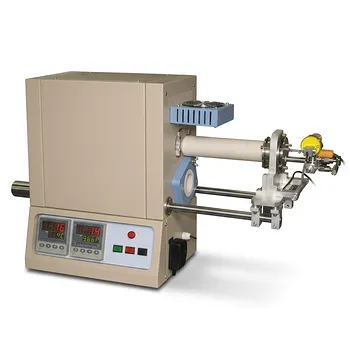
High Temperature Tube Furnace 1500C with Sliding Flanges and 50mm OD for Rapid Thermal Processing Fast Heating and Cooling

High Temperature 1700C Tube Furnace with High Vacuum Turbomolecular Pump System and Multi Channel Mass Flow Controller Gas Mixer

High Temperature 1700C Benchtop Tube Furnace with 5 Inch Heating Zone High Purity Alumina Tube and Vacuum Sealing Flanges
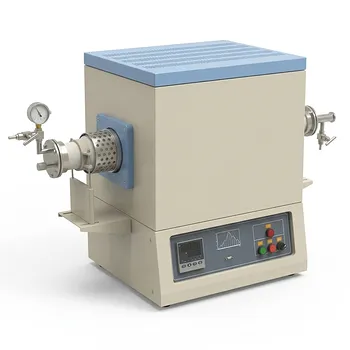
1750°C High Temperature Benchtop Vacuum Atmosphere Tube Furnace with Kanthal Super 1800 Heating Elements and 60mm Alumina Processing Tube

Compact High Temperature 1600C Tube Furnace with 50mm Alumina Tube and Vacuum Flanges for Material Sintering
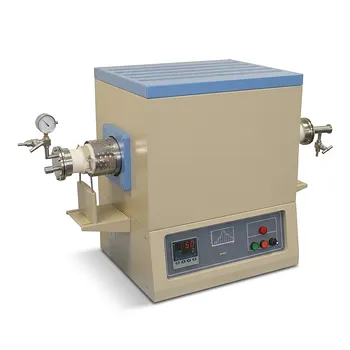
1700C High Temperature Alumina Tube Furnace with 18 Inch Heated Zone and Vacuum Sealing Flanges

1800C High Temperature Compact Vacuum Tube Furnace with 60mm OD Alumina Tube and Kanthal MoSi2 Heating Elements
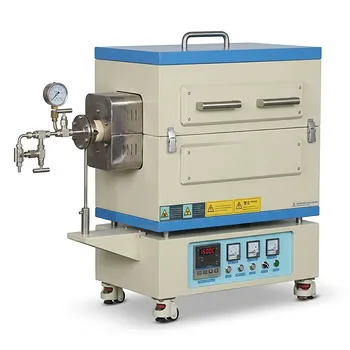
High Temperature Split Tube Furnace 1500C for Material Research Vacuum and Atmosphere Thermal Processing

High Temperature 1700C Vertical Tube Furnace for Powder Spherification and Material Sintering
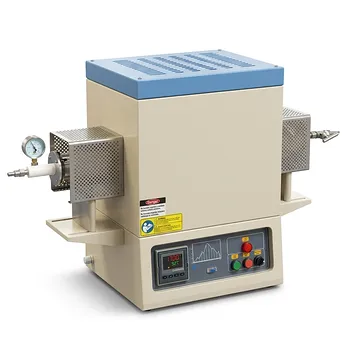
High Temperature Three Zone Tube Furnace 1700C with Alumina Tube and Water Cooled Flanges

High Temperature 1700C Six Zone Split Tube Furnace with Alumina Tube and Water Cooled Flanges
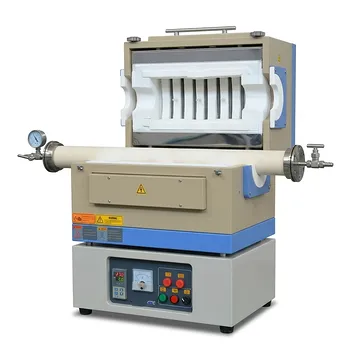
High Temperature 1600C Split Tube Furnace Vacuum Flanges Valves Optional 60mm 80mm Alumina Tube

High Temperature Automated 5 Inch Tube Furnace for Autonomous Material Research and Advanced Laboratory R&D
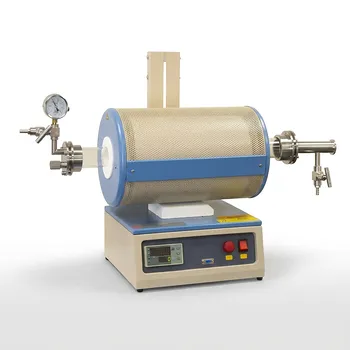
1100C Tube Furnace with Vacuum Flange and Programmable Temperature Controller for Material Science and Industrial Heat Treatment
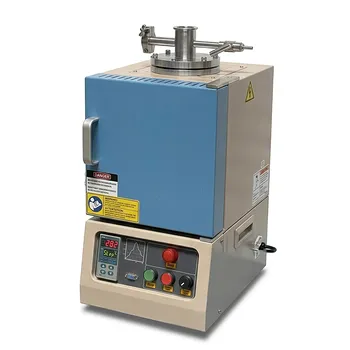
High Temperature Hybrid Muffle and Tube Furnace with Vacuum Capability and PID Control
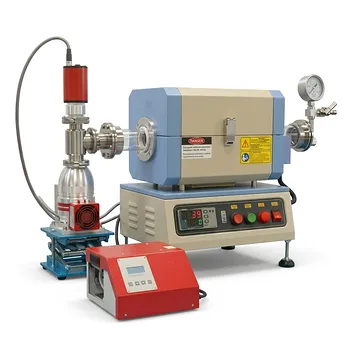
High Vacuum Compact Tube Furnace 1200C with Integrated Turbo Pump System and 8 Inch Heating Zone
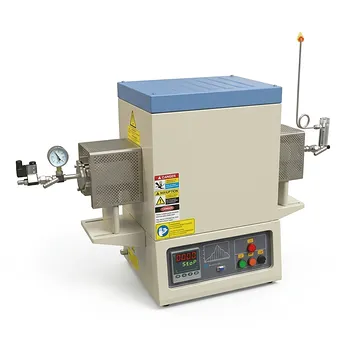
1700C Hydrogen Gas Tube Furnace with 60mm Alumina Process Tube and Integrated Hydrogen Safety Detector
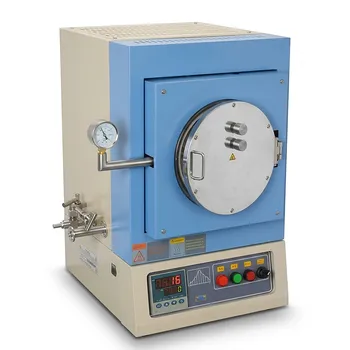
1100°C High Temperature Quartz Chamber Furnace 8 Inch OD with 7.6 Liter Capacity and Vacuum Atmosphere Capability
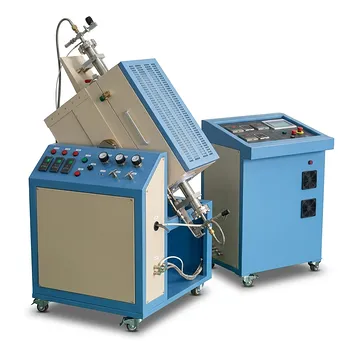
1100C High Pressure Rocking Tube Furnace with 2 Inch Super Alloy Processing Tube for Material Synthesis