What is the role of a High Vacuum and Atmosphere Tube Furnace in CVD hBN growth? - Precise Synthesis Guide
Updated 3 months ago
The High Vacuum and Atmosphere Tube Furnace serves as the primary reaction vessel for synthesizing hexagonal Boron Nitride (hBN) through Chemical Vapor Deposition. It provides a strictly controlled thermal and chemical environment, typically heating the reaction zone to 1000°C to facilitate precursor decomposition. By regulating vacuum levels and the flow of gases like argon and hydrogen, the furnace ensures that atomic layers deposit uniformly onto substrates such as copper to form high-quality monolayer films.
The furnace acts as a precision thermodynamic reactor that enables the molecular-level assembly of hBN by balancing heat, vacuum, and gas chemistry. Its ability to maintain structural purity and temperature stability is the decisive factor in achieving high crystalline quality and thickness uniformity.
The Thermodynamic Foundation of hBN Growth
Precision Temperature Control
The furnace provides a stable thermal environment, usually operating between 600°C and 1300°C, which is essential for triggering chemical reactions. At a standard set point of 1000°C, the system provides the energy required for thermal decomposition of precursors like borane or ammonia.
Uniformity and Crystalline Quality
Temperature stability across the heating zone ensures that the hBN film grows at a consistent rate. This uniformity is critical for preventing defects and ensuring that the resulting film possesses the desired monolayer or few-layer structure.
Precursor Transformation
The high-temperature environment allows gaseous precursors to undergo a controlled chemical reaction on the surface of a copper substrate. This process ensures that boron and nitrogen atoms arrange themselves into the characteristic hexagonal lattice of hBN.
The Role of Atmospheric and Vacuum Control
Managing the Mean Free Path
In Low-Pressure CVD (LP-CVD) modes, the high vacuum system reduces background pressure, which significantly increases the mean free path of precursor molecules. This allows molecules to travel from the source to the substrate without colliding, minimizing unwanted side reactions in the gas phase.
Preventing Environmental Contamination
The vacuum environment is vital for excluding impurities such as oxygen and moisture, which can degrade the film’s properties. By maintaining a high vacuum, the furnace prevents the oxidative loss of carbon during doping processes and ensures high phase purity.
Gas Flow and Chemical Ratios
The furnace allows for the precise regulation of argon and hydrogen flow ratios. These gases act as carriers and reducing agents, respectively, helping to maintain the ideal chemical balance for the growth of high-quality, dense hBN films.
Advanced Processing and Material Stability
Post-Growth Annealing
Beyond initial growth, these furnaces are used for high-temperature annealing at roughly 400°C in an Argon/Oxygen atmosphere. This step is necessary to decompose organic residues, such as PMMA, left behind during the thin-film transfer process.
Chemical Resistance of the Reactor
The use of a quartz tube within the furnace provides chemical stability against corrosive environments, such as those involving ammonia. This ensures the reaction remains free from external contaminants even under extreme thermal stress.
Carbon Doping and Pyrolysis
High-vacuum environments facilitate the pyrolysis of coatings at temperatures up to 1000°C. This allows for the effective doping of carbon atoms into the boron nitride lattice, creating the essential B-N-C chemical bonds required for specific catalytic applications.
Understanding the Trade-offs
Pressure vs. Growth Rate
While a high vacuum increases film purity and uniformity by extending the mean free path, it may also lead to slower deposition rates. Operators must balance the need for structural perfection with the throughput requirements of the project.
Thermal Gradients and Stress
Maintaining a perfectly uniform temperature zone is challenging; significant thermal gradients can induce mechanical stress in the substrate or the hBN film. This stress may lead to wrinkling or cracking during the cooling phase if not managed through precise ramp-down protocols.
Gas Consumption and Safety
Achieving the necessary atmospheric purity requires high volumes of specialized gases and robust sealing. Any failure in the sealing performance of the tube furnace can introduce oxygen, which immediately compromises the crystalline integrity of the hBN.
How to Apply This to Your Project
When selecting or configuring a tube furnace for hBN synthesis, your technical requirements should dictate the system's vacuum and thermal specifications.
- If your primary focus is monolayer crystalline purity: Prioritize a furnace with a high-vacuum system (LP-CVD) to maximize the mean free path and minimize background impurities.
- If your primary focus is surface cleanliness after transfer: Utilize the furnace in an atmospheric mode with an Ar/O2 mix at 400°C to effectively remove organic support layers.
- If your primary focus is carbon doping (B-N-C structures): Ensure the furnace can maintain a strictly oxygen-free vacuum during high-temperature pyrolysis (700°C-1000°C).
The High Vacuum and Atmosphere Tube Furnace is the physical foundation that transforms gaseous precursors into the high-performance atomic layers required for modern electronics and catalysis.
Summary Table:
| Feature/Parameter | Functional Role in hBN CVD Growth | Key Benefit |
|---|---|---|
| Temperature (600-1300°C) | Facilitates precursor decomposition & lattice assembly | Ensures monolayer crystalline quality |
| Vacuum Control (LP-CVD) | Increases mean free path of precursor molecules | Minimizes side reactions & impurities |
| Gas Management (Ar/H₂) | Carriers and reducing agents for chemical balance | Achieves uniform, dense film growth |
| Quartz Reactor Tube | High chemical resistance to ammonia and heat | Prevents contamination during synthesis |
| Post-Growth Annealing | Removes organic residues (e.g., PMMA) at ~400°C | Enhances surface cleanliness and purity |
Elevate Your Material Research with THERMUNITS
Are you looking to achieve superior precision in hexagonal Boron Nitride (hBN) synthesis or other advanced thin-film growth? THERMUNITS is a leading manufacturer specializing in high-performance high-temperature laboratory equipment for material science and industrial R&D.
From High Vacuum and Atmosphere Tube Furnaces tailored for CVD/PECVD to specialized Muffle, Rotary, Hot Press, and Vacuum Induction Melting (VIM) furnaces, we provide the thermal stability and atmospheric control required for cutting-edge research. Whether you are focused on monolayer electronics or catalytic carbon doping, our solutions ensure structural purity and process repeatability.
Ready to optimize your lab’s thermal processing? Contact our experts today to find the perfect furnace for your application!
References
- Rohit Babar, Viktor Ivády. Low-symmetry vacancy-related spin qubit in hexagonal boron nitride. DOI: 10.1038/s41524-024-01361-z
Mentioned Products
- 1750°C High Temperature Benchtop Vacuum Atmosphere Tube Furnace with Kanthal Super 1800 Heating Elements and 60mm Alumina Processing Tube
- Vertical 1700C Vacuum and Atmosphere Tube Furnace with 80mm Alumina Tube
- High Temperature 1200C Split Tube Furnace for CVD Research and Vacuum Atmosphere Heat Treatment
- 1700C High Temperature Alumina Tube Furnace with 18 Inch Heated Zone and Vacuum Sealing Flanges
- 1100°C High Temperature Quartz Chamber Furnace 8 Inch OD with 7.6 Liter Capacity and Vacuum Atmosphere Capability
People Also Ask
- What core functions does a high-temperature vacuum tube furnace provide? Optimize np-CuSn Sintering & Joint Integrity
- What is the role of a high-temperature tube furnace in the calcination process of ZnO/In2O3 nanocomposites?
- What role does a high-temperature tube furnace play in the sulfidation heat treatment of CoS@C/MXene nanocomposites? Guide
- Why is a high-temperature tube furnace required for CuAlO2 heat treatment? Master Phase Transformation Today
- What role does a high-temperature tube furnace play in executing nitrogen absorption kinetic experiments? Expert Insights

Tech Team · ThermUnits
Last updated on Jun 03, 2026
Related Products
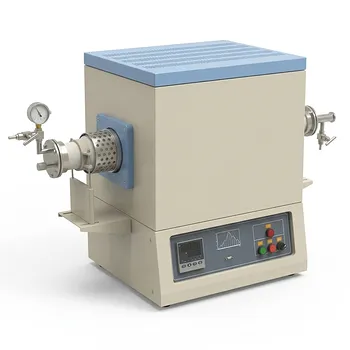
1750°C High Temperature Benchtop Vacuum Atmosphere Tube Furnace with Kanthal Super 1800 Heating Elements and 60mm Alumina Processing Tube

Vertical 1700C Vacuum and Atmosphere Tube Furnace with 80mm Alumina Tube
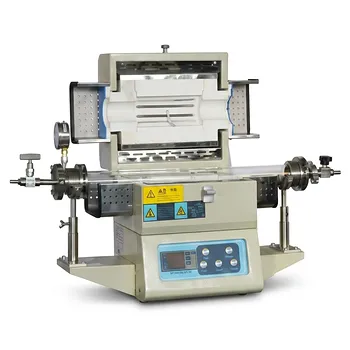
High Temperature 1200C Split Tube Furnace for CVD Research and Vacuum Atmosphere Heat Treatment
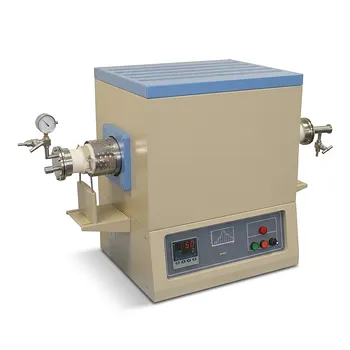
1700C High Temperature Alumina Tube Furnace with 18 Inch Heated Zone and Vacuum Sealing Flanges
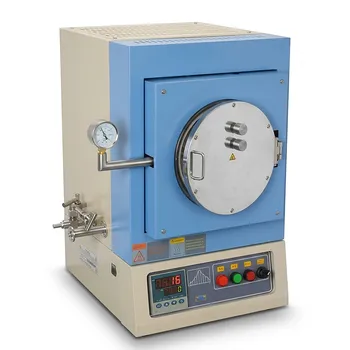
1100°C High Temperature Quartz Chamber Furnace 8 Inch OD with 7.6 Liter Capacity and Vacuum Atmosphere Capability
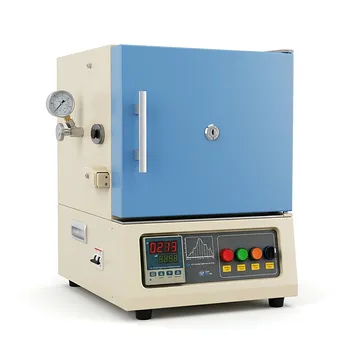
1200C Hybrid Muffle and Tube Furnace for Material Research with Dual Atmosphere Control Quartz Tubes
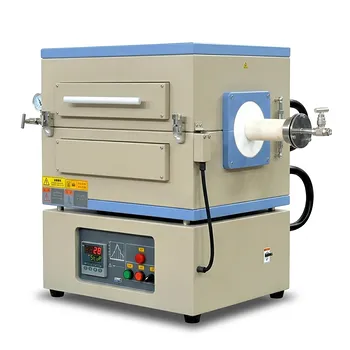
1500°C Split Tube Furnace with Alumina Tube and Vacuum Sealing Flanges for Material Research

Compact Vertical Split Quartz Tube Furnace with Stainless Steel Vacuum Flanges for Rapid Thermal Quenching and Controlled Atmosphere Material Processing

High Temperature 1700C Tube Furnace with High Vacuum Turbomolecular Pump System and Multi Channel Mass Flow Controller Gas Mixer
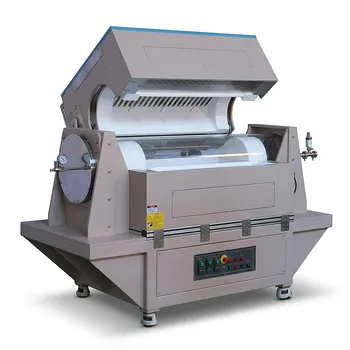
Three Zone Tube Furnace with 11 Inch or 15 Inch Quartz Tube and Hinged Flanges for Vacuum Atmosphere Heat Treatment
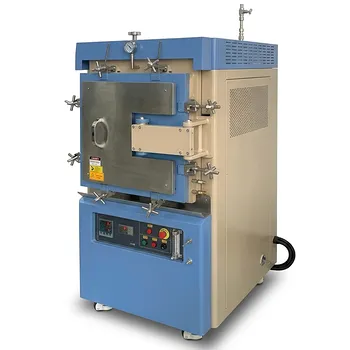
Atmosphere Controlled Muffle Furnace 1700C Maximum Temperature 80L High Capacity Vacuum Inert Gas Box Furnace

1800C High Temperature Compact Vacuum Tube Furnace with 60mm OD Alumina Tube and Kanthal MoSi2 Heating Elements
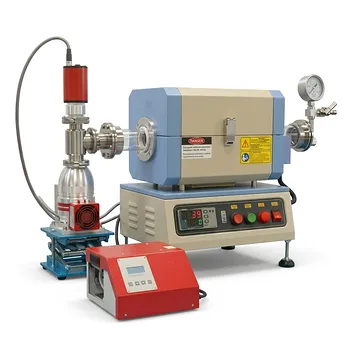
High Vacuum Compact Tube Furnace 1200C with Integrated Turbo Pump System and 8 Inch Heating Zone
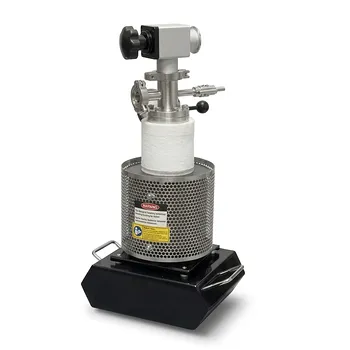
High Temperature 1100C Compact Top Loading Vertical Vacuum Tube Furnace for High Vacuum Noble Metal Melting and Material Research
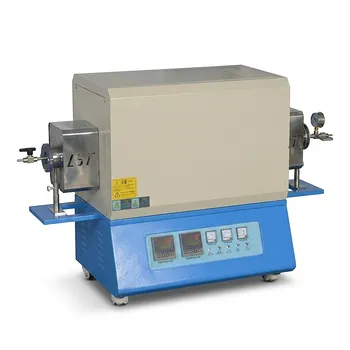
High Temperature Dual Zone Vacuum Tube Furnace for Material Research and CVD Processing
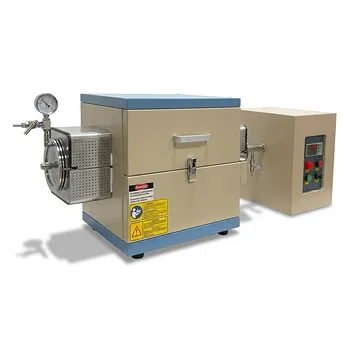
1200C High Temperature 5 Inch Split Vacuum Tube Furnace with 12 Inch Heating Zone and Separated PID Controller
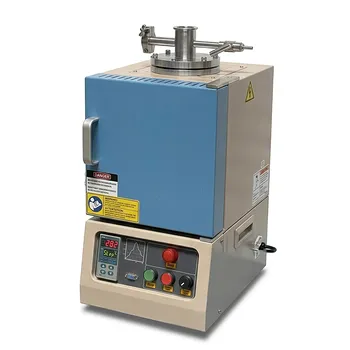
High Temperature Hybrid Muffle and Tube Furnace with Vacuum Capability and PID Control

High Temperature 1700C Vertical Tube Furnace for Powder Spherification and Material Sintering

High Temperature Automated 5 Inch Tube Furnace for Autonomous Material Research and Advanced Laboratory R&D
