What is the role of a high-vacuum quartz sealed tube in the synthesis of Ag8SiS6? Ensure Purity and Stoichiometry
Updated 3 months ago
The high-vacuum quartz sealed tube serves as a critical, hermetically isolated micro-reactor that enables the thermal synthesis of $Ag_8SiS_6$ by preventing atmospheric contamination and elemental loss. By maintaining a vacuum level of approximately 0.13 Pa, the tube ensures that silver and silicon do not oxidize while simultaneously trapping volatile sulfur within the reaction zone to maintain a strict stoichiometric ratio.
The primary role of the quartz sealed tube is to provide a chemically inert, low-pressure environment that preserves the purity and composition of the alloy during high-temperature processing. This containment is the fundamental requirement for achieving the phase uniformity necessary for subsequent single crystal growth.
Protecting Material Integrity at Extreme Temperatures
Prevention of Metal Oxidation
At the high temperatures required for $Ag_8SiS_6$ synthesis, silver (Ag) and silicon (Si) are highly susceptible to oxidation if exposed to even trace amounts of oxygen. The vacuum-sealed environment effectively excludes oxygen and moisture, preventing the formation of unwanted oxides that would degrade the material's intrinsic properties.
Containment of Volatile Sulfur
Sulfur is a highly volatile element that would evaporate and escape the reaction site in an open system. The sealed quartz tube creates a closed-loop environment where sulfur vapors are contained, forcing them to react with the silver and silicon rather than being lost to the atmosphere.
Exclusion of External Contaminants
High-purity quartz acts as a non-reactive barrier that prevents the introduction of non-target impurities from the furnace environment. Maintaining this level of purity is essential for materials sensitive to defects, as even minor impurities can significantly disrupt carrier mobility and electronic transport properties.
Ensuring Precise Chemical Stoichiometry
Maintenance of the Mixing Ratio
The functionality of $Ag_8SiS_6$ depends entirely on its specific atomic arrangement; any deviation in the ratio of Ag, Si, and S can result in secondary phases or "element depletion." By preventing the volatilization of components, the sealed tube ensures the final alloy matches the initial high-purity mixing ratio.
Facilitating Long-Duration Homogenization
Complex alloys often require multi-day equilibrium reactions or slow cooling processes to achieve a uniform internal microstructure. The quartz tube maintains a stable, pressurized environment over these extended periods, allowing the elements to diffuse and bond without risk of environmental interference.
Preparation for Single Crystal Growth
High-quality polycrystalline alloys serve as the "feedstock" for single crystal growth. By producing a homogeneous, stoichiometrically accurate ingot within the quartz tube, researchers establish the necessary chemical foundation for growing crystals with stable ferroelectric or thermoelectric properties.
Understanding the Trade-offs and Challenges
Thermal and Pressure Limitations
While quartz is highly resistant to heat, it has physical limits regarding internal vapor pressure and maximum temperature. If the heating rate is too aggressive or the sulfur content creates excessive internal pressure, the tube may rupture, leading to total sample loss and potential furnace damage.
The Impact of Vacuum Quality
A vacuum level that is insufficient (e.g., significantly higher than 0.13 Pa) can leave enough residual oxygen to cause surface oxidation during several hours of exposure. Achieving a "high vacuum" is a non-negotiable step; lower-quality seals often lead to compositional deviations that are only discovered after the synthesis is complete.
Quartz Reactivity
Although quartz is generally inert, at extremely high temperatures or in the presence of specific highly active metal powders, minor reactions between the sample and the tube wall can occur. This can lead to "sticking" or slight silicon contamination, requiring careful monitoring of the maximum processing temperature.
How to Apply These Principles to Your Synthesis
Making the Right Choice for Your Goal
- If your primary focus is phase purity: Ensure the vacuum level is better than $10^{-1}$ Pa to completely eliminate oxygen interference before sealing.
- If your primary focus is preventing sulfur loss: Use a thick-walled quartz tube and calculate the internal volume to ensure it can safely withstand the vapor pressure generated by sulfur at your target temperature.
- If your primary focus is subsequent crystal growth: Prioritize a slow cooling or "homogenization" stage within the sealed tube to lock in the single-phase structure before removing the ingot.
The success of $Ag_8SiS_6$ synthesis relies on the quartz tube's ability to act as a perfect barrier, balancing the need for high-temperature reaction energy with the requirement for absolute chemical isolation.
Summary Table:
| Function | Key Benefit | Mechanism |
|---|---|---|
| Oxidation Prevention | Protects Ag and Si integrity | Hermetic vacuum seal (~0.13 Pa) |
| Sulfur Containment | Maintains precise stoichiometry | Closed-loop reaction environment |
| Purity Control | Minimizes material defects | Non-reactive high-purity quartz barrier |
| Thermal Stability | Enables homogenization | High-temperature pressure resistance |
Elevate Your Material Research with THERMUNITS
Precision synthesis of complex alloys like $Ag_8SiS_6$ requires absolute control over thermal and atmospheric conditions. THERMUNITS is a leading manufacturer of high-temperature laboratory equipment, providing the advanced tools necessary for material science and industrial R&D.
Our comprehensive range of thermal solutions includes:
- Vacuum & Atmosphere Furnaces for precise environment control.
- Tube & Rotary Furnaces tailored for chemical synthesis.
- CVD/PECVD Systems and Vacuum Induction Melting (VIM) Furnaces.
- High-quality Thermal Elements and quartz processing tools.
Ensure the phase uniformity and chemical purity of your next breakthrough. Contact our experts today to find your custom heat treatment solution!
References
- A.I. Pogodin, Ruslan Mariychuk. Particularities of optical behavior of Ag8SiS6 single crystal. DOI: 10.15407/spqeo27.03.280
Mentioned Products
- High Temperature 1200C Split Tube Furnace with Hinged Vacuum Flanges and 4 Inch Quartz Tube for Laboratory Research
- 1100°C High Temperature Quartz Chamber Furnace 8 Inch OD with 7.6 Liter Capacity and Vacuum Atmosphere Capability
- High Temperature Rocking Tube Furnace with Quartz Tube and Vacuum Flange for Materials Synthesis
- 1200°C 5 Inch Vertical Quartz Tube Furnace with Stainless Steel Vacuum Flanges
- High Temperature Automated 5 Inch Tube Furnace for Autonomous Material Research and Advanced Laboratory R&D
People Also Ask
- What is the primary function of a high-temperature split tube furnace in nitrogen metastable particle research? Expert Guide
- What is the primary engineering purpose for using a customized ventilation hood when operating a split tube furnace? RCF Safety
- How is a laboratory high-temperature tube furnace utilized to research the products of aluminothermic reduction? Advanced Metallurgical Solutions
- Why use a tube furnace for oxygen annealing LaCrO3/LaMnO3? Optimize Phase Transition & Magnetic Performance.
- What key role does a laboratory high-temperature tube furnace play in the production of carbon nanofibers? Guide

Tech Team · ThermUnits
Last updated on Jun 02, 2026
Related Products
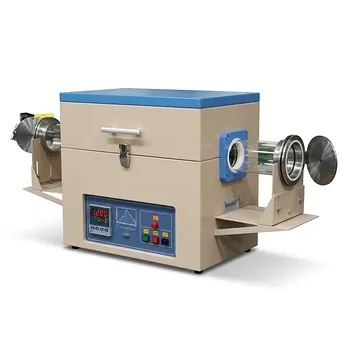
High Temperature 1200C Split Tube Furnace with Hinged Vacuum Flanges and 4 Inch Quartz Tube for Laboratory Research
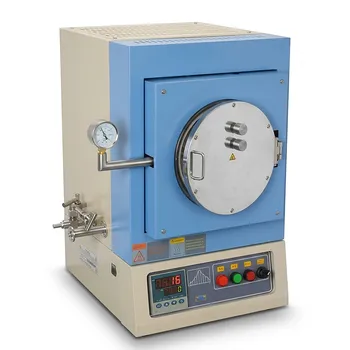
1100°C High Temperature Quartz Chamber Furnace 8 Inch OD with 7.6 Liter Capacity and Vacuum Atmosphere Capability
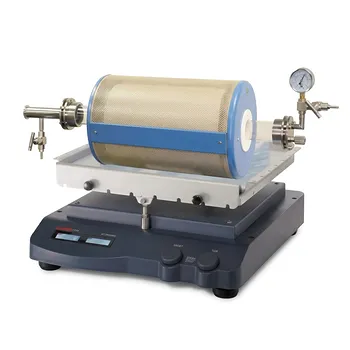
High Temperature Rocking Tube Furnace with Quartz Tube and Vacuum Flange for Materials Synthesis

1200°C 5 Inch Vertical Quartz Tube Furnace with Stainless Steel Vacuum Flanges

High Temperature Automated 5 Inch Tube Furnace for Autonomous Material Research and Advanced Laboratory R&D

High Temperature 1700C Benchtop Tube Furnace with 5 Inch Heating Zone High Purity Alumina Tube and Vacuum Sealing Flanges
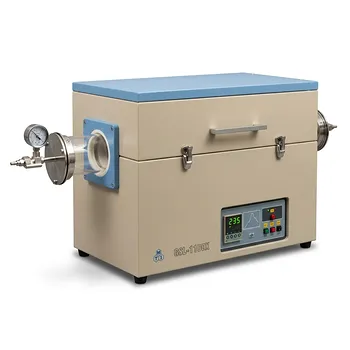
Single Zone Tube Furnace 5 Inch Quartz Tube 36 Inch Heating Zone Vacuum Flanges
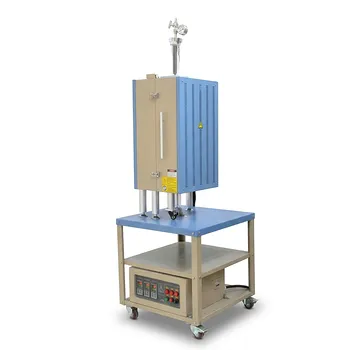
1200C Three Zone Vertical Tube Furnace with 2 Inch Quartz Tube and Vacuum Flanges
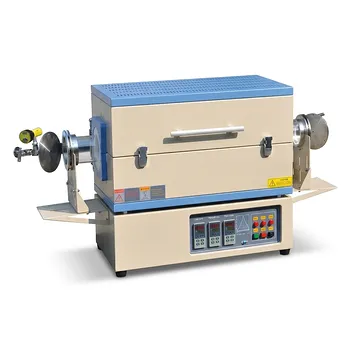
Three Zone Tube Furnace with 24 Inch Heating Length and Hinged Flange Quartz Tube System
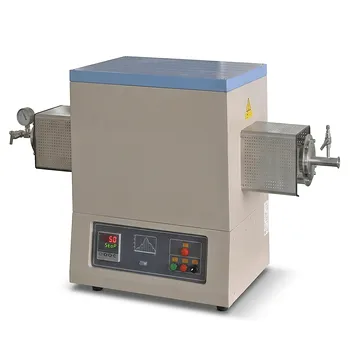
High Temperature 1700C Tube Furnace with 4 Inch OD Alumina Tube and Vacuum Sealing Flanges
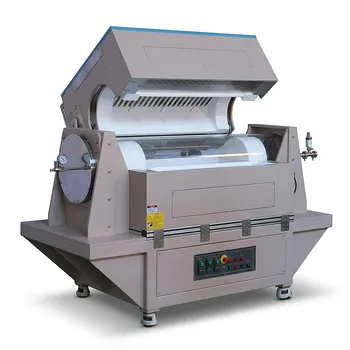
Three Zone Tube Furnace with 11 Inch or 15 Inch Quartz Tube and Hinged Flanges for Vacuum Atmosphere Heat Treatment
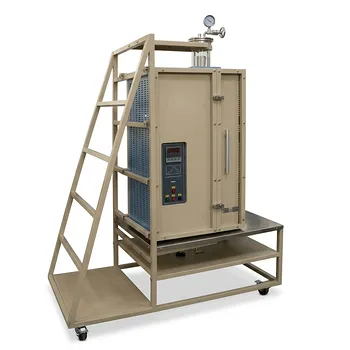
Split Vertical Tube Furnace with 1200C Quartz Tube and Stainless Steel Vacuum Flanges for Rapid Thermal Processing
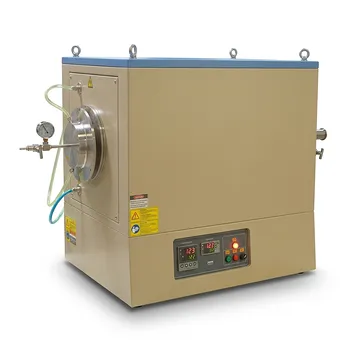
1100°C Large Diameter Quartz Tube Furnace with 24 Inch Heating Zone and Water Cooled Flanges
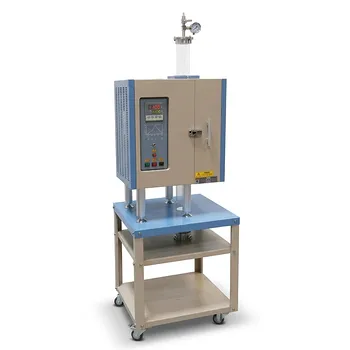
1100°C Split Vertical Tube Furnace with 80mm Quartz Tube and Stainless Steel Vacuum Flanges

Compact Vertical Split Quartz Tube Furnace with Stainless Steel Vacuum Flanges for Rapid Thermal Quenching and Controlled Atmosphere Material Processing
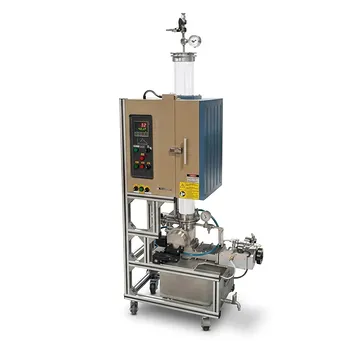
1200C High Temperature Atmosphere Controlled Vertical Quenching Tube Furnace with 4 Inch Quartz Tube
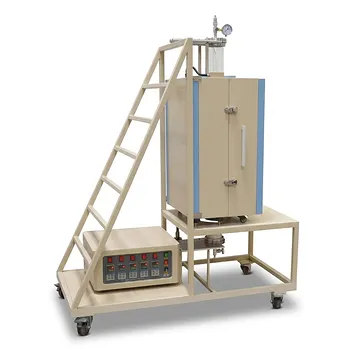
Five Zone Split Vertical Tube Furnace 1200C Max with 4 Inch Quartz Tube and Stainless Steel Vacuum Flanges
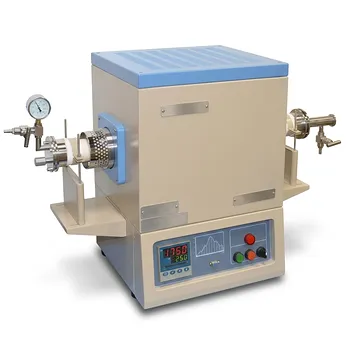
High Temperature Compact Vacuum Tube Furnace 1750C Max 60mm OD Alumina Tube
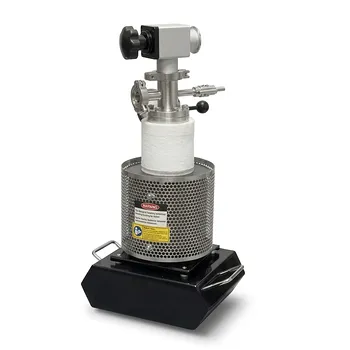
High Temperature 1100C Compact Top Loading Vertical Vacuum Tube Furnace for High Vacuum Noble Metal Melting and Material Research