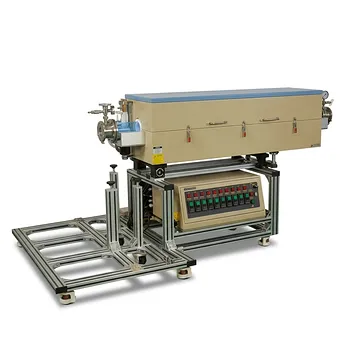
What is the significance of a high-temperature tube furnace for arsenic stability? Master Precision Heat Treatment
Updated 3 months ago
The significance of a high-temperature tube furnace lies in its ability to simulate industrial smelting conditions while providing a precisely controlled environment for measuring arsenic volatilization. By reaching temperatures up to 1200 °C under protective atmospheres like argon, researchers can accurately quantify mass loss and observe the physicochemical mechanisms that allow arsenic to form stable alloys with copper.
Core Takeaway: A high-temperature tube furnace is the essential tool for isolating the thermal and atmospheric variables required to understand how arsenic behaves within copper matte, enabling researchers to develop strategies for arsenic removal or stabilization.
Precision Control for Industrial Simulation
Mimicking Smelting Environments
To study arsenic stability, researchers must replicate the intense heat of a copper smelter. The tube furnace provides a stable thermal zone, often reaching 1200 °C to 1300 °C, which is necessary to observe the transition of arsenic from a solid alloy component to a gaseous oxide.
Regulating Heating Profiles
Precision temperature control systems allow for specific heating programs, such as increments of 10 °C per minute. This granularity is vital for identifying the exact temperature thresholds at which copper-arsenic alloy bonds begin to break or transform.
Maintaining Constant Thermal Stress
Many thermal stability tests require long-term exposure to heat to simulate industrial aging. Tube furnaces can maintain a constant thermal load for hundreds of hours, allowing researchers to evaluate if materials maintain their structural integrity or if arsenic gradually migrates under prolonged stress.
Atmospheric Management and Chemical Interaction
Preventing Unwanted Oxidation
When researching copper matte, it is critical to prevent the copper matrix from oxidizing prematurely. By introducing high-purity argon, the furnace creates an oxygen-free environment where atomic diffusion and metallurgical bonding can be studied in their pure state.
Facilitating De-Arsenic Reactions
The furnace serves as a reaction chamber for chemical additives like sodium carbonate. The controlled atmosphere provides the necessary energy to convert arsenic into gaseous oxides or liquid arsenates, which are easier to separate from the copper matte than solid alloys.
Protecting Sample Integrity
The use of a sealed tube ensures that volatile arsenic species do not escape into the laboratory environment. This containment is both a safety requirement and a scientific necessity for capturing all mass loss data during the roasting process.
Advanced Structural Analysis Techniques
Vertical Orientation for Quenching
Vertical tube furnaces allow samples to be suspended in the thermal center and then rapidly dropped into a quenching medium. This "freezes" the high-temperature phase equilibrium, permitting researchers to examine the arsenic distribution exactly as it existed at smelting temperatures.
Evaluating Phase Equilibrium
By maintaining a stable environment, the furnace allows for equilibrium reactions between copper matte and iron-silicate slag. This is essential for determining how arsenic partitions between different phases during the smelting process.
Understanding the Trade-offs
While tube furnaces offer unmatched precision, they come with inherent limitations. The small sample size required for most tubes means that results may not always account for the macro-scale inhomogeneities found in large industrial furnaces.
Additionally, the high concentration of volatile arsenic can lead to the degradation of the furnace’s internal components over time. Researchers must balance the need for high-temperature data with the potential for "poisoning" the heating elements or ceramic tubes if corrosive gases are not properly managed.
Applying This Research to Your Project
Recommendations for Research Design
- If your primary focus is determining volatilization rates: Utilize a horizontal tube furnace with an integrated high-precision scale to measure continuous mass loss during the heating cycle.
- If your primary focus is capturing high-temperature phases: Select a vertical tube furnace equipped with a rapid-quench mechanism to preserve the metallurgical structure of the copper-arsenic alloy.
- If your primary focus is chemical extraction (De-arsenation): Ensure the furnace supports a multi-gas inlet system to introduce reactive atmospheres that can break complex alloy bonds.
By utilizing the precision and atmospheric control of a high-temperature tube furnace, researchers can move beyond observation and begin to manipulate the fundamental mechanisms of arsenic stability in copper production.
Summary Table:
| Feature | Significance in Arsenic Research |
|---|---|
| High Temp Range (up to 1300°C) | Replicates industrial copper smelting conditions |
| Atmosphere Management | Uses high-purity argon to prevent sample oxidation |
| Precision Ramping | Identifies specific thresholds for alloy bond transformation |
| Vertical Quenching | Freezes high-temperature phase equilibrium for structural analysis |
| Sealed Environment | Safely contains volatile arsenic species for mass loss analysis |
Elevate Your Metallurgical Research with THERMUNITS
Are you conducting critical research into arsenic removal, thermal stability, or advanced material synthesis? THERMUNITS is a leading manufacturer of high-performance laboratory equipment designed for the most demanding material science and industrial R&D applications.
We provide specialized Tube, Vacuum, and Atmosphere furnaces that offer the precise temperature control and atmospheric purity required to isolate variables in copper matte processing. Our comprehensive range of thermal processing solutions includes:
- Furnaces: Muffle, Vacuum, Atmosphere, Tube, Rotary, Hot Press, and Dental Furnaces.
- Advanced Systems: CVD/PECVD systems and Vacuum Induction Melting (VIM) furnaces.
- Specialized Equipment: Electric rotary kilns, high-quality Thermal Elements, and various other laboratory heat treatment tools.
Whether you need localized heating for precise mass loss measurement or rapid-quench capabilities for phase analysis, THERMUNITS brings unmatched reliability to your laboratory. Our equipment is built to help researchers develop more efficient industrial strategies for material stabilization.
Ready to optimize your lab's thermal processing? Contact our technical experts today to find the perfect solution for your project!
References
- Yuxia Song, D. Wang. Study on the occurrence characteristics of arsenic in copper matte. DOI: 10.1038/s41598-024-76382-1
Mentioned Products
- High Temperature Tube Furnace 1500C with Sliding Flanges and 50mm OD for Rapid Thermal Processing Fast Heating and Cooling
- High Temperature 1700C Tube Furnace with High Vacuum Turbomolecular Pump System and Multi Channel Mass Flow Controller Gas Mixer
- High Temperature 1700C Benchtop Tube Furnace with 5 Inch Heating Zone High Purity Alumina Tube and Vacuum Sealing Flanges
- 1750°C High Temperature Benchtop Vacuum Atmosphere Tube Furnace with Kanthal Super 1800 Heating Elements and 60mm Alumina Processing Tube
- Compact High Temperature 1600C Tube Furnace with 50mm Alumina Tube and Vacuum Flanges for Material Sintering
People Also Ask
- How are high-temperature tube furnaces utilized to repair etching damage? Precision Lattice Restoration Solutions
- What core conditions does a high-temperature tube furnace provide for rGO aerogels? Mastering Precision Synthesis.
- What role does a high-temperature tube furnace play in CVD synthesis of silicon nanowires? Master VLS Growth Precision.
- How does precision tube furnace control influence CoFe nanoparticle formation? Master Your Bimetallic Synthesis.
- What role does a high-temperature tube furnace play in the sulfidation heat treatment of CoS@C/MXene nanocomposites? Guide

Tech Team · ThermUnits
Last updated on Jun 02, 2026
Related Products

High Temperature Tube Furnace 1500C with Sliding Flanges and 50mm OD for Rapid Thermal Processing Fast Heating and Cooling

High Temperature 1700C Tube Furnace with High Vacuum Turbomolecular Pump System and Multi Channel Mass Flow Controller Gas Mixer

High Temperature 1700C Benchtop Tube Furnace with 5 Inch Heating Zone High Purity Alumina Tube and Vacuum Sealing Flanges
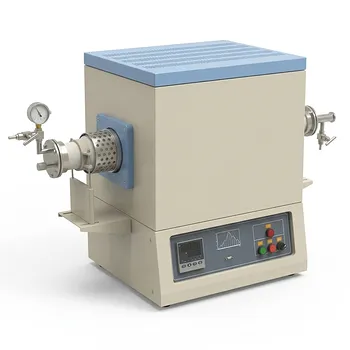
1750°C High Temperature Benchtop Vacuum Atmosphere Tube Furnace with Kanthal Super 1800 Heating Elements and 60mm Alumina Processing Tube

Compact High Temperature 1600C Tube Furnace with 50mm Alumina Tube and Vacuum Flanges for Material Sintering
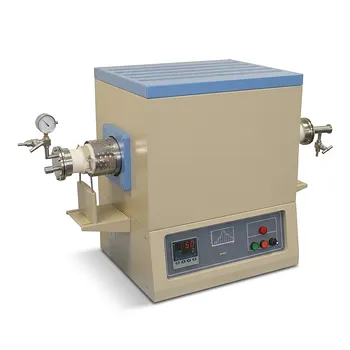
1700C High Temperature Alumina Tube Furnace with 18 Inch Heated Zone and Vacuum Sealing Flanges

1800C High Temperature Compact Vacuum Tube Furnace with 60mm OD Alumina Tube and Kanthal MoSi2 Heating Elements
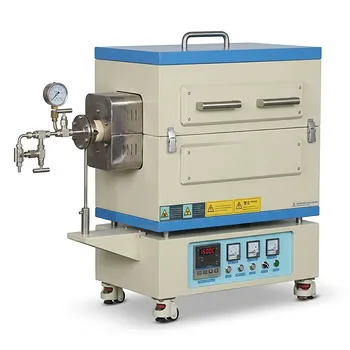
High Temperature Split Tube Furnace 1500C for Material Research Vacuum and Atmosphere Thermal Processing

High Temperature 1700C Vertical Tube Furnace for Powder Spherification and Material Sintering
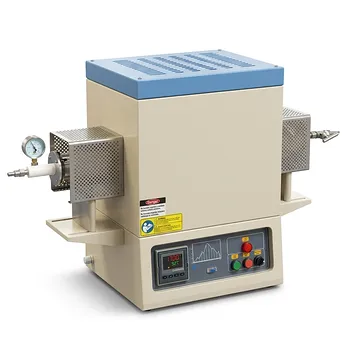
High Temperature Three Zone Tube Furnace 1700C with Alumina Tube and Water Cooled Flanges

High Temperature 1700C Six Zone Split Tube Furnace with Alumina Tube and Water Cooled Flanges
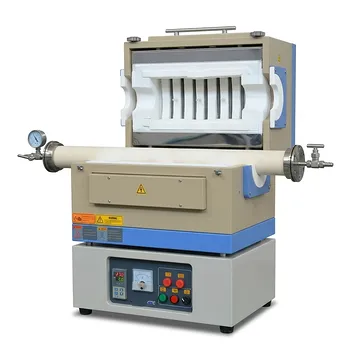
High Temperature 1600C Split Tube Furnace Vacuum Flanges Valves Optional 60mm 80mm Alumina Tube

High Temperature Automated 5 Inch Tube Furnace for Autonomous Material Research and Advanced Laboratory R&D
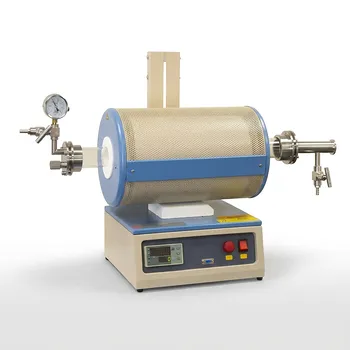
1100C Tube Furnace with Vacuum Flange and Programmable Temperature Controller for Material Science and Industrial Heat Treatment
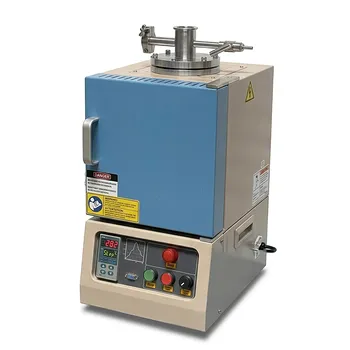
High Temperature Hybrid Muffle and Tube Furnace with Vacuum Capability and PID Control
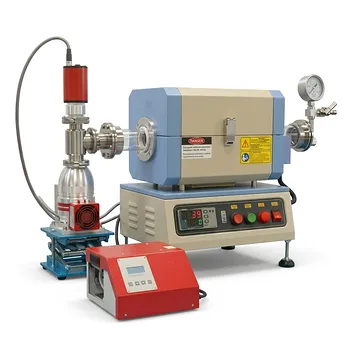
High Vacuum Compact Tube Furnace 1200C with Integrated Turbo Pump System and 8 Inch Heating Zone
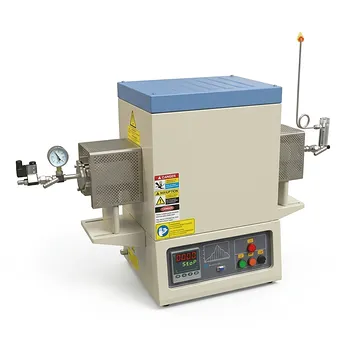
1700C Hydrogen Gas Tube Furnace with 60mm Alumina Process Tube and Integrated Hydrogen Safety Detector
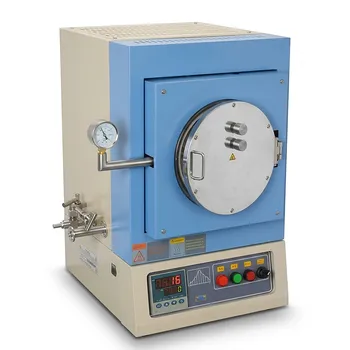
1100°C High Temperature Quartz Chamber Furnace 8 Inch OD with 7.6 Liter Capacity and Vacuum Atmosphere Capability
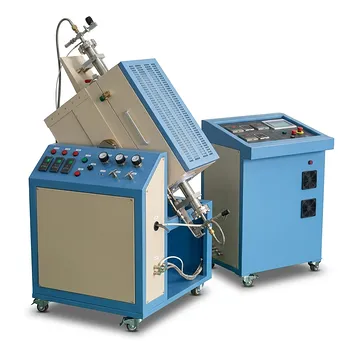
1100C High Pressure Rocking Tube Furnace with 2 Inch Super Alloy Processing Tube for Material Synthesis