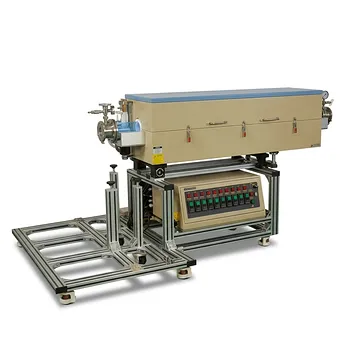
Tube Furnace Conditions for Carbon Activation: Achieve High-Performance Supercapacitor Materials
Updated 3 months ago
The performance of doped carbon supercapacitors hinges on the precise thermochemical environment provided by a high-temperature tube furnace. These furnaces deliver three essential conditions: precise programmed temperature control (typically between 700°C and 1000°C), a strictly inert atmosphere (such as argon or nitrogen), and a uniform thermal field. These factors are critical for facilitating the redox reactions and chemical etching necessary to transform carbon precursors into high-surface-area electrode materials.
Core Takeaway: A high-temperature tube furnace acts as a controlled chemical reactor that enables deep pyrolysis and pore formation while protecting the material from oxidation. By managing the interaction between activating agents and the carbon skeleton, the furnace allows for the creation of the specific microporous and mesoporous structures required for high-capacity energy storage.
Precise Thermal Management for Structural Development
Maintaining Programmed Temperature Profiles
The furnace allows for specific heating rates and "soak times," such as maintaining 900°C for three hours. This precision ensures that precursors, such as ZIF-8 or biomass, undergo complete pyrolysis and carbonization without structural failure.
Ensuring Uniform Thermal Fields
Consistency across the heating zone is vital for treating materials like jute fibers or petroleum pitch. A uniform thermal field ensures that the chemical reaction between the activating agent (e.g., ZnCl2 or KOH) and the carbon precursor occurs evenly, preventing localized defects.
Reaching Activation Thresholds
Most chemical activation processes require temperatures around 800°C to 850°C to trigger specific redox reactions. At these levels, the furnace facilitates the release of metallic potassium vapor, which intercalates into carbon layers to cause irreversible expansion and pore creation.
Atmospheric Control and Chemical Activation
The Role of Inert Protective Environments
The furnace provides a stable nitrogen or argon atmosphere to ensure an oxygen-free environment. This protection prevents the carbon material from burning away (combusting) at high temperatures, allowing for deep pyrolysis instead of total degradation.
Facilitating Chemical Etching
Under high heat, activating agents like KOH or potassium carbonate (K2CO3) deeply corrode and etch the carbon skeleton. This process is what increases the specific surface area from negligible values (e.g., 10 m²/g) to over 2400 m²/g, drastically increasing charge storage sites.
Controlling Pore Ratio
By adjusting the furnace temperature within the 700°C to 1000°C range, researchers can tune the ratio of micropores to mesopores. This control is essential for optimizing the material for different electrolytes and ensuring fast ion transport in the supercapacitor.
Heteroatom Doping and Electronic Tuning
Integrating Nitrogen and Boron
The furnace provides the high-energy environment required for thermal doping, where atoms like nitrogen or boron are integrated into the carbon lattice. This process often involves the decomposition of precursors like boric acid at temperatures between 800°C and 1000°C.
Adjusting Electronic Structure
Effective doping, facilitated by the furnace’s stable heat, modifies the electronic structure of the carbon support. This enhancement improves the interaction between the carbon and active metal particles, leading to better electrical conductivity and catalytic activity.
Preserving Structural Integrity during Doping
The use of a strictly controlled inert atmosphere during doping ensures that the carbon framework remains stable. This allows the material to maintain high conductivity while gaining the functional benefits of the added heteroatoms.
Understanding the Trade-offs
While high-temperature tube furnaces are essential, they present specific challenges that must be managed. Over-etching is a common pitfall; if the temperature is too high or the activation time is too long, the carbon skeleton can become too thin, leading to a loss of structural integrity and lower density.
Furthermore, higher temperatures significantly increase energy consumption and can lead to the loss of material yield as more carbon is converted to gas. There is also a delicate balance between surface area and conductivity, as excessive pore formation can sometimes disrupt the continuous paths needed for electron transport.
Applying Furnace Conditions to Your Project
To achieve the best results for your specific doped carbon material, align your furnace settings with your primary performance goal.
- If your primary focus is maximum surface area: Utilize a temperature between 800°C and 850°C with a KOH activator to maximize the creation of micropores and mesopores.
- If your primary focus is high electrical conductivity: Opt for higher temperatures (near 1000°C) and longer soak times to ensure high degrees of graphitization and stable heteroatom integration.
- If your primary focus is precise pore-size distribution: Carefully tune the furnace in 50°C increments between 700°C and 900°C to find the "sweet spot" where the activator etches the precursor without collapsing the walls.
By mastering the furnace's thermal and atmospheric variables, you can precisely engineer the physical and chemical properties of doped carbon for next-generation energy storage.
Summary Table:
| Furnace Condition | Technical Specification | Impact on Doped Carbon |
|---|---|---|
| Temperature Control | 700°C – 1000°C (Programmed) | Ensures complete pyrolysis and prevents structural collapse. |
| Atmosphere | Strict Inert (Argon/Nitrogen) | Prevents oxidation; facilitates deep chemical etching and doping. |
| Thermal Uniformity | Stable Heating Zone | Ensures consistent pore distribution and avoids localized defects. |
| Activation Precision | 50°C Increment Tuning | Optimizes the ratio of micropores to mesopores for ion transport. |
Elevate Your Energy Storage Research with THERMUNITS
Precise thermal processing is the backbone of advanced material science. THERMUNITS is a leading manufacturer of high-temperature laboratory equipment, providing the specialized tools needed for the next generation of industrial R&D.
From Tube and Atmosphere furnaces optimized for carbon activation to CVD/PECVD systems, Muffle, Vacuum, Rotary, and Hot Press furnaces, our solutions offer the structural integrity and atmospheric control your research demands. We also provide Vacuum Induction Melting (VIM) furnaces, Dental Furnaces, and high-quality Thermal Elements to meet diverse laboratory needs.
Ready to optimize your heat treatment process? Contact our engineering team today to find the perfect thermal solution for your materials.
References
- Qingnan Mu, Krzysztof Kapusta. Preparation of Supercapacitor Carbon Electrode Materials by Low-Temperature Carbonization of High-Nitrogen-Doped Raw Materials from Food Waste. DOI: 10.3390/ma17163984
Mentioned Products
- High Temperature Tube Furnace 1500C with Sliding Flanges and 50mm OD for Rapid Thermal Processing Fast Heating and Cooling
- High Temperature 1700C Tube Furnace with High Vacuum Turbomolecular Pump System and Multi Channel Mass Flow Controller Gas Mixer
- High Temperature 1700C Benchtop Tube Furnace with 5 Inch Heating Zone High Purity Alumina Tube and Vacuum Sealing Flanges
- 1750°C High Temperature Benchtop Vacuum Atmosphere Tube Furnace with Kanthal Super 1800 Heating Elements and 60mm Alumina Processing Tube
- Compact High Temperature 1600C Tube Furnace with 50mm Alumina Tube and Vacuum Flanges for Material Sintering
People Also Ask
- How are high-temperature tube furnaces utilized to repair etching damage? Precision Lattice Restoration Solutions
- What role does a high-temperature tube furnace play in CVD synthesis of silicon nanowires? Master VLS Growth Precision.
- What core conditions does a high-temperature tube furnace provide for rGO aerogels? Mastering Precision Synthesis.
- What role does a high-temperature tube furnace play in the sulfidation heat treatment of CoS@C/MXene nanocomposites? Guide
- How does precision tube furnace control influence CoFe nanoparticle formation? Master Your Bimetallic Synthesis.

Tech Team · ThermUnits
Last updated on Jun 03, 2026
Related Products

High Temperature Tube Furnace 1500C with Sliding Flanges and 50mm OD for Rapid Thermal Processing Fast Heating and Cooling

High Temperature 1700C Tube Furnace with High Vacuum Turbomolecular Pump System and Multi Channel Mass Flow Controller Gas Mixer

High Temperature 1700C Benchtop Tube Furnace with 5 Inch Heating Zone High Purity Alumina Tube and Vacuum Sealing Flanges
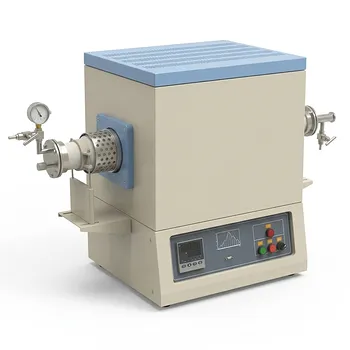
1750°C High Temperature Benchtop Vacuum Atmosphere Tube Furnace with Kanthal Super 1800 Heating Elements and 60mm Alumina Processing Tube

Compact High Temperature 1600C Tube Furnace with 50mm Alumina Tube and Vacuum Flanges for Material Sintering
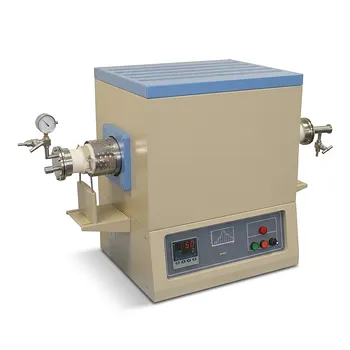
1700C High Temperature Alumina Tube Furnace with 18 Inch Heated Zone and Vacuum Sealing Flanges

1800C High Temperature Compact Vacuum Tube Furnace with 60mm OD Alumina Tube and Kanthal MoSi2 Heating Elements
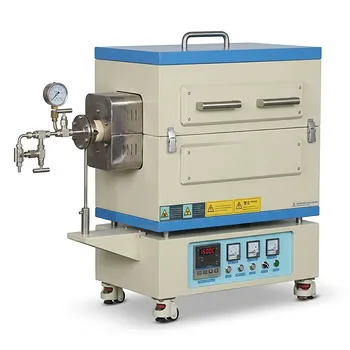
High Temperature Split Tube Furnace 1500C for Material Research Vacuum and Atmosphere Thermal Processing

High Temperature 1700C Vertical Tube Furnace for Powder Spherification and Material Sintering
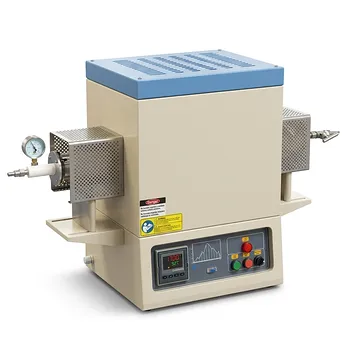
High Temperature Three Zone Tube Furnace 1700C with Alumina Tube and Water Cooled Flanges

High Temperature 1700C Six Zone Split Tube Furnace with Alumina Tube and Water Cooled Flanges
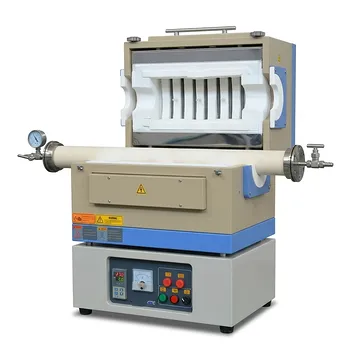
High Temperature 1600C Split Tube Furnace Vacuum Flanges Valves Optional 60mm 80mm Alumina Tube

High Temperature Automated 5 Inch Tube Furnace for Autonomous Material Research and Advanced Laboratory R&D

1100C Tube Furnace with Vacuum Flange and Programmable Temperature Controller for Material Science and Industrial Heat Treatment
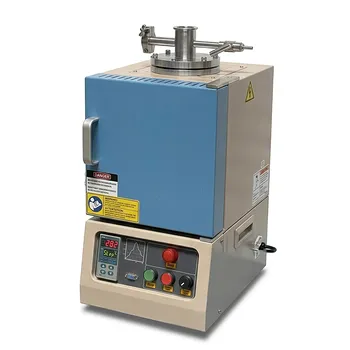
High Temperature Hybrid Muffle and Tube Furnace with Vacuum Capability and PID Control
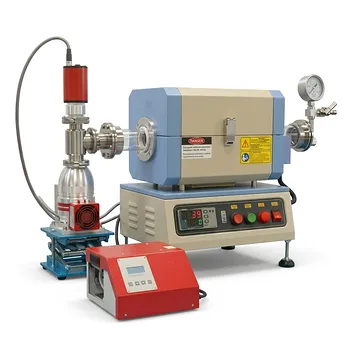
High Vacuum Compact Tube Furnace 1200C with Integrated Turbo Pump System and 8 Inch Heating Zone

1700C Hydrogen Gas Tube Furnace with 60mm Alumina Process Tube and Integrated Hydrogen Safety Detector
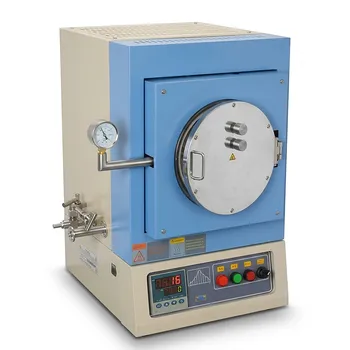
1100°C High Temperature Quartz Chamber Furnace 8 Inch OD with 7.6 Liter Capacity and Vacuum Atmosphere Capability
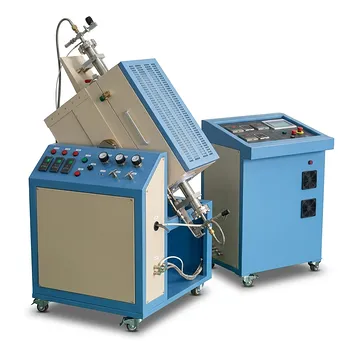
1100C High Pressure Rocking Tube Furnace with 2 Inch Super Alloy Processing Tube for Material Synthesis