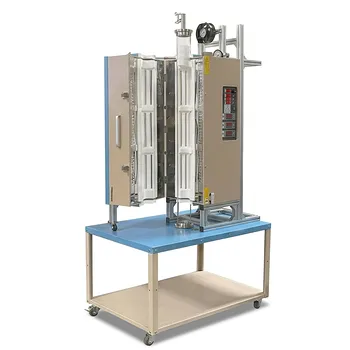
What process conditions does a precision tube furnace provide for N-MWCNTs? Optimize In-Situ Growth & Thermal Stability
Updated 3 months ago
A precision tube furnace provides the highly controlled thermal and atmospheric conditions required for "etching-growth" coupling. This specialized environment maintains a precise temperature (typically around 525°C) while strictly regulating gas flow, such as hydrogen, to facilitate the interaction between catalysts and substrates. These conditions allow nickel nanoparticles to etch a carbon nitride substrate, using the resulting gas-phase fragments to catalyze the in-situ growth of nitrogen-doped multi-walled carbon nanotubes (N-MWCNTs).
Core Takeaway: The precision tube furnace acts as a closed-system reactor that synchronizes thermal decomposition and catalytic growth. By maintaining a stable 525°C environment and a reducing atmosphere, it enables the simultaneous etching of precursors and the formation of nitrogen-doped nanotube structures.
Thermal Field Stability and Precision
Exact Temperature Regulation
The furnace provides a precise thermal setpoint, often maintained at 525°C for N-MWCNT growth via the etching-growth method. This specific temperature is critical because it must be high enough to initiate catalytic activity but controlled enough to manage the etching rate of the carbon nitride substrate.
Uniform Thermal Field Distribution
A high-quality tube furnace ensures that the thermal field is evenly distributed throughout the reaction zone. This uniformity ensures that every part of the catalyst-coated substrate experiences identical thermodynamic conditions, leading to consistent nanotube crystallinity and growth density.
Programmed Temperature Ramping
Precise control over heating and cooling rates is necessary to prepare the substrate for growth. Programmed environments allow for the gradual activation of catalysts and the stabilization of the reaction environment before the primary growth phase begins.
Atmospheric Control and Gas Dynamics
Regulation of Reducing Atmospheres
The furnace provides a sealed environment for the introduction of specific gases, such as hydrogen, which is vital for the reduction of nickel nanoparticles. Under these controlled atmospheres, the hydrogen facilitates the etching process that releases the necessary carbon and nitrogen fragments for nanotube formation.
Mass Flow Controller (MFC) Integration
Precision systems utilize multiple MFCs to accurately switch and mix gases like helium, hydrogen, and carbon sources. This level of control allows for the transition between inert protection, catalyst reduction, and the active growth phase without compromising the internal environment.
Oxygen-Free Environment
Maintaining a strict, oxygen-free atmosphere is essential to prevent the oxidation of metal catalysts and the unintended combustion of the carbon precursors. The sealing integrity of the tube furnace ensures that the nitrogen doping remains effective and the carbon framework remains intact.
Support for Complex Chemical Mechanisms
Etching-Growth Coupling
The furnace provides the physical stage for "etching-growth" coupling, where nickel nanoparticles consume the underlying substrate. The resulting gas-phase fragments are immediately utilized by the same nanoparticles to catalyze the growth of nanotubes directly on the material surface.
Catalytic Cracking of Precursors
At temperatures ranging from 500°C to 1000°C, the furnace provides the energy required for the thermal decomposition of carbon and nitrogen sources. Whether using solid carbon nitride or gas-phase sources like acetylene, the furnace ensures stable energy delivery for the cracking process.
Nucleation and Structural Development
The stable thermochemical environment directly determines the morphology and final electrical performance of the nanotubes. By controlling the internal furnace pressure and gas ratios, researchers can influence the diameter, wall count, and nitrogen-doping level of the N-MWCNTs.
Understanding the Trade-offs
Temperature Sensitivity
If the temperature deviates even slightly from the 525°C threshold, the etching rate may become too aggressive or too slow. This imbalance can lead to either the complete consumption of the substrate or insufficient fragment release for nanotube growth.
Gas Flow Precision
Inconsistent gas flow rates can lead to non-uniform doping or the formation of amorphous carbon impurities. Precise ratios are required to ensure that nitrogen atoms are correctly integrated into the carbon lattice rather than simply coating the surface.
Catalyst Deactivation
Even with precise conditions, catalysts can become "poisoned" or encapsulated by excess carbon if the gas-to-temperature ratio is not perfectly calibrated. The furnace must maintain a delicate balance between precursor decomposition and nanotube elongation to prevent premature termination of growth.
Applying These Conditions to Your Synthesis
To achieve high-quality N-MWCNTs, the operational parameters must be aligned with your specific material objectives.
- If your primary focus is maximized nitrogen doping: Prioritize long-term temperature stability and precise control over the nitrogen-rich precursor's decomposition rate.
- If your primary focus is structural alignment and yield: Focus on the uniformity of the thermal field and the precision of the hydrogen flow to ensure consistent etching across the entire substrate.
- If your primary focus is electrical conductivity: Ensure a strictly oxygen-free environment and high-purity gas sources to maintain the integrity of the multi-walled carbon framework.
The precision tube furnace transforms a complex chemical reaction into a repeatable manufacturing process by mastering the balance of heat and atmosphere.
Summary Table:
| Feature | Optimal Condition for N-MWCNTs | Role in Synthesis |
|---|---|---|
| Temperature | Stable 525°C (±1°C) | Balances substrate etching rate with catalytic growth. |
| Atmosphere | Reducing (H2/He) | Reduces catalysts and facilitates gas-phase fragment release. |
| Thermal Field | High Uniformity | Ensures consistent nanotube crystallinity across the substrate. |
| Gas Dynamics | MFC Integration | Controls precise mixing for catalyst activation and growth phases. |
| System Integrity | Oxygen-Free | Prevents catalyst oxidation and carbon precursor combustion. |
Elevate Your Nanomaterial Synthesis with THERMUNITS
Achieving the delicate balance of etching-growth coupling for N-MWCNTs requires uncompromising thermal precision. THERMUNITS is a leading manufacturer of high-performance laboratory equipment designed specifically for material science and industrial R&D.
Whether you are focusing on nitrogen-doped nanotubes or complex CVD processes, our comprehensive range of thermal solutions—including Precision Tube Furnaces, Vacuum/Atmosphere Furnaces, CVD/PECVD Systems, and Rotary Kilns—provides the stable environment your research demands.
Ready to optimize your heat treatment process?
Contact our technical experts today to find the perfect furnace for your lab and accelerate your material breakthroughs.
References
- Mariusz Pietrowski, Robert Wojcieszak. <i>In situ</i> growth of N-doped carbon nanotubes from the products of graphitic carbon nitride etching by nickel nanoparticles. DOI: 10.1039/d3na00983a
Mentioned Products
- Compact High Temperature 1600C Tube Furnace with 50mm Alumina Tube and Vacuum Flanges for Material Sintering
- Vertical 1700C Vacuum and Atmosphere Tube Furnace with 80mm Alumina Tube
- High Temperature Compact Vacuum Tube Furnace 1750C Max 60mm OD Alumina Tube
- Three Zone Tube Furnace with 11 Inch or 15 Inch Quartz Tube and Hinged Flanges for Vacuum Atmosphere Heat Treatment
- 1200°C 5 Inch Vertical Quartz Tube Furnace with Stainless Steel Vacuum Flanges
People Also Ask
- What is the role of a high-temperature tube furnace in the calcination process of ZnO/In2O3 nanocomposites?
- Why is a high-temperature tube furnace required for CuAlO2 heat treatment? Master Phase Transformation Today
- Function of tube furnaces in cellulose aerogel carbonization? Achieve High-Performance Materials
- What role does a high-temperature tube furnace play in the carbonization? Mastering Precision Carbon Synthesis
- What role does a high-temperature tube furnace play in executing nitrogen absorption kinetic experiments? Expert Insights

Tech Team · ThermUnits
Last updated on Jun 03, 2026
Related Products

Compact High Temperature 1600C Tube Furnace with 50mm Alumina Tube and Vacuum Flanges for Material Sintering

Vertical 1700C Vacuum and Atmosphere Tube Furnace with 80mm Alumina Tube
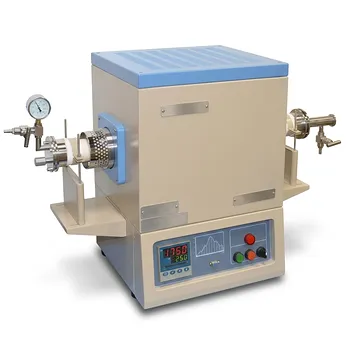
High Temperature Compact Vacuum Tube Furnace 1750C Max 60mm OD Alumina Tube

Three Zone Tube Furnace with 11 Inch or 15 Inch Quartz Tube and Hinged Flanges for Vacuum Atmosphere Heat Treatment

1200°C 5 Inch Vertical Quartz Tube Furnace with Stainless Steel Vacuum Flanges
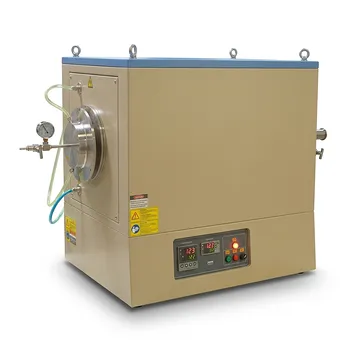
1100°C Large Diameter Quartz Tube Furnace with 24 Inch Heating Zone and Water Cooled Flanges

1200C High Throughput Multi Channel Tube Furnace with 50mm Quartz Tubes for Annealing and Material Phase Diagram Research
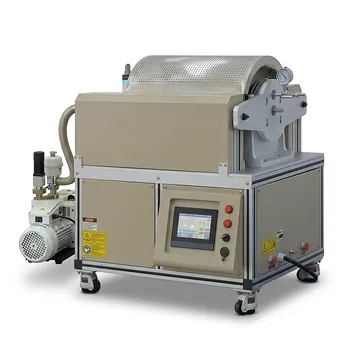
Automated 1200 C Tube Furnace for AI Material Research with 6 Inch OD and Sliding Flange

High Temperature 1700C Vertical Tube Furnace for Powder Spherification and Material Sintering

High Temperature Automated 5 Inch Tube Furnace for Autonomous Material Research and Advanced Laboratory R&D

1800C High Temperature Compact Vacuum Tube Furnace with 60mm OD Alumina Tube and Kanthal MoSi2 Heating Elements

High Temperature 1700C Tube Furnace with High Vacuum Turbomolecular Pump System and Multi Channel Mass Flow Controller Gas Mixer

1100C Tube Furnace with Vacuum Flange and Programmable Temperature Controller for Material Science and Industrial Heat Treatment

High Temperature 1700C Six Zone Split Tube Furnace with Alumina Tube and Water Cooled Flanges

High Temperature 1700C Benchtop Tube Furnace with 5 Inch Heating Zone High Purity Alumina Tube and Vacuum Sealing Flanges

High Vacuum Compact Tube Furnace 1200C with Integrated Turbo Pump System and 8 Inch Heating Zone
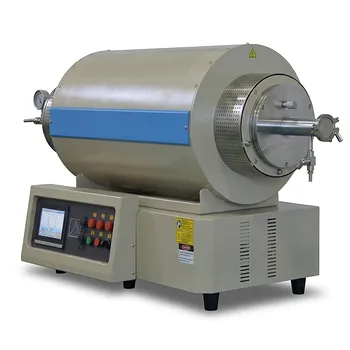
1200C Max Three Zone Tube Furnace 6 Inch OD Max with Tube and Flange

Compact Vertical Split Quartz Tube Furnace with Stainless Steel Vacuum Flanges for Rapid Thermal Quenching and Controlled Atmosphere Material Processing
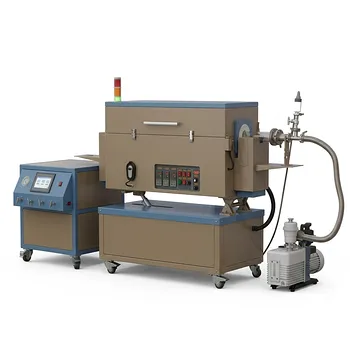
5 Inch Three Zone Rotary Tube Furnace with Integrated Gas Delivery System and 1200C Capability for Advanced Material CVD Processing