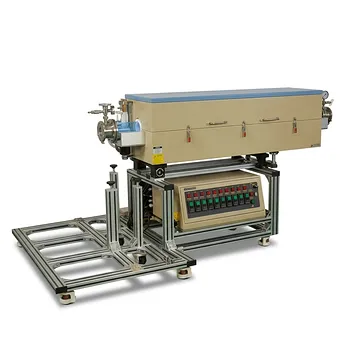
What role do tube furnaces & atmospheres play in uranium oxide nanorod prep? Precise Phase Control & Stability
Updated 3 months ago
In the ex-situ preparation of uranium oxide nanorods, high-temperature tube furnaces and reducing atmospheres serve as the primary mechanisms for phase control and chemical stability. Specifically, the furnace provides a precise thermal environment (typically 600 °C) required to decompose chemical precursors, while a Hydrogen/Argon ($H_2/Ar$) reducing atmosphere ensures the material reaches the $U_4O_9$ phase by preventing over-oxidation from trace environmental oxygen.
Core Takeaway: The combination of a stable thermal field and a controlled reducing atmosphere allows for the precise conversion of uranium precursors into specific oxide phases ($U_4O_9$) while maintaining the structural integrity necessary for nanorod formation.
The Role of the High-Temperature Tube Furnace
Precise Thermal Field for Precursor Decomposition
The tube furnace acts as a stable thermochemical reaction zone that facilitates the controlled decomposition of uranium-based precursors. At temperatures near 600 °C, the furnace provides the energy necessary to break down organic ligands or intermediate compounds without causing excessive particle growth.
Maintaining Uniformity and Morphology
The parabolic axial temperature distribution within the furnace tube is critical for ensuring that the nanorods develop a uniform crystal phase. This regulated heating prevents the particle coarsening and sintering that often occur at higher temperatures, ensuring the nanostructures retain their high surface area and reactivity.
Support for Large-Volume Heat Treatment
Unlike batch processing in standard ovens, tube furnaces allow for consistent phase evolution during long-term treatments. By using alumina crucibles within a quartz or ceramic tube, researchers can ensure a uniform thermal gradient across the entire sample, which is vital for achieving reproducible nanorod dimensions.
The Function of the Reducing Atmosphere
Achieving the $U_4O_9$ Stoichiometric Phase
The primary role of the $H_2/Ar$ mixed atmosphere is to guide the reduction of uranium precursors to the specific $U_4O_9$ oxidation state. Without this active reduction, the uranium would likely remain in, or revert to, higher-valence states that do not possess the desired nanorod characteristics.
Mitigation of Trace Oxygen Contamination
Even in high-vacuum environments, trace oxygen can compromise the purity of uranium oxides. The constant flow of a reducing gas mixture creates a protective "blanket" that neutralizes any residual oxygen, preventing the formation of unwanted secondary phases during the cooling process.
Regulating Reaction Thermodynamics
By strictly controlling the flow rate of pure hydrogen, the system maintains stable thermodynamic conditions throughout the reduction cycle. This precision allows for a one-step complete conversion of the precursor into the target oxide while inhibiting the formation of metallic uranium or over-reduced species.
Understanding the Trade-offs and Pitfalls
Temperature Sensitivity and Sintering
While 600 °C is often the target for $U_4O_9$ synthesis, exceeding this threshold can lead to excessive sintering. This causes nanorods to fuse together, destroying the distinct morphological advantages of the nanomaterial and reducing its effective surface area.
Atmospheric Purity and Flow Rate Risks
If the flow rate of the $H_2/Ar$ mixture is too low, incomplete reduction may occur, leaving the material in a mixed-valence state. Conversely, excessively high flow rates can cause thermal instability within the tube or lead to the inefficient use of expensive high-purity gases.
Safety Concerns with Hydrogen
Operating a tube furnace with hydrogen at high temperatures introduces significant safety risks, including potential combustion if the system is not properly purged. Maintaining a high-purity inert environment (typically Argon) before and after the reduction stage is a non-negotiable requirement for safe operation.
How to Apply This to Your Project
When configuring your synthesis environment, your technical parameters should align with your specific material requirements:
- If your primary focus is phase purity ($U_4O_9$): Prioritize the stability of the $H_2/Ar$ mix and ensure the furnace maintains a consistent 600 °C with minimal fluctuation.
- If your primary focus is preventing nanorod coarsening: Use the lowest effective temperature and a strictly regulated heating ramp to prevent particles from fusing.
- If your primary focus is industrial scalability: Utilize a tube furnace with a large uniform heating zone and automated gas flow controllers to ensure consistency across large batches.
Success in uranium oxide synthesis depends entirely on the synergy between precise thermal energy and a chemically active atmosphere.
Summary Table:
| Component | Key Role | Critical Parameter |
|---|---|---|
| Tube Furnace | Precise thermal decomposition & phase evolution | Uniform 600 °C thermal field |
| Reducing Atmosphere | Achieves $U_4O_9$ phase & prevents over-oxidation | High-purity $H_2/Ar$ flow rate |
| Morphology Control | Prevents sintering & nanorod coarsening | Controlled heating ramp rate |
| Safety Protocol | Mitigates hydrogen combustion risk | Inert gas (Argon) purging |
Optimize Your Nanomaterial Synthesis with THERMUNITS
Achieving precise phase control like the $U_4O_9$ stoichiometric state requires advanced thermal engineering. THERMUNITS is a leading manufacturer of high-performance laboratory equipment designed for the rigors of material science and industrial R&D.
Our comprehensive range of thermal solutions includes:
- Atmosphere & Vacuum Tube Furnaces: Perfect for controlled $H_2/Ar$ reduction and precise phase evolution.
- Advanced Systems: CVD/PECVD systems, Vacuum Induction Melting (VIM), and Hot Press furnaces.
- Versatile Lab Equipment: Muffle, Rotary, and Dental furnaces, alongside high-quality Thermal Elements.
Whether you are synthesizing uranium oxide nanorods or developing next-gen ceramics, we provide the stability, uniformity, and precision your research demands. Contact our technical experts today to discuss your specific heat treatment requirements!
References
- Luyao Zhang, Feng Yang. Directional growth and reconstruction of ultrafine uranium oxide nanorods within single-walled carbon nanotubes. DOI: 10.1039/d4sc03415e
Mentioned Products
- High Temperature Tube Furnace 1500C with Sliding Flanges and 50mm OD for Rapid Thermal Processing Fast Heating and Cooling
- High Temperature 1700C Tube Furnace with High Vacuum Turbomolecular Pump System and Multi Channel Mass Flow Controller Gas Mixer
- High Temperature 1700C Benchtop Tube Furnace with 5 Inch Heating Zone High Purity Alumina Tube and Vacuum Sealing Flanges
- 1750°C High Temperature Benchtop Vacuum Atmosphere Tube Furnace with Kanthal Super 1800 Heating Elements and 60mm Alumina Processing Tube
- Compact High Temperature 1600C Tube Furnace with 50mm Alumina Tube and Vacuum Flanges for Material Sintering
People Also Ask
- How are high-temperature tube furnaces utilized to repair etching damage? Precision Lattice Restoration Solutions
- What role does a high-temperature tube furnace play in the sulfidation heat treatment of CoS@C/MXene nanocomposites? Guide
- What core conditions does a high-temperature tube furnace provide for rGO aerogels? Mastering Precision Synthesis.
- How does precision tube furnace control influence CoFe nanoparticle formation? Master Your Bimetallic Synthesis.
- What role does a high-temperature tube furnace play in CVD synthesis of silicon nanowires? Master VLS Growth Precision.

Tech Team · ThermUnits
Last updated on Jun 03, 2026
Related Products
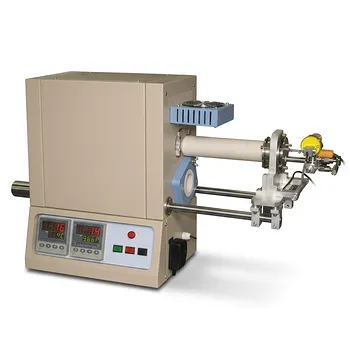
High Temperature Tube Furnace 1500C with Sliding Flanges and 50mm OD for Rapid Thermal Processing Fast Heating and Cooling

High Temperature 1700C Tube Furnace with High Vacuum Turbomolecular Pump System and Multi Channel Mass Flow Controller Gas Mixer

High Temperature 1700C Benchtop Tube Furnace with 5 Inch Heating Zone High Purity Alumina Tube and Vacuum Sealing Flanges

1750°C High Temperature Benchtop Vacuum Atmosphere Tube Furnace with Kanthal Super 1800 Heating Elements and 60mm Alumina Processing Tube

Compact High Temperature 1600C Tube Furnace with 50mm Alumina Tube and Vacuum Flanges for Material Sintering
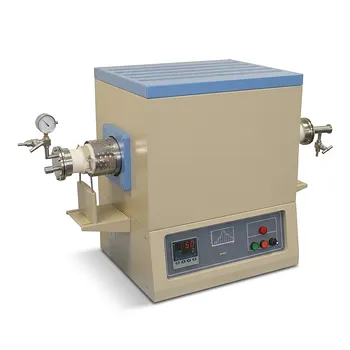
1700C High Temperature Alumina Tube Furnace with 18 Inch Heated Zone and Vacuum Sealing Flanges

1800C High Temperature Compact Vacuum Tube Furnace with 60mm OD Alumina Tube and Kanthal MoSi2 Heating Elements
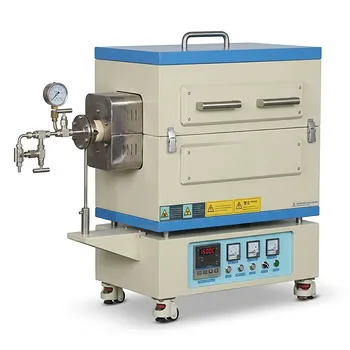
High Temperature Split Tube Furnace 1500C for Material Research Vacuum and Atmosphere Thermal Processing

High Temperature 1700C Vertical Tube Furnace for Powder Spherification and Material Sintering
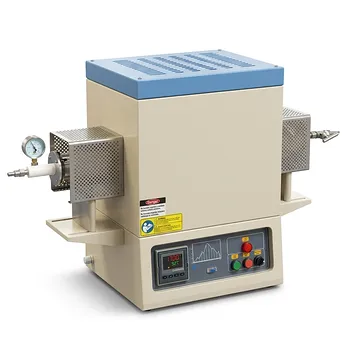
High Temperature Three Zone Tube Furnace 1700C with Alumina Tube and Water Cooled Flanges

High Temperature 1700C Six Zone Split Tube Furnace with Alumina Tube and Water Cooled Flanges
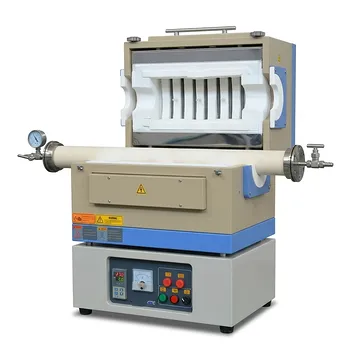
High Temperature 1600C Split Tube Furnace Vacuum Flanges Valves Optional 60mm 80mm Alumina Tube

High Temperature Automated 5 Inch Tube Furnace for Autonomous Material Research and Advanced Laboratory R&D

1100C Tube Furnace with Vacuum Flange and Programmable Temperature Controller for Material Science and Industrial Heat Treatment
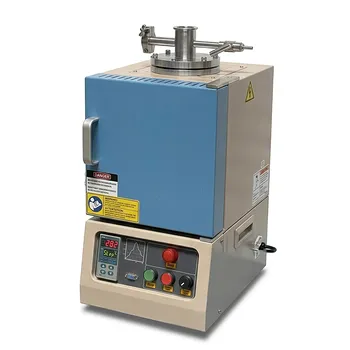
High Temperature Hybrid Muffle and Tube Furnace with Vacuum Capability and PID Control
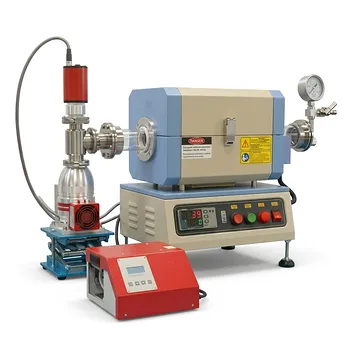
High Vacuum Compact Tube Furnace 1200C with Integrated Turbo Pump System and 8 Inch Heating Zone
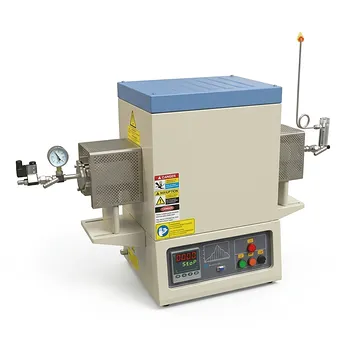
1700C Hydrogen Gas Tube Furnace with 60mm Alumina Process Tube and Integrated Hydrogen Safety Detector
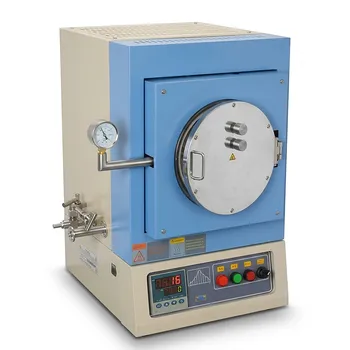
1100°C High Temperature Quartz Chamber Furnace 8 Inch OD with 7.6 Liter Capacity and Vacuum Atmosphere Capability
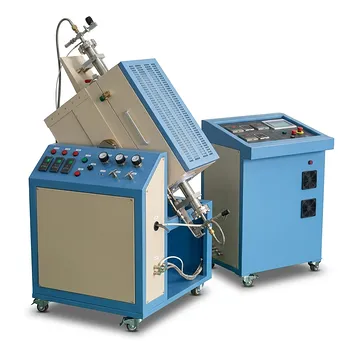
1100C High Pressure Rocking Tube Furnace with 2 Inch Super Alloy Processing Tube for Material Synthesis