What role does a controlled atmosphere tube furnace play during the sintering of aluminum-alumina composites? Optimize Bonding.
Updated 3 months ago
A controlled atmosphere tube furnace serves as the precise thermal and chemical regulator required for the solid-state diffusion bonding of aluminum and alumina composites. By maintaining temperatures strictly below the melting point of aluminum, the furnace provides continuous thermal energy to activate atomic diffusion, which facilitates chemical bonding between aluminum particles and the alumina reinforcement while eliminating interfacial gaps.
The primary role of the furnace is to facilitate densification and interfacial bonding by balancing thermal energy with a protective, oxygen-free environment, ensuring the composite achieves its intended mechanical properties without suffering from metal oxidation.
Activating Solid-State Diffusion and Bonding
Thermal Energy as a Catalyst
The furnace inputs steady thermal energy to the composite, which is essential for triggering the migration of atoms across particle boundaries. This process, known as solid-state diffusion, allows aluminum and alumina particles to fuse without the matrix ever reaching a liquid state.
Elimination of Interfacial Gaps
As atoms migrate, the gaps between the aluminum matrix and the ceramic alumina reinforcement are gradually filled. This reduction in porosity is critical for achieving a high-density material that can withstand mechanical stress.
Chemical Bond Formation
The precise heat allows for the formation of strong chemical bonds at the interface of the two materials. In some cases, this environment facilitates the development of intermetallic compounds or specific phases that block dislocation movement, significantly increasing the hardness of the final composite.
The Critical Role of Atmosphere Control
Prevention of Aluminum Oxidation
Aluminum has a high affinity for oxygen, especially at elevated sintering temperatures. The "controlled atmosphere" (typically utilizing Argon, Nitrogen, or a high vacuum) prevents the formation of an alumina scale on the aluminum particles, which would otherwise act as a barrier to diffusion.
Regulation of Oxygen Partial Pressure
By managing the gaseous environment, the furnace regulates oxygen partial pressure. This control is vital for maintaining the purity of the crystalline phases and preventing unintended chemical reactions that could embrittle the composite.
Removal of Volatile Impurities
At high temperatures, the furnace environment—particularly when under vacuum—facilitates the evaporation of residual impurities like paraffin or lubricants used during the initial pressing of the powder. Removing these volatiles is essential for preventing internal defects and gas pockets.
Precision Microstructure Management
Grain Boundary Migration
The furnace’s ability to maintain a constant "soak" temperature allows for grain boundary migration. This movement is what eventually closes off internal pores, leading to a refined and uniform microstructure.
Inhibiting Abnormal Grain Growth
High-precision temperature control systems follow strict heating and cooling curves (often measured in fractions of a degree per second). This precision prevents abnormal grain growth, ensuring the aluminum matrix maintains a fine-grained structure for optimal toughness.
Thermal Cycle Consistency
The tube furnace architecture ensures a uniform thermal zone. This consistency ensures that the entire composite part reaches the same density and mechanical strength, preventing internal stresses caused by thermal gradients.
Understanding the Trade-offs and Pitfalls
Temperature Sensitivity
If the furnace temperature exceeds the melting point of aluminum even slightly, the structural integrity of the composite is lost as the matrix flows. Conversely, if the temperature is too low, the diffusion rate will be insufficient to eliminate pores, resulting in a weak, brittle material.
Atmospheric Contamination
Even minor leaks in the tube seals can introduce trace oxygen. At sintering temperatures, this results in oxidative loss, where the aluminum matrix loses mass or develops a non-conductive oxide layer that ruins the material’s electrical or thermal properties.
Cooling Rate Internal Stresses
Cooling the composite too rapidly after sintering can induce thermal shock due to the different coefficients of thermal expansion between aluminum and alumina. This often leads to micro-cracking at the interface, undermining the very bonds created during the soaking phase.
Making the Right Choice for Your Goal
How to Apply This to Your Project
Depending on the specific requirements of your aluminum-alumina composite, your furnace parameters should be adjusted accordingly:
- If your primary focus is Maximum Density: Prioritize longer "soak" times at the highest safe temperature to ensure total pore elimination through volume diffusion.
- If your primary focus is High Interface Strength: Use a high-vacuum environment to ensure the aluminum surfaces are completely deoxidized before bonding begins.
- If your primary focus is Fine Grain Structure: Implement a fast heating rate and a controlled, moderate cooling curve to prevent grains from enlarging during the thermal cycle.
The controlled atmosphere tube furnace is ultimately the bridge between a loose mixture of powders and a high-performance structural material.
Summary Table:
| Function | Mechanism | Impact on Composite |
|---|---|---|
| Thermal Activation | Solid-state diffusion | Promotes interfacial bonding and densification |
| Atmosphere Control | Inert gas/Vacuum | Prevents aluminum oxidation and maintains purity |
| Impurity Removal | Volatile evaporation | Eliminates internal defects and gas pockets |
| Microstructure Mgmt | Precise cooling curves | Inhibits abnormal grain growth and thermal shock |
Elevate Your Material Research with THERMUNITS Precision
As a leading manufacturer of high-temperature laboratory equipment, THERMUNITS provides the advanced thermal processing solutions required for cutting-edge material science and industrial R&D. Our expertise ensures that your aluminum and alumina composites achieve maximum density and superior mechanical properties through precise atmospheric and temperature control.
Our comprehensive product range includes:
- Tube and Atmosphere Furnaces for controlled sintering environments.
- Vacuum, Muffle, and Hot Press Furnaces for versatile heat treatment.
- CVD/PECVD Systems, Rotary Kilns, and Vacuum Induction Melting (VIM) units.
- Dental Furnaces and Thermal Elements for specialized laboratory applications.
Don't let oxidation or inconsistent thermal zones compromise your results. Contact our experts today to find the ideal furnace solution for your application!
References
- Ahmad Amirul Mukmin Yusof, Kamarul-Azhar Kamarudin. Effect of Alumina as Reinforcement on the Mechanical and Physical Properties of Recycled AA6061 Aluminium. DOI: 10.37934/aram.126.1.7178
Mentioned Products
- 1200°C Atmosphere Controlled Automatic Bottom Loading Furnace with 6 Inch Quartz Tube
- Compact Vertical Split Quartz Tube Furnace with Stainless Steel Vacuum Flanges for Rapid Thermal Quenching and Controlled Atmosphere Material Processing
- Compact Hybrid Muffle and Tube Furnace for 1000C Controlled Atmosphere Laboratory Material Sintering
- 1200C Hybrid Muffle and Tube Furnace for Material Research with Dual Atmosphere Control Quartz Tubes
- 1650C High Temperature Atmosphere Controlled Box Furnace with 65L Chamber for Advanced Material Sintering and Industrial Heat Treatment
People Also Ask
- Why is a tube furnace required for FGM-PhG structural color ceramics? Key to Carbon Preservation & Vibrant Color
- Why is an atmosphere-controlled tube furnace required for the pre-sulfidation of NiMo/gamma-Al2O3 catalysts?
- Why is an atmosphere-controlled tube furnace required for 800 °C CNF annealing? Essential for Oxidative Protection.
- Why is an atmosphere-controlled tube furnace required for [email protected]/C preparation? Key for Purity & Structure
- Why is an atmosphere-controlled tube furnace required for single-atom sensor calcination? Ensure Atomic Dispersion.

Tech Team · ThermUnits
Last updated on Jun 02, 2026
Related Products
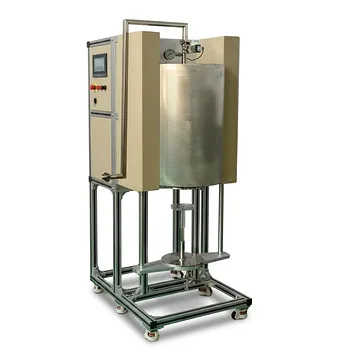
1200°C Atmosphere Controlled Automatic Bottom Loading Furnace with 6 Inch Quartz Tube

Compact Vertical Split Quartz Tube Furnace with Stainless Steel Vacuum Flanges for Rapid Thermal Quenching and Controlled Atmosphere Material Processing
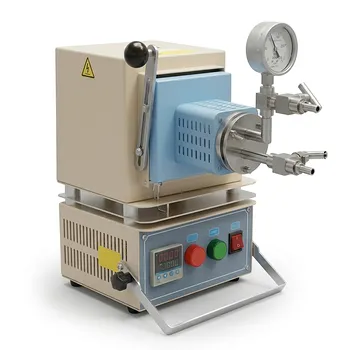
Compact Hybrid Muffle and Tube Furnace for 1000C Controlled Atmosphere Laboratory Material Sintering
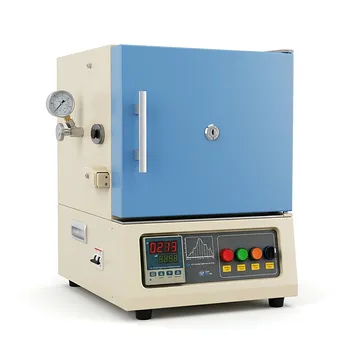
1200C Hybrid Muffle and Tube Furnace for Material Research with Dual Atmosphere Control Quartz Tubes
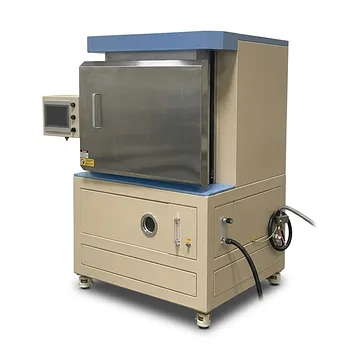
1650C High Temperature Atmosphere Controlled Box Furnace with 65L Chamber for Advanced Material Sintering and Industrial Heat Treatment

1700C High Temperature Alumina Tube Furnace with 18 Inch Heated Zone and Vacuum Sealing Flanges
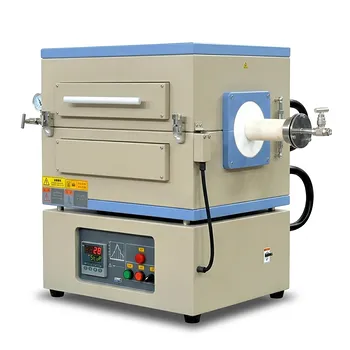
1500°C Split Tube Furnace with Alumina Tube and Vacuum Sealing Flanges for Material Research
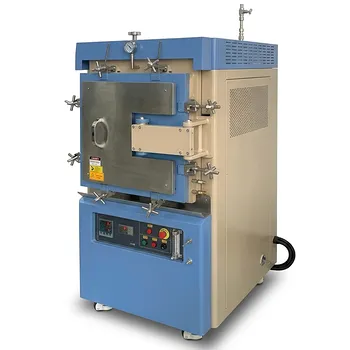
Atmosphere Controlled Muffle Furnace 1700C Maximum Temperature 80L High Capacity Vacuum Inert Gas Box Furnace
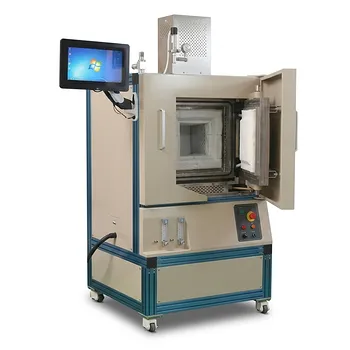
High Temperature Oxygen and Inert Atmosphere Controlled Furnace 8 Liter 1700C Sintering System for Advanced Materials RD
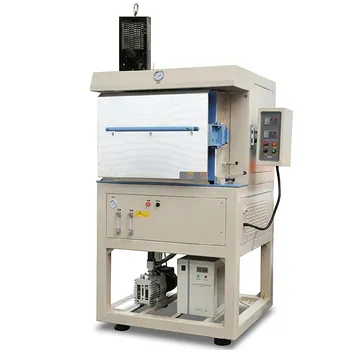
1200C Hydrogen Atmosphere Box Furnace with 5 Heated Sides and 64L Chamber

Vertical 1700C Vacuum and Atmosphere Tube Furnace with 80mm Alumina Tube

Three Zone Tube Furnace with 11 Inch or 15 Inch Quartz Tube and Hinged Flanges for Vacuum Atmosphere Heat Treatment
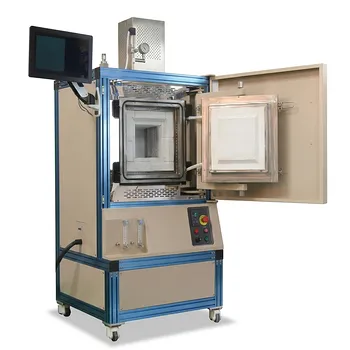
High Temperature Hydrogen Atmosphere Box Furnace 1650C Max Reducing Environment Material Synthesis System 8x8x8 Chamber

High Temperature 1700C Tube Furnace with High Vacuum Turbomolecular Pump System and Multi Channel Mass Flow Controller Gas Mixer
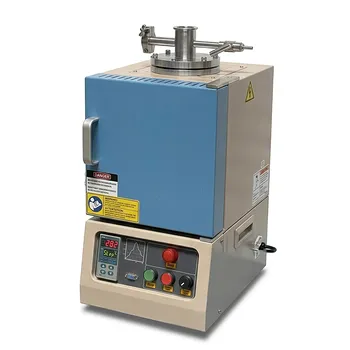
High Temperature Hybrid Muffle and Tube Furnace with Vacuum Capability and PID Control
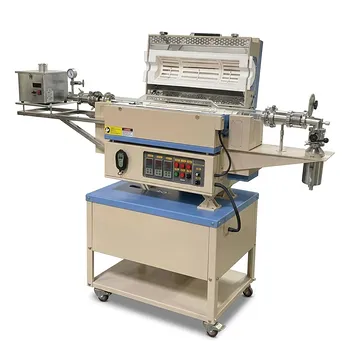
5 Inch Rotary Tube Furnace with Automatic Feeding and Receiving System 1200C Three Zone CVD Powder Processing
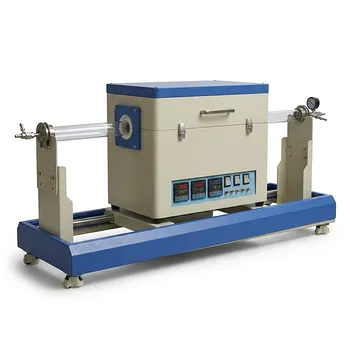
Double Temperature Zone Double Cover Tube Furnace for High Temperature CVD and Vacuum Annealing
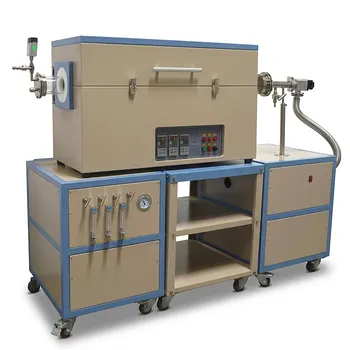
Three Zone Quartz Tube Furnace with 3 Channel Gas Mixer Vacuum Pump and Anti Corrosive Vacuum Gauge
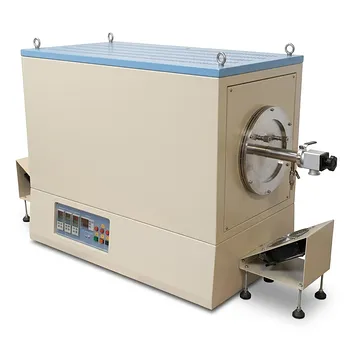
Four Zone Tube Furnace 1100C with 600mm Large Diameter Quartz Tube and Vacuum Flanges
