What role does a controlled atmosphere tube furnace play in Rh–WNO catalyst synthesis? Precision Thermal Engineering.
Updated 3 months ago
In the synthesis of Rh–WNO catalysts, the tube furnace acts as a precision reactor that regulates both thermal energy and the chemical environment. It enables the direct execution of multi-stage temperature profiles—specifically 70 °C pretreatment and 600 °C nitridation—to ensure the proper conversion of precursors into a crystalline tungsten oxynitride support while simultaneously anchoring rhodium ions onto its surface.
Core Takeaway: The controlled atmosphere tube furnace is the critical tool for orchestrating the phase transformation of Rh–WNO catalysts, balancing the decomposition of nitriding agents with the precise reduction of metal ions in a stable, oxygen-free environment.
The Role of Programmed Thermal Profiles
Regulating Reaction Kinetics
The furnace provides a precise temperature field that dictates the speed and sequence of chemical reactions. By controlling the heat, researchers can manage the interaction between urea decomposition products and metal precursors, ensuring the support structure forms correctly before the active sites are finalized.
Facilitating Multi-Stage Transformations
A programmed cycle allows for a 70 °C pretreatment phase followed by a high-temperature 600 °C nitridation. This progression is essential for removing volatiles early on and then providing the high activation energy required to synthesize highly crystalline tungsten oxynitride structures.
Enabling In-Situ Metal Anchoring
During the high-temperature phase, the furnace environment facilitates the in-situ reduction of rhodium ions. This process "anchors" the rhodium directly onto the carrier surface, creating a stable and highly active catalytic site that is less prone to leaching or sintering.
Achieving Structural Integrity through Atmosphere Control
Preventing Unwanted Oxidation
The "controlled atmosphere" aspect is vital for excluding oxygen, which would otherwise convert the tungsten into simple oxides rather than the desired oxynitride. By maintaining a stable flow of protective or reactive gases, the furnace ensures the chemical purity of the final Rh–WNO catalyst.
Managing Volatile Intermediates
As precursors like urea decompose, they release gases that must react with the metal source to form the nitride lattice. The furnace's stable gas flow environment ensures these decomposition products are consistently available to the precursors rather than accumulating or escaping unevenly.
Inducing Catalytic Defects
Precise control over the atmosphere can be used to induce oxygen vacancies within the support structure. These vacancies are critical for accelerating reaction kinetics, such as hydrogen insertion and extraction, which are often the goal of these specific catalyst designs.
Understanding the Trade-offs and Pitfalls
Gradient Risk in Large Samples
While tube furnaces offer high precision, the temperature field uniformity can fluctuate if the sample size is too large or the gas flow is too high. This can lead to "hot spots" where the nitridation overshoots, potentially causing the rhodium nanoparticles to aggregate.
Atmospheric Contamination
Even minute traces of oxygen or moisture can compromise the tungsten oxynitride support. Maintaining a strict, high-purity gas environment is non-negotiable; otherwise, the catalyst may revert to a less active oxide phase, negating the benefits of the 600 °C treatment.
Heating Rate Sensitivity
Increasing the temperature too rapidly can lead to incomplete urea decomposition or structural collapse of the carbon skeleton. A slow, programmed ramp is necessary to maintain the high porosity and surface functional groups required for high catalyst performance.
How to Apply This to Your Project
When utilizing a tube furnace for Rh–WNO synthesis, your settings must align with your specific structural goals and the limitations of your precursors.
- If your primary focus is phase purity: Prioritize a slow ramp rate to 600 °C under a strict inert or nitriding atmosphere to ensure the tungsten oxynitride crystal lattice forms without oxide contamination.
- If your primary focus is active site dispersion: Focus on the pretreatment stage (70 °C) and initial moisture removal to ensure rhodium ions are uniformly distributed before the high-temperature anchoring begins.
- If your primary focus is conductivity and stability: Ensure the atmosphere is entirely oxygen-deficient to prevent the oxidative combustion of any carbon-based components or support lattices.
By masterfully controlling both the thermal gradient and the chemical atmosphere, you transform a simple heating element into a sophisticated tool for molecular engineering.
Summary Table:
| Furnace Role | Specific Function in Rh–WNO Synthesis | Desired Outcome |
|---|---|---|
| Temperature Programming | Executes 70°C pretreatment and 600°C nitridation | Crystalline tungsten oxynitride support formation |
| Atmosphere Control | Excludes oxygen and manages urea decomposition gases | Prevents oxidation; ensures phase purity and vacancies |
| Metal Anchoring | Facilitates in-situ reduction of rhodium ions | Highly active and stable catalytic sites |
| Ramp Rate Control | Prevents rapid decomposition of carbon/precursors | Maintains high porosity and structural integrity |
Elevate Your Catalyst Research with THERMUNITS
Precision is paramount in synthesizing high-performance Rh–WNO catalysts. As a global leader in high-temperature laboratory equipment, THERMUNITS provides the advanced thermal processing solutions required for material science and industrial R&D.
Whether you need a specialized Controlled Atmosphere Tube Furnace, CVD/PECVD systems, or Vacuum Induction Melting (VIM) furnaces, our equipment ensures uniform heating and strict atmospheric control to prevent oxidation and maximize active site anchoring.
Ready to optimize your heat treatment process?
Contact THERMUNITS Today to discuss your specific catalyst synthesis needs and discover our full range of Muffle, Atmosphere, Rotary, and Hot Press furnaces.
References
- Ben Zhang, Shuang Li. Interfacial electron-engineered tungsten oxynitride interconnected rhodium layer for highly efficient all-pH-value hydrogen production. DOI: 10.1039/d3ta06856k
Mentioned Products
- 1200°C Atmosphere Controlled Automatic Bottom Loading Furnace with 6 Inch Quartz Tube
- Compact Vertical Split Quartz Tube Furnace with Stainless Steel Vacuum Flanges for Rapid Thermal Quenching and Controlled Atmosphere Material Processing
- Compact Hybrid Muffle and Tube Furnace for 1000C Controlled Atmosphere Laboratory Material Sintering
- 1200C Hybrid Muffle and Tube Furnace for Material Research with Dual Atmosphere Control Quartz Tubes
- 1650C High Temperature Atmosphere Controlled Box Furnace with 65L Chamber for Advanced Material Sintering and Industrial Heat Treatment
People Also Ask
- Why is a tube furnace required for FGM-PhG structural color ceramics? Key to Carbon Preservation & Vibrant Color
- Why is an atmosphere-controlled tube furnace required for the pre-sulfidation of NiMo/gamma-Al2O3 catalysts?
- Why is an atmosphere-controlled tube furnace required for 800 °C CNF annealing? Essential for Oxidative Protection.
- Why is an atmosphere-controlled tube furnace required for [email protected]/C preparation? Key for Purity & Structure
- Why is an atmosphere-controlled tube furnace required for single-atom sensor calcination? Ensure Atomic Dispersion.

Tech Team · ThermUnits
Last updated on Jun 03, 2026
Related Products
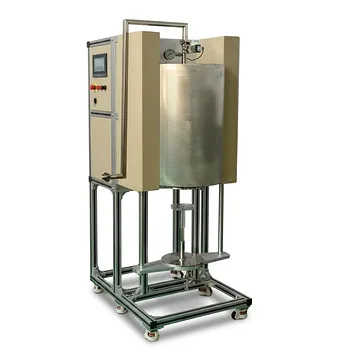
1200°C Atmosphere Controlled Automatic Bottom Loading Furnace with 6 Inch Quartz Tube
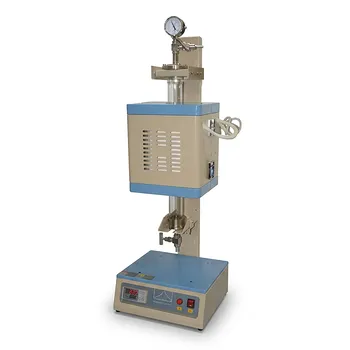
Compact Vertical Split Quartz Tube Furnace with Stainless Steel Vacuum Flanges for Rapid Thermal Quenching and Controlled Atmosphere Material Processing
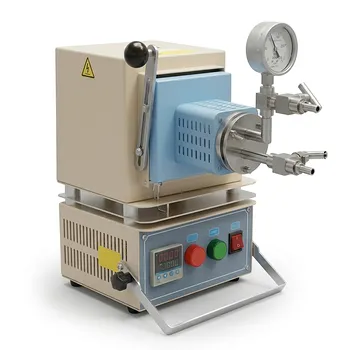
Compact Hybrid Muffle and Tube Furnace for 1000C Controlled Atmosphere Laboratory Material Sintering
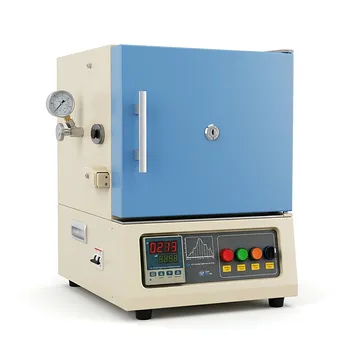
1200C Hybrid Muffle and Tube Furnace for Material Research with Dual Atmosphere Control Quartz Tubes
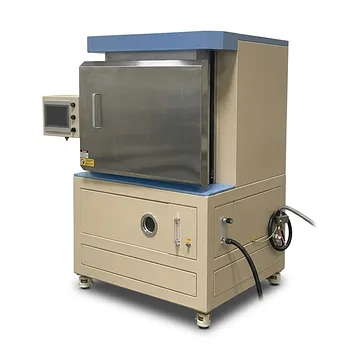
1650C High Temperature Atmosphere Controlled Box Furnace with 65L Chamber for Advanced Material Sintering and Industrial Heat Treatment
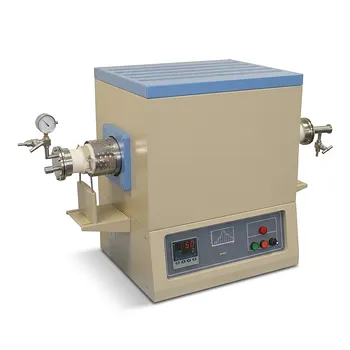
1700C High Temperature Alumina Tube Furnace with 18 Inch Heated Zone and Vacuum Sealing Flanges
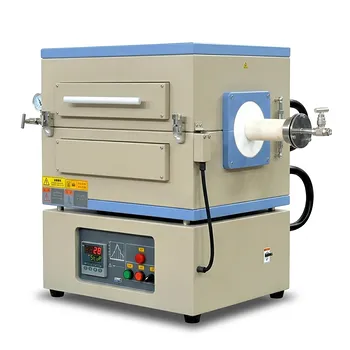
1500°C Split Tube Furnace with Alumina Tube and Vacuum Sealing Flanges for Material Research
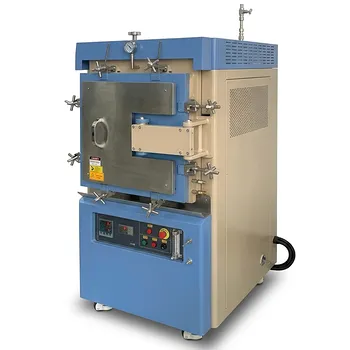
Atmosphere Controlled Muffle Furnace 1700C Maximum Temperature 80L High Capacity Vacuum Inert Gas Box Furnace
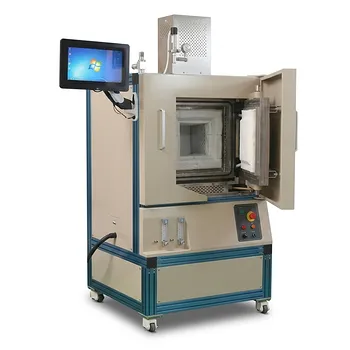
High Temperature Oxygen and Inert Atmosphere Controlled Furnace 8 Liter 1700C Sintering System for Advanced Materials RD
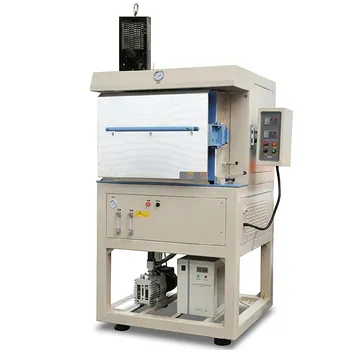
1200C Hydrogen Atmosphere Box Furnace with 5 Heated Sides and 64L Chamber

Vertical 1700C Vacuum and Atmosphere Tube Furnace with 80mm Alumina Tube
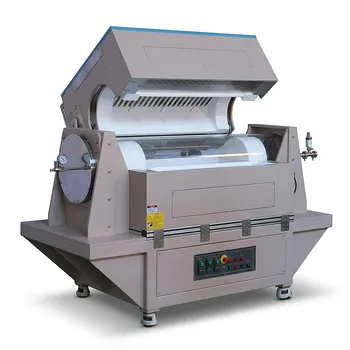
Three Zone Tube Furnace with 11 Inch or 15 Inch Quartz Tube and Hinged Flanges for Vacuum Atmosphere Heat Treatment
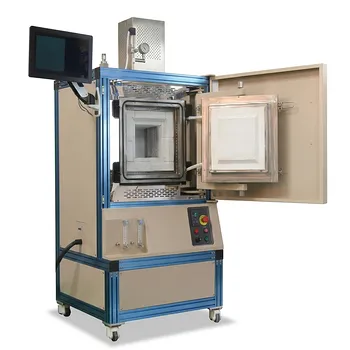
High Temperature Hydrogen Atmosphere Box Furnace 1650C Max Reducing Environment Material Synthesis System 8x8x8 Chamber

High Temperature 1700C Tube Furnace with High Vacuum Turbomolecular Pump System and Multi Channel Mass Flow Controller Gas Mixer
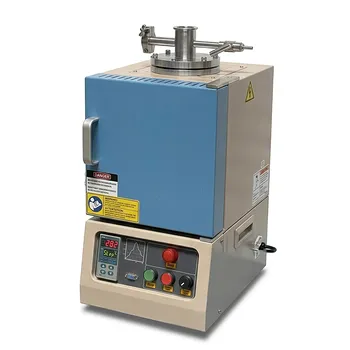
High Temperature Hybrid Muffle and Tube Furnace with Vacuum Capability and PID Control
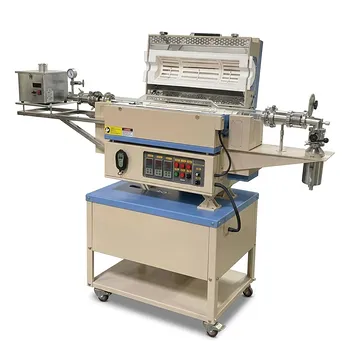
5 Inch Rotary Tube Furnace with Automatic Feeding and Receiving System 1200C Three Zone CVD Powder Processing
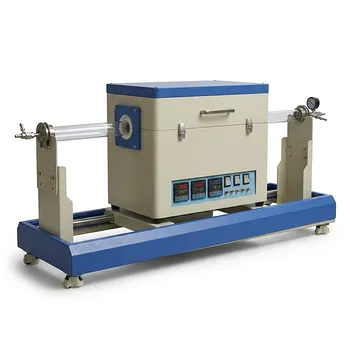
Double Temperature Zone Double Cover Tube Furnace for High Temperature CVD and Vacuum Annealing
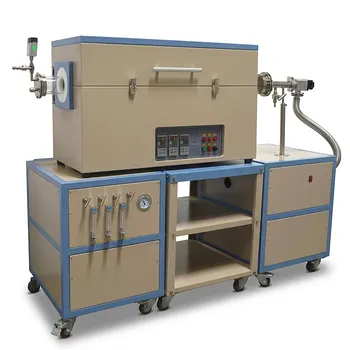
Three Zone Quartz Tube Furnace with 3 Channel Gas Mixer Vacuum Pump and Anti Corrosive Vacuum Gauge
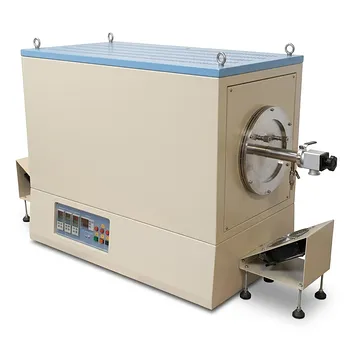
Four Zone Tube Furnace 1100C with 600mm Large Diameter Quartz Tube and Vacuum Flanges
