What role does a high-power tube resistance furnace play in the manufacturing of high-alumina refractory bricks? - Key Functions
Updated 3 months ago
The high-power tube resistance furnace is the fundamental tool for achieving the structural densification required in high-alumina refractory bricks. It provides a sustained, high-temperature environment—often reaching up to 1600°C—that triggers the solid-state sintering process. This thermal energy allows raw alumina particles to bond at a molecular level, transforming a fragile "green body" into a high-strength industrial ceramic.
Core Takeaway: A high-power tube furnace dictates the final mechanical properties of high-alumina bricks by precisely controlling grain growth and pore elimination. Without its rigorous temperature uniformity and atmospheric control, the bricks would lack the compressive strength and thermal stability needed for heavy industrial use.
The Mechanics of Solid-State Sintering
Driving Grain Boundary Migration
At temperatures near 1600°C, the furnace provides the thermal energy necessary for grain boundary migration. This process involves the movement of atoms across the boundaries of individual alumina particles, causing them to merge and grow.
Eliminating Porosity through Diffusion
The furnace facilitates pore elimination through a process of diffusion. As the material is held at high heat, the spaces between particles are filled, resulting in a dense, non-porous ceramic structure that can withstand extreme environments.
Establishing Structural Integrity
By controlling the sintering degree, the furnace directly influences the final compressive strength of the brick. This ensures that the refractory material can support heavy loads in furnace linings or kilns without collapsing or deforming.
Precision Control and Material Integrity
Managing the Heating Curve
Precise heating curve control is essential to prevent thermal shock and internal stresses. The furnace allows for a gradual increase and decrease in temperature, ensuring that the internal and external layers of the brick expand and contract at a uniform rate.
Atmospheric Protection and Purity
High-power tube furnaces often support the introduction of inert gases, such as argon, to create a controlled environment. This prevents the oxidation of raw materials and ensures that the final product reaches the highest possible purity levels.
The Role in Thermal Debinding
Before the final sintering, the furnace is used for the thermal debinding stage. This involves a staged heating program that allows organic resins, dispersants, and binders to decompose and exit the green body slowly, preventing defects like cracks or bloating.
Understanding the Trade-offs
Limitations in Volume and Throughput
While tube furnaces offer unmatched precision, they are often limited by chamber size. For mass-scale production of standard bricks, they may be less efficient than large-scale tunnel kilns, making them better suited for high-specification or specialized refractory components.
Energy Consumption and Ramp Rates
Operating at 1600°C requires significant power, and rapid heating rates can be detrimental to the furnace heating elements. Users must balance the need for speed with the longevity of the furnace components to maintain cost-effectiveness.
Sensitivity to Contamination
Because the tube environment is enclosed, any volatized impurities from the brick can settle on the tube walls or heating elements. This requires regular maintenance and "burn-out" cycles to ensure that subsequent batches are not contaminated by residual materials.
How to Apply This to Your Manufacturing Goal
Making the Right Choice for Your Goal
Choosing the right furnace settings and atmosphere is critical to the performance of the final refractory product.
- If your primary focus is Maximum Compressive Strength: Prioritize longer "soak times" at peak temperature to ensure complete grain boundary migration and total pore elimination.
- If your primary focus is Dimensional Accuracy: Focus on a highly controlled cooling phase to prevent warping or internal micro-cracks during the material's contraction.
- If your primary focus is High-Purity Applications: Utilize a vacuum-sealed tube or a constant flow of high-purity argon to prevent any interaction with atmospheric oxygen or nitrogen.
By mastering the thermal environment of the high-power tube furnace, manufacturers can produce high-alumina bricks that meet the most demanding thermal and mechanical specifications.
Summary Table:
| Stage/Process | Function & Effect | Key Parameter |
|---|---|---|
| Sintering | Facilitates grain boundary migration & pore elimination | Temperatures up to 1600°C |
| Thermal Debinding | Decomposes organic resins and binders to prevent cracks | Precise staged heating |
| Atmospheric Control | Prevents oxidation and ensures high material purity | Inert gas (Argon) flow |
| Controlled Cooling | Prevents thermal shock and ensures dimensional accuracy | Managed cooling curve |
Elevate Your Refractory Research with THERMUNITS
Achieving the perfect densification and structural integrity for high-alumina bricks requires precision thermal control. As a leading manufacturer of high-temperature laboratory equipment, THERMUNITS provides the advanced tools you need for material science and industrial R&D.
Our comprehensive range includes:
- High-Power Tube & Rotary Furnaces for specialized sintering.
- Muffle, Vacuum, and Atmosphere Furnaces for versatile heat treatment.
- CVD/PECVD & Vacuum Induction Melting (VIM) systems for advanced material synthesis.
- Hot Press & Dental Furnaces and high-quality Thermal Elements.
Contact us today to discover how our high-performance thermal solutions can optimize your manufacturing results and ensure superior material properties.
References
- Badan Riset dan Inovasi Nasional, Fakultas Teknik Kimia, Universitas Jenderal Achmad Yani. Optimasi persen binder, beban kompaksi, dan suhu sintering dalam pembuatan batu bata tinggi alumina menggunakan aplikasi RSM (response surface methodology). DOI: 10.30556/jtmb.vol20.no1.2024.1522
Mentioned Products
- 1100C High Pressure Rocking Tube Furnace with 2 Inch Super Alloy Processing Tube for Material Synthesis
- Compact High Temperature 1600C Tube Furnace with 50mm Alumina Tube and Vacuum Flanges for Material Sintering
- High Temperature 1700C Tube Furnace with High Vacuum Turbomolecular Pump System and Multi Channel Mass Flow Controller Gas Mixer
- High Temperature Tube Furnace 1500C with Sliding Flanges and 50mm OD for Rapid Thermal Processing Fast Heating and Cooling
- High Temperature Automated 5 Inch Tube Furnace for Autonomous Material Research and Advanced Laboratory R&D
People Also Ask
- Why is a high-pressure tube furnace required for the nitriding process of Fe-Cr-N alloys? Enhance Phase Stability
- What is the function of a high-temperature tube furnace in the synthesis of graphene oxide? Mastering LPCVD Processes
- Pt2CoM synthesis: High-temp tube furnace conditions (1000°C & 5% H2/Ar) for L10 intermetallic catalysts.
- What core conditions does a high-temperature tube furnace provide for rGO aerogels? Mastering Precision Synthesis.
- Why is it necessary to introduce steam into a high-temperature tube furnace during ACNN activation? Enhance Porosity.

Tech Team · ThermUnits
Last updated on Jun 03, 2026
Related Products
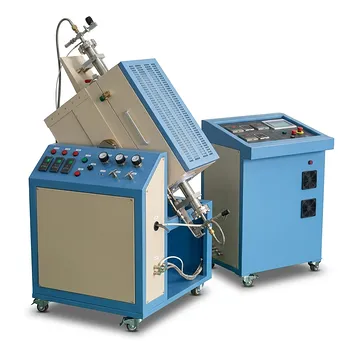
1100C High Pressure Rocking Tube Furnace with 2 Inch Super Alloy Processing Tube for Material Synthesis

Compact High Temperature 1600C Tube Furnace with 50mm Alumina Tube and Vacuum Flanges for Material Sintering

High Temperature 1700C Tube Furnace with High Vacuum Turbomolecular Pump System and Multi Channel Mass Flow Controller Gas Mixer
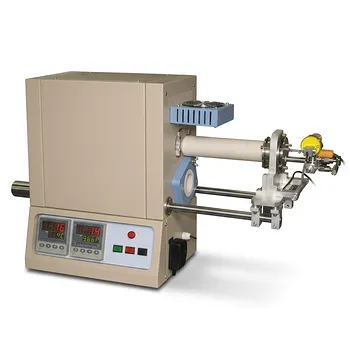
High Temperature Tube Furnace 1500C with Sliding Flanges and 50mm OD for Rapid Thermal Processing Fast Heating and Cooling

High Temperature Automated 5 Inch Tube Furnace for Autonomous Material Research and Advanced Laboratory R&D
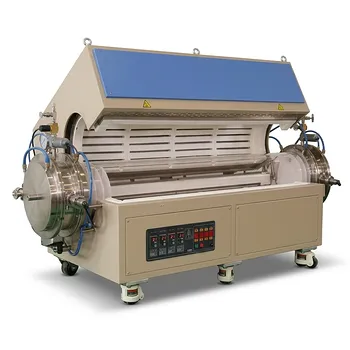
1200C Max Four Zone Split Tube Furnace with Optional Large Diameter Quartz Tubes
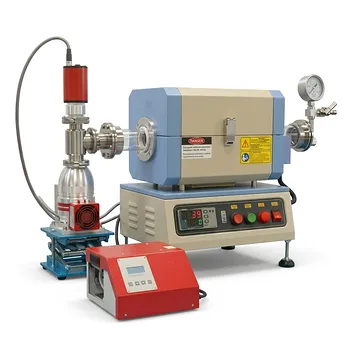
High Vacuum Compact Tube Furnace 1200C with Integrated Turbo Pump System and 8 Inch Heating Zone

High Temperature 1700C Vertical Tube Furnace for Powder Spherification and Material Sintering
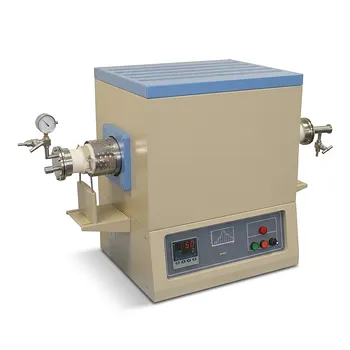
1700C High Temperature Alumina Tube Furnace with 18 Inch Heated Zone and Vacuum Sealing Flanges

High Temperature 1700C Benchtop Tube Furnace with 5 Inch Heating Zone High Purity Alumina Tube and Vacuum Sealing Flanges

High Temperature 1700C Six Zone Split Tube Furnace with Alumina Tube and Water Cooled Flanges
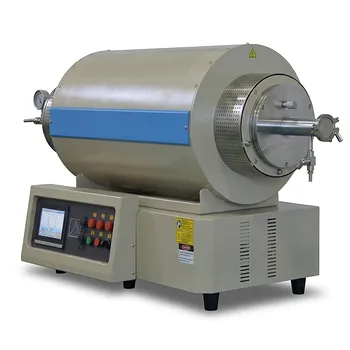
1200C Max Three Zone Tube Furnace 6 Inch OD Max with Tube and Flange
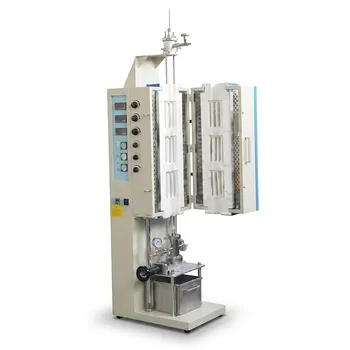
High Temperature Dual Zone Tube Furnace for Material Science Research and Professional Thermal Processing
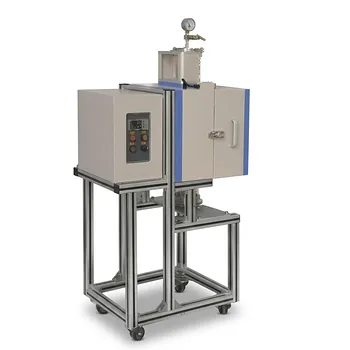
1200°C 5 Inch Vertical Quartz Tube Furnace with Stainless Steel Vacuum Flanges

1800C High Temperature Compact Vacuum Tube Furnace with 60mm OD Alumina Tube and Kanthal MoSi2 Heating Elements
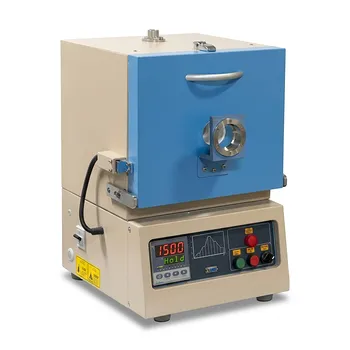
1500C Hybrid Muffle Tube Furnace 1.7L Box with 2 Inch Mullite Tube and Programmable PID Controller
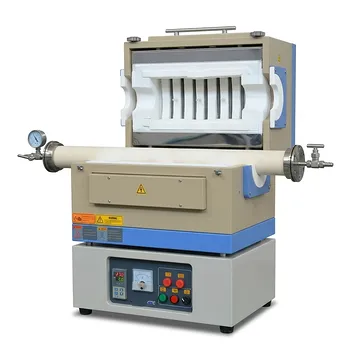
High Temperature 1600C Split Tube Furnace Vacuum Flanges Valves Optional 60mm 80mm Alumina Tube
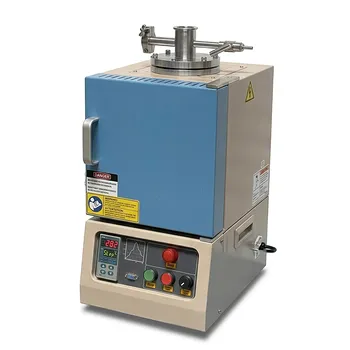
High Temperature Hybrid Muffle and Tube Furnace with Vacuum Capability and PID Control

1100C Tube Furnace with Vacuum Flange and Programmable Temperature Controller for Material Science and Industrial Heat Treatment
