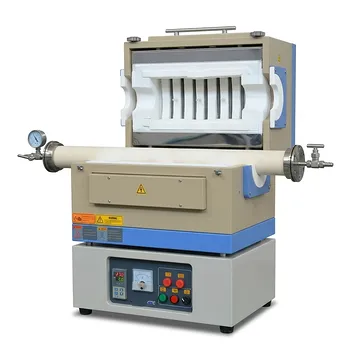
What role does a high-temperature tube atmosphere furnace play in the solid-state synthesis of CaGa4O7:Mn2+ phosphor?
Updated 3 months ago
In the synthesis of $\text{CaGa}_4\text{O}_7\text{:Mn}^{2+}$ phosphor, the high-temperature tube atmosphere furnace acts as the "reaction chamber" that dictates the material's final crystal structure and luminescent efficiency. By providing a stable thermal environment of approximately 1573 K and a controlled argon atmosphere, the furnace enables precursors to react and ensures manganese ions occupy the correct positions within the host lattice without oxidizing.
Core Takeaway: The high-temperature tube furnace is essential for providing the specific thermal energy and inert environment required to facilitate atomic diffusion and maintain the divalent state of manganese ions, which is the foundation of the phosphor's light-emitting capabilities.
Facilitating Complex Solid-State Reactions
Driving Atomic Diffusion and Phase Formation
The primary role of the furnace is to provide the high thermal energy—typically 1573 K—required to initiate solid-state chemical reactions between precursors. This heat facilitates atomic diffusion, allowing different chemical components to migrate and form a stable $\text{CaGa}_4\text{O}_7$ crystal lattice.
Ensuring Lattice Integrity and Crystallinity
High-temperature treatment promotes the growth of well-ordered crystals and the elimination of structural defects. A stable thermal field is necessary to ensure the material reaches the correct phase formation, which directly correlates to how efficiently the phosphor can eventually emit light.
Precision Control of Ionic Substitution
Stabilizing the Dopant Ions
For the phosphor to function, $\text{Mn}^{2+}$ ions must successfully infiltrate the host lattice and occupy specific $\text{Ca}^{2+}$ sites. The precision of the tube furnace’s temperature control ensures that these trace ions are incorporated stably into the structure.
Defining Luminescent Properties
The specific placement of manganese within the lattice determines its energy transitions. Without the precise thermal regulation provided by the furnace, the dopant might not integrate correctly, leading to poor color purity or low quantum efficiency.
Maintaining the Protective Atmosphere
Preventing Manganese Oxidation
Manganese is highly sensitive to the surrounding environment and can easily oxidize into higher valence states at high temperatures. The furnace’s sealed tube design allows for the introduction of argon, an inert gas that prevents oxygen from reacting with the manganese ions.
Regulating the Valence State
To achieve the desired luminescence, manganese must remain in its divalent state ($\text{Mn}^{2+}$). By excluding oxygen and maintaining a controlled atmosphere, the furnace ensures that the manganese does not shift to non-fluorescent or deep-red emitting states (like $\text{Mn}^{4+}$) that would alter the material's intended performance.
Understanding the Trade-offs and Pitfalls
Temperature Precision vs. Phase Purity
Even slight fluctuations in the targeted 1573 K environment can lead to the formation of secondary, unwanted phases. If the temperature is too low, the reaction remains incomplete; if too high, the material may sinter excessively or melt, degrading its optical properties.
Atmosphere Purity and Oxidation Risks
The effectiveness of the argon atmosphere depends entirely on the airtight integrity of the furnace tube. Any leak that introduces ambient oxygen can cause the unnecessary oxidation of $\text{Mn}^{2+}$, effectively neutralizing the phosphor's ability to emit the specific light spectrum required for its application.
How to Apply These Principles to Your Synthesis
To optimize the synthesis of luminescent materials like $\text{CaGa}_4\text{O}_7\text{:Mn}^{2+}$, consider these strategic focuses:
- If your primary focus is Maximum Luminous Intensity: Ensure the furnace maintains a long, stable holding period at 1573 K to maximize crystallinity and eliminate all structural defects.
- If your primary focus is Correct Color Emission: Prioritize the integrity of the argon flow and the airtightness of the tube to prevent manganese from shifting to an undesired valence state.
- If your primary focus is Material Uniformity: Use a programmed cooling cycle within the furnace to prevent internal stresses and ensure a homogenous phase across the entire sample.
Mastering the precise balance of thermal energy and atmospheric control is the definitive factor in transforming raw precursors into a high-performance, functional phosphor.
Summary Table:
| Key Parameter | Requirement | Furnace Role & Benefit |
|---|---|---|
| Temperature | 1573 K (Stable) | Facilitates atomic diffusion & phase formation |
| Atmosphere | Inert Argon Gas | Prevents Mn2+ oxidation to non-fluorescent states |
| Valence Control | Divalent Mn2+ | Maintains correct ionic state for light emission |
| Crystallinity | Well-ordered Lattice | Eliminates structural defects for higher efficiency |
| Sealing | Airtight Tube | Ensures atmosphere purity & prevents oxygen leaks |
Maximize Your Material Research Precision with THERMUNITS
Are you aiming for perfect phase purity and superior luminescent performance? THERMUNITS is a leading manufacturer of high-temperature laboratory equipment, providing the advanced thermal control necessary for cutting-edge material science and industrial R&D.
Our comprehensive range of solutions includes:
- Tube & Atmosphere Furnaces: Perfect for specialized phosphor synthesis and inert gas processing.
- Vacuum & Muffle Furnaces: Engineered for high-uniformity heat treatment.
- Advanced Systems: Including CVD/PECVD, Rotary, Hot Press, and Vacuum Induction Melting (VIM) furnaces.
Elevate your laboratory outcomes with equipment built for precision. Contact a THERMUNITS Expert Today to find the ideal thermal solution for your specific requirements!
References
- Yiqian Tang, Juncheng Zhang. Dynamic multicolor emissions of multimodal phosphors by Mn2+ trace doping in self-activated CaGa4O7. DOI: 10.1038/s41467-024-47431-0
Mentioned Products
- 1750°C High Temperature Benchtop Vacuum Atmosphere Tube Furnace with Kanthal Super 1800 Heating Elements and 60mm Alumina Processing Tube
- High Temperature 1200C Split Tube Furnace for CVD Research and Vacuum Atmosphere Heat Treatment
- High Temperature Split Tube Furnace 1500C for Material Research Vacuum and Atmosphere Thermal Processing
- 1700C High Temperature Alumina Tube Furnace with 18 Inch Heated Zone and Vacuum Sealing Flanges
- High Temperature Tube Furnace 1500C with Sliding Flanges and 50mm OD for Rapid Thermal Processing Fast Heating and Cooling
People Also Ask
- What core functions does a high-temperature vacuum tube furnace provide? Optimize np-CuSn Sintering & Joint Integrity
- What is the role of a high-temperature tube furnace in the calcination process of ZnO/In2O3 nanocomposites?
- What role does a high-temperature tube furnace play in the sulfidation heat treatment of CoS@C/MXene nanocomposites? Guide
- Why is a high-temperature tube furnace required for CuAlO2 heat treatment? Master Phase Transformation Today
- What role does a high-temperature tube furnace play in executing nitrogen absorption kinetic experiments? Expert Insights

Tech Team · ThermUnits
Last updated on Jun 02, 2026
Related Products

1750°C High Temperature Benchtop Vacuum Atmosphere Tube Furnace with Kanthal Super 1800 Heating Elements and 60mm Alumina Processing Tube
High Temperature 1200C Split Tube Furnace for CVD Research and Vacuum Atmosphere Heat Treatment
High Temperature Split Tube Furnace 1500C for Material Research Vacuum and Atmosphere Thermal Processing
1700C High Temperature Alumina Tube Furnace with 18 Inch Heated Zone and Vacuum Sealing Flanges
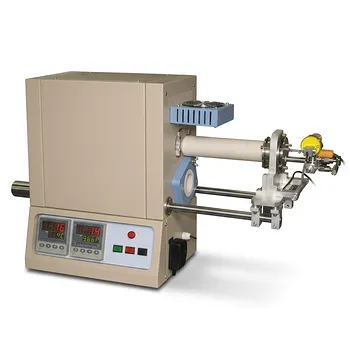
High Temperature Tube Furnace 1500C with Sliding Flanges and 50mm OD for Rapid Thermal Processing Fast Heating and Cooling

High Temperature 1700C Tube Furnace with High Vacuum Turbomolecular Pump System and Multi Channel Mass Flow Controller Gas Mixer
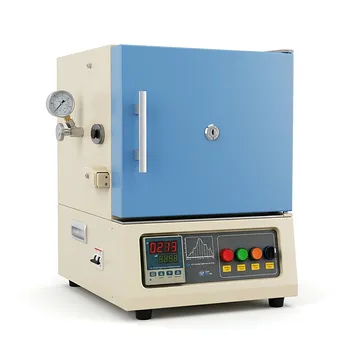
1200C Hybrid Muffle and Tube Furnace for Material Research with Dual Atmosphere Control Quartz Tubes
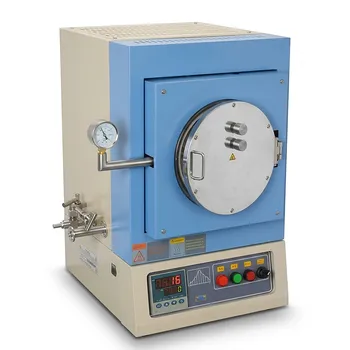
1100°C High Temperature Quartz Chamber Furnace 8 Inch OD with 7.6 Liter Capacity and Vacuum Atmosphere Capability

Vertical 1700C Vacuum and Atmosphere Tube Furnace with 80mm Alumina Tube
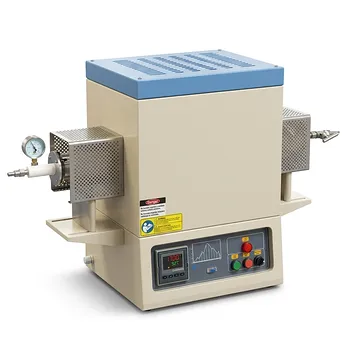
High Temperature Three Zone Tube Furnace 1700C with Alumina Tube and Water Cooled Flanges

Compact High Temperature 1600C Tube Furnace with 50mm Alumina Tube and Vacuum Flanges for Material Sintering

1800C High Temperature Compact Vacuum Tube Furnace with 60mm OD Alumina Tube and Kanthal MoSi2 Heating Elements

High Temperature 1700C Benchtop Tube Furnace with 5 Inch Heating Zone High Purity Alumina Tube and Vacuum Sealing Flanges
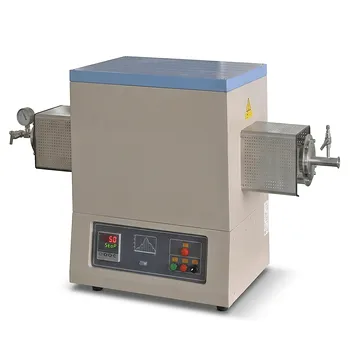
High Temperature 1700C Tube Furnace with 4 Inch OD Alumina Tube and Vacuum Sealing Flanges

High Temperature 1700C Vertical Tube Furnace for Powder Spherification and Material Sintering
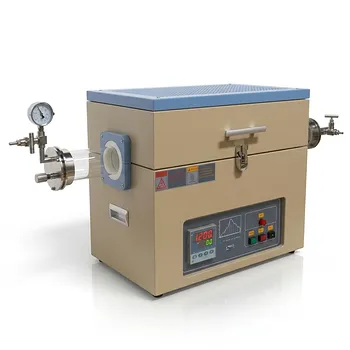
High Temperature 1200C Split Tube Furnace with Optional Quartz Tube Sizes and Vacuum Sealing Flanges for Material Science Research

High Temperature Automated 5 Inch Tube Furnace for Autonomous Material Research and Advanced Laboratory R&D

High Temperature 1700C Six Zone Split Tube Furnace with Alumina Tube and Water Cooled Flanges
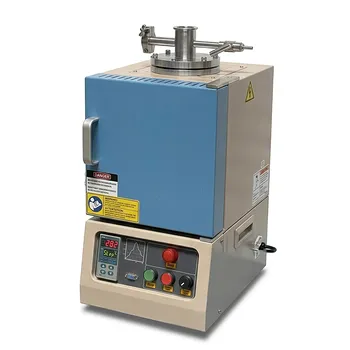
High Temperature Hybrid Muffle and Tube Furnace with Vacuum Capability and PID Control