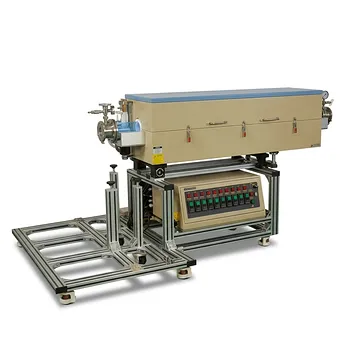
What role does a High-Temperature Tube Furnace play in iron ore simulated sintering research? Precision Lab Simulation
Updated 3 months ago
The High-Temperature Tube Furnace acts as the primary reactor in iron ore sintering research. It recreates the extreme thermal and atmospheric conditions of industrial sinter plants within a laboratory setting. This allows researchers to study physical and chemical transformations—such as solid-phase reactions and melt consolidation—with high precision and reproducibility.
A high-temperature tube furnace provides the stable thermal field and controlled gas environment necessary to simulate industrial sintering processes. It is the essential tool for evaluating how temperature curves, residence times, and atmospheric compositions affect the final sinter's microstructure and mechanical strength.
The Foundation of Thermal Simulation
Precision Control of Heating Profiles
The tube furnace allows researchers to program exact heating curves that mirror the rapid temperature spikes found in industrial sinter strands. By managing heating rates and maximum temperatures (typically between 1200 °C and 1350 °C), researchers can pinpoint the exact moment phase transformations occur.
Facilitating Solid-Phase Reactions
Sintering relies on long-range solid-state diffusion to bond iron ore particles together. The furnace provides a uniform thermal field that drives these reactions, ensuring that various oxides transform into a single, uniform phase structure.
Driving Melt Consolidation
As temperatures peak, the furnace facilitates the partial melting of materials, known as melt consolidation. This process is critical for creating the liquid phase that binds the ore together, ultimately determining the density and purity of the final sinter.
Atmospheric and Flow Field Management
Replicating Industrial Air Velocity
A critical role of the tube furnace is providing a controlled airflow field with constant air velocity. This replicates the suction-driven environment of a sinter machine, which is vital for understanding how oxygen availability impacts the combustion of internal fuels like coke breeze.
Simulating Low-Carbon and Reducing Environments
Modern research often focuses on "low-carbon" sintering to reduce environmental impact. Tube furnaces allow for the introduction of mixed gases, such as Ar-CO2-CO combinations, to simulate these specific thermodynamic conditions and evaluate their effect on the sinter's reduction performance.
Acting as a Gas Path Hub
Beyond being a heater, the tube furnace serves as a gas path hub. It transports the resulting sintering flue gases to downstream detection systems, allowing for the real-time analysis of emissions and chemical precursors during the sintering process.
Understanding the Trade-offs
Scale vs. Precision
While tube furnaces offer unmatched precision in temperature and gas control, they operate at a much smaller scale than industrial strands. This "lab-scale" environment may not fully capture the complex macroscopic heat transfer and permeability issues found in a deep-bed industrial sinter pot.
Vertical vs. Horizontal Orientation
Researchers must choose between vertical and horizontal furnace configurations. Vertical furnaces are often preferred for simulating gravity-fed gas flow, but they can be more challenging to load without disturbing the material bed structure.
Soaking Time Sensitivity
Extended soaking times (often 18 to 24 hours in some ceramic contexts) promote grain growth and eliminate internal stresses. However, if the residence time in the furnace is too long compared to the rapid cooling of an industrial strand, the resulting microstructure may not accurately reflect commercial sinter.
Applying This Research to Your Goals
How to Apply This to Your Project
To maximize the value of a high-temperature tube furnace in your research, align your furnace parameters with your specific metallurgical objectives.
- If your primary focus is reducing carbon emissions: Utilize the gas mixing capabilities to simulate CO-rich or hydrogen-supplemented atmospheres to evaluate sinter strength under low-coke conditions.
- If your primary focus is improving sinter strength: Focus on the precise control of the cooling curve post-1300 °C to study how different cooling rates impact the formation of brittle phases.
- If your primary focus is emission monitoring: Ensure the furnace is tightly sealed and integrated with a high-speed gas analyzer to capture transient flue gas spikes during the preheating and roasting phases.
The high-temperature tube furnace remains the definitive tool for bridging the gap between raw material chemistry and industrial-scale production quality.
Summary Table:
| Feature | Role in Sintering Research | Research Benefit |
|---|---|---|
| Thermal Control | Precise heating/cooling curves (up to 1350°C) | Pinpoints exact phase transformation moments |
| Atmosphere Management | Controlled gas flow (Ar-CO2-CO, Hydrogen) | Simulates low-carbon and reducing environments |
| Melt Consolidation | Facilitates partial melting and bonding | Optimizes sinter density and mechanical strength |
| Gas Path Hub | Integration with downstream gas analyzers | Enables real-time emission and flue gas analysis |
Elevate Your Metallurgical Research with THERMUNITS
Precision is the backbone of successful material science. As a leading manufacturer of high-temperature laboratory equipment, THERMUNITS provides the advanced thermal processing solutions required for rigorous industrial R&D and iron ore sintering studies.
Our comprehensive product lineup is designed to meet the most demanding laboratory requirements, including:
- Tube & Atmosphere Furnaces: Perfect for precise gas-controlled sintering simulations.
- Muffle, Vacuum, & Rotary Furnaces: For versatile heat treatment and material processing.
- Advanced Systems: CVD/PECVD systems, Hot Press furnaces, and Vacuum Induction Melting (VIM) furnaces.
- Specialized Equipment: Dental furnaces and high-quality Thermal Elements.
Whether you are focusing on reducing carbon emissions or enhancing material microstructure, our expert team is ready to help you configure the ideal system for your goals.
Contact THERMUNITS Today to discuss your project requirements and discover how our equipment can drive your research forward.
References
- Shiwang Han, Zhiqiang Wang. The mechanism of NO<sub><i>x</i></sub> removal in the sintering process based on source reduction of carbon emissions. DOI: 10.1039/d4ra01102c
Mentioned Products
- High Temperature Tube Furnace 1500C with Sliding Flanges and 50mm OD for Rapid Thermal Processing Fast Heating and Cooling
- High Temperature 1700C Tube Furnace with High Vacuum Turbomolecular Pump System and Multi Channel Mass Flow Controller Gas Mixer
- High Temperature 1700C Benchtop Tube Furnace with 5 Inch Heating Zone High Purity Alumina Tube and Vacuum Sealing Flanges
- 1750°C High Temperature Benchtop Vacuum Atmosphere Tube Furnace with Kanthal Super 1800 Heating Elements and 60mm Alumina Processing Tube
- Compact High Temperature 1600C Tube Furnace with 50mm Alumina Tube and Vacuum Flanges for Material Sintering
People Also Ask
- How are high-temperature tube furnaces utilized to repair etching damage? Precision Lattice Restoration Solutions
- What role does a high-temperature tube furnace play in CVD synthesis of silicon nanowires? Master VLS Growth Precision.
- What core conditions does a high-temperature tube furnace provide for rGO aerogels? Mastering Precision Synthesis.
- What role does a high-temperature tube furnace play in the sulfidation heat treatment of CoS@C/MXene nanocomposites? Guide
- How does precision tube furnace control influence CoFe nanoparticle formation? Master Your Bimetallic Synthesis.

Tech Team · ThermUnits
Last updated on Jun 03, 2026
Related Products

High Temperature Tube Furnace 1500C with Sliding Flanges and 50mm OD for Rapid Thermal Processing Fast Heating and Cooling

High Temperature 1700C Tube Furnace with High Vacuum Turbomolecular Pump System and Multi Channel Mass Flow Controller Gas Mixer

High Temperature 1700C Benchtop Tube Furnace with 5 Inch Heating Zone High Purity Alumina Tube and Vacuum Sealing Flanges

1750°C High Temperature Benchtop Vacuum Atmosphere Tube Furnace with Kanthal Super 1800 Heating Elements and 60mm Alumina Processing Tube

Compact High Temperature 1600C Tube Furnace with 50mm Alumina Tube and Vacuum Flanges for Material Sintering
1700C High Temperature Alumina Tube Furnace with 18 Inch Heated Zone and Vacuum Sealing Flanges

1800C High Temperature Compact Vacuum Tube Furnace with 60mm OD Alumina Tube and Kanthal MoSi2 Heating Elements
High Temperature Split Tube Furnace 1500C for Material Research Vacuum and Atmosphere Thermal Processing

High Temperature 1700C Vertical Tube Furnace for Powder Spherification and Material Sintering
High Temperature Three Zone Tube Furnace 1700C with Alumina Tube and Water Cooled Flanges

High Temperature 1700C Six Zone Split Tube Furnace with Alumina Tube and Water Cooled Flanges
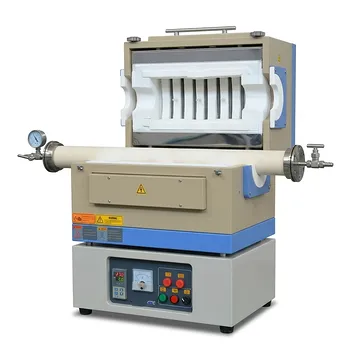
High Temperature 1600C Split Tube Furnace Vacuum Flanges Valves Optional 60mm 80mm Alumina Tube

High Temperature Automated 5 Inch Tube Furnace for Autonomous Material Research and Advanced Laboratory R&D

1100C Tube Furnace with Vacuum Flange and Programmable Temperature Controller for Material Science and Industrial Heat Treatment
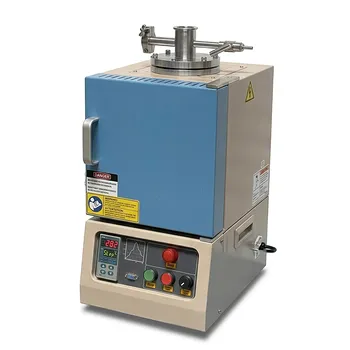
High Temperature Hybrid Muffle and Tube Furnace with Vacuum Capability and PID Control
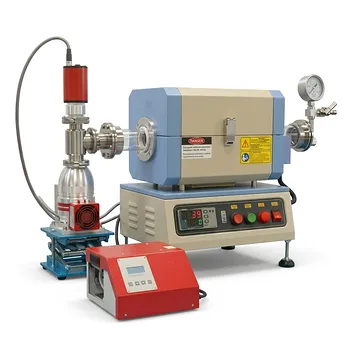
High Vacuum Compact Tube Furnace 1200C with Integrated Turbo Pump System and 8 Inch Heating Zone

1700C Hydrogen Gas Tube Furnace with 60mm Alumina Process Tube and Integrated Hydrogen Safety Detector
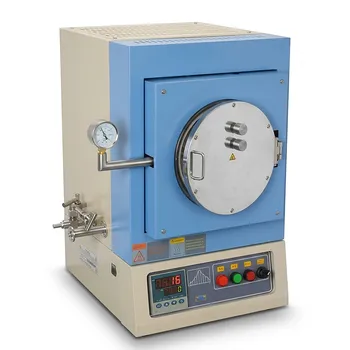
1100°C High Temperature Quartz Chamber Furnace 8 Inch OD with 7.6 Liter Capacity and Vacuum Atmosphere Capability
1100C High Pressure Rocking Tube Furnace with 2 Inch Super Alloy Processing Tube for Material Synthesis