What role does a high-temperature tube furnace play in the carbonization process of polyacrylonitrile-based nanofibers? Explained
Updated 3 months ago
The high-temperature tube furnace serves as the fundamental reactor for transforming polyacrylonitrile (PAN) precursors into high-performance carbon nanofibers. By providing a strictly controlled thermal environment and an oxygen-free atmosphere, the furnace facilitates the chemical evolution of stabilized fibers into a carbon-rich skeleton. This process is essential for achieving the high electrical conductivity and chemical stability required for advanced material applications.
A high-temperature tube furnace acts as a protective chemical reactor that drives the dehydrogenation and polycondensation of PAN fibers while preventing oxidative destruction. It is the decisive tool for controlling the structural rearrangement of carbon atoms into a conductive, high-strength framework.
The Dual Role of Atmosphere and Temperature
A tube furnace manages two critical variables: the chemical environment and the thermal energy required for molecular restructuring.
Providing a Protective Inert Atmosphere
The primary function of the tube furnace is to maintain a strictly inert atmosphere, typically utilizing high-purity nitrogen (N2) or argon (Ar).
Because carbon fibers are highly susceptible to oxidation at elevated temperatures, the furnace's superior sealing performance is vital to prevent the entry of oxygen.
Without this oxygen-free environment, the organic precursor would simply burn away rather than undergoing the intended carbonization.
Facilitating Dehydrogenation and Polycondensation
The furnace provides the sustained heat—typically starting at 650°C and reaching up to 1100°C—necessary to break chemical bonds in the PAN precursor.
This thermal energy drives dehydrogenation and polycondensation reactions, which systematically eliminate non-carbon components like hydrogen and nitrogen.
The result is the conversion of organic fibers into a carbon nanofiber skeleton characterized by high aspect ratios and developed ultramicropore structures.
Optimizing the Carbon Nanofiber Structure
Beyond simple heating, the tube furnace allows for the precise manipulation of the fiber’s physical properties through controlled thermal cycles.
Precision Heating and Soaking Times
Modern tube furnaces utilize precision control systems to manage slow heating rates and prolonged soaking times.
Controlled heating is essential to ensure that the removal of non-carbon elements occurs uniformly, preventing structural defects in the nanofibers.
This level of control promotes the rearrangement and graphitization of carbon atoms, which directly enhances the material's specific surface area and electrical conductivity.
Ensuring Temperature Field Uniformity
For nanofibers to exhibit consistent mechanical and electrical properties, they must experience a uniform temperature throughout the batch.
The tube furnace provides a uniform temperature field, ensuring that the entire precursor sample undergoes the same degree of thermal decomposition.
This uniformity is the foundation for creating a reliable conductive network used in applications ranging from electromagnetic wave absorption to composite electrodes.
Understanding the Trade-offs and Limitations
While the tube furnace is essential, it presents specific challenges that researchers and engineers must manage to ensure success.
The Risk of Residual Impurities
If the carbonization temperature is too low (e.g., staying near 600°C), the elimination of non-carbon elements may be incomplete.
This results in "soft carbon" structures that lack the high electrical conductivity and structural strength found in materials treated at 1000°C or higher.
Conversely, excessively high temperatures can lead to unwanted crystal growth that may reduce the flexibility of the resulting fiber mat.
Atmosphere Integrity vs. Gas Consumption
Maintaining a high-purity nitrogen environment requires a constant flow of gas and high-quality seals.
Small leaks in the furnace tube or connections can introduce trace amounts of oxygen, leading to the oxidative loss of the carbon matrix.
Achieving the necessary sealing performance often requires specialized equipment and frequent maintenance of the tube gaskets and gas lines.
How to Apply This to Your Project
When utilizing a tube furnace for PAN-based carbonization, your thermal strategy should align with your final material requirements.
- If your primary focus is high electrical conductivity: Target carbonization temperatures of 1000°C to 1100°C to maximize the graphitization and rearrangement of carbon atoms.
- If your primary focus is high specific surface area: Use a precision control system to manage slow heating rates and specific soaking times between 600°C and 900°C to develop micropore structures.
- If your primary focus is structural stability in composites: Prioritize a strictly inert atmosphere and uniform temperature fields to ensure a consistent, high-strength carbon fiber skeleton.
By mastering the furnace's atmosphere and thermal precision, you can precisely engineer the electrochemical and structural properties of PAN-derived carbon nanofibers.
Summary Table:
| Feature | Function in PAN Carbonization | Impact on Nanofibers |
|---|---|---|
| Inert Atmosphere | Maintains N2 or Ar environment | Prevents oxidative loss; forms carbon skeleton. |
| Thermal Precision | High heat (650°C - 1100°C) | Drives dehydrogenation and polycondensation. |
| Temperature Uniformity | Consistent heating across batch | Ensures reliable conductive networks and strength. |
| Control Systems | Managed heating/soaking rates | Optimizes graphitization and specific surface area. |
Elevate Your Material Research with THERMUNITS Precision
As a leading manufacturer of high-temperature laboratory equipment, THERMUNITS provides the advanced thermal processing solutions essential for material science and industrial R&D. From Tube Furnaces and CVD/PECVD systems to Vacuum Induction Melting (VIM) and Rotary Kilns, our equipment ensures the strict atmosphere control and temperature uniformity required for high-performance PAN-based carbonization.
Contact us today to discover how our comprehensive range of heat treatment solutions can optimize your lab's efficiency and material performance!
References
- Basma I. Waisi, Mohammed A. Manal. Adsorption Isotherms and Kinetics Studies of Lead on Polyacrylonitrile-Based Activated Carbon Nonwoven Nanofibres. DOI: 10.12912/27197050/186546
Mentioned Products
- High Temperature 1700C Vertical Tube Furnace for Powder Spherification and Material Sintering
- High Temperature Tube Furnace 1500C with Sliding Flanges and 50mm OD for Rapid Thermal Processing Fast Heating and Cooling
- High Temperature Dual Zone Rotating Tube Furnace 1500C Silicon Carbide Heating for Advanced Material Synthesis
- High Temperature 1700C Tube Furnace with High Vacuum Turbomolecular Pump System and Multi Channel Mass Flow Controller Gas Mixer
- Compact High Temperature 1600C Tube Furnace with 50mm Alumina Tube and Vacuum Flanges for Material Sintering
People Also Ask
- What role does a high-temperature vertical tube furnace play in simulating high-carbon ferromanganese slag formation?
- What functions does a vertical high-temperature tube furnace perform? Master Industrial Sintering & R&D Simulation
- What is the primary function of a high-temperature tube furnace in Cu1-N-C synthesis? Precision Thermal Control.
- High-Temp Tube Furnace Role in Converting Microbial Proteins to Iron Single-Atom Sites: Expert Synthesis Guide
- What impact does the heating rate of a tube furnace have on biochar microstructure? Optimize Your Material R&D.

Tech Team · ThermUnits
Last updated on Jun 02, 2026
Related Products

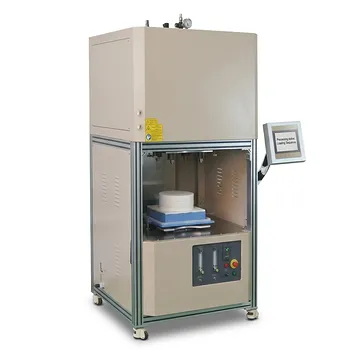
High Temperature 1700C Vertical Tube Furnace for Powder Spherification and Material Sintering

High Temperature Tube Furnace 1500C with Sliding Flanges and 50mm OD for Rapid Thermal Processing Fast Heating and Cooling
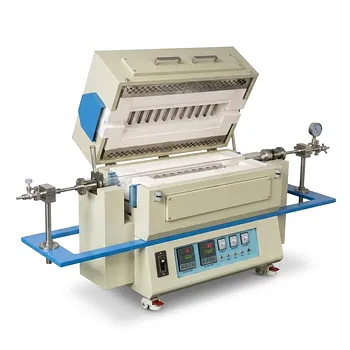
High Temperature Dual Zone Rotating Tube Furnace 1500C Silicon Carbide Heating for Advanced Material Synthesis

High Temperature 1700C Tube Furnace with High Vacuum Turbomolecular Pump System and Multi Channel Mass Flow Controller Gas Mixer

Compact High Temperature 1600C Tube Furnace with 50mm Alumina Tube and Vacuum Flanges for Material Sintering
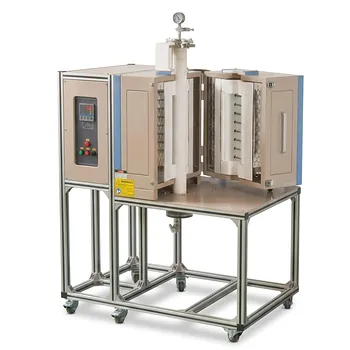
High Temperature 1700C Vertical Split Tube Furnace for Material Quenching and Single Crystal Growth
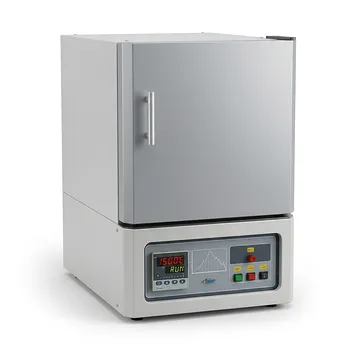
High Temperature 1500C Benchtop Muffle Furnace 3.6L Alumina Fiber Chamber Programmable Controller Sintering Annealing Carbonization Thermal Processing System
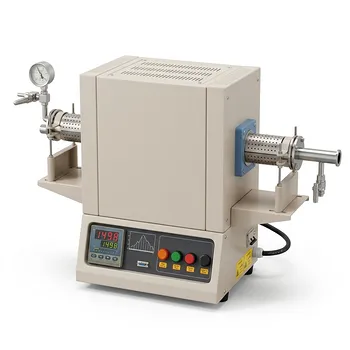
1500C High Temperature Compact Tube Furnace 2 Inch OD with Vacuum Flanges and Complete Accessories
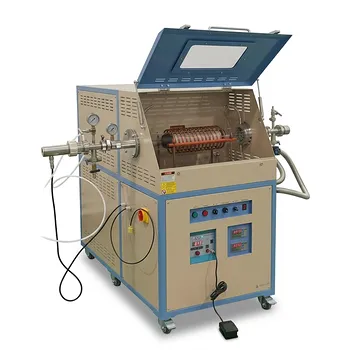
Ultra High Temperature 2300C Induction Heated Graphite Tube Furnace with Infrared Control
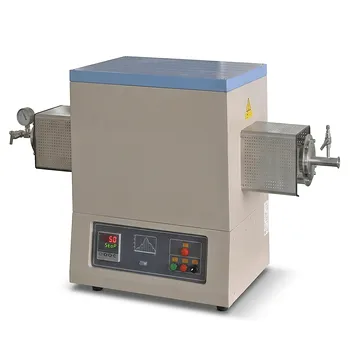
High Temperature 1700C Tube Furnace with 4 Inch OD Alumina Tube and Vacuum Sealing Flanges
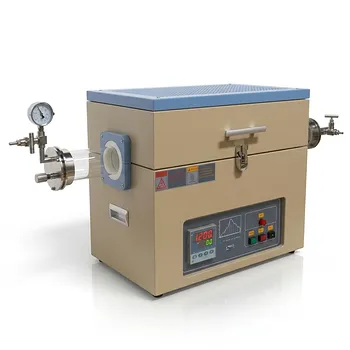
High Temperature 1200C Split Tube Furnace with Optional Quartz Tube Sizes and Vacuum Sealing Flanges for Material Science Research
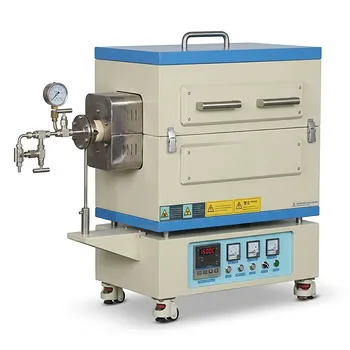
High Temperature Split Tube Furnace 1500C for Material Research Vacuum and Atmosphere Thermal Processing

High Temperature 1700C Benchtop Tube Furnace with 5 Inch Heating Zone High Purity Alumina Tube and Vacuum Sealing Flanges
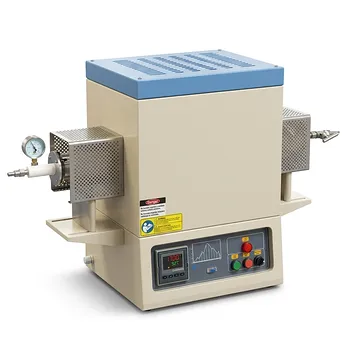
High Temperature Three Zone Tube Furnace 1700C with Alumina Tube and Water Cooled Flanges

High Temperature Automated 5 Inch Tube Furnace for Autonomous Material Research and Advanced Laboratory R&D

1800C High Temperature Compact Vacuum Tube Furnace with 60mm OD Alumina Tube and Kanthal MoSi2 Heating Elements
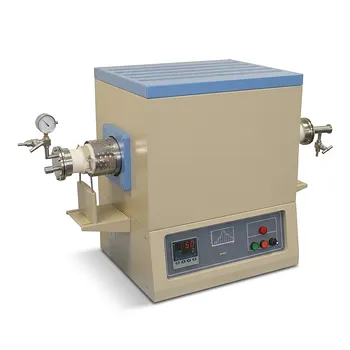
1700C High Temperature Alumina Tube Furnace with 18 Inch Heated Zone and Vacuum Sealing Flanges
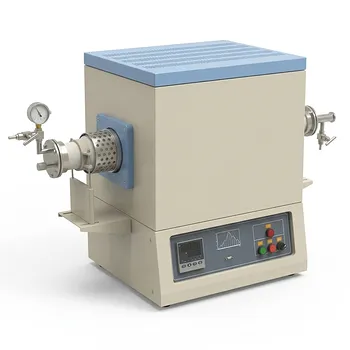
1750°C High Temperature Benchtop Vacuum Atmosphere Tube Furnace with Kanthal Super 1800 Heating Elements and 60mm Alumina Processing Tube
1200C Max Three Zone Tube Furnace 6 Inch OD Max with Tube and Flange