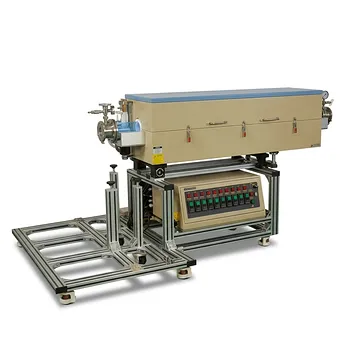
What role does a high-temp tube furnace play in chemical activation? Optimize your porous carbon support synthesis.
Updated 3 months ago
The high-temperature tube furnace is the central reactor for chemical activation, providing the precise thermal energy and controlled environment required to transform carbon precursors into highly porous structures. It enables chemical activators to etch the carbon skeleton, creating a tailored network of micropores and mesopores essential for loading active sites.
The furnace acts as a controlled thermal environment that facilitates the deep chemical etching of carbon precursors by activators like $K_2CO_3$ or $KOH$. By precisely managing temperature and atmosphere, it dictates the final pore size distribution and surface area of the carbon support.
Facilitating the Chemical Etching Mechanism
Activation through Thermal Decomposition
The furnace provides a stable high-heat environment, typically ranging from 700 to 1100 °C, to trigger reactions between the carbon precursor and the activating agent. During this process, agents such as Potassium Carbonate ($K_2CO_3$) or Zinc Chloride ($ZnCl_2$) deeply corrode and ablate the carbon surface. This thermal treatment is what "opens" closed pores and clears volatiles to create a high-adsorption network.
Controlling Pore Size Distribution
By adjusting the furnace temperature within specific ranges, operators can precisely control the ratio of micropores to mesopores. Higher temperatures often facilitate more intense etching, leading to higher specific surface areas, sometimes exceeding 1900 $m^2/g$. This level of control is critical for tailoring the support to specific catalytic or energy storage applications.
Structural Reorganization
Beyond simple etching, the furnace drives the structural reorganization of the carbon atoms. As volatile matter is released, the remaining carbon skeleton strengthens and realigns. This process ensures the resulting porous carbon has the necessary purity and mechanical integrity to function as a support material.
Maintaining the Essential Environment
Inert Atmosphere Protection
The tube furnace allows for the introduction of protective gases like Nitrogen or Argon to create an oxygen-free environment. This prevents the carbon precursor from simply burning away (combustion) at high temperatures. The controlled atmosphere ensures that the heat leads to selective etching rather than total degradation of the material.
Precision Heating and Uniformity
Advanced tube furnaces allow for specific heating rates, such as 5 °C or 10 °C per minute, which prevent thermal shock and ensure consistent pore formation. Some designs, like rotary tube furnaces, use movement to ensure that the raw materials are heated uniformly. This prevents localized overheating and ensures the final carbon product has a homogenous pore structure.
Understanding the Trade-offs
Temperature vs. Structural Integrity
While higher temperatures generally increase the specific surface area, exceeding optimal limits can lead to the collapse of the pore walls. This results in a loss of surface area and reduced mechanical strength of the carbon support. Finding the "sweet spot" between 700 °C and 1000 °C is often a delicate balance between porosity and stability.
Chemical Corrosivity
The very reactions that create pores—the etching by strong bases or salts—are also highly corrosive to the furnace equipment. Over time, vapors from activators like KOH can degrade the furnace's quartz or ceramic work tubes. This necessitates regular maintenance and the use of high-purity, resistant materials for the furnace internals.
How to Apply This to Your Project
When utilizing a high-temperature tube furnace for carbon activation, your choice of parameters should align with your specific performance requirements.
- If your primary focus is Maximum Surface Area: Utilize higher temperatures (900-1100 °C) and strong activators like KOH, ensuring a slow heating rate to allow for deep etching.
- If your primary focus is Pore Size Control: Focus on the precise calibration of the furnace temperature between 700-850 °C to balance the ratio of micropores and mesopores.
- If your primary focus is Material Uniformity: Consider using a rotary tube furnace to ensure the precursor and activator maintain constant contact and even heat distribution.
By mastering the thermal environment within the tube furnace, you can transform raw carbon into a sophisticated, high-performance support structure tailored to your exact needs.
Summary Table:
| Feature | Impact on Porous Carbon Synthesis |
|---|---|
| Temp Control (700-1100°C) | Regulates etching intensity and specific surface area (up to 1900 m²/g). |
| Inert Atmosphere | Prevents carbon combustion, allowing for selective chemical etching. |
| Heating Rate (5-10°C/min) | Ensures structural integrity and prevents pore wall collapse. |
| Rotary Design | Maximizes uniformity by ensuring even contact between precursor and activator. |
| Material Resistance | High-purity tubes withstand corrosive vapors from agents like KOH. |
Optimize Your Carbon Synthesis with THERMUNITS
As a leading manufacturer of high-temperature laboratory equipment, THERMUNITS provides the precision and reliability required for advanced material science and industrial R&D. Our comprehensive range of thermal processing solutions—including Tube, Rotary, Atmosphere, and CVD/PECVD Furnaces—is specifically engineered to handle the demanding conditions of chemical activation while ensuring uniform pore distribution and structural integrity.
Whether you are developing next-generation catalysts or energy storage materials, our thermal experts can help you select the ideal equipment for your heat treatment needs.
Contact our technical team today to discuss your project!
References
- Yongjie Chen, Mingbo Wu. Carbon-Supported Fe-Based Catalyst for Thermal-Catalytic CO2 Hydrogenation into C2+ Alcohols: The Effect of Carbon Support Porosity on Catalytic Performance. DOI: 10.3390/molecules29194628
Mentioned Products
- High Temperature Tube Furnace 1500C with Sliding Flanges and 50mm OD for Rapid Thermal Processing Fast Heating and Cooling
- High Temperature 1700C Tube Furnace with High Vacuum Turbomolecular Pump System and Multi Channel Mass Flow Controller Gas Mixer
- High Temperature 1700C Benchtop Tube Furnace with 5 Inch Heating Zone High Purity Alumina Tube and Vacuum Sealing Flanges
- 1750°C High Temperature Benchtop Vacuum Atmosphere Tube Furnace with Kanthal Super 1800 Heating Elements and 60mm Alumina Processing Tube
- Compact High Temperature 1600C Tube Furnace with 50mm Alumina Tube and Vacuum Flanges for Material Sintering
People Also Ask
- How are high-temperature tube furnaces utilized to repair etching damage? Precision Lattice Restoration Solutions
- What core conditions does a high-temperature tube furnace provide for rGO aerogels? Mastering Precision Synthesis.
- What role does a high-temperature tube furnace play in CVD synthesis of silicon nanowires? Master VLS Growth Precision.
- How does precision tube furnace control influence CoFe nanoparticle formation? Master Your Bimetallic Synthesis.
- What role does a high-temperature tube furnace play in the sulfidation heat treatment of CoS@C/MXene nanocomposites? Guide

Tech Team · ThermUnits
Last updated on Jun 03, 2026
Related Products
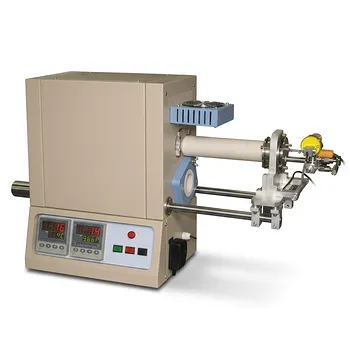
High Temperature Tube Furnace 1500C with Sliding Flanges and 50mm OD for Rapid Thermal Processing Fast Heating and Cooling

High Temperature 1700C Tube Furnace with High Vacuum Turbomolecular Pump System and Multi Channel Mass Flow Controller Gas Mixer

High Temperature 1700C Benchtop Tube Furnace with 5 Inch Heating Zone High Purity Alumina Tube and Vacuum Sealing Flanges

1750°C High Temperature Benchtop Vacuum Atmosphere Tube Furnace with Kanthal Super 1800 Heating Elements and 60mm Alumina Processing Tube

Compact High Temperature 1600C Tube Furnace with 50mm Alumina Tube and Vacuum Flanges for Material Sintering
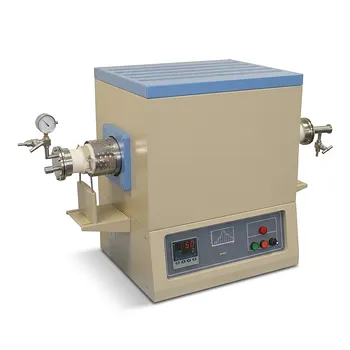
1700C High Temperature Alumina Tube Furnace with 18 Inch Heated Zone and Vacuum Sealing Flanges

1800C High Temperature Compact Vacuum Tube Furnace with 60mm OD Alumina Tube and Kanthal MoSi2 Heating Elements
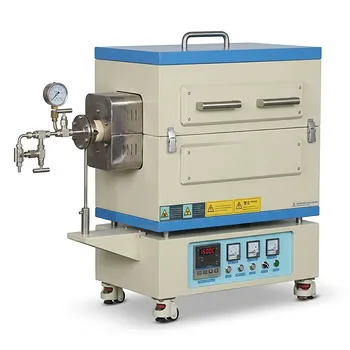
High Temperature Split Tube Furnace 1500C for Material Research Vacuum and Atmosphere Thermal Processing

High Temperature 1700C Vertical Tube Furnace for Powder Spherification and Material Sintering
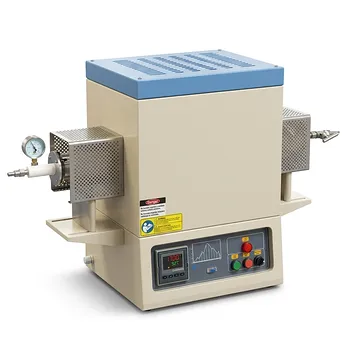
High Temperature Three Zone Tube Furnace 1700C with Alumina Tube and Water Cooled Flanges

High Temperature 1700C Six Zone Split Tube Furnace with Alumina Tube and Water Cooled Flanges
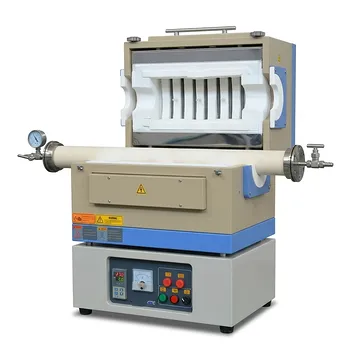
High Temperature 1600C Split Tube Furnace Vacuum Flanges Valves Optional 60mm 80mm Alumina Tube

High Temperature Automated 5 Inch Tube Furnace for Autonomous Material Research and Advanced Laboratory R&D
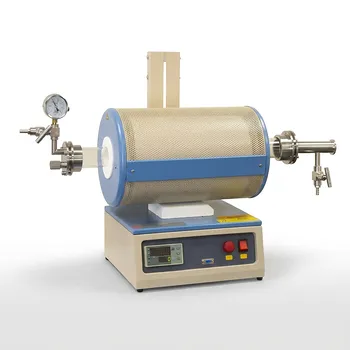
1100C Tube Furnace with Vacuum Flange and Programmable Temperature Controller for Material Science and Industrial Heat Treatment
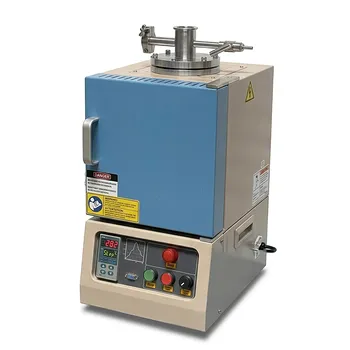
High Temperature Hybrid Muffle and Tube Furnace with Vacuum Capability and PID Control
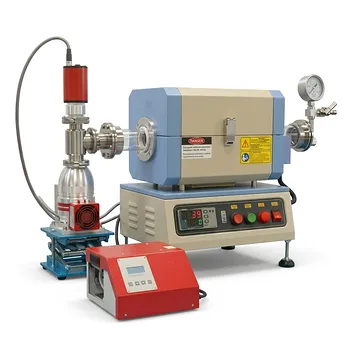
High Vacuum Compact Tube Furnace 1200C with Integrated Turbo Pump System and 8 Inch Heating Zone
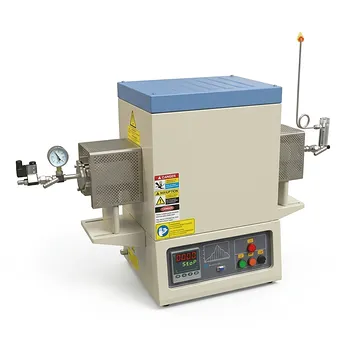
1700C Hydrogen Gas Tube Furnace with 60mm Alumina Process Tube and Integrated Hydrogen Safety Detector
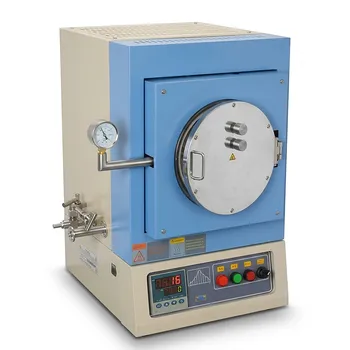
1100°C High Temperature Quartz Chamber Furnace 8 Inch OD with 7.6 Liter Capacity and Vacuum Atmosphere Capability
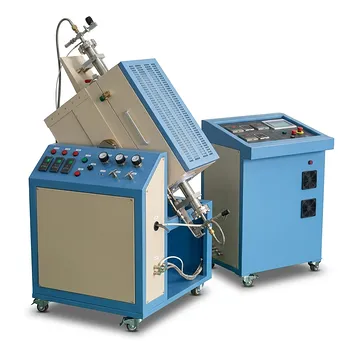
1100C High Pressure Rocking Tube Furnace with 2 Inch Super Alloy Processing Tube for Material Synthesis