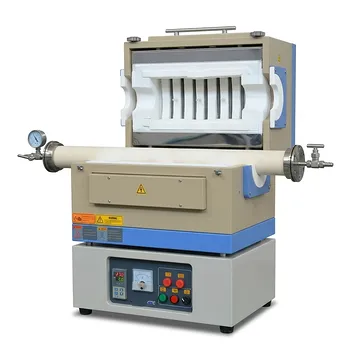
What role does a tube furnace play in BNF processing? Optimize Purity and Crystallinity in Boron Nitride Synthesis
Updated 3 months ago
The high-temperature tube furnace is the fundamental processing platform that converts chemical precursors into stable Hexagonal Boron Nitride Fibers (BNF) through controlled thermal stages. It functions as both a chemical reactor for molecular reorganization and a protected environment that ensures high-purity crystal growth by excluding atmospheric contaminants.
Core Takeaway: The tube furnace enables the multi-stage transformation of BNF by providing a precise temperature field for mass removal at 300°C and crystal fiberization at 950°C, all while maintaining an inert atmosphere to prevent oxidation.
The Core Mechanism: Precision Temperature Control
Preliminary Pyrolysis at 300°C
The first critical role of the furnace is to facilitate preliminary pyrolysis, typically occurring at approximately 300°C. During this stage, the furnace provides the energy required to remove the majority of the precursor's mass, effectively "debinding" the material.
This controlled heating allows organic components or volatile substances to exit the fiber structure slowly. This prevents the formation of internal defects such as cracks, bloating, or unintended pores that could compromise the fiber's integrity.
Final Calcination and Fiberization at 950°C
As the process moves to the final stage, the furnace ramps up to a calcination temperature of roughly 950°C. This high-energy environment triggers molecular structural reorganization, transforming the precursor into a hexagonal lattice.
The furnace's ability to maintain a stable, uniform temperature field is what ensures the final BNF possesses high crystallinity. This stage is responsible for the transition from a chemical precursor to a regular, durable fiber morphology.
Atmospheric Integrity and Chemical Synthesis
The Role of Inert Protective Gases
The tube furnace acts as a sealed chamber where high-purity nitrogen or argon can be introduced to displace oxygen. Because the reaction between boron and nitrogen is extremely sensitive to oxygen, an inert atmosphere is mandatory to prevent oxidation side-reactions.
Without this nitrogen flow, the raw materials would undergo oxidative loss, resulting in chemical impurities. The furnace ensures that the final product reaches its full potential for chemical purity and structural stability.
Facilitating Advanced Doping and Reactions
In specialized BNF production, the furnace can also be used to facilitate vacuum reduction or topological replacement reactions. By maintaining a high vacuum or specific gas flow, the furnace allows for the effective doping of atoms into the boron nitride lattice.
This capability is essential for creating specific chemical bonds, such as B-N-C bonds, which are required for catalytic active sites. The furnace provides the necessary energy to overcome activation barriers for these deep chemical transitions.
Understanding the Trade-offs
Heating Rates and Morphological Stability
While high temperatures are necessary for crystallinity, rapid heating rates can be detrimental. Inconsistent or overly aggressive temperature ramps often lead to structural defects or the loss of the fiber’s two-dimensional morphology.
Atmosphere Maintenance vs. Throughput
Maintaining a strictly controlled vacuum or inert environment increases the complexity of the process. Atmospheric leaks or insufficient gas purging can result in the formation of oxide layers, which degrade the metallic-grade electrical properties or mechanical strength of the fibers.
How to Apply This to Your Project
Optimizing the Thermal Process for Specific Outcomes
Depending on your project's requirements, the operation of the tube furnace must be tuned to prioritize different material properties.
- If your primary focus is High Crystallinity: Ensure the furnace maintains a prolonged soaking time at temperatures between 950°C and 1300°C to allow for complete crystal growth along the 002 plane.
- If your primary focus is Morphological Precision: Prioritize a slow, staged heating program during the 300°C pyrolysis phase to ensure organic components decompose without damaging the fiber structure.
- If your primary focus is Chemical Purity: Implement a high-vacuum environment or a continuous high-purity nitrogen flow to exclude oxygen interference throughout the entire heating cycle.
By mastering the furnace's thermal and atmospheric variables, you can precisely engineer the physical and chemical characteristics of Hexagonal Boron Nitride Fibers.
Summary Table:
| Processing Stage | Temperature | Primary Function | Key Outcome |
|---|---|---|---|
| Preliminary Pyrolysis | ~300°C | Mass removal & debinding | Prevents internal defects & cracks |
| Final Calcination | ~950°C | Molecular reorganization | Achieves high crystallinity & fiberization |
| Atmospheric Control | Ambient to Peak | Inert gas purging (N2/Ar) | Prevents oxidation & ensures chemical purity |
| Advanced Reaction | Variable | Vacuum/Topological replacement | Enables specific B-N-C bond formation |
Elevate Your Material Research with THERMUNITS Precision Furnaces
Achieving high-purity Hexagonal Boron Nitride Fibers requires the absolute thermal precision and atmospheric integrity found in THERMUNITS equipment. As a leading manufacturer of high-temperature laboratory solutions for material science and industrial R&D, we empower your innovations with a comprehensive range of thermal processing systems.
Whether you need Tube, Vacuum, Atmosphere, or Muffle furnaces, or specialized CVD/PECVD and Vacuum Induction Melting (VIM) systems, THERMUNITS provides the reliability and control necessary for complex multi-stage synthesis.
Ready to optimize your heat treatment results? Contact our engineering experts today to discuss a customized solution for your laboratory or industrial R&D needs!
References
- Tímea Hegedűs, Zoltán Kónya. Hexagonal boron nitride fibers as ideal catalytic support to experimentally measure the distinct activity of Pt nanoparticles in CO2 hydrogenation. DOI: 10.1016/j.heliyon.2024.e40078
Mentioned Products
- High Temperature Tube Furnace 1500C with Sliding Flanges and 50mm OD for Rapid Thermal Processing Fast Heating and Cooling
- High Temperature 1700C Vertical Tube Furnace for Powder Spherification and Material Sintering
- High Temperature 1700C Tube Furnace with High Vacuum Turbomolecular Pump System and Multi Channel Mass Flow Controller Gas Mixer
- Hybrid High Temperature Muffle and Tube Furnace with 1500C Capability and Vacuum Flange Assembly
- Compact High Temperature 1600C Tube Furnace with 50mm Alumina Tube and Vacuum Flanges for Material Sintering
People Also Ask
- How are high-temperature tube furnaces utilized to repair etching damage? Precision Lattice Restoration Solutions
- What role does a high-temperature tube furnace play in CVD synthesis of silicon nanowires? Master VLS Growth Precision.
- What core conditions does a high-temperature tube furnace provide for rGO aerogels? Mastering Precision Synthesis.
- What role does a high-temperature tube furnace play in the sulfidation heat treatment of CoS@C/MXene nanocomposites? Guide
- How does precision tube furnace control influence CoFe nanoparticle formation? Master Your Bimetallic Synthesis.

Tech Team · ThermUnits
Last updated on Jun 03, 2026
Related Products

High Temperature Tube Furnace 1500C with Sliding Flanges and 50mm OD for Rapid Thermal Processing Fast Heating and Cooling

High Temperature 1700C Vertical Tube Furnace for Powder Spherification and Material Sintering

High Temperature 1700C Tube Furnace with High Vacuum Turbomolecular Pump System and Multi Channel Mass Flow Controller Gas Mixer
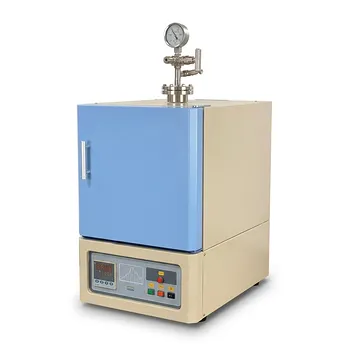
Hybrid High Temperature Muffle and Tube Furnace with 1500C Capability and Vacuum Flange Assembly

Compact High Temperature 1600C Tube Furnace with 50mm Alumina Tube and Vacuum Flanges for Material Sintering

1100C Tube Furnace with Vacuum Flange and Programmable Temperature Controller for Material Science and Industrial Heat Treatment
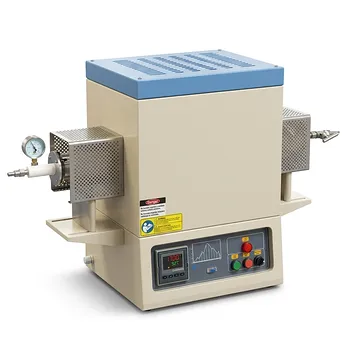
High Temperature Three Zone Tube Furnace 1700C with Alumina Tube and Water Cooled Flanges
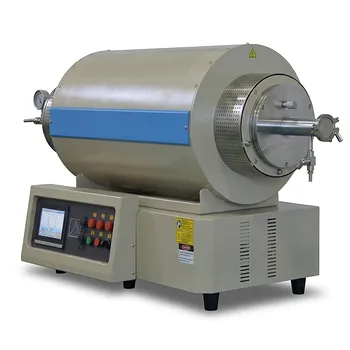
1200C Max Three Zone Tube Furnace 6 Inch OD Max with Tube and Flange

High Temperature Automated 5 Inch Tube Furnace for Autonomous Material Research and Advanced Laboratory R&D

High Temperature 1700C Benchtop Tube Furnace with 5 Inch Heating Zone High Purity Alumina Tube and Vacuum Sealing Flanges

High Temperature 1700C Six Zone Split Tube Furnace with Alumina Tube and Water Cooled Flanges

1800C High Temperature Compact Vacuum Tube Furnace with 60mm OD Alumina Tube and Kanthal MoSi2 Heating Elements
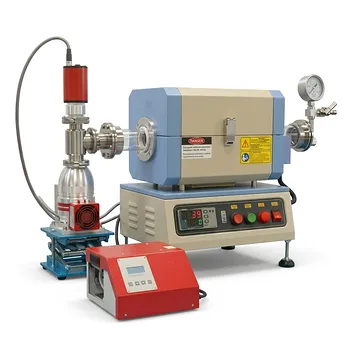
High Vacuum Compact Tube Furnace 1200C with Integrated Turbo Pump System and 8 Inch Heating Zone

High Temperature 1700C Tube Furnace with 4 Inch OD Alumina Tube and Vacuum Sealing Flanges

1750°C High Temperature Benchtop Vacuum Atmosphere Tube Furnace with Kanthal Super 1800 Heating Elements and 60mm Alumina Processing Tube
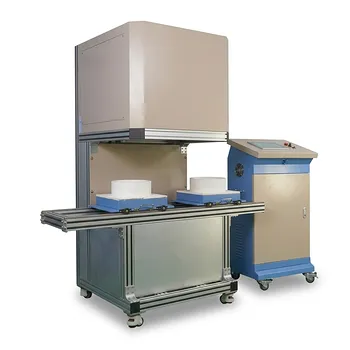
High Temperature Bottom Loading Vertical Furnace 1700C Dual Stage Sample Processing System 18L Large Capacity Thermal Treatment Equipment

1700C High Temperature Alumina Tube Furnace with 18 Inch Heated Zone and Vacuum Sealing Flanges
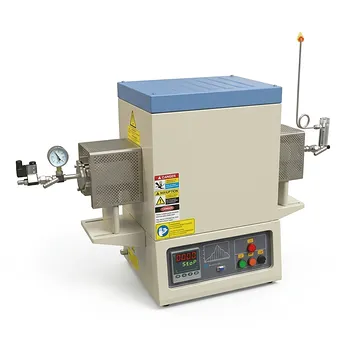
1700C Hydrogen Gas Tube Furnace with 60mm Alumina Process Tube and Integrated Hydrogen Safety Detector

1100°C High Temperature Quartz Chamber Furnace 8 Inch OD with 7.6 Liter Capacity and Vacuum Atmosphere Capability